

Diplomat Briefing
Iran Ceasefire Nears Expiration Amid Talks
·5 developments·1 deep dive
For the complete documentation index, see llms.txt.Skip to main content
The two-week Iran ceasefire is expiring and the Islamabad talks have produced a framework but no deal — every major power is now scrambling to claim credit for an outcome that hasn't arrived yet.
The 14-day ceasefire brokered by Pakistan between the U.S. and Iran — tied explicitly to Iran's partial reopening of the Strait of Hormuz — is entering its final days with no comprehensive settlement in hand. Delegations from Washington and Tehran have been meeting in Islamabad since April 11, with President Trump describing the negotiations as "very deep." Iran's framework on the table is its 10-point plan: recognition of the right to enrich uranium, lifting of primary and secondary sanctions, continued Iranian control over Hormuz transit (including fees), U.S. military withdrawal from the region, and release of frozen assets. The U.S. has not publicly accepted any of those terms. The gap between a tactical pause and a durable deal remains wide — and the ceasefire clock is running out.
AP News — Pakistan emerges as mediator |
Gulf News — Trump agrees to ceasefire |
Al Jazeera — Day 40 ceasefire
The strategic incoherence at the heart of the coalition is sharpening as talks proceed. Washington is focused on coercive diplomacy — constraining Iran's nuclear program and securing the Strait of Hormuz — while Israel wants regime dissolution and has consistently targeted Iranian leadership and infrastructure in ways that collapse U.S. diplomatic space. An Israeli strike during the conflict caused collateral damage to a Tehran synagogue, drawing rare Israeli expressions of regret. Foreign Affairs argues the divergence is structural, not tactical: Israel's actions signal to Tehran that survival equals victory, which is precisely the psychology that makes an American deal harder to close.
Foreign Affairs — America and Israel Have Different Endgames |
CFR — Iran Strikes Defiant Tone
Islamabad has executed one of the more remarkable geopolitical pivots in recent memory: from U.S. sanctions threat and IMF ward to the primary intermediary in the most consequential Middle East negotiation in decades. Pakistan PM Shehbaz Sharif, Foreign Minister Ishaq Dar, and Army Chief Field Marshal Asim Munir are the trio driving it. Their leverage: credible back-channels to both Washington and Tehran, a joint five-point framework co-signed with Egypt, Turkey, and Saudi Arabia, and the goodwill earned after helping the U.S. capture a suspect linked to the 2021 Kabul airport bombing. The collateral loser is India, which has been pointedly sidelined — New Delhi's preference for "quiet diplomacy" is being read in the region as absence, not restraint.
Reuters — Pakistan's remarkable makeover |
BBC — Pakistan's push, is India sidelined? |
AP News — China steps up Iran diplomacy
Beijing has presented a joint five-point de-escalation plan with Pakistan and is actively courting Gulf states, while simultaneously blocking a U.S.-backed UN Security Council resolution that would authorize military force to reopen the Strait of Hormuz. France and Russia joined China in opposing the draft. U.S. officials assess China's mediation initiative as "largely performative" — Beijing secures roughly 20% of its oil through Hormuz and needs the strait open regardless of whose flag flies over the talks. The more interesting dynamic: Trump reportedly suggested China helped push Iran toward the table, which, if true, would be the first public U.S. acknowledgment of Beijing's constructive role in the crisis.
AP News — China steps up Iran war diplomacy |
CFR — Iran Strikes Defiant Tone
For the first time in the alliance's history, all European NATO members met the 2% of GDP defense spending target in 2025, with European and Canadian outlays rising ~20% to $574 billion. The U.S. share of total NATO spending fell from 64% to 59% — measurable burden-shifting. But the benchmark is already obsolete: the Hague summit committed members to 5% of GDP in total defense-related spending by 2035 (3.5% core defense, 1.5% civil preparedness and infrastructure). Poland, Lithuania, Latvia, Estonia, Denmark, and Norway all spent a higher share of GDP than the U.S. The next summit is in Ankara in July — the 5% target will dominate it, and several Western European economies will arrive without a credible path to get there.
DW — European NATO spending rose ~20% in 2025 |
CFR — NATO's 77th Anniversary
~3.2 million — Iranians temporarily displaced since the U.S.-Israeli campaign began in February, with over 1,500 civilians reported killed and 13 U.S. service members dead. The human cost is now a recurring variable in Washington's political calculus on whether to extend the ceasefire. CFR Global Conflict Tracker
~150 — Ships that have transited the Strait of Hormuz since March 1, many linked to China, India, Pakistan, and Iran itself, under informal safe-passage arrangements. Western-flagged commercial vessels only began transiting after a French container ship crossed on April 2 — the first since the conflict began. Al Jazeera — Omani, French, Japanese vessels transit Hormuz
Washington Quietly Rewired Its Venezuela Policy Amid the Iran War
While every diplomatic eye was on Islamabad, the Trump administration lifted sanctions on Venezuela's acting president Delcy Rodríguez and issued a broad Treasury license allowing PDVSA to sell oil directly to U.S. companies and global markets. The context is blunt: Iran's Hormuz closure drove oil prices high enough that the White House needed new supply fast. The Jones Act was waived for 60 days to facilitate rerouting. This is a significant normalization of U.S.-Venezuela relations — Rodríguez was sanctioned since 2018 for undermining democracy — driven entirely by energy market pressure, not any political reform in Caracas. The longer-term implication: once the Iran war ends and energy prices ease, Washington will face pressure to justify what it traded away.
AP News — US lifts sanctions on Delcy Rodríguez |
AP News — US allows Venezuela to sell more oil
Ceasefire Countdown: Islamabad Talks on Iran-US Tensions
As the Iran-US ceasefire deadline approaches, Islamabad hosts crucial talks that could reshape regional stability and oil markets.
Diplomat Briefing — Daily political intelligence.
Read more:
Today's stories
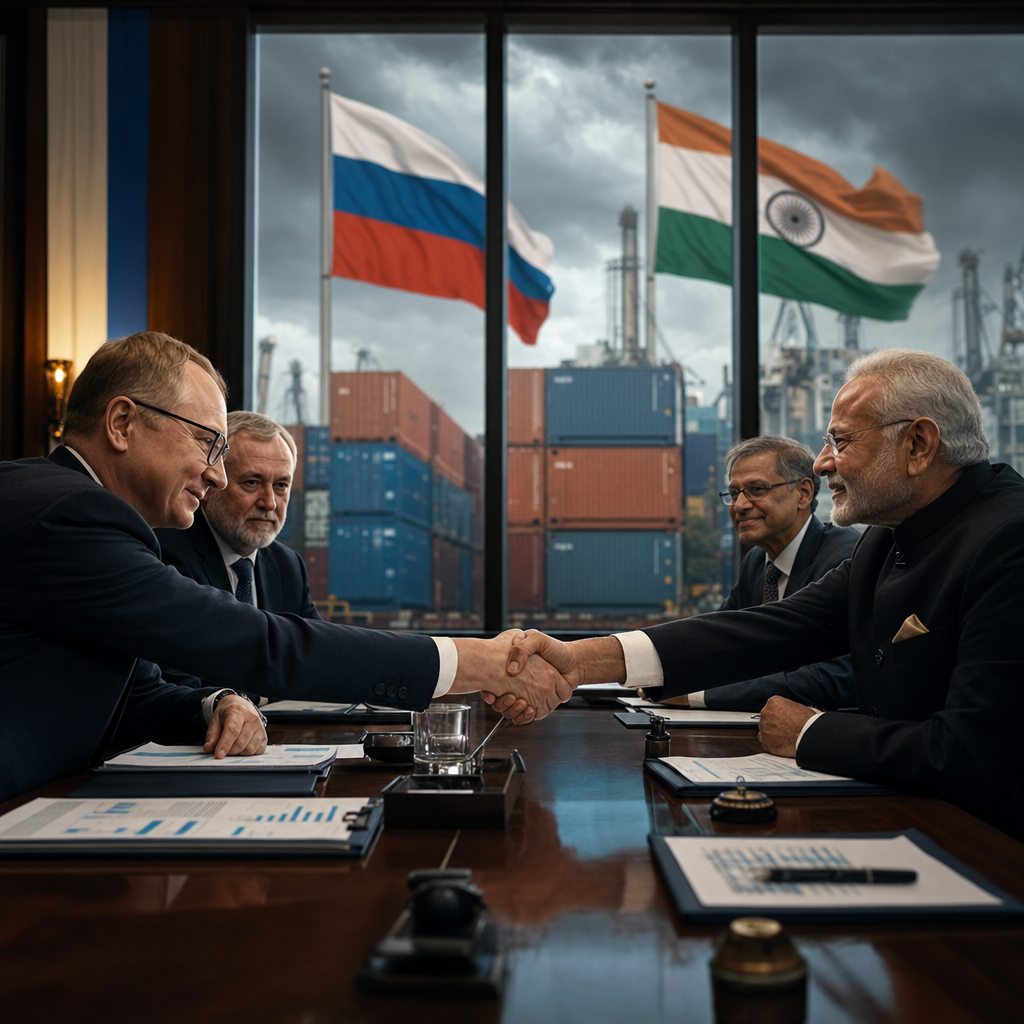
Russia and India deepen economic ties despite U.S. tariffs and sanctions.

Yorkshire charities are overwhelmed as local budgets collapse, revealing a funding crisis.
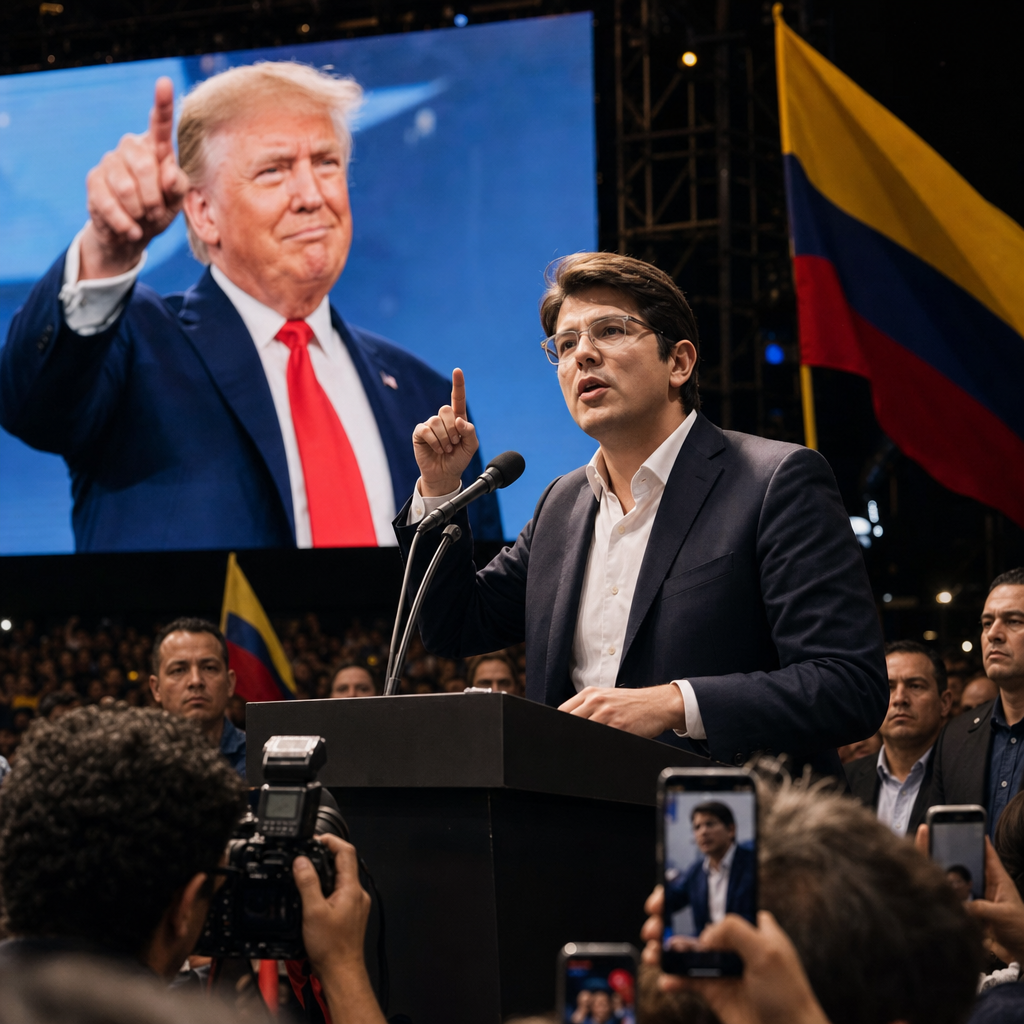
Trump's endorsement of De la Espriella signals a shift in Colombia's political dynamics.