BJP Urges Election Commission on Kharge's PMs
BJP petitions EC against Congress chief for controversial comments.
Model Diplomat2 min readIndia
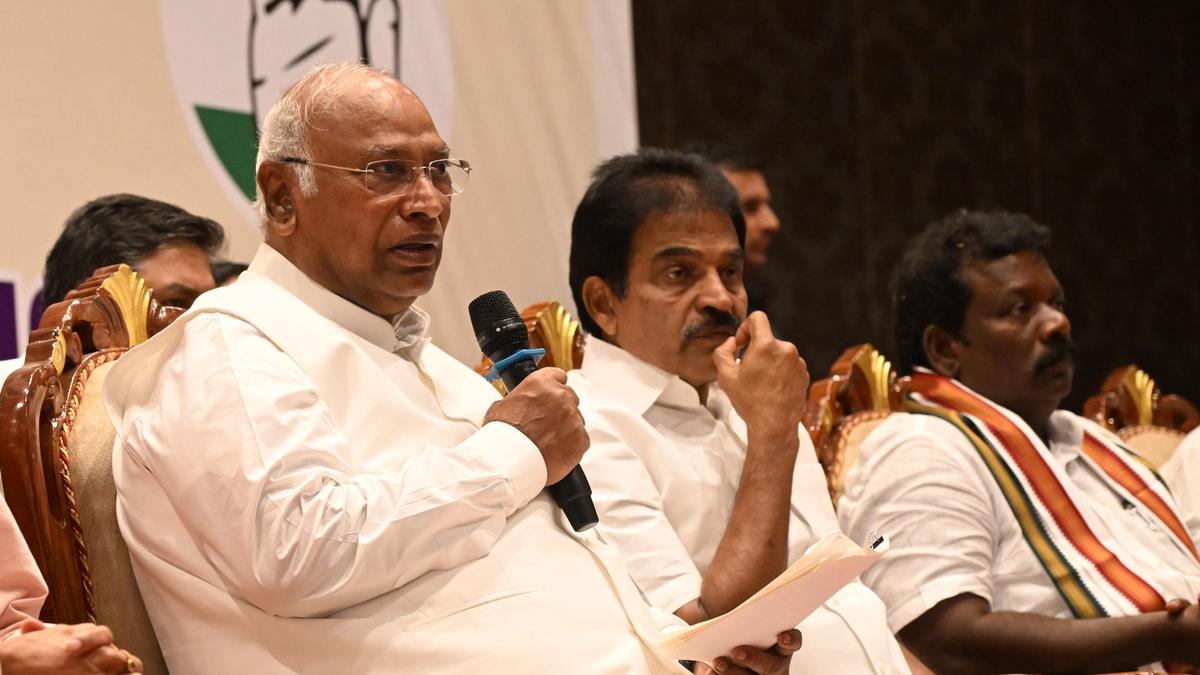
BJP Demands Election Commission Probe Over Kharge’s PM Remark
BJP petitions Election Commission against Congress chief Kharge for a controversial statement about Prime Minister Modi.
The Bharatiya Janata Party (BJP) has formally sought the Election Commission’s intervention against Congress president Mallikarjun Kharge for comments made about Prime Minister Narendra Modi. The BJP alleges that Kharge’s remarks violate the model code of conduct during the ongoing election season, urging the commission to take strict action.
Context: Political and Electoral Stakes
Mallikarjun Kharge, a veteran Congress leader, recently made a statement targeting PM Modi, which the BJP claims is defamatory and beyond acceptable political discourse. This complaint comes amidst a highly charged pre-election atmosphere where both parties seek to consolidate support ahead of critical state and national elections.
Kharge’s Congress is attempting to position itself as a credible alternative to Modi’s incumbency, increasing direct confrontation. The BJP’s move to involve the Election Commission signals a strategy to legally constrain opposition rhetoric while appealing to electoral morals and regulatory frameworks. This tactic has precedent: the Election Commission in India routinely receives complaints from rival parties during elections to curb inflammatory or allegedly defamatory speech.
The ruling BJP’s willingness to escalate to the EC could also be a show of strength aimed at rallying its voter base by portraying Congress as aggressive and disrespectful toward the Prime Minister. The complaint highlights the polarized nature of India’s political environment, where election laws and institutions are battlegrounds for influence beyond traditional campaigning.
What to Watch Next
The Election Commission’s response will be pivotal. It could issue warnings, call for retractions, or in rare cases, disqualify candidates or parties for severe code violations. How the EC manages this demand will reflect its stance on maintaining electoral fairness without appearing partisan.
Further, analysts should watch Congress’s reaction. If Kharge retracts or softens his remarks, it may signal a tactical retreat; if he doubles down, it could escalate tensions ahead of the polls. Meanwhile, BJP’s move may encourage other parties to file similar complaints, potentially politicizing the Election Commission’s role.
This development exemplifies how election law enforcement in India often becomes entangled with political strategy, with parties leveraging legal instruments to gain advantages. The broader implication lies in whether democratic competition will prioritize substantive debate or increasingly rely on regulatory and legal contests.
Sources: The Hindu
Related reading: India Politics,
Global Politics
Discover more
India
CPI MP Accuses PM Modi of MCC Violations
CPI MP P Sandosh Kumar alleges PM Modi breached the Model Code of Conduct in Tamil Nadu, raising election integrity concerns before the 2026 Assembly polls.
India
700 Activists Accuse PM Modi of MCC Breach
Over 700 activists allege PM Modi breached election code with a televised address attacking opposition parties just before state elections.
India
BJP Congress Clash Over MP Bill Defeat
The BJP's defeat of the women's quota amendment sparks a political narrative war with Congress, impacting future elections.

Conflict & Security
Drone Warfare Killing Aid Workers at Unprec
Over 1,000 humanitarian workers killed in three years as cheap armed drones collapse legal protections. Gaza, Sudan, Ukraine, and DRC see deliberate targeting of aid convoys and hospitals with zero prosecutions.