BJP Congress Clash Over MP Bill Defeat
Debate continues over women's quota amendment defeat
Model Diplomat8 min readMadhya Pradesh
BJP-Congress Clash Over MP Bill Defeat Reframes Delimitation Fight
The women's quota amendment fell 298–230 on April 17, 2026. Two months on, the BJP and Congress are still fighting over what the defeat really meant — and who paid the price.
The Constitution (131st Amendment) Bill was the first constitutional amendment defeated on the floor of the Lok Sabha in Narendra Modi's 12 years as prime minister. The BJP has since spent every state campaign — Bhopal, Bengaluru, Kolkata — telling women voters that the Congress killed their quota. That framing has largely worked. But the underlying fact, established by the government's own numbers, is that the amendment fell because the BJP tried to bolt a redraw of India's electoral map onto women's reservation and dared the opposition to stop it. The opposition did. The BJP lost the vote and won the narrative — and it is the second half of that sentence that now matters most for 2029.
What actually happened on April 17
The Modi government convened a three-day special session from April 16–18, 2026 to pass three linked bills: the Constitution (131st Amendment) Bill, 2026; the Delimitation Bill, 2026; and the Union Territories Laws (Amendment) Bill, 2026. According to the Press Information Bureau, Home Minister Amit Shah told the House that 130 members, including 56 women, had spoken in the debate before the vote.
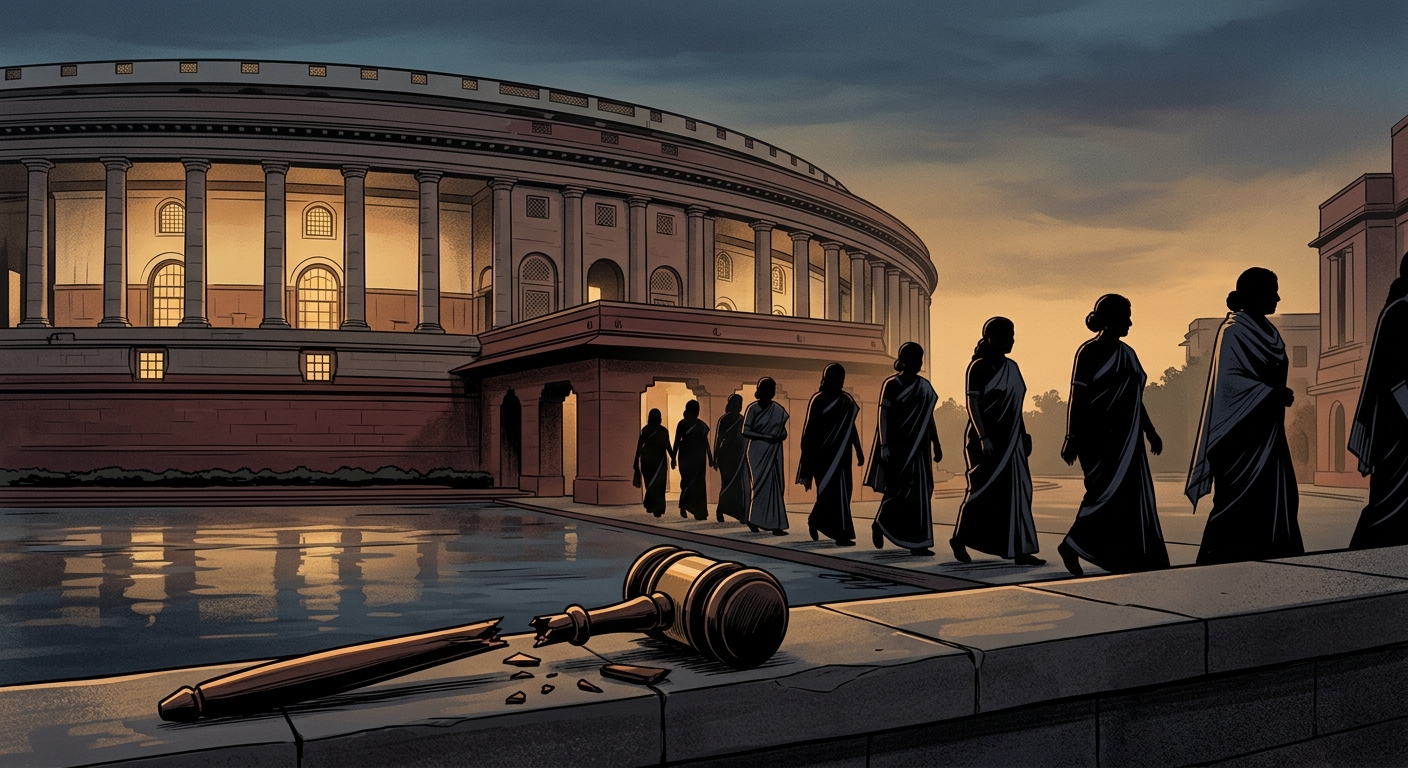
The 131st Amendment would have raised the constitutional ceiling of the Lok Sabha from 550 to 850 seats — 815 for states and 35 for union territories — and, crucially, stripped out the automatic post-census trigger for reapportionment. As the Carnegie Endowment for International Peace noted in its post-mortem, that final clause would have handed Parliament — meaning the government of the day — the discretion to decide which census future delimitations would be pegged to.
The vote, per the BBC's Hindi service, was 298 in favour, 230 against. A two-thirds majority of members present and voting was required; the NDA's 293 seats made that arithmetic impossible without the Congress-led INDIA bloc, and it did not come. The
NUS Institute of South Asian Studies recorded it as "the first time that the passage of a constitutional amendment was blocked during Narendra Modi's tenure as prime minister."
The Bhopal front: why Mohan Yadav went after Priyanka
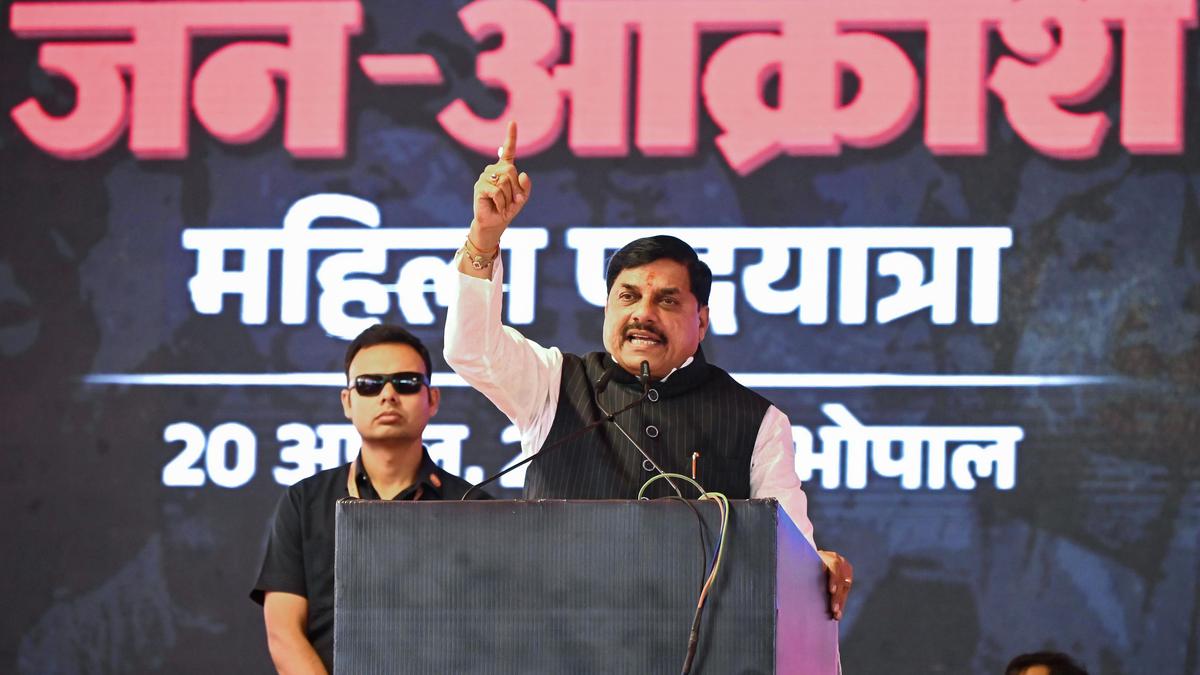
Three days after the defeat, Madhya Pradesh Chief Minister Mohan Yadav led a "Jan Akrosh Mahila Padyatra" through Bhopal. His target, The Hindu reported, was Congress general secretary Priyanka Gandhi Vadra: "Priyanka Gandhi used to make grand claims in the past — declaring, 'I am a woman; I can fight.' But now, she has effectively strangled the rights of our sisters." He warned the Congress would "pay the price."
Congress's Madhya Pradesh unit responded through Shobha Oza, former head of the party's women's wing, who told the same paper the Opposition had "foiled the Modi government's plot to monopolise power through delimitation under the guise of women's reservation." Reservation, she said, "can be implemented within the existing 543 Lok Sabha seats starting today."
That is not a rhetorical throwaway. It is the load-bearing legal point in the entire dispute. The Nari Shakti Vandan Adhiniyam — passed unanimously by the Rajya Sabha in September 2023 and notified as commenced on April 16, 2026 — ties the 33% women's quota to "the delimitation exercise undertaken after the relevant figures for the first census taken after the commencement of the Constitution (One Hundred and Sixth Amendment) Act, 2023 have been published." The Congress argues that clause could be repealed by an amendment applying the quota to the current 543 seats. The BJP insists delimitation must come first — and that any delimitation must expand the House.
That is the actual disagreement. Everything else is theatre.
Why the arithmetic was always against the government
The government knew going in that it did not have 360 votes. Al Jazeera's count on April 16 pegged the NDA at 293 seats. Even generous defections from the Biju Janata Dal, YSR Congress and independents would not have closed a 60-plus vote gap once the entire INDIA bloc — Congress, DMK, Samajwadi Party, TMC, Left — whipped against.
Senior journalist Sharad Gupta told BBC Hindi the bill's timing — days before assembly polls in West Bengal, Tamil Nadu, Kerala and Assam — was the giveaway: "The government knew it did not have the numbers, but it wanted to campaign on women's reservation in Bengal." The
ISAS assessment is blunter: the bill was introduced "without any prior consultation with opposition parties or floor management," days before southern and eastern polls where its content was politically radioactive.
Tamil Nadu Chief Minister M.K. Stalin, before losing office weeks later, burned a copy of the bill and hoisted a black flag, calling delimitation "an attempt to marginalise the state." Southern chief ministers had for a year been demanding a further 25-year freeze on redistribution.
The federalism problem the BJP could not paper over
The Takshashila Institution's post-mortem framed the defeat this way: "The bills, coming in the backdrop of several state elections, were seen as an affront to federalism and were defeated." That is the polite version.
The harder version, laid out by Carnegie's Milan Vaishnav and Neelanjan Sircar, is that the amendment offered a 50% expansion of the Lok Sabha with new seats reserved for women — but no legal guarantee any state's share would be preserved. Shah told the House the southern states would gain, not lose: "there are 129 MPs from South India; after this Bill, the number will increase to 195," he said in his reply to the debate. The bill's text did not codify that promise. Vidhi Centre for Legal Policy's Arghya Sengupta told the
BBC the 850 ceiling had no clear proportional basis in either 1971 or 2011 census data.
For DMK, TMC and the Kerala Left, that ambiguity was disqualifying. Rahul Gandhi, quoted by The Kashmir Images, framed the amendment as "an attempt to seize power through delimitation and gerrymandering" — an "attack on the Constitution."
Who actually won: read the May 4 results
Here is the twist that reframes the Bhopal padyatra. Three weeks after Yadav's march, Indian voters delivered the most consequential state results of Modi's third term. The BJP won West Bengal for the first time in its history, taking 207 of 294 seats and reducing Mamata Banerjee's TMC to 80. It retained Assam and Puducherry. The DMK was swept out of Tamil Nadu by actor Vijay's fledgling TVK. The Congress-led UDF reclaimed Kerala.
The BJP was outvoted on the floor of the Lok Sabha, and then rewarded at the ballot box in the very state — West Bengal — its strategists had targeted. Al Jazeera's post-mortem noted that a controversial Special Intensive Revision of electoral rolls, which struck 2.7 million Bengal voters off the register, materially shaped the outcome. But the political line the BJP ran through the campaign — that the opposition, not the government, was the party of anti-women obstruction — held.
That is the second-order effect: the defeat of the 131st Amendment cost the BJP nothing electorally, and may have converted a legislative loss into a state-level rout of the parties that killed it. The DMK, which whipped hardest against delimitation, lost power. The TMC, which walked out of the vote, lost Bengal. The Congress alone kept its head above water — winning Kerala — and is now the last opposition party still credibly claiming the "we support women's reservation, just not this version" line.
What the primary documents say about intent
Shah, in his written Lok Sabha reply, was unusually direct: "in 2023, Prime Minister Shri Narendra Modi deliberately brought the Women's Reservation Bill, knowing that elections were due in 2024. He stated that regardless of any political posturing, the opposition would not be able to oppose it." The government's own record, in other words, treats the reservation architecture as a political instrument — not a technical one. That is exactly the reading Congress's Gaurav Gogoi advanced in the debate, calling the package "delimitation through the backdoor."
The Observer Research Foundation, hardly hostile to the government, noted before the vote that women have historically won at higher rates than men in every Lok Sabha poll since 1957 — and that ticket allocation, not delimitation, is the real gender bottleneck. ISAS added the sharpest counterfactual: if the BJP were serious about women's representation, it could unilaterally reserve one-third of its own tickets in 2029 without a single new amendment. It has never come close to doing so.
Diplomat View
The BJP lost the 131st Amendment on the floor and won the West Bengal state assembly two weeks later. That should be read as evidence, not coincidence: the party has monetised the fact of the defeat more effectively than a legislative win would have allowed. Expect the Congress to be pinned as "anti-women" through every 2026 by-election and into the 2027 budget session. Expect the government to reintroduce delimitation — but decoupled from women's reservation, and after the ongoing 2026–27 census produces publishable figures. The government's ceiling is not political will; it is the two-thirds threshold in the Rajya Sabha, where NDA arithmetic is tighter still.
The forecast changes if two conditions break. First, if the Congress accepts an offer to apply the 33% quota to the current 543 seats — an option Shobha Oza named explicitly on April 20 — the BJP's "obstruction" narrative collapses. Second, if the 2027 census figures show slower southern-state population growth than currently assumed, the federal fight over delimitation becomes structurally harder to resolve, and the 131st Amendment defeat looks less like a setback than a preview.
Watch for:
- Monsoon session 2026 (July–August): whether the government reintroduces a stripped-down 131st Amendment applying the women's quota to 543 seats.
- 2027 census enumeration phase: the trigger for delimitation under the existing Nari Shakti Vandan Adhiniyam; caste data collection was formally added by cabinet decision in April 2026.
- Bihar assembly election, late 2026: the next test of the BJP's "Congress killed the women's quota" line, in a state where the SIR electoral-roll revision was first piloted.
The Bottom Line
The BJP-Congress clash over the 131st Amendment's defeat is not a fight about women's representation. It is a fight about who controls the boundaries of Indian constituencies before 2029 — and the BJP, having lost the vote, has spent every campaign since April converting that loss into a weapon against the opposition parties that inflicted it. On current evidence, that trade has already paid for itself in Kolkata and Chennai, and the arithmetic that killed the bill on April 17 is the same arithmetic the government will try to rewrite before the next general election.
Discover more

India
Delhi CM Rekha Gupta Blasts Opposition's Delm
Delhi CM Rekha Gupta's remarks on women's quota defeat reveal BJP's strategy for the 2029 Lok Sabha elections, focusing on delimitation.
India
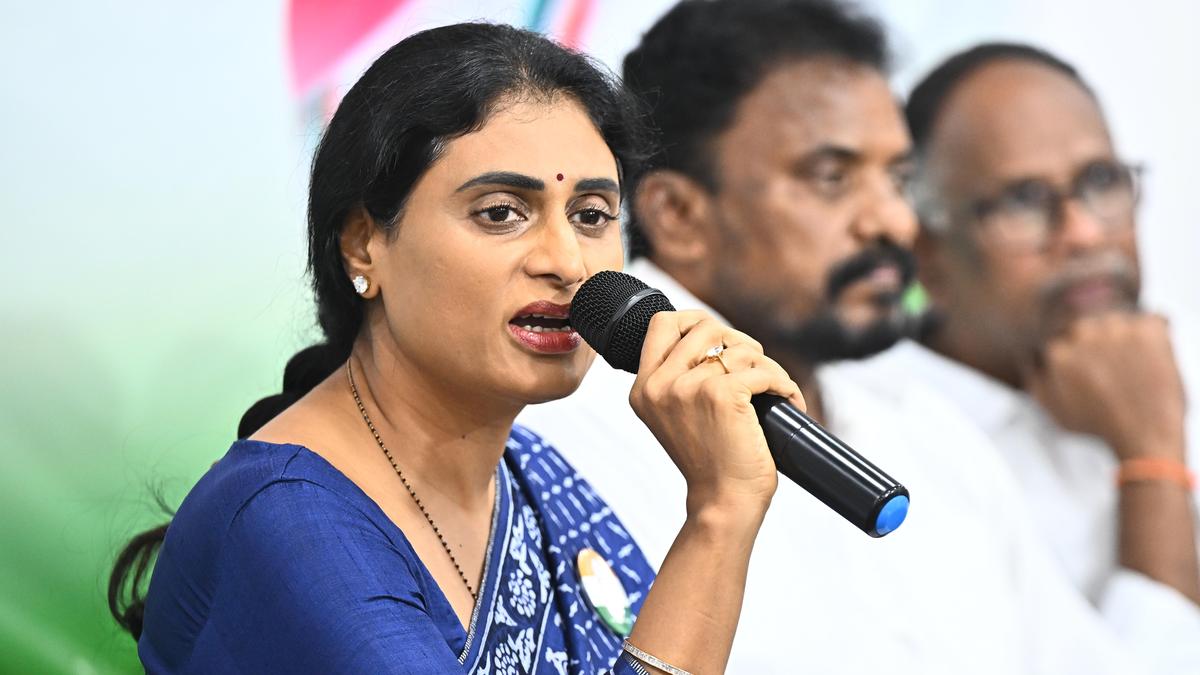
Congress Advocates 33% Women’s Quota
Congress calls for a 33% women's reservation in the existing 543 Lok Sabha seats, countering Modi's plan to expand the house to 850 seats.

Economics
Fed's Amex AML order puts correspondent banking on notice
Federal Reserve's Amex AML order requires board-level controls and a 90-day plan; OCC fined the bank $350 million over enterprise-wide deficiencies.
Conflict & Security
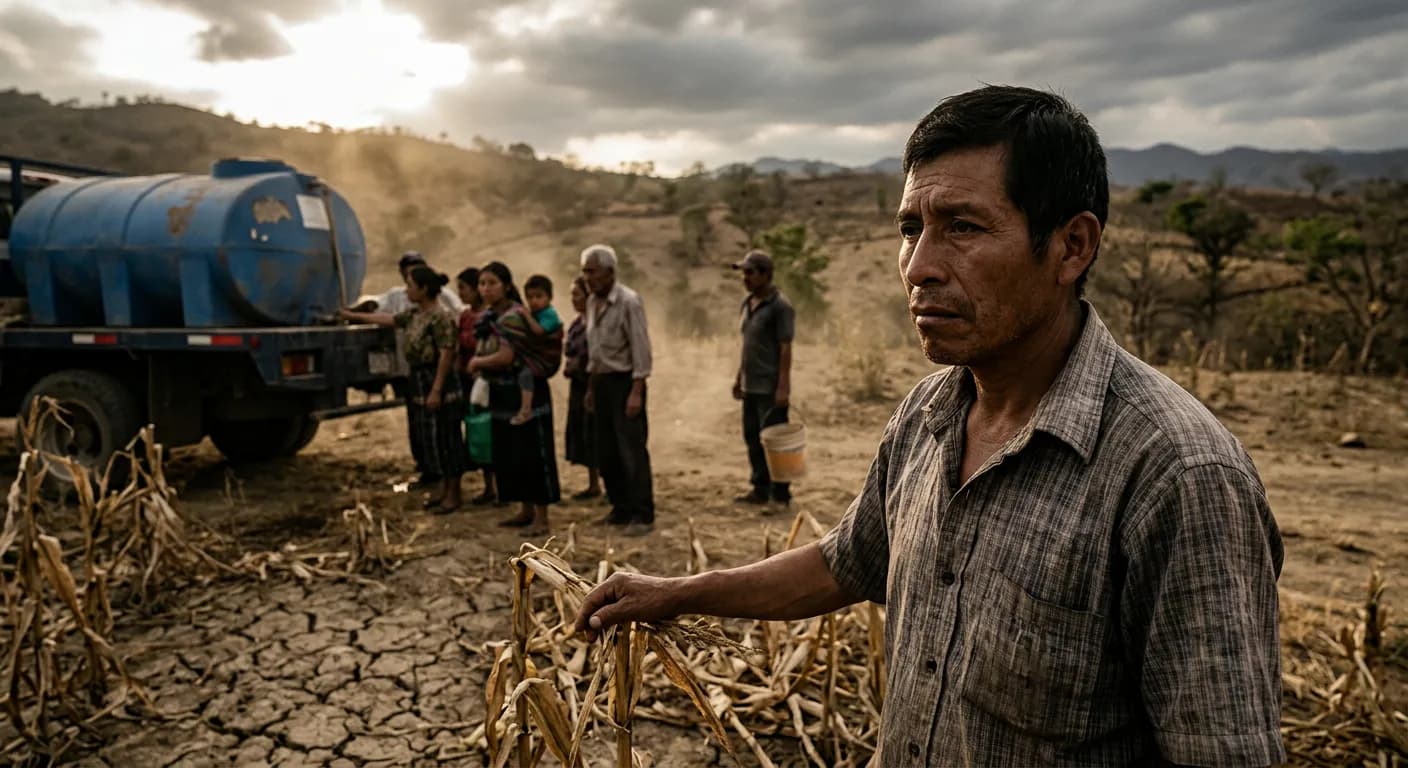
Guatemala: El Niño 2026–27 becomes regional security test
UNICEF: 25.8M children face El Niño risks in Latin America; Guatemala maps 188 municipalities for drought and food insecurity amid regional security test.