Delhi CM Rekha Gupta Blasts Opposition's Delm
Delhi CM Rekha Gupta targets Congress over women's quota defeat.
Model Diplomat7 min readDelhi

Rekha Gupta's delimitation attack is a preview of BJP's 2029 pitch
Delhi CM Rekha Gupta accused Congress of "celebrating" the defeat of the women's quota-cum-delimitation bill. The real target is the 2029 Lok Sabha election.
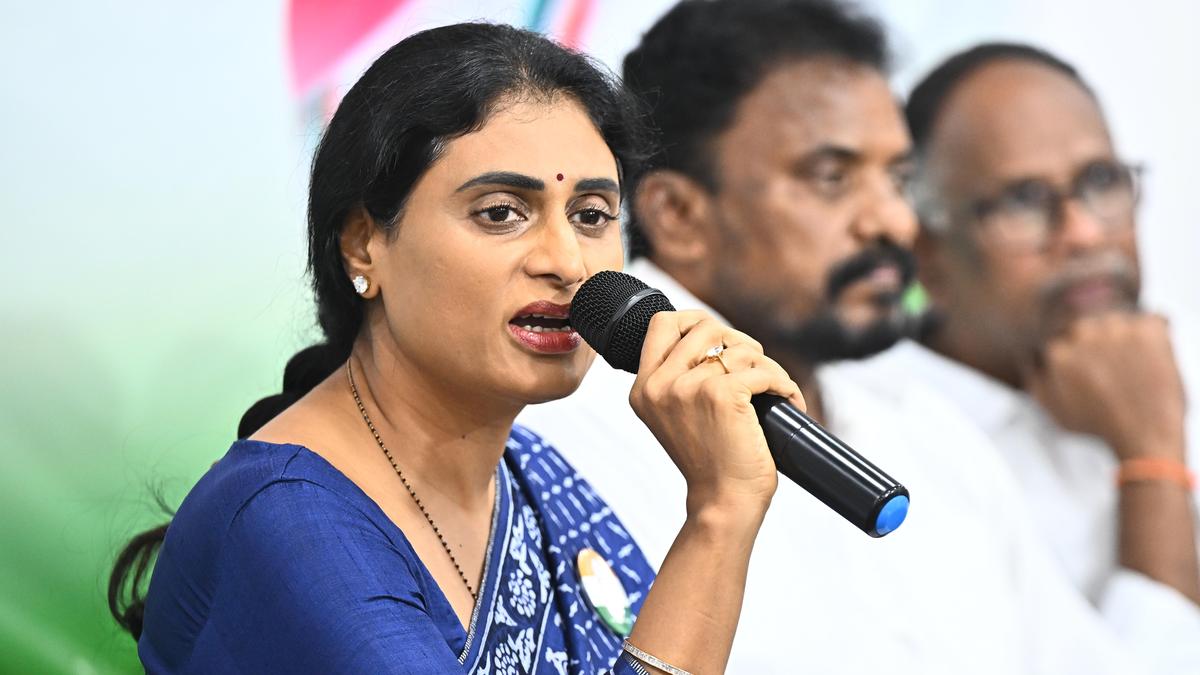
Delhi Chief Minister Rekha Gupta's April 19 broadside against Congress — accusing the opposition of "celebrating women's loss as a victory of democracy" after Parliament defeated the 131st Constitutional Amendment two days earlier — is not really about women's reservation. It is the opening line of the BJP's 2029 campaign, road-tested by the party's most photogenic new woman chief minister two days after Prime Minister Narendra Modi lost his first constitutional amendment vote in eleven years. The women's quota is the political packaging; delimitation of India's Lok Sabha is the product.
The numbers explain why Gupta was sent out first. On April 17, 2026, the Constitution (131st Amendment) Bill fell 298–230 in the Lok Sabha, 62 votes short of the two-thirds majority a constitutional amendment requires, according to the NUS Institute of South Asian Studies. It was the first constitutional amendment defeated under Modi. The package would have expanded the Lok Sabha from 543 to 850 seats using 2011 census data, and implemented the 33 percent women's reservation the government had passed in 2023 but never enforced.
What Gupta actually said, and why she said it
Speaking at the Delhi BJP office on Sunday, April 19, Gupta launched what wire service IANS described as a "broadside" against Congress and its INDIA bloc allies, expressing "remorse" that opposition parties were treating the bill's defeat as a democratic triumph, as reported by Kaumi Marg. Her framing was surgical: the opposition, she argued, had killed a women's empowerment law. She said nothing about the 815-seat state allocation, nothing about the delimitation commission's composition, nothing about the 2011 census base year — the actual objections raised by Rahul Gandhi, MK Stalin and the CPI(M).
That silence is the point. Gupta was chosen as chief minister of a 33-million-person capital in February 2025 in part because she is a first-time legislator with a clean profile and a record on women's welfare — she was passed over Parvesh Verma, whose profile the BBC's Hindi service called "controversial." Her Al Jazeera-reported swearing-in explicitly emphasised her work on "welfare of women and children." In April 2026, that biography is the message. When Gupta accuses the opposition of blocking women's representation, she carries authority the BJP's mostly male frontbench cannot manufacture.
The bill the opposition actually killed
The Modi government convened a three-day special parliament session between April 16 and 18, 2026, and tabled three linked pieces of legislation: the Constitution (131st Amendment) Bill, 2026; the Delimitation Bill, 2026; and the Union Territories Laws (Amendment) Bill, 2026. According to the Carnegie Endowment, the package would have raised the constitutional cap on the lower house from 550 to 867 seats and set the operational maximum at 850 — 815 for states, 35 for union territories.
Home Minister Amit Shah, intervening in the Lok Sabha debate, told MPs the government had "not made any changes to the Delimitation Commission Act; we have repeated the existing Act exactly, down to the full stops and commas." He insisted southern states would gain, not lose: their combined 129 seats would rise to 195 under a uniform 50 percent expansion, keeping their national share near 24 percent. He also promised no delimitation could take effect before 2029.
The opposition rejected the reassurance because the legal text did not match the rhetoric. Rahul Gandhi called the package "an attempt to seize power through delimitation and gerrymandering," as Al Jazeera reported. Arghya Sengupta of the Vidhi Centre for Legal Policy told the
BBC that "the basis for this number [850] is unclear and does not appear to be proportionate to population growth recorded in the 1971 and 2011 census," and that the bill included no similar expansion for state assemblies — creating a mismatch where "fast-growing states could gain more MPs without a corresponding rise in MLAs."
Tamil Nadu CM MK Stalin burned a copy of the bill in Chennai and raised a black flag. Kerala's chief minister called delimitation "a sword of Damocles" hanging over the south. Analysts at the Takshashila Institution concluded the bills, "coming in the backdrop of several state elections, were seen as an affront to federalism and were defeated."
The real prize: North India's seat bonanza
The federal arithmetic is what makes this fight generational, not procedural. Carnegie's modelling, using government population projections, shows that under a purely proportional redistribution Uttar Pradesh would go from 80 seats to 131 and Bihar's tally would jump significantly. Even under the government's promised 50 percent uniform expansion — which preserves relative shares — UP would rise to 120 seats, Bihar to 60, Maharashtra to 72. Both approaches deliver enormous absolute gains to a Hindi belt where the BJP holds deep organisational roots.
Yamini Aiyar, formerly of the Centre for Policy Research, put the political stakes plainly to NPR last year: "Where the BJP has deeper roots — which is largely in the northern and eastern parts of the country — it is more likely to gain, potentially, from expanded representation." Economist Shruti Rajagopalan of George Mason University noted on the same programme that a straight redistrict today would strip southern states of parliamentary voice — the "punishment" southern chief ministers have spent 2025 and 2026 warning against.
That is why the BJP linked women's reservation to delimitation in the first place. The Constitution (106th Amendment) Act of 2023 — the Nari Shakti Vandan Adhiniyam — explicitly ties the one-third women's quota to the completion of a fresh census and subsequent delimitation. As Carnegie's analysts put it: the women's quota "functioned as a vehicle to push through a broader reengineering of India's electoral design." Killing the vehicle without killing the destination is the opposition's tightrope.
Gupta's role in the counter-attack
The BJP's post-defeat playbook was set inside 48 hours. On April 18, Modi took the case to television, telling the nation, per ISAS, that "the opposition has committed a sin by opposing women reservation and they will be surely punished for this" — he accused Congress and its allies of "foeticide" against the bill. On April 19, Gupta led the state-level echo from Delhi.
Her attack lines matter because Delhi is the media capital and because BJP polling suggests women voters delivered the party its 48-of-70 seat sweep in February 2025. Gupta has since spent her tenure emphasising the ₹2,500-per-month stipend to poor women promised in the manifesto — a scheme she told The Indian Express her government "did not want to rush into." Attacking the opposition on women's reservation extends that positioning nationally.
The Home Ministry's own communiqué frames the political line Gupta is now delivering at the state level: "The opposition will have to face the 'anger of women' not just in the 2029 Lok Sabha elections, but at every level, in every election, and at every place." That is not the language of a party that expected the bill to pass. It is the language of a party that always intended the debate.
The falsifiable expert consensus
Senior BJP-friendly analyst Sharad Gupta told BBC Hindi that the defeat is a genuine setback because the government "brought this despite knowing it did not have the numbers" — a tactical loss that let the BJP re-brand the opposition as anti-women ahead of the Tamil Nadu and West Bengal state elections. Hemant Atri, quoted in the same piece, argued the failure damaged the government's credibility more than its agenda.
Both are wrong on the second-order effect. What Gupta is doing in Delhi is proof the BJP always modelled the bill as a two-track bet: a low-probability legislative win, and a high-probability wedge issue. On April 17, track one closed. On April 19, track two opened — and that track runs through the 2027 census, the 2028 delimitation exercise the Home Minister has already scheduled, and the 2029 general election.
Diplomat View
Rekha Gupta's press conference is worth reading as a signal, not a story. The BJP has lost its first constitutional amendment vote under Modi and immediately deployed its highest-profile new woman chief minister to shift the frame from federalism to feminism. Expect this pattern to repeat: every Modi minister and NDA chief minister has been handed a version of the same script and told to run it through the Tamil Nadu, West Bengal, Kerala and 2029 Lok Sabha campaigns. The bill was legislation; the fight is a campaign.
The forecast that follows: a redrawn Lok Sabha will happen — the constitutional clock, tied to the 2027 census results, makes it near-inevitable — but on terms the opposition can extract concessions on, including a written no-loss guarantee for southern states and a specific pro-rata formula in statute. Revise this call if two conditions change: if the BJP wins Tamil Nadu outright in the ongoing state cycle, or if the 2027 census data is released faster than the 18-month baseline. Either would let the government reintroduce the amendment from strength, not from the wounded posture Gupta is now defending. If neither happens, the party will keep running Gupta's script — and losing the vote will have been worth more than winning it.
What to watch next:
- Tamil Nadu assembly election results (2026): DMK's margin against the BJP-AIADMK alliance is the referendum on whether the "south under attack" framing beats the "anti-women opposition" framing.
- 2027 census fieldwork completion: the Home Minister has committed to running delimitation only after this. A delay past mid-2028 pushes redistricting beyond the 2029 general election and forces a third attempt at the amendment.
- The next constitutional amendment vote: whether the NDA rebuilds a two-thirds coalition in the Rajya Sabha after the July 2026 biennial elections. Without it, the 131st Amendment's substance cannot pass, however loudly Gupta attacks the opposition.
The Bottom Line
The bottom line: Rekha Gupta's attack on the opposition is not about the women's quota bill that lost — it is about the delimitation bill the BJP still intends to win. By framing Congress and the INDIA bloc as opponents of women's representation rather than defenders of southern federalism, the BJP is buying itself three years of political cover to reintroduce the same seat-expansion package on stronger numbers. If the strategy works, the April 17 defeat will look, in retrospect, like the day the 2029 campaign began.
Discover more
India
Congress Advocates 33% Women’s Quota
Congress calls for a 33% women's reservation in the existing 543 Lok Sabha seats, countering Modi's plan to expand the house to 850 seats.
India
Modi's Women’s Convention in Varanasi
Modi's Varanasi rally frames women's reservation as a national mission, targeting the 2027 Uttar Pradesh elections with a strategic narrative.

Global Politics
US Seizes Iranian Ship, Tensions Surge
The US seizure of the Iranian ship Touska highlights a shift in control over the Strait of Hormuz, favoring Iran's strategic position.

Economics
Fed's Amex AML order puts correspondent banking on notice
Federal Reserve's Amex AML order requires board-level controls and a 90-day plan; OCC fined the bank $350 million over enterprise-wide deficiencies.