700 Activists Accuse PM Modi of MCC Breach
Over 700 signatories file complaint against PM Modi's address.
Model Diplomat8 min readIndia
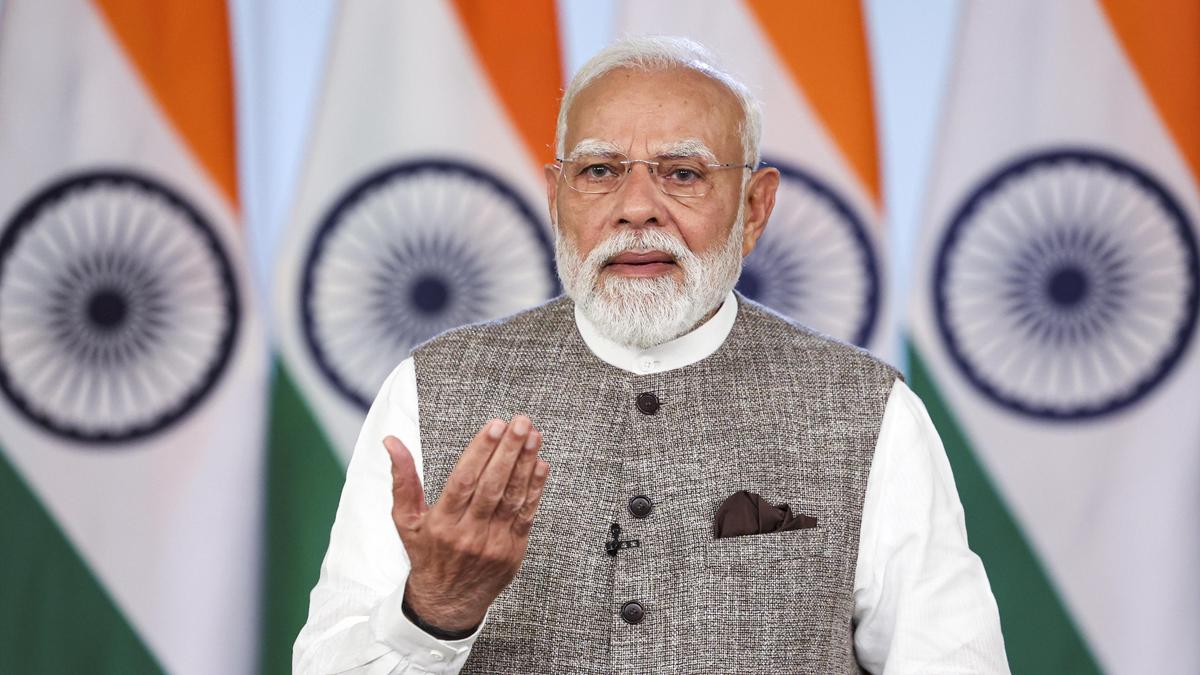
714 Activists Accuse PM Modi of Poll-Code Breach Over TV Address
Over 700 signatories told India's Election Commission on April 20, 2026 that PM Modi's national address on the women's quota bill defeat violated the Model Code of Conduct.
On April 20, 2026, exactly two days after Prime Minister Narendra Modi went on Doordarshan to accuse the opposition of committing "foeticide" by defeating the women's reservation amendment, 714 former civil servants, academics, activists and journalists put their names to a single-page complaint to the Chief Election Commissioner. Their argument is narrow and — on the plain text of the Model Code of Conduct — hard to rebut: the Prime Minister used state-funded broadcasters to attack the Congress, DMK and Trinamool Congress by name, during an active election in five states, three days before Tamil Nadu and West Bengal voted. The letter's real subject is not Modi but the Election Commission of India — a test the ECI failed by choosing not to act, a choice that was politically vindicated on May 4 when the BJP won West Bengal for the first time.
What the letter actually alleges
The complaint, first reported by The Hindu and
The News Minute, calls Modi's April 18 televised address a "clear and blatant" breach of the MCC because it was carried live on Doordarshan, Sansad TV and All India Radio while the code was in force. The signatories — among them former Delhi Lieutenant Governor Najeeb Jung, Congress leader Digvijaya Singh, economist Jayati Ghosh, political economist Parakala Prabhakar, JNU's Zoya Hasan, Carnatic musician T.M. Krishna, psephologist Yogendra Yadav and former IAS officer Harsh Mander — argue that the broadcast "at public expense" constituted "electioneering and partisan propaganda".
The demand is unusually specific. The letter asks the Commission to determine whether Modi obtained prior permission for the address; if he did, to grant "equal time on the national media" to other parties; if he did not, to order removal of the speech from official platforms and take "deterrent action". Outlook and
The Telegraph report the same framing: an "undue advantage" that "undermined the level playing field".
The legal hook is the "Party in Power" section added to the MCC in 1979, which prohibits ministers from combining official visits with electioneering and bars the use of government-funded media for publicity that benefits the ruling party. Election Commission media advisories issued for the 2026 state polls, published by the Press Information Bureau on March 15, reiterated that press "shall not accept/publish any advertisement at the cost of public exchequer regarding achievements of a party/government in power". The 2026 rolling code came into effect the same day, when the ECI announced the schedule for Assam, Kerala, Puducherry, Tamil Nadu and West Bengal.
Why the address was politically necessary — and legally exposed
Modi's speech did not appear in a vacuum. On April 17, the government's Constitution (131st Amendment) Bill, which would have expanded the Lok Sabha to 850 seats and operationalised the 33 per cent women's quota through a 2011-census-based delimitation, was defeated 298–230 — "significantly short of the two-thirds majority needed for a constitutional amendment", according to the NUS Institute of South Asian Studies. It was, ISAS noted, "the first time that under Prime Minister Narendra Modi a constitutional amendment bill failed to receive the required numbers". The
Carnegie Endowment later assessed that the quota "functioned as a vehicle to push through a broader reengineering of India's electoral design" — the real prize being delimitation, not gender parity.
Southern and eastern opposition parties read it that way from the start. Tamil Nadu Chief Minister M.K. Stalin burned a copy of the bill in the Assembly and hoisted a black flag, telling voters the BJP was punishing states that had controlled their populations. When the amendment collapsed, the government had three days before Tamil Nadu and the first phase of West Bengal voted on April 23. Modi's April 18 address — in which he told viewers "[the] opposition has committed a sin by opposing women reservation and they will be surely punished for this" — did exactly what the MCC's party-in-power clause forbids: it named opposition parties, used state broadcast infrastructure, and occurred while the code was operational.
That is the tension the BBC's Hindi service captured in its post-speech analysis, quoting Congress president Mallikarjun Kharge accusing Modi of "the political use of a national address". Even government-friendly analysts told the BBC the timing was engineered: the special session had been called days before the Tamil Nadu and West Bengal votes when it could have waited for the monsoon session.
The Election Commission's structural problem
The ECI's dilemma is well-documented and predates this government. Former Lok Sabha Secretary General P.D.T. Achary has argued for years that the MCC has "no legal binding" and that "the ECI does not take complaints to their logical conclusion", as he put it to Al Jazeera after a similar activist letter campaign in 2019. A 2020 study in Constitutional Resilience in South Asia, archived on
SSRN, found that the Supreme Court has consistently treated the ECI through a "framework of trust" that "has failed to address the serious concerns of the ECI's accountability and transparency".
There is also precedent that cuts the other way. In 2014, the Commission actually filed FIRs against Modi himself for displaying the BJP's lotus symbol outside a polling booth in Ahmedabad, citing Sections 126(1)(a) and 126(1)(b) of the Representation of the People Act, 1951 — a fact recorded in BBC and
Al Jazeera coverage at the time. In 2024, roughly 20,000 citizens petitioned the Commission over Modi's "infiltrators" speech; the Commission issued a notice to BJP president J.P. Nadda but declined to act against Modi personally, per
BBC reporting.
The 2026 letter tests whether that pattern still holds. As of today, July 7, 2026, the Commission has issued no public order on the April 20 complaint. The elections have been held. The Prime Minister's speech remains on official platforms. On May 4, results counted by the Commission itself, and reported by NPR and
Al Jazeera, delivered a BJP majority in West Bengal for the first time in the state's history, ended 15 years of Mamata Banerjee's Trinamool government, and — via the collapse of the DMK to actor Vijay's TVK — dismantled the two Congress-led INDIA-alliance pillars in one day.
Who won by the ECI's silence
The direct beneficiary is the BJP, which took 200 of West Bengal's 294 seats and consolidated women voters the TMC had built its coalition around. Al Jazeera's post-poll analysis found the party had specifically targeted Banerjee's female base with "larger cash transfers and expanded welfare benefits". Modi's speech, delivered while women's-reservation coverage saturated Bengali and Tamil news cycles, was pitched squarely at that constituency.
The second beneficiary is the Election Commission's revised institutional posture. Chief Election Commissioner Gyanesh Kumar, appointed under the 2023 law that replaced the Chief Justice with a Union Cabinet Minister on the selection panel, publicly emphasised "strict enforcement of the Model Code of Conduct" in his April 6 briefing to central observers. The gap between that rhetoric and the non-response to the 714-signature letter is the real story the letter documents.
The losers are more diffuse. Banerjee's TMC and Stalin's DMK — the two regional parties Modi named in the address — lost their strongholds within three weeks. The women's-reservation amendment itself remains inoperable: the Carnegie Endowment notes that the 2023 constitutional amendment ties one-third female representation to "the completion of a fresh census and the subsequent delimitation exercise" — meaning the reform now cannot take effect before the 2027 census results are published, plausibly not before 2029. The civil-society signatories, several of whom — including Harsh Mander — have been under
CBI and FCRA scrutiny since 2024, have again demonstrated the limits of the "eminent citizens' letter" as an accountability instrument in the third Modi term.
For deeper context on this beat, see our coverage of India.
Diplomat View
The 714-signature letter will not produce an ECI ruling against Modi, and everyone who signed it knew that when they signed. Its function is documentary: to place on the record, at the moment the breach occurred, that the party-in-power provisions of the Model Code of Conduct — the specific 1979 additions designed to prevent incumbents from converting government airtime into campaign airtime — went unenforced against a sitting Prime Minister during an active five-state election. That record now matters more, not less, because the May 4 results have effectively removed the political cost of ignoring it: the BJP won the states the address targeted.
Our forecast: expect no formal ECI action on the April 20 complaint before the Commission's response window quietly lapses. Expect at least one signatory to face a follow-up FCRA or CBI inquiry within six months — the pattern is consistent since 2024. And expect the next major test not in a court but in Parliament, when the government reintroduces a delimitation framework after the 2027 census. If that bill is tabled without prior opposition consultation, and if the ECI has by then set a precedent of non-action on ruling-party MCC breaches, the 2029 general election will run on a code that exists on paper and nowhere else. What would change this forecast: an ECI written order — even a mild rebuke — on the April 18 broadcast before December 2026, or a Supreme Court writ admitting the 714-signatory complaint for judicial review. Neither is currently visible.
What to watch
- ECI response deadline: Under the Commission's own norms, complaints filed during a live MCC period are meant to be disposed of before results are declared. The May 4 counting has passed with no order. A formal closure notice, if issued, is the next document to watch for.
- Winter session, Parliament (November–December 2026): Home Minister Amit Shah signalled in his April 17
PIB statement that the government would reintroduce the women's-reservation-plus-delimitation package. A revised bill would test whether the opposition can hold its April 17 coalition together after the West Bengal and Tamil Nadu losses.
- 2027 census publication: The trigger for any legal delimitation exercise, and therefore for actual implementation of the 33 per cent women's quota. The next real fight over India's political map — the one this letter is really a footnote to — begins the day those numbers are released.
The Bottom Line
The 714-signature letter to India's Election Commission is not a request for enforcement; it is a receipt. It documents that on April 18, 2026, a sitting Prime Minister used state-funded broadcasters to attack named opposition parties three days before they faced voters, and that the Model Code of Conduct — the only instrument designed to prevent exactly that — was not enforced. The BJP's May 4 sweep of West Bengal is the answer to whether that non-enforcement had consequences: it did not, which is why it will happen again.
Discover more
India
Modi's Women’s Convention in Varanasi
Modi's Varanasi rally frames women's reservation as a national mission, targeting the 2027 Uttar Pradesh elections with a strategic narrative.
India
Congress Accuses Modi of Stalling Women's Law
Congress accuses Modi of stalling women's reservation law by linking it to delimitation, revealing a deeper electoral strategy.
India
CPI(M) Calls to Decouple Quota from Delimita
CPI(M) advocates for a 33% women's quota in Lok Sabha by 2029, removing the need for delimitation and census linkage.

Economics
Fed's Amex AML order puts correspondent banking on notice
Federal Reserve's Amex AML order requires board-level controls and a 90-day plan; OCC fined the bank $350 million over enterprise-wide deficiencies.