CPI(M) Calls to Decouple Quota from Delimita
CPI(M) seeks to legislate women's quota without delimitation.
Model Diplomat7 min readIndia
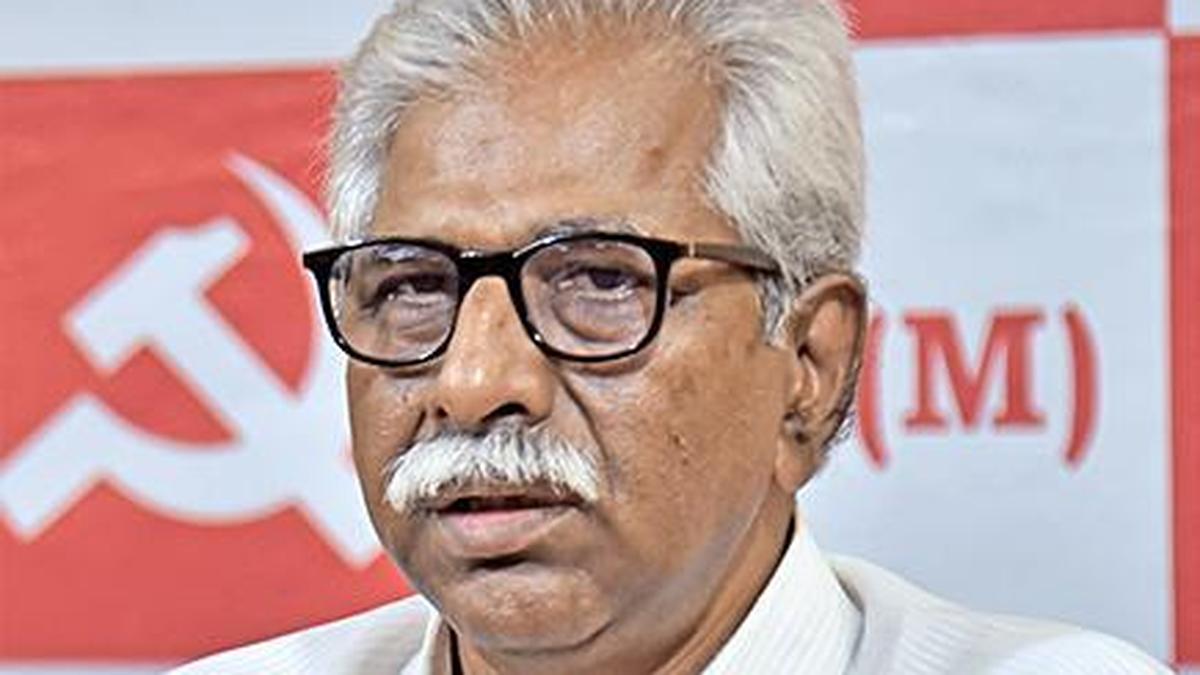
CPI(M) Wants Women's Quota Untied From Delimitation — Now
After the Modi government's 131st Amendment fell 62 votes short on April 17, the CPI(M) is pushing to legislate a 33% women's quota in the existing 543-seat Lok Sabha by 2029 — no delimitation required.
The Communist Party of India (Marxist) is trying to convert a defeat into a template. On April 17, 2026, the Modi government's Constitution (One Hundred and Thirty-First Amendment) Bill — which would have implemented the 2023 women's reservation law by first expanding the Lok Sabha from 543 to 850 seats — fell 298 to 230 in the lower house, short of the two-thirds majority. In the ten days that followed, the CPI(M) turned three open letters and a Polit Bureau statement into a single ask: strip the census-and-delimitation condition out of the Nari Shakti Vandan Adhiniyam and seat one-third women in the current 543-seat house by the 2029 general election. The party's argument matters not because the CPI(M) can carry it alone — with three Lok Sabha MPs, it cannot — but because it offers Congress, the DMK and the Samajwadi Party a legally coherent off-ramp from a fight the government has now visibly lost.
The linkage the CPI(M) wants gone
The 2023 amendment that inserted Articles 330A and 332A into the Constitution contains a sequencing clause: the one-third quota "shall come into effect after an exercise of delimitation is undertaken … after the relevant figures for the first census taken after the commencement." That clause, and not the quota itself, is the CPI(M)'s target. In its April 10, 2026 Polit Bureau statement, the party argued that women's reservation "can be implemented from the 2029 General Election in the given framework which will require an amendment to delink women's reservations from the Census and delimitation."
That framing is deliberate. The 2027 census, formally launched on April 1, 2026 with a March 1, 2027 reference date, according to the BBC, will not deliver processed enumeration data until well into 2027. A Delimitation Commission then typically takes years — the last one, from 2002 to 2008, ran five years. Carnegie's May 2026 analysis of the failed session concluded plainly that under current law "women's reservation — despite being formally enacted — cannot take effect until after the 2027 census is completed and a new delimitation is carried out," per
Carnegie Endowment. Delink the two, and the arithmetic changes: parties would simply designate 181 of the existing 543 constituencies for rotation among women candidates, using the mechanism already available in state-assembly SC/ST reservations.
Why the CPI(M) is loudest on a bill it cannot block
The party's political stake here is narrow but sharp. In the special session, CPI(M) Rajya Sabha MP John Brittas told BBC News the party would "support reserving 33% seats for women based on the current strength of parliament" while opposing any expansion "until population trends stabilise." That is the Kerala-Bengal position: a Left bloc concentrated in states that stand to lose relative weight if the Lok Sabha expands on 2011 census data, but that cannot politically be seen opposing women's representation. Delinkage lets the party do both.
The open letter published on April 20 by CPI(M) Andhra Pradesh secretary V. Srinivasa Rao to Union Civil Aviation Minister K. Ram Mohan Naidu — the senior TDP minister in the Union cabinet — is the operational move, according to The Hindu. The letter pins Naidu on two facts simultaneously: that seat additions promised under the Andhra Pradesh Reorganisation Act, 2014 remain unfulfilled after eleven years, and that a 2011-census-based delimitation would disadvantage Andhra Pradesh through the same population arithmetic that alarms Tamil Nadu. The message to the TDP is that its coalition alignment with the BJP is incompatible with defending its home state's seat share.
The heaviest artillery came from Brinda Karat. In her April 21 open letter to Prime Minister Modi, the veteran All-India Democratic Women's Association leader argued that 180 women MPs could be sworn in without any linkage, The Week reported her writing: "Don't shed tears for us, just act. Bring the women's reservation bill without linkages, without conditions." Karat's letter also invoked the 1996 Geeta Mukherjee Committee report — which examined the original 81st Amendment Bill and recommended straightforward rotation without any census condition — telling reporters, per
The News Mill, that the linkage was "devious." The Mukherjee framework is important because Home Minister Amit Shah, on the government's own
Press Information Bureau release, has publicly credited the same committee as the intellectual origin of the 2023 law. The CPI(M) is quoting the government's own genealogy against it.
The angle everyone missed: the south's real leverage is legal, not electoral
The southern-states story has been framed as demographic grievance — NPR reported Tamil Nadu Chief Minister M.K. Stalin urging couples to have more babies to protect the state's representation. That misses the harder point. The Modi government's April package tried to solve two political problems with one instrument: reset seat allocation on 2011 population data while wrapping the exercise in the politically untouchable cause of women's reservation. When the 131st Amendment fell short on April 17, the wrapping came off. The government now has to defend a delimitation bill on its own merits — with no census closer than 2027, no data closer than 2011, and no obvious constituency for a 300-seat expansion that would concentrate new seats disproportionately in Uttar Pradesh, Bihar and Madhya Pradesh.
That is why CPI(M) General Secretary M.A. Baby's characterisation of the linkage as "devious," reported by The New Indian Express, lands harder than it did in 2023. The Nari Shakti Vandan Adhiniyam passed the Lok Sabha 454–2, according to the
BBC's contemporaneous coverage. Reversing the linkage clause requires only that the same near-unanimous coalition reconvene around a stripped-down amendment — one that touches representation without touching state seat allocations. That is a bill that can pass. The 850-seat expansion, on current numbers, is one that cannot.
What the government's own analysts concede
Even the Al Jazeera account of the special session records BJP MP K. Laxman claiming the delimitation would proceed "pro-rata" so that no state's share falls. But Arghya Sengupta of the Vidhi Centre for Legal Policy, one of the government's most frequent legal interlocutors, told the BBC the "basis for this number is unclear and does not appear to be proportionate to population growth recorded in the 1971 and 2011 census." Carnegie's post-mortem concludes that a "different model of expansion … could also be adapted to implement one-third reservations for women" — the analytic community has effectively conceded the CPI(M)'s technical premise. The dispute is now political, not legal.
There is a subtler point that the party's own Peoples Democracy organ has pressed: the reservation, once implemented, comes with a 15-year sunset clause. Every year the linkage delays implementation is a year subtracted from the effective life of the quota. If the government waits for 2027 census results, subsequent delimitation, and 2034 elections to first apply the quota, the constitutional window closes in 2049 rather than 2044 — a five-year haircut on women's representation delivered as a byproduct of procedure. This is the
India story that most wire coverage has not surfaced.
Forward look: three catalysts to watch
- Winter session (December 2026): whether Congress and the DMK formally table a delinkage amendment as a private-member or opposition bill. Rahul Gandhi's April 16 social-media statement that the government's plan had "no connection to women's reservation," reported by
Al Jazeera, makes that co-sponsorship politically cheap.
- March 31, 2027: the census closing date. Once the data pipeline begins, the government's window to justify a 2011-based delimitation narrows to weeks.
- State assembly elections through 2026–27: in Tamil Nadu and Kerala especially, whether allies of the NDA (TDP, JD(U)) can defend the linkage without conceding ground on state-level seat guarantees.
Diplomat View
The CPI(M)'s demand to decouple quota from delimitation is not a fringe leftist protest — it is now the median opposition position, and after April 17 it is the only technically clean path to implementing the 2023 law by 2029. The forecast: a delinked amendment has a plausible route to two-thirds support in the winter session if Congress makes it a formal ask, because no party can vote against a stripped-down women's quota on the record. The government's counter-strategy will be to bundle the linkage back into a broader "one-nation-one-election" package to raise the political cost of opposition. That is falsifiable. What would revise this forecast: a BJP-DMK deal that guarantees southern seat floors in exchange for delimitation acceptance, or a Supreme Court reference under Article 143 clarifying that Articles 330A and 332A can be operationalised without a fresh delimitation. Absent one of those, the 850-seat expansion is dead, and the CPI(M) has quietly written the epitaph.
The Bottom Line
The linkage between women's reservation and delimitation, sold in 2023 as a technicality, is now the load-bearing wall of the Modi government's electoral redesign — and the CPI(M) has spotted that pulling one brick brings the whole structure down. If the delinkage amendment reaches the floor before the 2027 census closes, India gets 181 women MPs by 2029 without redrawing a single boundary. If it does not, the quota slips to 2034, and the 15-year sunset clock eats five years of promised representation before it starts.
Discover more
India
Congress Advocates 33% Women’s Quota
Congress calls for a 33% women's reservation in the existing 543 Lok Sabha seats, countering Modi's plan to expand the house to 850 seats.
India
Congress Accuses Modi of Stalling Women's Law
Congress accuses Modi of stalling women's reservation law by linking it to delimitation, revealing a deeper electoral strategy.

India
Delhi CM Rekha Gupta Blasts Opposition's Delm
Delhi CM Rekha Gupta's remarks on women's quota defeat reveal BJP's strategy for the 2029 Lok Sabha elections, focusing on delimitation.

Economics
Fed's Amex AML order puts correspondent banking on notice
Federal Reserve's Amex AML order requires board-level controls and a 90-day plan; OCC fined the bank $350 million over enterprise-wide deficiencies.