Congress Accuses Modi of Stalling Women's Law
The real fight is over delimitation and electoral control.
Model Diplomat8 min readIndia
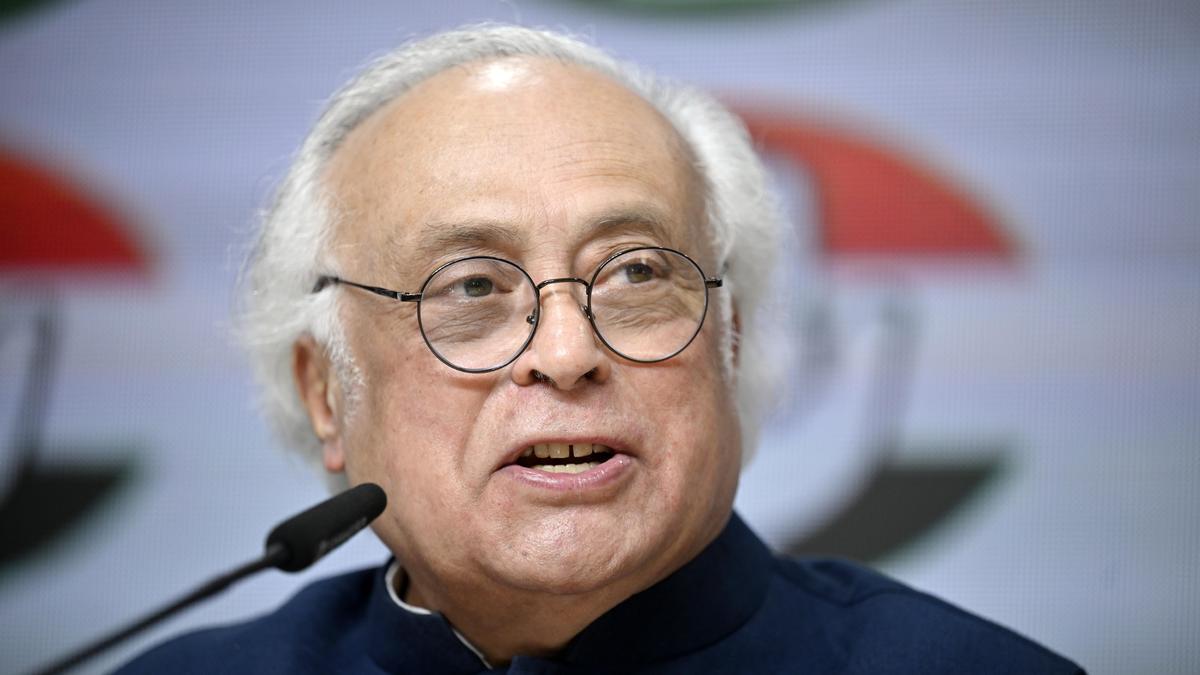
Congress Accuses Modi of Stalling Women's Law — the Real Fight Is Delimitation
Congress says Modi is stalling the Nari Shakti Vandan Adhiniyam. The evidence: he tied a 33% women's quota to a delimitation vote he knew he would lose.
The Indian National Congress has spent the summer accusing Narendra Modi of "stalling" the women's reservation law he himself signed in September 2023 — but the more revealing charge, made by Jairam Ramesh on April 21 and repeated through July, is that the prime minister deliberately fused a popular gender quota to an unpopular constituency redraw, then blamed the opposition when the package collapsed on the floor of the Lok Sabha by 298 votes to 230. The row is no longer about whether 33% of parliamentary seats will go to women. It is about who controls the map on which those seats sit — and the Congress calculation is that a defeated Modi is a more useful Modi than one who quietly implements the law after the 2027 census.
What the Congress is actually alleging
The Nari Shakti Vandan Adhiniyam — the Constitution (106th Amendment) Act, notified by the government on 28 September 2023 — reserves one-third of seats in the Lok Sabha, state assemblies and the Delhi assembly for women. The catch was written into the statute: reservation "shall come into effect after an exercise of delimitation is undertaken … after the relevant figures for the first census taken after the commencement" of the act, a sequencing constraint set out in the
ISAS-NUS brief issued days after passage. In plain English: no census, no delimitation, no quota.
Congress's argument in April 2026 — hardened over the ninety days since — has three moving parts. First, Sonia Gandhi in 2017 and Rahul Gandhi in 2018 wrote to Modi urging immediate implementation without waiting for delimitation; the party made those letters public on April 21, 2026, telling the New Indian Express that the government had "slept" on the demand for eight years. Second, when Modi finally moved in April 2026, he did so through the 131st Constitutional Amendment Bill, which bundled women's reservation with an expansion of the Lok Sabha from 543 to 850 seats and a delimitation using 2011 census data. Third — and this is the load-bearing claim — the government tabled that bill knowing the NDA's 293 seats fell 67 votes short of the 360-vote two-thirds threshold,
as Al Jazeera reported on April 16.
The vote confirmed the arithmetic. The ISAS-NUS post-mortem records the 298–230 defeat on April 17, 2026 as "the first time that under Prime Minister Narendra Modi a constitutional amendment bill failed to receive the required numbers." The
Ministry of Parliamentary Affairs confirmed in its official session summary that once the 131st Amendment fell short under Article 368(2), "the two dependent Bills namely the Union Territories Laws (Amendment) Bill, 2026, and the Delimitation Bill, 2026 were not proceeded further."
The trap inside the bill
The Modi package looked, on paper, like a fast-tracking. It was the opposite. The 2023 statute required a 2027 census before any woman could be elected on a reserved seat. The 131st Amendment offered to skip that queue — but only by anchoring the redraw to 2011 population data, expanding the house by 307 seats and letting all the new seats be filled through a delimitation controlled by a commission the government would appoint. The BBC's explainer captured the objection cleanly: opposition parties, especially the four southern states of Tamil Nadu, Kerala, Karnataka and Telangana, feared that a population-based redraw would penalise regions with lower fertility and stronger economies, transferring seats and influence to the Hindi belt where the BJP dominates.
Arghya Sengupta of the Vidhi Centre for Legal Policy told the BBC that the choice of 850 seats had no clear demographic basis and that the bill created "a mismatch: fast-growing states could gain more MPs without a corresponding rise in MLAs." Tamil Nadu Chief Minister M.K. Stalin called the plan a "massive historic injustice." The Carnegie Endowment's May 2026 analysis is blunter: the government's package used the women's quota as "a vehicle to push through a broader reengineering of India's electoral design."
That is the Congress thesis. Rahul Gandhi told the house during the two-day debate, according to ISAS-NUS, that the exercise had "nothing to do with empowering women. It is an attempt to change the country's electoral map, using and hiding behind India's women." Congress parliamentarian Gaurav Gogoi, quoted in
Al Jazeera's coverage, described the manoeuvre as introducing delimitation "through the backdoor."
Who benefits from the deadlock
Follow the beneficiaries.
Modi, having lost the vote, has redeployed the defeat as an electoral cudgel. In a rare address to the nation on April 18, he told the country he was "sorry" to India's women, blamed Congress, the DMK, the TMC and the Samajwadi Party for the failure, and warned — as BBC Hindi reported — that the opposition had committed a "sin" for which women voters would punish them. On April 22,
Home Minister Amit Shah told Parliament that the opposition "will have to face the anger of women" in the 2029 election and at "every level, in every election, and at every place." That is not the language of a party that wanted the bill to pass. It is the language of a party that wanted the fight.
Congress benefits, too, from the same failure. The Al Jazeera post-election review noted that in 2024 Congress's share of the women vote climbed to 22% — modest, but 2 points above 2019, and the first time in a decade the party outperformed among women. Every month the reservation stays unimplemented, Congress retains a live grievance. The Rahul-Sonia letters, timed for release after the defeat, are not new arguments — they are receipts.
Southern regional parties are the biggest structural winners. The freeze on delimitation, in place since the 1971 census, preserves a Lok Sabha in which Tamil Nadu, Kerala, Karnataka and Telangana together hold roughly 130 seats. A 2011-based redraw would have cut that share sharply. By defeating the bill under cover of "women's rights," the DMK's Stalin secured a federal victory that any explicit anti-delimitation campaign would have struggled to deliver.
Women — the ostensible subjects of the law — are where the ledger runs red. India ranks 152nd of 181 national legislatures on women's representation, according to the Congressional Research Service report of May 2026, with women holding 14.6% of parliamentary seats against a global average of 27.4%. The
Congressional Research Service's 2024 India brief recorded that women's share of the Lok Sabha actually fell slightly after the 2024 election. The
Observer Research Foundation notes that India lags Nepal (34%), Bangladesh (21%) and Pakistan (20%) — and every state assembly except West Bengal sits below 15% female membership.
The historical parallel
Congress's charge of political calculation has a precedent that cuts against it. Amit Shah invoked it directly on April 22, telling Parliament that "in 1976, during the Emergency, the then Prime Minister halted delimitation in order to retain power, and even today, it is the principal opposition party that is working to stall delimitation" — a reference to Indira Gandhi's freeze on constituency redraws, extended in 2002 by the Vajpayee government and still in force. The BJP's argument is that Congress has been the historic beneficiary of the freeze; the Modi package was, on this reading, an overdue correction.
The Congress counter is that the 2023 law it voted for did not require a pre-2027 delimitation, and did not need one to reserve one-third of the existing 543 seats for women. That interpretation is disputed by legal readings of Articles 330A and 332A introduced by the Constitution (106th Amendment) Act, which explicitly tie the quota to a fresh delimitation. But it is not implausible: the CPI(M)'s John Brittas
told the BBC his party would back 33% reservation "based on the current strength of parliament," a position that would let the reform proceed without a redraw. That is the compromise Congress now says the government refused to consider.
Second-order effects
Three consequences follow.
First, the census that began on April 1, 2026 — a two-phase, three-million-enumerator exercise scheduled to finish population enumeration in February 2027 — has become the single most consequential political document in India for the rest of the decade. It will fix the numerator and denominator for both delimitation and women's reservation. It will also, for the first time since 1931, count caste — a variable Congress has demanded and the BJP has resisted for a decade.
Second, the defeat resets the parliamentary arithmetic. The NDA's 293 seats leave the government dependent on floor management with regional parties for any constitutional amendment. The Takshashila Institution's post-mortem argues that the government's failure to consult before tabling the bill turned a technically implementable reform into "an affront to federalism." Modi's second-term legislative agenda — uniform civil code, election reform, further delimitation — now has to reckon with the fact that the opposition can, when it holds together, block him.
Third, the women's reservation itself is now bound to a slower, more contested track. Under the existing 2023 law, and as the Carnegie Endowment notes, reservation "cannot take effect until after the 2027 census is completed and a new delimitation is carried out" — a sequence that pushes real implementation to the 2029 general election at the earliest, and quite possibly to 2034.
What to watch
The next decision points are close. Parliament's monsoon session, expected to convene in late July 2026, is where the government must decide whether to re-table a slimmer amendment — 33% reservation on existing seats, no expansion, no interim delimitation — or hold the line and let the issue run into the assembly polls in Tamil Nadu and West Bengal. Modi has already, per ISAS-NUS, taken the fight to campaign rallies in those states. The second date to mark is the completion of the census's population phase in February 2027; publication of the results, likely late 2027 or 2028, will start the constitutional clock on delimitation.
The Bottom Line
The bottom line: Congress is not defending women's reservation from Modi — it is defending the electoral map from him, using women's reservation as the shield. The 131st Amendment's defeat on April 17, 2026 was not an accident of arithmetic; it was the predictable outcome of a government that bundled a popular reform with an unpopular redraw and dared the opposition to reject both. Until the 2027 census delivers a number that neither side can dispute, India's 33% quota for women will remain what it has been since 2023 — a law on the books, and a weapon in the campaign.
Discover more
India
Congress Advocates 33% Women’s Quota
Congress calls for a 33% women's reservation in the existing 543 Lok Sabha seats, countering Modi's plan to expand the house to 850 seats.

India
Delhi CM Rekha Gupta Blasts Opposition's Delm
Delhi CM Rekha Gupta's remarks on women's quota defeat reveal BJP's strategy for the 2029 Lok Sabha elections, focusing on delimitation.
India
Modi's Women’s Convention in Varanasi
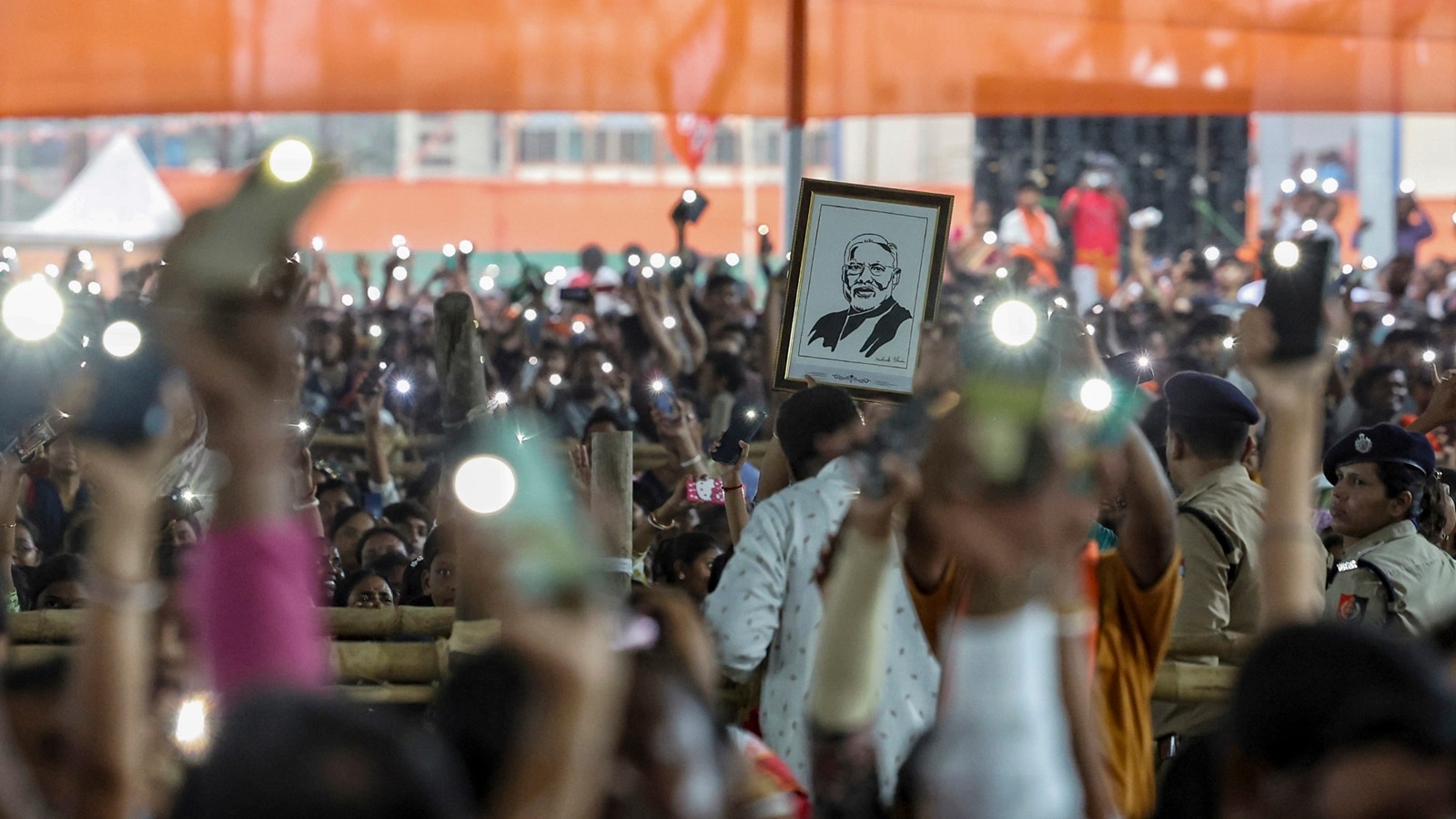
Modi's Varanasi rally frames women's reservation as a national mission, targeting the 2027 Uttar Pradesh elections with a strategic narrative.

Economics
Fed's Amex AML order puts correspondent banking on notice
Federal Reserve's Amex AML order requires board-level controls and a 90-day plan; OCC fined the bank $350 million over enterprise-wide deficiencies.