For the complete documentation index, see llms.txt.Skip to main content
Topic
News & analysis tagged Ata — diplomacy, politics, and global affairs coverage from Model Diplomat.
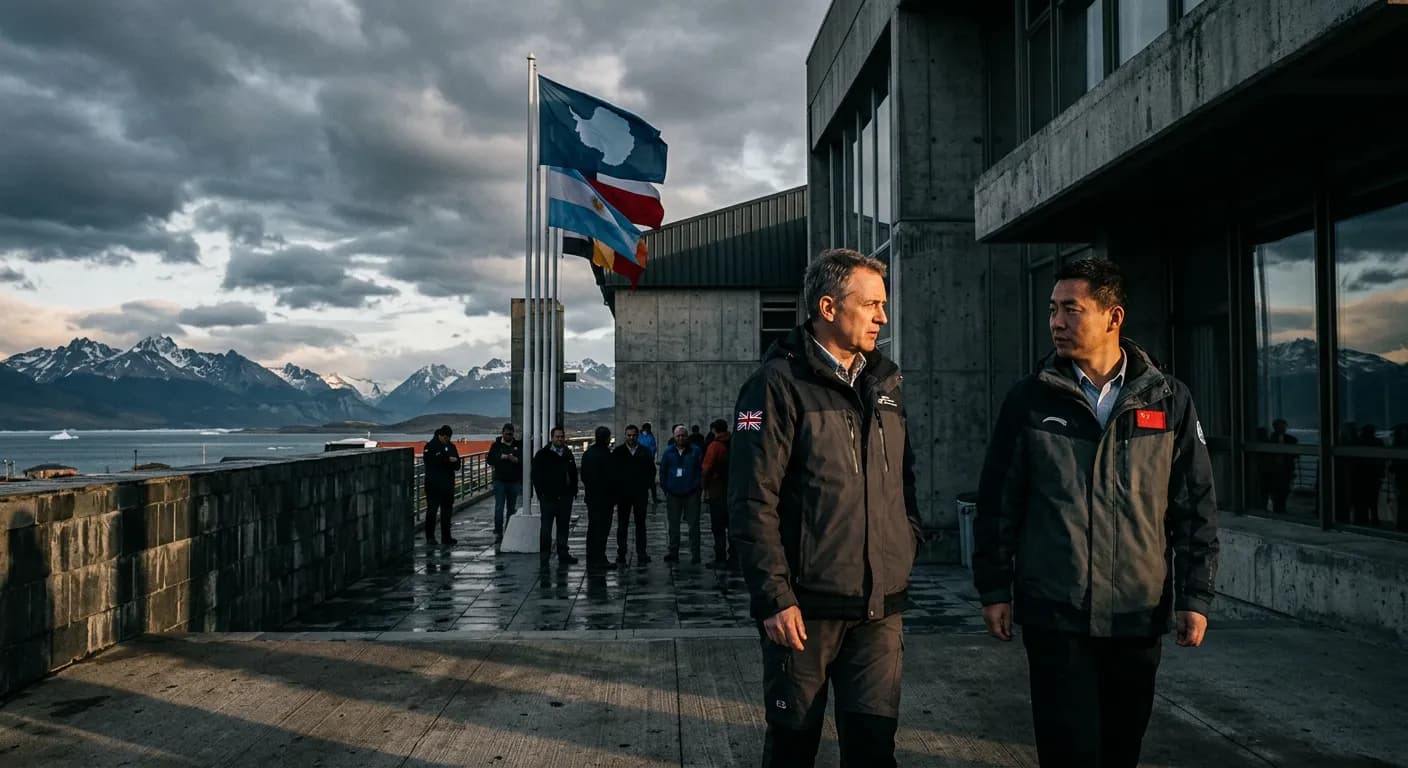
Summary: - The report analyzes how geopolitical and environmental developments are drawing increased international attention to Antarctica and the Southern Ocean, with potential political, economic, and security implications for the United States and other nations. - Key geopolitics issues include the growing presence of China and Russia, potential implications for the Antarctic Treaty System (ATS), and how expanding activities (research, krill fishing, tourism, and new resea
2026-06-24Summary: The Strategist argues that the Antarctic Treaty System is deteriorating amid global great-power tensions. Despite decades of cooperative governance, major powers are disengaging from treaty processes, with reduced use of working papers and limited consensus at the latest Antarctic Treaty Consultative Meeting. The piece notes Australia’s comparatively small defence investment and its exposure to Antarctic governance as a security and diplomacy issue. It highlights Rus
2026-06-21Summary: The article argues that Antarctica’s status under the 1961 Antarctic Treaty is under renewed strain as major powers reassert influence. It notes: - The treaty preserves peaceful, scientific use and freezes territorial claims, but rising great-power competition and a weaker rules-based order threaten the status quo. - The scene is complicated by climate change (rapid warming and potential ice-melt consequences) and by strengthened national security postures and sphere
2026-06-20Summary: The article traces the evolution of United States policy toward Antarctica, highlighting a shift from a primarily scientific and environmental focus to a more geopolitically aware and security-conscious stance. Key points: - The Antarctic Treaty System (ATS) governs the region to ensure peace, scientific cooperation, and environmental protection. - US policy documents show a progression: 1982 and 1994 memoranda emphasized science and environment; 2020 memorandum intr
2026-06-20Summary: A Soufan Center briefing argues that Antarctica is a developing arena for strategic competition, with China emerging as a key player. Beijing has built and plans further infrastructure (permanent and seasonal research stations, icebreakers, satellites) and is advancing capabilities in data collection, technology, and logistics under the guise of scientific exploration. This growth could yield dual-use advantages (satellite, communications, climate data, possible sign
2026-06-20Antarctica is entering a high-stakes strategic era. After years of relative tranquility, great-power competition—especially involving the United States, China, and Russia—threatens the continent’s stability and the rules-based Antarctic Treaty System. Key points: - The Antarctic status quo is fraying as climate change reshapes the environment and geopolitical competition intensifies, elevating the continent on global political agendas. - The presence of major powers on the g
2026-06-19- The article argues for a robust, America-first U.S. policy toward Antarctica, advocating a comprehensive strategy similar to the Arctic approach. - Key elements proposed: - Increased U.S. presence on the continent: funding and modernization of current stations, plus construction of new stations to project influence. - Resupply and enforcement capabilities: fully resourced air/sea logistics, more polar-capable aircraft, and icebreakers; capability to inspect Chinese/Russ
2026-06-10