Antarctic Treaty at 65: Resilience or Erosion
Examining the Antarctic Treaty System's challenges and resilience.
Model Diplomat4 min readantarctica
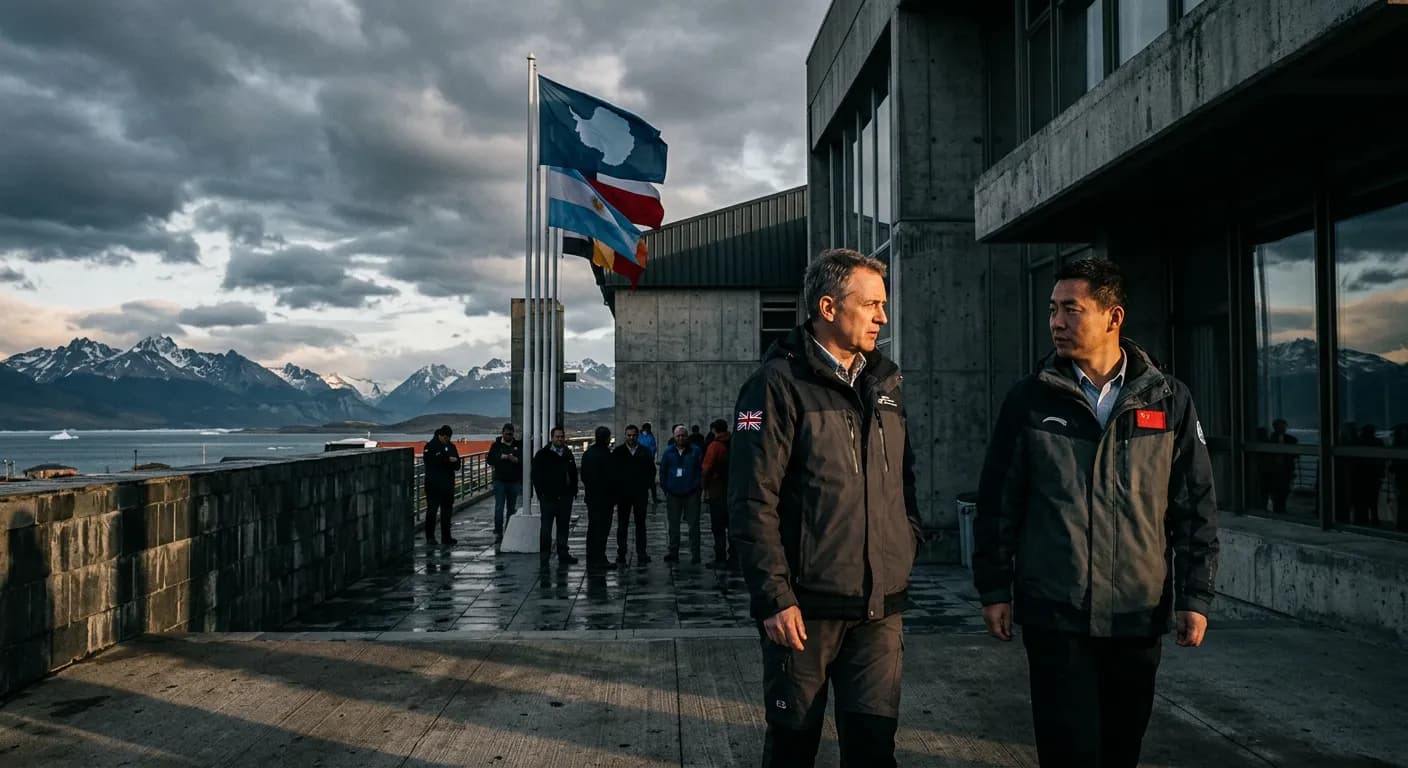
The Antarctic Treaty at 65: Resilience or Slow Erosion?
The system has survived every crisis thrown at it. But the nature of today's threats — and who's wielding them — is different.
The Antarctic Treaty System has kept a continent at peace for over six decades. That is not in dispute. What is newly contested, as Marcus Haward argues in the The Polar Journal, is whether analysts are undervaluing that resilience. Haward examines ten internal and external challenges across the ATS's lifespan — from the collapse of the minerals convention (CRAMRA) in the late 1980s to the United Nations "Question of Antarctica" debate — and concludes that in every case, "adroit diplomacy and enduring commitment to sustaining the Treaty's principles" carried the system through. His central claim: the system's demonstrated resilience has not reached its limits, and hand-wringing about current tensions overstates the danger.
The evidence on the ground complicates that optimism.
The case for resilience — and its limits
Haward's framework is worth taking seriously. The ATS did not merely survive the Cold War; it was born during it, in 1959, when 12 nations — including Cold War rivals — agreed to freeze territorial claims, demilitarize the continent, and dedicate it to science. CRAMRA's collapse in 1989 looked existential at the time; it instead produced the 1991 Madrid Protocol, which banned mining and created the strongest environmental protection regime on Earth. The system absorbed Argentina and Britain fighting a war in 1982 without either side repudiating the Treaty. It withstood the UN General Assembly's challenge from Malaysia in the 1980s, which framed Antarctic governance as a colonial-era club.
Haward's point, echoed by the Lowy Institute, is that diplomatic walkouts and sharp statements at recent meetings — prompted by Russia's invasion of Ukraine — are conflict being managed within the system, not evidence of its breakdown. The inspection mechanisms under Article VII remain functional. In 2019–20, 11 on-site inspections were conducted. The institutions are working.
What's different now
The counter-narrative, advanced by Foreign Affairs,
The Economist, and a 2023
RAND Corporation study, identifies structural differences from past crises.
First, the consensus rule is being weaponized, not just tested. The Commission for the Conservation of Antarctic Marine Living Resources (CCAMLR) has not established a single new marine protected area since the Ross Sea MPA in 2016. China and Russia have blocked three major MPA proposals for nearly a decade, as documented by the Wilson Center. Russia went further in 2022, vetoing toothfish fishing near South Georgia in a direct rebuke to the United Kingdom — not on conservation grounds, but as geopolitical payback. This is not adroit diplomacy resolving a standoff. It is two powers learning that the system's design lets them paralyze it indefinitely.
Second, the technology has changed. Dual-use capabilities — satellites, drones, remote sensing — blur the line between scientific research and military surveillance. China's civil-military fusion doctrine, now enshrined in law, requires civilian research to have military application. When China opened its fifth Antarctic research station, Qinling, in February 2024 with 460 personnel, the Treaty permitted it. But as CSIS noted in April 2025, China and Russia announced coordinated expansion plans while the United States was cutting $60 million in critical Antarctic funding. The party that built the system is reducing its stake in it.
Third, the 2048 horizon changes incentives. The Madrid Protocol's mining ban can be reviewed after 2048. RAND's tabletop exercise found that "states are very likely to exploit resources, both on land and in the seas around the Antarctic, to undermine the ATS" — not necessarily through open repudiation, but through hedging strategies that establish presence now for leverage later. The Konrad-Adenauer-Stiftung assessment is blunt: China benefits from the status quo today but is positioning to push for a mining amendment when the window opens.
What to watch
Haward is right that past resilience is real data. But his challenge to critics — "articulate why future threats are more damaging than those in the past" — has an answer forming in real time. The difference is not the severity of any single challenge but the simultaneity of external geopolitical fracture (Ukraine, BRICS polarization, US retrenchment), internal gridlock (CCAMLR's decade-long MPA blockade), and technological transformation that the Treaty's 1959 language was never designed to regulate.
The next decision point is the 2026 Antarctic Treaty Consultative Meeting. If the inspection regime is strengthened and at least one MPA moves forward, Haward's resilience thesis gains ground. If another year passes with neither, the erosion narrative hardens. The 2048 review is what everyone talks about — but the system's fate will be decided well before, in annual meetings where the same two countries keep saying no.
Discover more
US Politics
House Ethics Committee Pushes Sexual Miscond.
The House Ethics Committee has shifted responsibility for sexual harassment settlement records to the Office of Congressional Workplace Rights, complicating disclosure efforts.

US Politics
SNAP Food Assistance Faces Legal Challenges
In 2026, SNAP faces stricter eligibility rules and mounting legal challenges, threatening food assistance for the millions of Americans who rely on the program.

India
Vijay's Political Rise vs Silent Tamil Nadu
Actor Vijay's popularity surges across Tamil Nadu even as campus student politics fades, raising fresh questions about youth engagement and future power.

Conflict & Security
Drone Warfare Killing Aid Workers at Unprec
Over 1,000 humanitarian workers killed in three years as cheap armed drones collapse legal protections. Gaza, Sudan, Ukraine, and DRC see deliberate targeting of aid convoys and hospitals with zero prosecutions.