SNAP Food Assistance Faces Legal Challenges
Tightened SNAP eligibility and benefits spark legal conflicts.
Model Diplomat3 min readUnited States
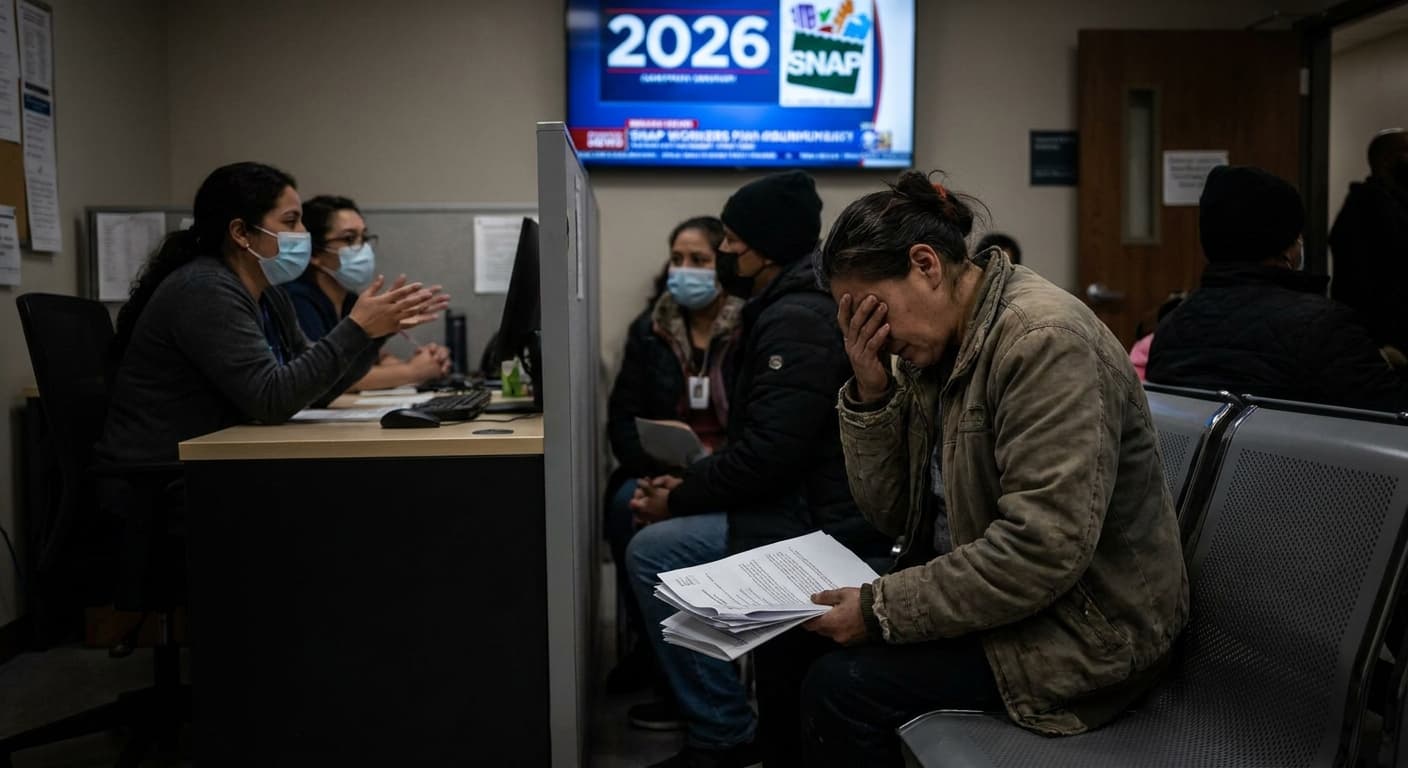
SNAP food fight intensifies with stricter rules and legal battles in 2026
SNAP faces tighter eligibility, reduced benefits, and state-level legal challenges, deepening uncertainty for 42 million Americans reliant on food assistance.
The Supplemental Nutrition Assistance Program (SNAP), America’s core food aid for 42 million low-income residents, is in a heated political and legal conflict in 2026. Recent tightened rules and contested funding have escalated tensions between the federal government, states, and advocacy groups. These shifts are reshaping access to SNAP benefits amid ongoing budget disputes and court cases.
A tightening of SNAP rules and benefits
The Biden administration’s policy changes, enacted under budget constraints and legislative mandates from previous years, have significantly narrowed SNAP eligibility and benefit levels. As of February 1, 2026, new work requirements lengthen mandatory employment or training participation for recipients, with fewer waivers permitted for states to extend benefits in areas below a 10% unemployment rate. This move aligns with a broader $186 billion funding cut plan through 2034 initiated in fiscal policy discussions from 2019 onward.
Complicating the landscape, the USDA ordered in late 2025 that states stop issuing full SNAP benefits for November and revert to partial payments — roughly 65% of the prior norms. This directive followed Supreme Court intervention in disputes over federal contingency funding usage. The partial payments disruption has persisted into 2026, creating real-time hardships and administrative challenges for states and recipients alike. As CNN reported, states face potential penalties if they don’t comply with these reduced issuance rules, intensifying uncertainty for roughly one in eight Americans who depend on SNAP.
The stakes: states push back, legal fights escalate
The most visible flashpoints have emerged from a coalition of 25 Democratic-led states and Washington, DC, suing the federal government to block the cuts and funding restrictions. They argue that halting or reducing SNAP benefits without proper appropriations violates federal law and threatens millions with increased food insecurity. The USDA counters that contingency funds are not authorized for ongoing benefit issuance beyond emergency periods, setting up a climactic legal and political showdown.
This state-versus-federal clash signals a longer-term struggle over the future structure and funding of food assistance in the US. The litigation and executive actions come amid broader political battles over social safety net spending and federal-state relations.
What to watch next
For policymakers and analysts, the crucial developments will be court rulings on the lawsuit and legislative responses to SNAP’s funding gap. Key dates include impending Supreme Court decisions and Congressional budget negotiations that might restore or further cut SNAP funding.
State-level implementation will remain uneven depending on political leadership and economic conditions, with monitoring needed in states with rising unemployment—where waivers could allow extended benefits. Watch for the impact on vulnerable populations: families with children, seniors, and disabled individuals will disproportionately bear the brunt of tightened rules and partial payments.
This battle highlights the deepening division in US social policy debates and the increasingly fraught dynamic of federal food aid administration. The outcome will reverberate through domestic politics and public health, shaping the contours of poverty alleviation for years.
For further context on US political divisions affecting federal programs, see our United States political profile and broader coverage of
Global Politics.
Sources:
SNAP food stamp program tougher rules started Feb, 1 - USA Today
USDA orders states to stop issuing full SNAP benefits - CNN
Democratic-led states sue Trump administration over SNAP funds - CNN
Discover more

US Politics
Next Generation Republicans
A leaked survey shows 39% of Republicans under 30 do not identify as MAGA, revealing a split in the GOP's future leadership.

Economics
Fed's Amex AML order puts correspondent banking on notice
Federal Reserve's Amex AML order requires board-level controls and a 90-day plan; OCC fined the bank $350 million over enterprise-wide deficiencies.

Conflict & Security
Guatemala: El Niño 2026–27 becomes regional security test
UNICEF: 25.8M children face El Niño risks in Latin America; Guatemala maps 188 municipalities for drought and food insecurity amid regional security test.

Economics
Fed's stress-test overhaul is a capital-smoothing exercise
Federal Reserve finalized stress-test overhaul: two-year averaging for bank capital buffers and public input, expected to halve volatility.