Women’s Quota Bill Fails in Lok Sabha
India's 33% women’s reservation bill faces major setback
Model Diplomat3 min readIndia
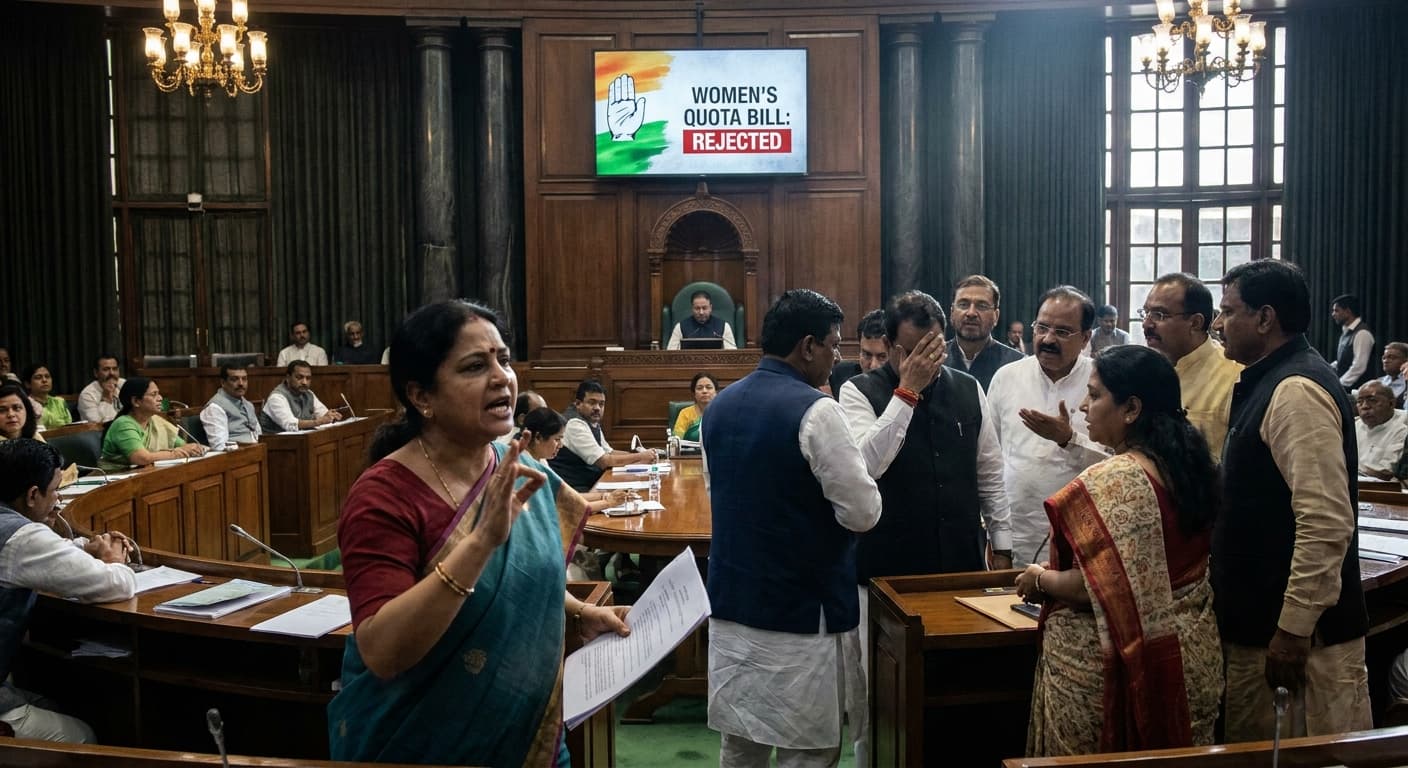
Women’s Quota Bill Fails in Lok Sabha, Modi’s Gender Reform Hits a Wall
India’s 33% women’s reservation bill for Parliament and state assemblies falls short of the two-thirds majority needed for constitutional amendment.
On April 17, 2026, the Indian Lok Sabha dealt a significant setback to Prime Minister Narendra Modi’s government by failing to pass the Constitution (131st Amendment) Bill, 2026, aimed at reserving one-third of seats for women in the Lok Sabha and state legislative assemblies. The bill secured only 298 votes in favor, missing the two-thirds supermajority threshold required for a constitutional amendment.
Why the Women’s Quota Bill Mattered
This bill was more than a symbolic gesture. India remains one of the world’s largest democracies with one of the lowest representations of women in Parliament. Currently, women hold under 15% of Lok Sabha seats, contrasting sharply with the EU average of over 30%. The proposed 33% reservation for women was designed to accelerate gender parity in India’s notoriously male-dominated political landscape and align India with global gender quotas seen in countries like Rwanda and Spain.
The failure to reach the two-thirds majority was a blow to Modi’s government, which holds a strong parliamentary majority but could not persuade enough opposition or even some ruling party MPs. This suggests persistent resistance rooted in entrenched political, social, and regional interests that view such quotas as disruptive or threatening to existing power structures.
Moreover, the bill required ratification by at least half of India’s state legislatures and final approval by the Rajya Sabha (upper house)—steps that now face a tumultuous path given this initial parliamentary impasse. Without clearing the Lok Sabha hurdle decisively, the bill’s prospects are dimmer than ever.
Political Underpinnings and Opposition
Notably, several opposition parties, as well as dissenters within Modi’s coalition, expressed concerns over the quota’s implementation mechanisms and feared that reservation could undermine meritocracy or reinforce identity politics without addressing broader gender inequalities.
This failure also reflects the complex balance Modi’s BJP tries to maintain between progressive reforms and conservative constituency dynamics. While socially conservative factions within the party and allies may have balked at the idea of mandated female representation, Modi’s government had banked on this reform to showcase its commitment to women’s empowerment ahead of key state elections later this year.
What to Watch Next
-
Rajya Sabha and State Legislatures: If the government opts to revive the bill, expect intense lobbying in the Rajya Sabha and among state assemblies. Opposition parties will likely leverage this to gain concessions or stall further.
-
Policy Alternatives: Modi’s government may pursue alternative, less politically contentious measures to boost women’s political participation without constitutional amendments, such as incentives for parties to field more women candidates.
-
Election Impact: This setback may influence voter perceptions, particularly among women voters and urban electorates, potentially reshaping campaign narratives across India’s states in 2026.
India’s struggle with this gender quota bill underscores the persistent friction between aspirations for modern, inclusive democracy and the realities of deeply embedded social and political interests. For Modi’s government, it is a clear message: progressive reforms requiring consensus remain challenging even with parliamentary dominance.
For ongoing updates on India’s political reforms and gender policies, see India and
Global Politics.
Discover more
India
BJP's Women's Reservation Bill Controversy
The BJP faces backlash over the Women's Reservation Bill as the DMK accuses it of political exploitation during a heated and pivotal Lok Sabha session in Delhi.
India
Congress: Modi's Delimitation Manipulation
Congress accused the Modi government of using delimitation to consolidate power in Jammu and Kashmir, urging it be separated from the women's reservation bill.
India
Former Leaders Endorse Women's Reservation
Pratibha Patil, Meira Kumar, and Mayawati backed the 33% Women's Reservation Bill, uniting behind a push to expand women's political representation in India.

Conflict & Security
Drone Warfare Killing Aid Workers at Unprec
Over 1,000 humanitarian workers killed in three years as cheap armed drones collapse legal protections. Gaza, Sudan, Ukraine, and DRC see deliberate targeting of aid convoys and hospitals with zero prosecutions.