Modi Calls Women's Reservation Bill Rejection
How Modi turned a legislative loss into a political win
Model Diplomat8 min readIndia
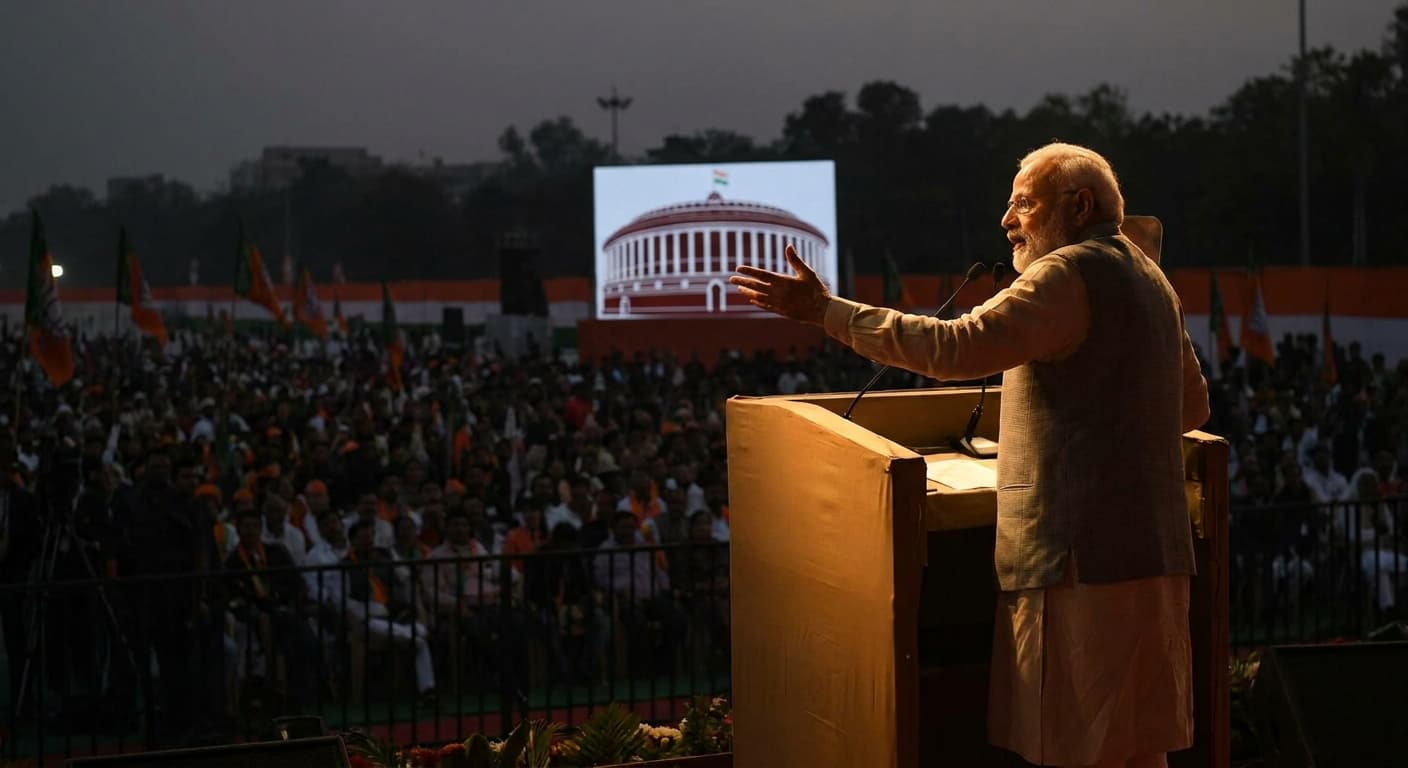
Modi's Women's Quota Defeat Becomes a 2029 Election Weapon
Modi apologised to India's women after the Lok Sabha voted 298-230 to reject the 131st Amendment on April 17, 2026. Here is what the defeat actually delivers.
On April 18, 2026, Prime Minister Narendra Modi delivered a televised address apologising to Indian women after the Lok Sabha voted 298-230 the previous evening to reject the Constitution (One Hundred and Thirty-First Amendment) Bill, 2026 — the legislation the government insisted was needed to bring the long-pending women's reservation into force by 2029. The core story is not the apology. It is that a bill sold as a gender reform was, on the legal text, a delimitation bill; that its defeat has already reshaped a state election; and that Modi's Bharatiya Janata Party is now using the loss as a more valuable political asset than the law itself would have been. Modi lost the vote and won the narrative — and in India's political economy right now, that is the harder trade to execute.
The vote fell 62 short of the 360 needed for a two-thirds constitutional majority, according to BBC Hindi's tally of the division. It is the first constitutional amendment the Modi government has proposed and lost in 12 years in office, a fact underscored by
BBC Marathi's post-vote analysis. The defeat came from a bloc the government named directly the next morning: Congress, the Samajwadi Party, Mamata Banerjee's Trinamool Congress, and M. K. Stalin's Dravida Munnetra Kazhagam. Three weeks later, on May 4, 2026, the BJP took West Bengal from Banerjee for the first time in the state's history, a result
NPR called a mid-term strengthening of Modi's third-term position. The apology was already doing work.
What was actually in the bill
The Nari Shakti Vandan Adhiniyam, 2023, notified on 28 September 2023 as the Constitution (One Hundred and Sixth Amendment) Act, already reserves one-third of Lok Sabha and state assembly seats for women. The Union Law Ministry brought the 2023 Act into force on April 16, 2026, per
BBC Hindi's reading of the government notification issued that Thursday. The bill Modi lost the next day was not that Act. It was the machinery to trigger it.
The Carnegie Endowment's post-mortem by Louise Tillin and Milan Vaishnav sets out the package in three parts. The 131st Amendment Bill would have raised the Lok Sabha cap from 550 to 850 seats, allocated up to 815 to states and 35 to Union Territories, and stripped the constitutional requirement that reapportionment follow every census — handing Parliament discretion over which census to use. A companion Delimitation Bill would have redrawn constituencies and rotated women's reserved seats. A Union Territories Laws (Amendment) Bill completed the package. The rationale, Carnegie writes, was to enlarge the Lok Sabha by 50 percent, with the new seats becoming the vehicle for the women's quota so no sitting MP was displaced.
That is where the bill lost its coalition. Rahul Gandhi told the House the package was "merely an attempt to seize power through delimitation and gerrymandering," according to Al Jazeera's account of the April 16 debate. Congress MP Gaurav Gogoi called it delimitation "through the backdoor." The Vidhi Centre for Legal Policy's Arghya Sengupta told the
BBC that the 850-seat cap had no proportional basis in either the 1971 or 2011 census figures, and that no matching expansion was proposed for state assemblies — meaning fast-growing northern states would gain MPs without a corresponding rise in MLAs. Sanjay Kumar of the Centre for the Study of Developing Societies added, in the same
BBC report, that the bill also did not spell out how women's constituencies would be selected in an 850-seat chamber, particularly among Scheduled Caste and Scheduled Tribe reserved seats.
The southern veto
The real defeat vector was the south. The five southern states — Tamil Nadu, Andhra Pradesh, Karnataka, Kerala and Telangana — hold roughly 20 percent of India's 1.4 billion population but 24 percent of Lok Sabha seats, a gap that has widened as their fertility rates fell below replacement. India's Total Fertility Rate dropped to 1.9 in the Sample Registration System report released by the Registrar General in May 2026, down from 3.3 in the early 2000s, and southern states are a full decade ahead of that national curve. Bihar's population grew by roughly 215 percent between 1971 and the 2011 census, Kerala's by only 70 percent — the arithmetic on which any honest reapportionment would gut southern political weight, per Carnegie's
reference dataset.
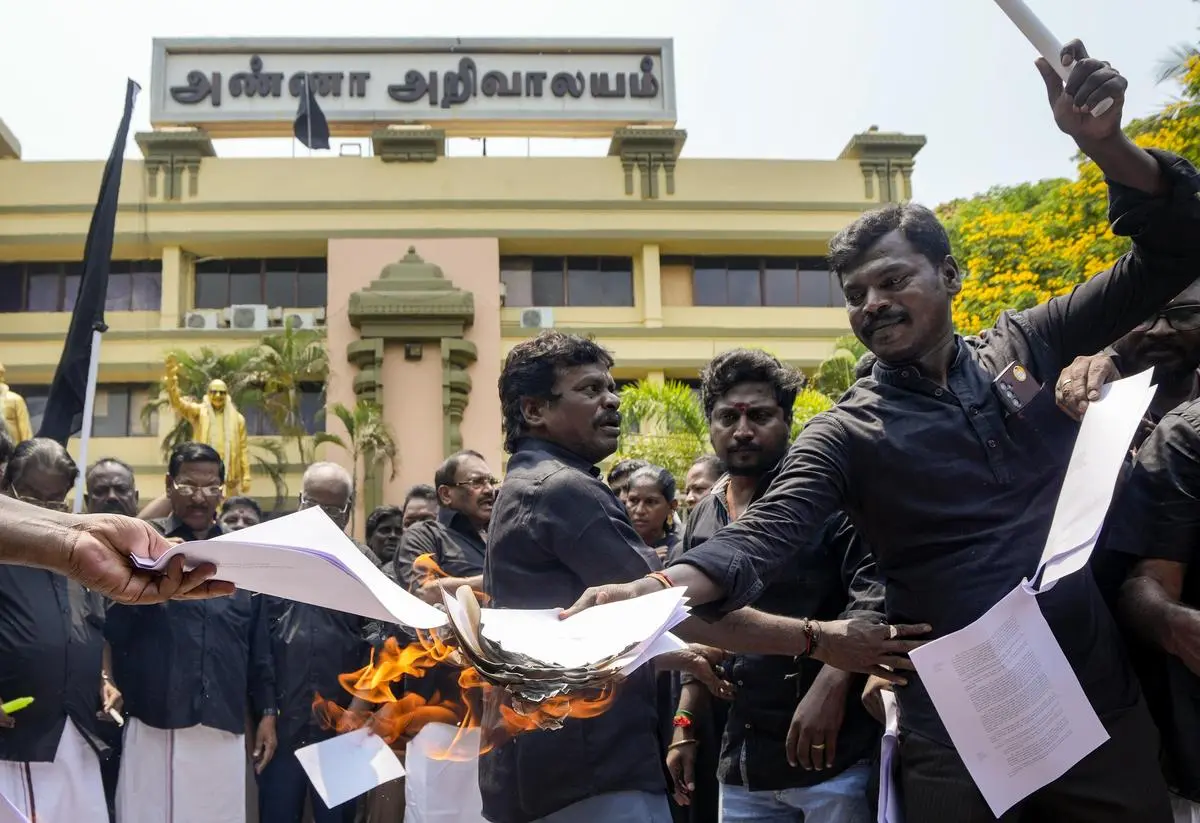
Home Minister Amit Shah's Press Information Bureau statement tried to pre-empt the objection with arithmetic: the south's 129 seats would rise to 195 after a 50 percent uniform expansion, moving its national share only marginally, from 23.76 to 23.87 percent. The legal text, Carnegie notes, contained no such guarantee — a gap the Vidhi Centre flagged in real time. Tamil Nadu Chief Minister M. K. Stalin burned a copy of the bill and hoisted a black flag outside his residence, telling supporters, "Let the flames of resistance spread across Tamil Nadu" and calling the plan a "massive historic injustice," per the
Al Jazeera report and a follow-up
BBC dispatch from Chennai. The DMK, TMC, Samajwadi Party and CPI(M) walked their MPs out or voted against. That — not any BJP defection — is what produced the 62-vote shortfall.
Why the government picked this fight it could not win
Modi's National Democratic Alliance holds 293 seats in the Lok Sabha, Al Jazeera reported, 67 short of a two-thirds constitutional majority. The government knew the math before it convened the April 16-18 special session. Senior journalist Vijay Trivedi told
BBC Hindi the exercise was designed to build a narrative that the opposition is against women, and journalist Adesh Rawal added, in the same report, that the specific target was the West Bengal assembly election, then weeks away. The Takshashila Institution's
post-mortem agreed the bills were "seen as an affront to federalism and were defeated," while noting the 850-seat expansion would not actually solve Parliament's core dysfunction — India's average MP already represents 2.5 million people and the chamber sits for fewer days each year.
The political calculus was straightforward. A 2023 Institute of South Asian Studies brief had already flagged that the BJP waited until the end of Modi's second term to pass the underlying Nari Shakti Vandan Adhiniyam, and that "the women's quota will not be implemented before 2029 or even later" — done "most likely with an eye on its impact on women voters in the coming assembly polls and next general election." The April 2026 defeat monetised the same asset a second time. If the bill had passed, credit would have to be shared with the parties that helped provide the 360 votes. Failed, it was owned exclusively by the opposition Modi named on April 18.
The Bengal payoff
That accounting was settled on May 4, 2026. The BBC's Bengal report recorded the BJP crossing the majority mark in the 294-seat assembly, ending Mamata Banerjee's 15-year rule. The Lokniti-CSDS post-poll data cited in that report showed TMC's female vote share in 2021 had touched 50 percent — four points higher than among men — the exact demographic Modi's April 18 address targeted when he said "the women of the country will never forgive" the parties that blocked the bill, according to
BBC Hindi's transcript. Modi's line was more surgical than sermon. He named Congress, DMK, TMC and Samajwadi Party by initial in that address — the same four he named the previous night on X, per
BBC Hindi.
Banerjee's defeat, BBC analyst Mukulika Banerjee argued, reflected "single-party dominance" as much as local anti-incumbency; the TMC had fielded 52 women candidates and still lost her women-first coalition. There is a broader lesson buried there for the four opposition parties still standing: opposing a bill Modi framed as a women's reform, even for defensible federalist reasons, cost the female vote share that had insulated regional incumbents for a decade. The DMK, which faces its own Tamil Nadu poll in 2026, is now trying to reconvert the delimitation issue into a state-rights argument rather than a gender one — with mixed early results, per
BBC News.
The historical parallel
The women's reservation bill has died in Parliament four times before — 1996, 1998, 1999 and 2008 — most memorably in physical scuffles in the Rajya Sabha well, as Al Jazeera catalogued in a 25-year retrospective. What is new in 2026 is not the failure. It is the framing. Earlier defeats were charged to regional parties defending OBC sub-quotas. This one has been charged to regional parties defending southern federalism — a fight the BJP is delighted to keep having in every state assembly election through 2029. Congress's own
historical position has been that the delay is symbolic, not procedural. That argument is much harder to make now that the party voted against the operational mechanism.
What to watch
Three catalysts will decide whether the April defeat sticks as opposition liability or fades:
- Late 2027 census publication. India's ongoing decennial count began in April 2026 and will
conclude in 2027. Once results land, the constitutional freeze imposed by the 84th Amendment lapses. The government can then bring a fresh delimitation bill with actual 2027 population figures — removing the "why 2011 data" objection.
- Tamil Nadu assembly election, 2026. The DMK's ability to convert its April walkout into a state-rights mandate is the first electoral test of whether opposing the bill has a southern upside big enough to offset the national female-vote cost.
- 2029 general election. The Nari Shakti Vandan Adhiniyam remains on the statute book but inoperative without delimitation. If Modi wins a fourth term with a two-thirds bloc, the 131st Amendment returns in a stronger form. If he loses ground, the compromise offered by CPI(M) — 33 percent within the existing 543 seats — becomes the operative floor.
The Bottom Line
The Constitution (131st Amendment) Bill was not a women's reservation bill; it was a delimitation bill riding a women's reservation vehicle, and the four opposition parties that killed it did so to protect the southern seat share they will lose whenever India's political map is finally redrawn. Modi lost the vote 298 to 230 and immediately converted the defeat into a targeted attack on Congress, DMK, TMC and the Samajwadi Party — an attack that helped deliver West Bengal to the BJP 17 days later. The bill's real value to Modi was always higher as a failed vote than as an implemented law, and the results of May 4, 2026 have proved that calculation correct.
Discover more

India
Modi's Nari Shakti Gambit
Modi's Varanasi speech redefines women's empowerment as a Nari Shakti gambit, blending appeals for women's votes with the contentious delimitation debate.
India
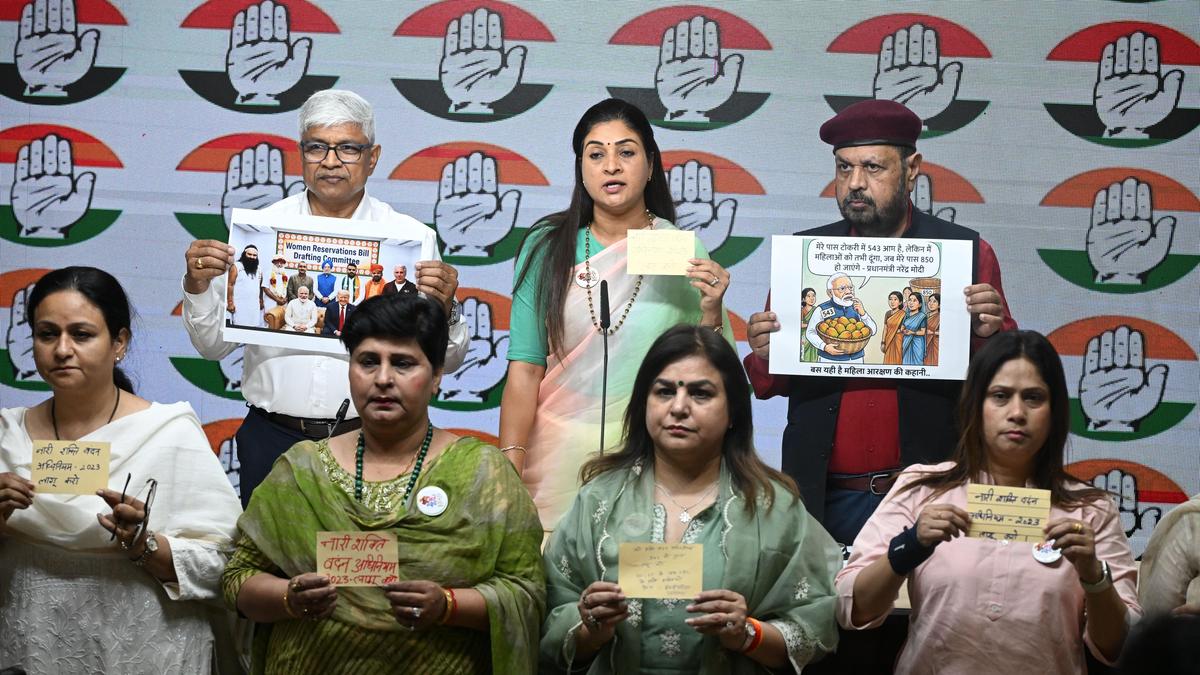
Mahila Congress Postcard Push for Women's Quo
The Mahila Congress launches a postcard campaign to demand immediate implementation of the 33% women's reservation in India's Lok Sabha, targeting PM Modi.
India
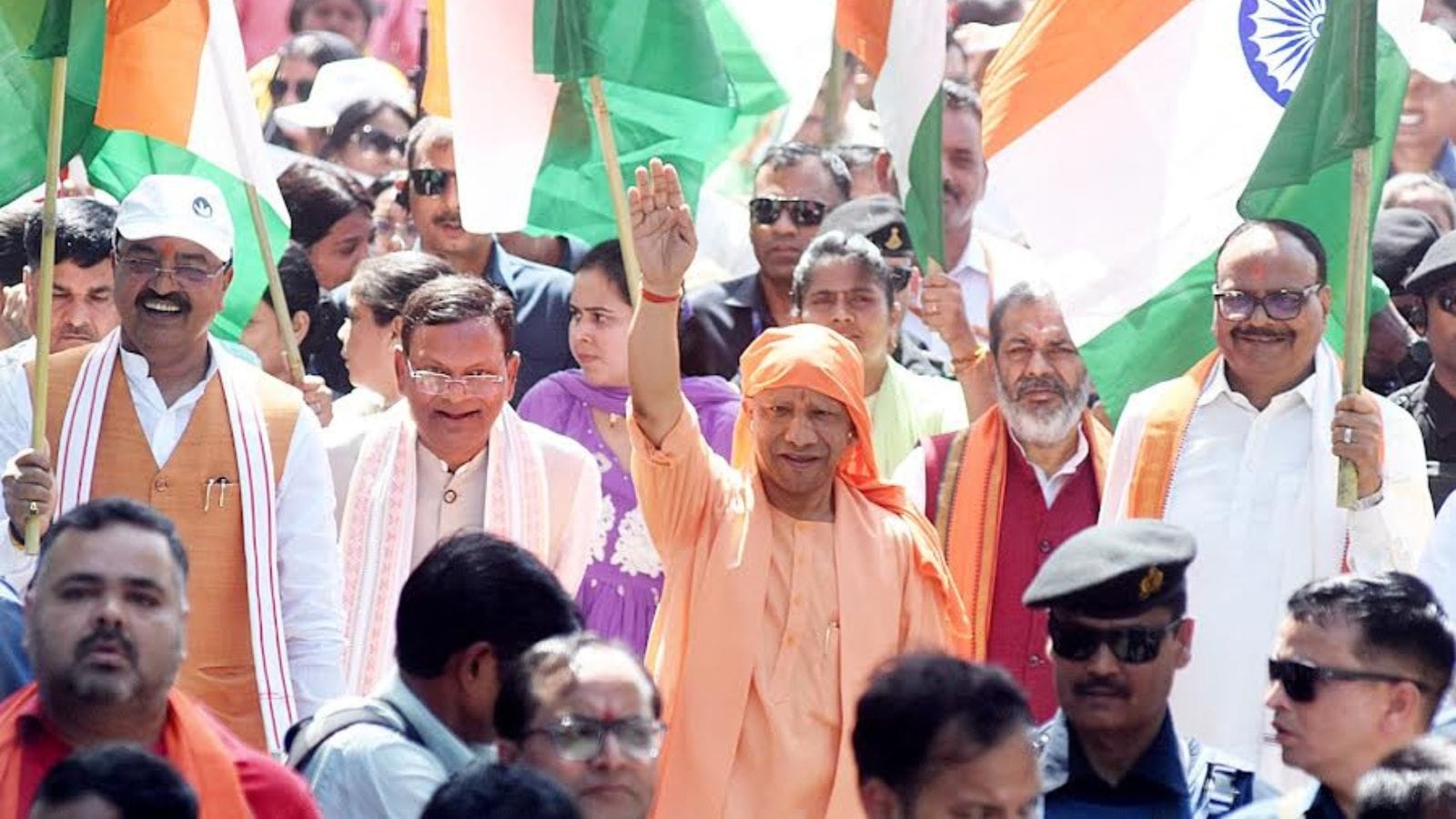
Yogi Adityanath's BJP March on Women's Bill
Yogi Adityanath's padyatra after the women's bill defeat aims to reshape UP's 2027 elections, targeting women's votes against the SP.
India
Women’s Reservation Bill 2026
The Constitution (131st Amendment) Bill, 2026 was defeated in Lok Sabha, revealing deeper political conflicts over women's reservation and delimitation.