Gandhi Challenges Modi's Nicobar Project
Rahul Gandhi rallies youth against $11 billion project.
Model Diplomat3 min readAsia
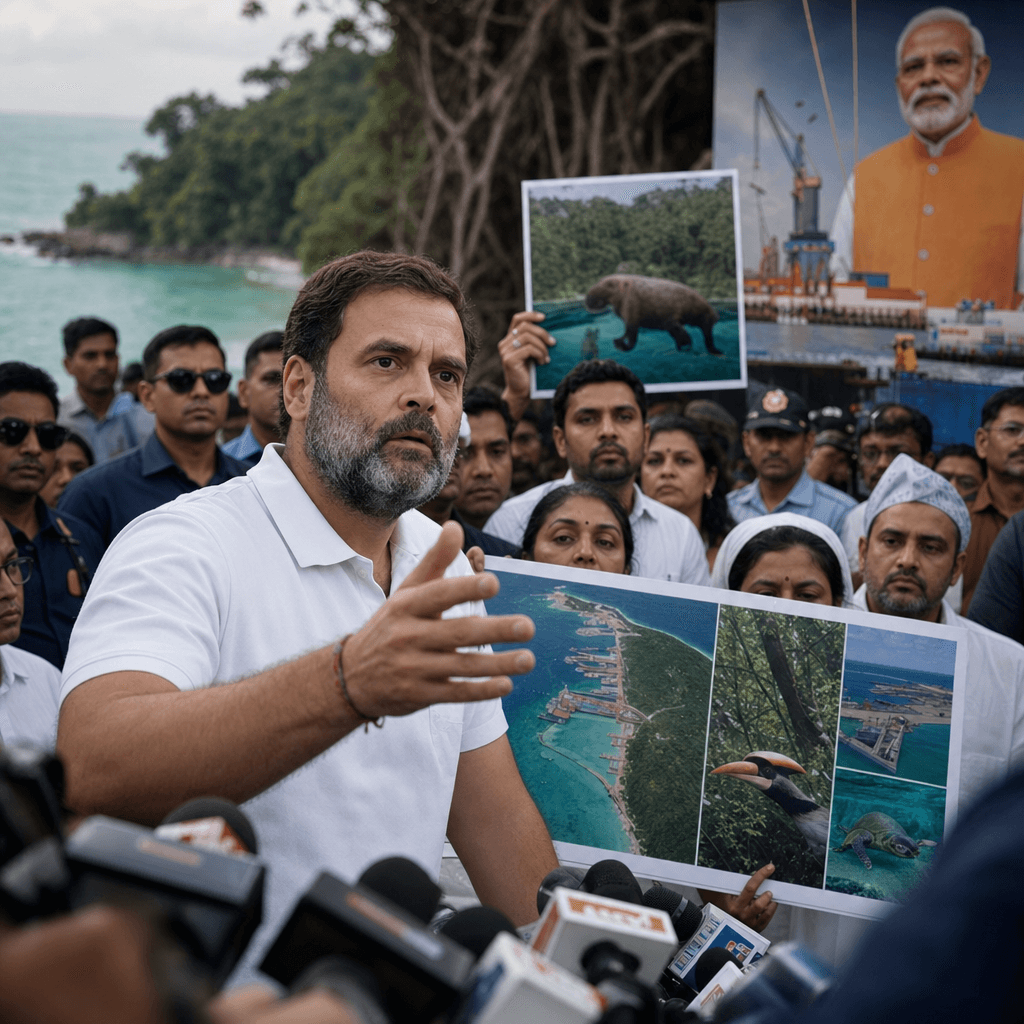
Nicobar Mega-Project: Gandhi Targets Modi’s Indian Ocean Stronghold
Rahul Gandhi leverages World Environment Day to build youth opposition against Modi’s $11 billion Great Nicobar project, turning a strategic defense outpost into a domestic political battleground.
On June 5, 2026, Rahul Gandhi transformed a highly insulated national security priority into a volatile focal point of domestic political dispute by urging India's youth to mobilize against the government's flagship Great Nicobar Island (GNI) project. According to The Indian Express, the Leader of the Opposition used a World Environment Day message to characterize the $11 billion enterprise as "destruction dressed in development's language." The targeted appeal to younger voters aims to turn localized environmental and tribal concerns into a nationwide opposition movement, testing the government's resolve on its most ambitious maritime outpost.
A Strategic Chokepoint on the Malacca Strait
The GNI mega-project, spanning 166 square kilometers at the southernmost tip of Indian territory, is estimated to cost between $9 billion and $11 billion. The master plan calls for a transshipment container port, an international military-civilian airport, and a massive greenfield coastal city. As reported by Al Jazeera, Indian defense planners view the island as a Hormuz-like chokehold capable of checking China’s maritime expansion near the mouth of the Strait of Malacca. By placing defensive and commercial infrastructure at this critical junction, New Delhi seeks to command the primary sealanes of the Indian Ocean.
The Ecological and Tribal Toll
However, this strategic imperative is colliding with catastrophic ecological and social costs. The project requires clearing up to 130 square kilometers of pristine rainforest—equivalent to nearly one million trees—and overlaps directly with the ancestral lands of the Shompen, an isolated hunter-gatherer tribe of fewer than 400 people. A group of 39 international experts warned in a letter to the presidency that the development constitutes a "death sentence" for the tribe due to their lack of immunity to outside diseases, according to the BBC. By amplifying these concerns alongside allegations of cronyism, Gandhi is positioning the Congress party as the defender of vulnerable indigenous communities against corporate state overreach.
Climate Politics as the New Battleground
This clash reflects a broader shift in the political economy of India, where environmental costs are increasingly difficult to isolate from national security debates. The ruling Bharatiya Janata Party (BJP) has responded by accusing the opposition of actively sabotaging national security to the benefit of foreign adversaries. Yet, with the country enduring intense climate pressures, including record-breaking heatwaves, the opposition sees a strategic opportunity in
Global Politics. By mobilizing youth around ecological preservation, Congress is attempting to expose the government's vulnerability on environmental governance, translating climate anxiety into direct electoral pressure.
What to watch next is whether the opposition can leverage this campaign to trigger judicial intervention. The immediate pressure point centers on pending petitions before India’s National Green Tribunal and the Supreme Court, which could halt initial land clearing. Clearances for the port are already facing legal challenges, and the upcoming parliamentary session will serve as the next major arena. Opposition lawmakers are expected to demand a full parliamentary inquiry into the project’s environmental impact, forcing the Modi administration to decide if it will compromise on project timelines to mitigate domestic political fallout. *
Discover more
India
Rajnath Singh's Durga Squad for 2026 Polls
Rajnath Singh's Durga Squad promised women's safety in Bengal but has since disappeared from the agenda, revealing BJP's true priorities.
India
Modi's Women’s Convention in Varanasi
Modi's Varanasi rally frames women's reservation as a national mission, targeting the 2027 Uttar Pradesh elections with a strategic narrative.
India
Congress Accuses Modi of Stalling Women's Law
Congress accuses Modi of stalling women's reservation law by linking it to delimitation, revealing a deeper electoral strategy.

Conflict & Security
Drone Warfare Killing Aid Workers at Unprec
Over 1,000 humanitarian workers killed in three years as cheap armed drones collapse legal protections. Gaza, Sudan, Ukraine, and DRC see deliberate targeting of aid convoys and hospitals with zero prosecutions.

