USMCA Annual Reviews Create Trade Uncertainty
Annual reviews turn USMCA into a leverage tool for the U.S.
Model Diplomat8 min readNorth America
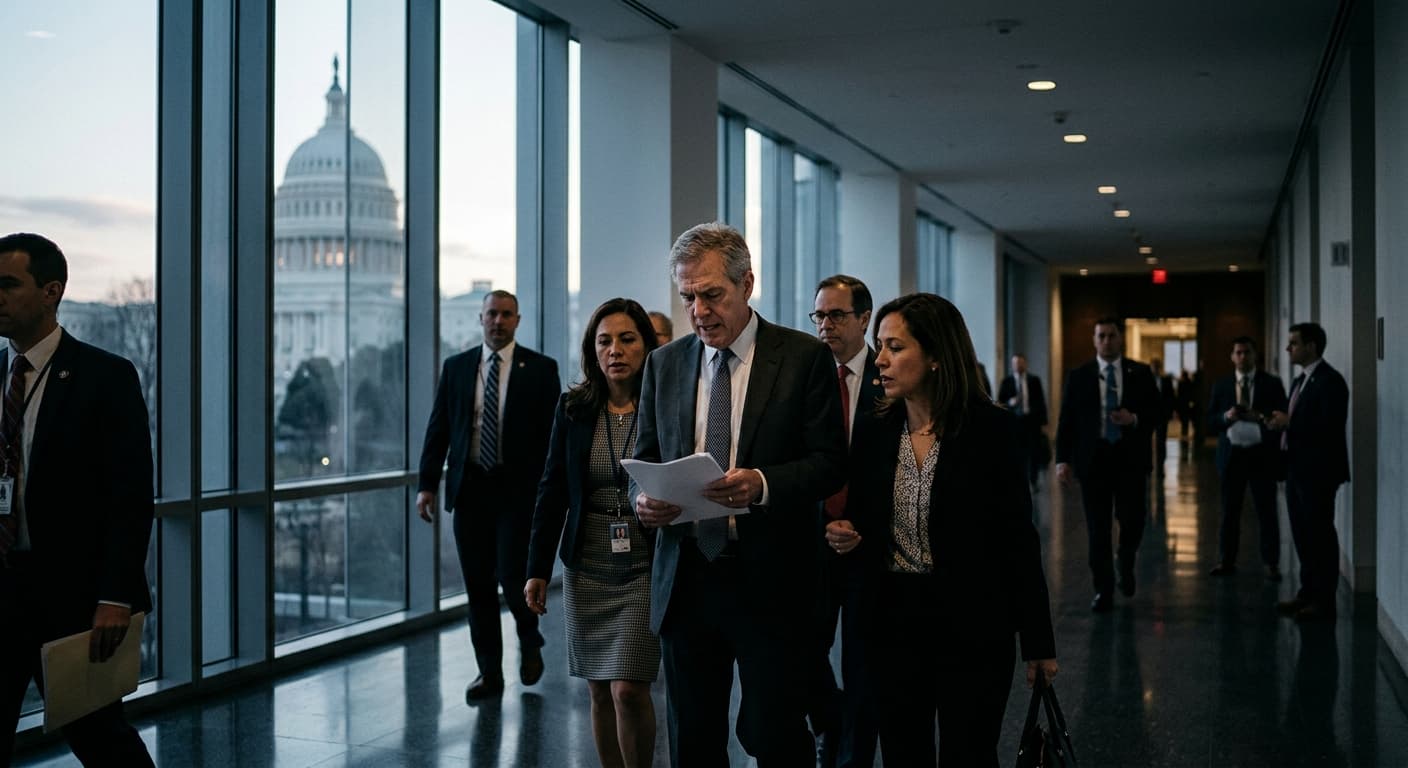
USMCA Shift to Annual Reviews Locks in a Decade of Uncertainty
The USMCA survives July 1, 2026 unchanged — but a decade of annual reviews turns North America's trade anchor into Washington's rolling leverage tool.
The three USMCA partners walked out of the July 1, 2026 Free Trade Commission meeting in Washington without a renewal — sending the pact into annual reviews through 2036, with current tariff-free rules formally intact and roughly $2 trillion in yearly trilateral trade nominally protected. The rules did not change. The regime did. What was designed as a one-off "sunset" check has become a rolling extraction mechanism that lets the Trump administration reopen the deal every twelve months, keeps sectoral tariffs alive as parallel leverage, and — according to Fitch Ratings — quietly taxes the very investment USMCA was supposed to lock in. The status quo on paper is not the status quo in practice.
What actually happened on July 1
The trilateral joint review was mandated by Article 34.7 of the agreement. On the sixth anniversary, the three trade ministers had to decide whether to extend USMCA another 16 years to 2042, revise it, or trigger annual reviews leading to a possible 2036 expiration, as CSIS laid out in its pre-meeting mechanics guide. Both Canada and Mexico formally requested renewal in early June. The United States did not agree.
U.S. Trade Representative Jamieson Greer's official statement was clipped and unambiguous. In the USTR press release, Greer said: "The United States did not agree to renew the USMCA in its current form. As a result, the USMCA is not renewed." His January 2026 report to Congress had already telegraphed the outcome, warning that "a rubberstamp of the Agreement is not in the national interest" and that USTR would recommend renewal "only if resolution can be achieved" (
USTR). The Congressional Research Service's
background report had cast the July 2026 review as the pivotal decision node for the entire agreement.
The Holland & Knight readout of the July 1 trilateral was blunt: "there is no consensus among the three countries to automatically extend the agreement for an additional 16 years." The default clock has started — a new joint review every July until either an extension is agreed or the treaty expires on July 1, 2036.
Why annual reviews are worse than they sound
On paper, "annual review" simply means the parties re-examine the agreement each July. In practice, it converts the deal from a settled framework into an open renegotiation. Fitch Ratings, in its July 8 sovereigns note, said the shift "maintains current trade rules" but "prolongs policy uncertainty," and warned that a renegotiated deal — likely before 2036 — may be "less favorable for Mexico and Canada." Fitch also flagged that the reviews are contributing directly to weaker 2025 investment and a downgraded 2026 GDP outlook for both countries.
CSIS put the sharper edge on it: the greatest threat to North American competitiveness is not withdrawal — it is uncertainty. Under serial annual reviews, the institute warns in a companion analysis, "the agreement stays in force but under a cloud of uncertainty that could persist for up to a decade," damaging investor confidence and weakening supply chain integration (
CSIS).
The numbers behind that warning are already on the tape. In Mexico, total investment fell roughly 10 percent in 2025, with private investment down about 2 percent, according to a February 2026 study titled "Nearshoring Without Growth". Brookings' USMCA Forward 2026 report shows overall FDI reached $40.9 billion in the first three quarters of 2025 — a 14.5% jump on 2024 — but "the 2025 pickup in FDI was mainly due to the reinvestment of profits," with genuinely new FDI running at $6.6 billion, roughly half the 2015–2022 average of $13 billion (
Brookings). Foreign firms are still spending in Mexico — but on existing operations, not new plants. That is the fingerprint of an uncertainty tax.
In Canada, the damage has shown up in the national accounts. Statistics Canada confirmed a technical recession spanning late 2025 and Q1 2026, per the BBC, which cites IMF and OECD forecasts of just 1.6% growth in 2026 and 1.7% in 2027. The IMF's December 2025 Article IV report on Canada was blunter still: "Higher U.S. tariffs have disrupted tightly integrated North American supply chains and weighed on exports, investment, and confidence," with "continued or additional U.S. tariff actions or uncertain outcomes of a USMCA review" identified by the Bank of Canada as the main external risks to the outlook (
IMF). Oxford Economics' Tony Stillo told
Al Jazeera that his growth forecast for the second half of 2026 and 2027 "depends on a favourable USMCA renegotiation." That condition just failed.
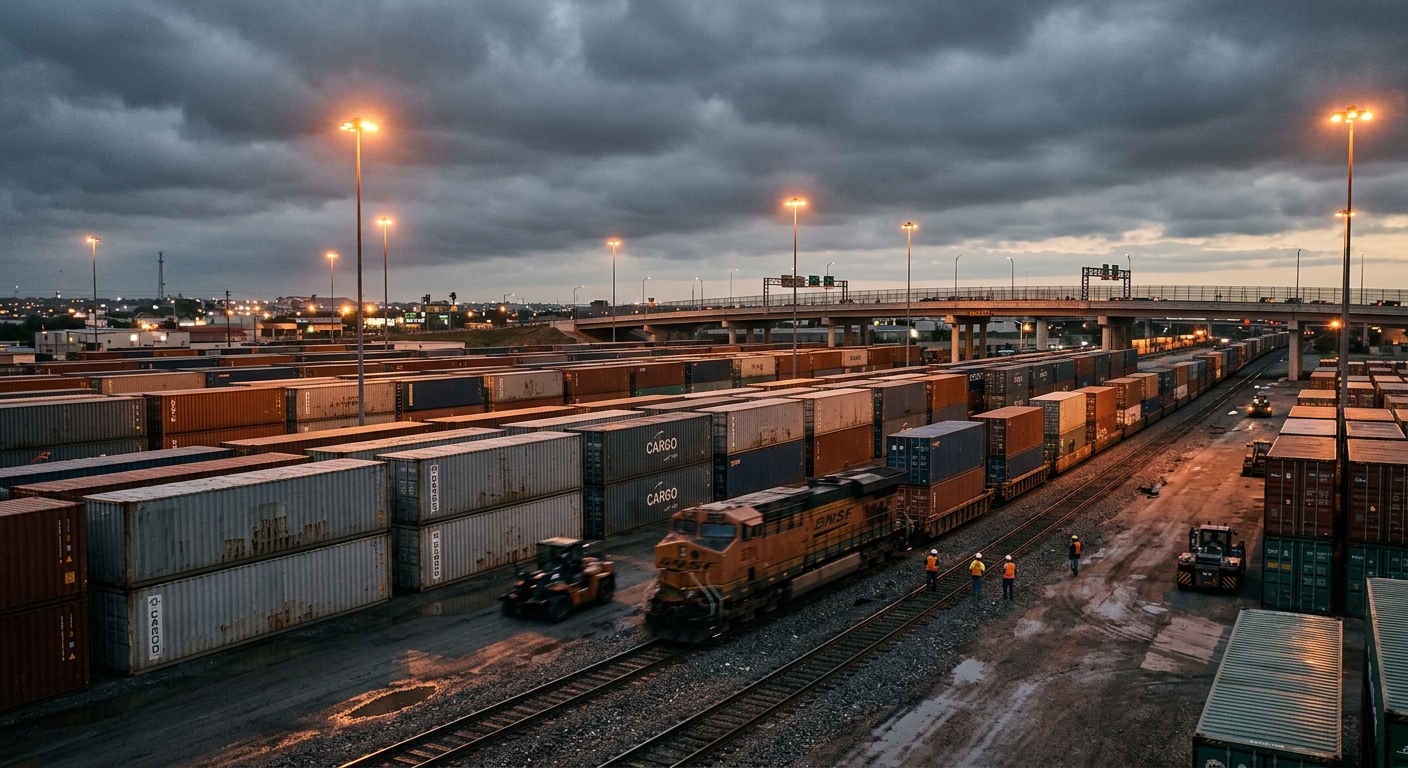
The leverage story: why Trump chose not to renew
The decision has to be read against a February 20, 2026 Supreme Court ruling that stripped one of the administration's main tariff tools. In Learning Resources, Inc. v. Trump, the Court held that the International Emergency Economic Powers Act "does not authorize the President to impose tariffs," applying the major questions doctrine to reject the government's reading of "regulate…importation" as a delegation of tariff-setting power (Supreme Court). The president retains Sections 232, 301, 201 and 338 — but the sweeping IEEPA duties on Canadian, Mexican and Chinese imports announced in early 2025 lost their legal footing overnight.
That closed one door and opened another. As CFR's Michael Froman put it, the USMCA review "creates a new opportunity for Trump to exert leverage over two of the United States' largest trading partners in the wake of the Supreme Court's ruling on IEEPA" (Council on Foreign Relations). Annual reviews are that lever. They keep tariff-free access conditional on continued U.S. satisfaction and let Washington press for concessions that were unwinnable in a single 2026 negotiation — chief among them a 50 percent U.S.-content floor for autos, tighter rules of origin, and coordinated restrictions on Chinese inputs across North America.
The auto ask is the sharp end. Reuters, cited by Al Jazeera, reports that USTR wants regional content in North American-built vehicles pushed to 82 percent, with 50 percent produced in the U.S. — a major break from the current 75 percent regional content threshold and the 40–45 percent "core parts" floor for high-wage jurisdictions. If accepted, that rewrites plant-location math from Michigan to Puebla to Windsor. Greer has said he intends to keep some Section 232 sectoral tariffs on Mexican and Canadian goods even inside a revised deal, per the
BBC, meaning the 25% duty on autos and 50% duty on steel, aluminum and copper are not going away — they are the collateral running alongside the annual reviews.
There is a historical parallel worth naming. NAFTA had no such mechanism precisely because its architects assumed that predictability was the point. USMCA's negotiators, as Brookings notes in its review of the review, consciously added Article 34.7 to prevent Washington from being "hostage to outdated rules." That mechanism was designed as a safety valve. In the first Trump administration it was framed as insurance; in the second, it has become the instrument itself. The consequence is that a treaty ratified by three Congresses and Parliaments now operates on annual sufferance from one of them.
Winners, losers, and the split between Ottawa and Mexico City
The most striking feature of the current phase is that Mexico has become Washington's preferred negotiating partner and Canada its problem. Deputy USTR Rick Switzer told a CFR audience in late June: "We have issues with Mexico we're still working through, but Mexico intends on coming to an agreement with us…the grown-ups are in the room talking because there's a grown-up in leadership there. And I would argue there's not a grown-up in Canada in charge" (Council on Foreign Relations).
That is a diplomatic incident with a policy tail. Prime Minister Mark Carney, elected on a platform of diversifying away from U.S. dependence, has retaliated against U.S. tariffs where President Claudia Sheinbaum did not. Greer named Canada and China as the only two countries that "retaliated economically against the United States in the past year" (BBC). Canada's punishment is exclusion: the U.S.-Mexico bilateral track has two completed rounds and a third scheduled for the week of July 20 in Mexico City (
USTR). Canada, meanwhile, has been kept in what Greer publicly called "a different spot." The Canada-Mexico Comprehensive Strategic Partnership announced by Carney and Sheinbaum in September 2025 was supposed to prevent exactly this outcome; instead it has been leapfrogged by parallel bilateral tracks in which Washington sets terms.
The obvious winner from continuity is the set of existing manufacturers with sunk assets in Mexico. USMCA-compliant Mexican and Canadian imports still enter duty-free, and compliance has surged — PIIE economists Gary Hufbauer and Zachary Resneck note that USMCA-compliant consumer imports rose from 40% in early 2025 to 88.2% by December 2025 as firms adjusted (PIIE). The losers are greenfield investors deciding where to place a $2 billion battery plant or EV line, and Canadian export sectors — the
BBC reports Canadian steel-derivative sales to the U.S. are down 20% since the tit-for-tat tariffs began.
A second, quieter winner: U.S. consumers, for now. PIIE calculates that terminating USMCA and replacing it with a 15% tariff on Canadian and Mexican goods would push the PCE index up 0.27 percent through direct pass-through alone — before counting the intermediate-goods effect on U.S. manufacturing, particularly autos, where 55.6% of vehicle-part imports and 95.7% of goods-vehicle imports come from Canada and Mexico (PIIE). The status quo, precarious as it is, is holding that price shock at bay. The
Congressional Research Service has separately underscored that congressional and business opposition would make a full U.S. exit deeply difficult — the constraint that keeps the pact alive even as its predictability erodes.
What to watch next
- Week of July 20, 2026 — Mexico City: Third round of U.S.-Mexico bilateral talks, focused on autos rules of origin, agriculture, and "level playing field." First real test of whether the 50 percent U.S.-content floor sticks.
- November 3, 2026 — U.S. midterms: A Democratic House would sharply narrow the president's room to impose a new blanket 15 percent tariff, per PIIE, and change the leverage math heading into the July 2027 review.
- July 1, 2027 — Second joint review: The first true recurrence of the new annual process. If it produces another non-renewal, expect Fitch and Moody's to move on Mexican and Canadian sovereign outlooks.
Diplomat View
The July 1 non-renewal is the more consequential North American trade decision of the decade — more so than the original USMCA signing — because it converts the rules of continental commerce from a treaty into a permission slip. Our call: annual reviews will hold current tariff-free rules through at least mid-2028, but genuinely new FDI into Mexico stays below the 2015–2022 baseline of $13 billion per quarter, Canadian growth stays capped near 1.6–1.7%, and auto rules of origin get rewritten — likely in a bilateral U.S.-Mexico deal Canada is presented with as a fait accompli. What would change the forecast: a Democratic House in November that forces the administration back toward a clean trilateral extension; a Supreme Court sequel narrowing Section 232 the way Learning Resources narrowed IEEPA; or Sheinbaum breaking with Washington on Chinese investment screening, which is the one concession Mexico has so far kept off the table. Absent those, the uncertainty tax compounds — quietly, annually, until 2036.
The Bottom Line
USMCA survived July 1, 2026 in form and lost its purpose. By pushing the agreement into annual reviews rather than renewal or termination, the Trump administration has converted a rules-based trading bloc into a permanent negotiation — and the region's investors are already pricing that as a decade-long tax on North American competitiveness.
Discover more

International Relations
Pakistan's Key Role in US-Israel-Iran Meddle
Pakistan is seeking to mediate the US-Israel-Iran conflict, balancing high-stakes diplomacy against severe economic pressures and steep regional challenges.
Global Politics
Trump's Conflicting Messages on Iran War
Trump's mixed messages on Iran reflect a strategy of audience management, benefiting Tehran amid a complex geopolitical landscape.

India
UN Expert Albanese: India Violates Law
UN Rapporteur Francesca Albanese accuses India of breaching international law, spotlighting human rights concerns in Kashmir and prompting diplomatic pushback.

Economics
Fed's Amex AML order puts correspondent banking on notice
Federal Reserve's Amex AML order requires board-level controls and a 90-day plan; OCC fined the bank $350 million over enterprise-wide deficiencies.