US–Iran Oil Deal: Article 10's Collapse
Exploring the implications of the revoked oil waiver
Model Diplomat7 min readMiddle East
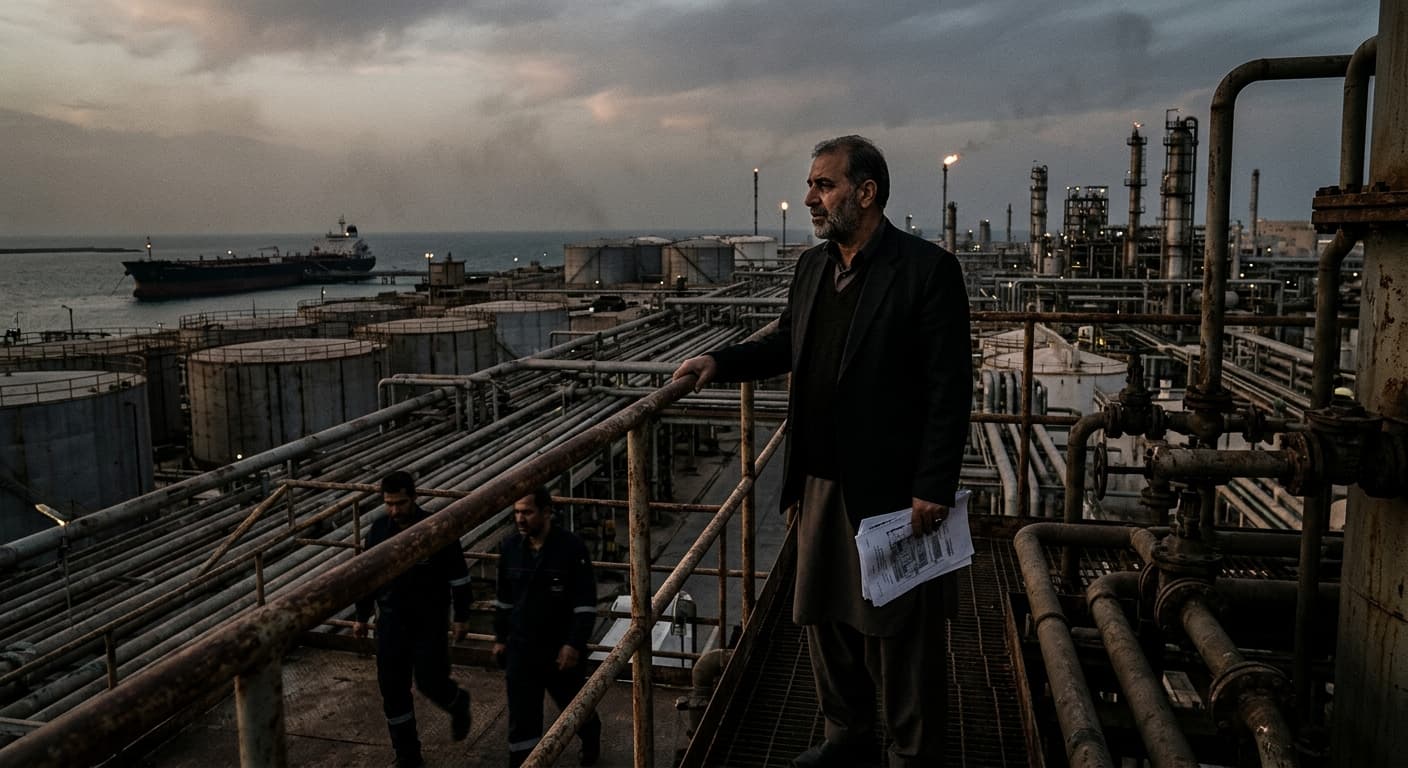
Article 10 and the 20-Day Collapse of the US–Iran Oil Deal
Iran calls the July 7 revocation of its oil waiver a breach of Article 10 of the Islamabad MoU. Here is what the clause says, and why it moves Brent.
The 20-day life of the Islamabad Memorandum of Understanding ended on July 7, 2026, when the US Treasury revoked General License X — the instrument that made Article 10 of the deal operational — and CENTCOM struck more than 80 targets across southern Iran. Article 10 was the only clause in the 14-point framework that produced immediate, measurable economic value for Tehran, and killing it was therefore the fastest way for Washington to signal that the June 17 peace was conditional on Iran's behaviour in the Strait of Hormuz. Iran's foreign ministry called the revocation a "clear violation" of the MoU; Donald Trump, at a NATO summit in Ankara, told reporters the deal was "over." The result is a market braced for a repricing that has, so far, been implausibly modest — Brent up roughly 3% to $76 — because the barrels Article 10 was meant to release were never actually flowing.
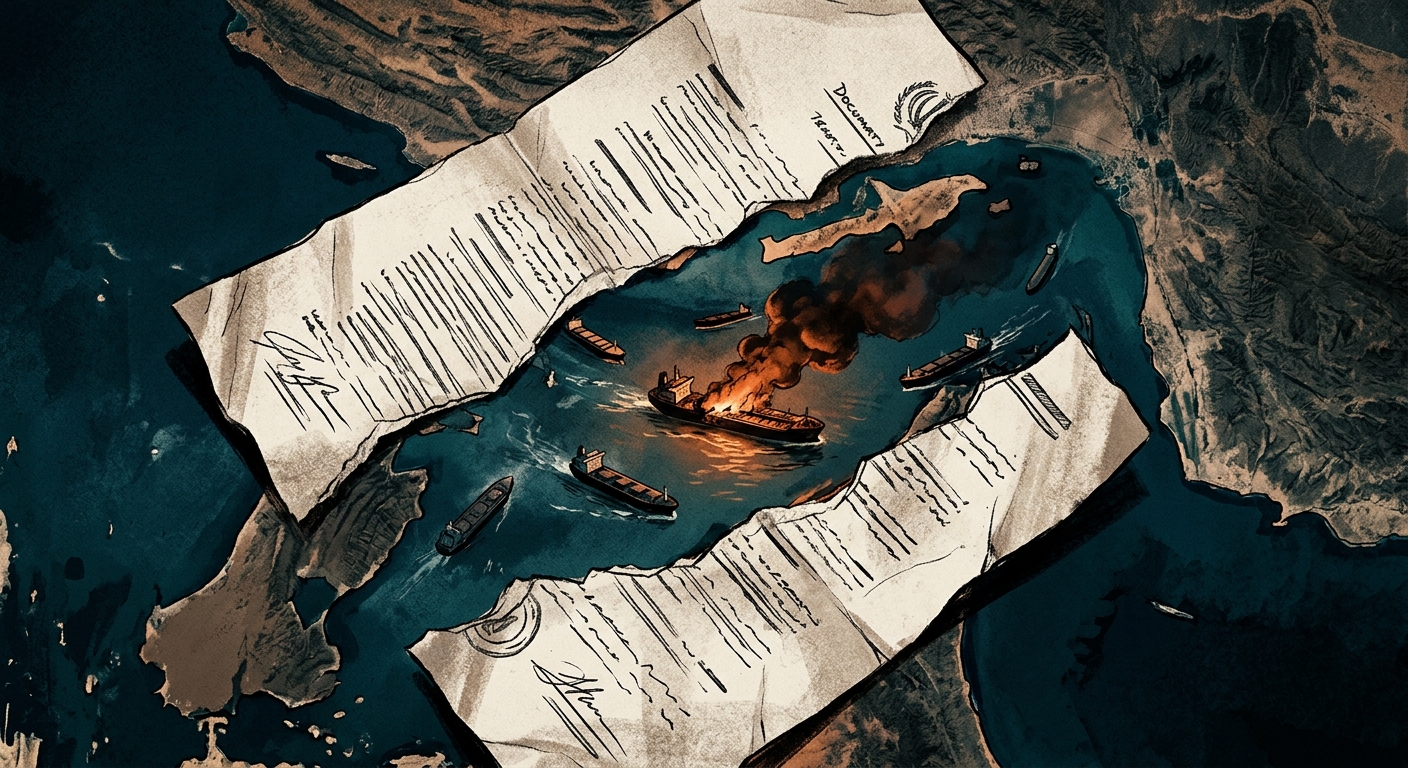
What Article 10 actually says
The 14-point MoU has not been released as a physical document by either government. A senior US official read it aloud to reporters on June 17; the BBC published the verbatim text the next day. Point 10 reads:
"The United States of America undertakes that immediately upon the signing of this MOU and until the termination of sanctions, the U.S. Department of Treasury will issue waivers for the export of Iranian crude oil, petroleum products and derivatives and all associated services including banking, transactions, insurances, transportation, etc."
The clause is not a formal sanctions termination. Point 7 handles that, on an "agreed upon schedule" as part of a final deal to be reached within 60 days. Article 10 is the interim device — a commitment to keep waivers alive while the final architecture is negotiated. As Al Jazeera reconstructed from the same call, the waivers were designed to cover "all associated services, including banking transactions, insurances, transportation" — the entire commercial stack that OFAC's secondary-sanctions regime had disabled since 2018.
OFAC operationalised Article 10 through General License X, issued on June 21, 2026, which authorised the production, delivery and sale of Iranian-origin crude, petrochemicals and petroleum products through August 21. On July 7 that license was superseded by General License X1, styled a "Revocation and Wind Down." In administrative-law terms, Treasury did not repudiate the MoU — it exercised discretion over the licensing instrument. In Tehran's reading, that is a distinction without a difference: Article 10 obliges Washington to issue the waivers, not merely to have once issued them.
Why the clause matters more than Point 7
Every previous US–Iran deal has foundered on the gap between promised sanctions relief and delivered commerce. The Atlantic Council's EnergySource argued in early July that GL X was less a waiver than a compliance test: "Issuing a sanctions waiver that authorizes oil sales is one thing; persuading banks, shipping companies, and insurers to reengage with Iran within sixty days is another."
Article 10's inclusion of "banking, transactions, insurances, transportation, etc." was a direct answer to that history. It was drafted, in effect, to force Treasury to underwrite the ecosystem — to make US banks, P&I clubs and non-Iranian shipowners legally comfortable touching Iranian barrels denominated in dollars, a shift Treasury Secretary Scott Bessent publicly framed as "Iranians will be invoicing in dollars." That single design choice is what distinguishes the Islamabad MoU from the residue of the 2015 JCPOA, where waivers on paper never translated into Western financial normalisation. Kill Article 10, and the rest of the framework — the $300 billion reconstruction fund, the 60-day nuclear talks, the unfreezing of Iranian assets — loses its transmission belt.
The market that isn't panicking (yet)
The paradox of the July 7 escalation is how little oil has moved. Brent settled around $76 on Tuesday, up just over 3%, per the BBC and FT market data. That is a full $38 below the May 5 spike, when Brent hit $114.44 as violence flared in the Strait, according to
Al Jazeera. Trump told reporters in Ankara any rise would be limited to "$2." The market, so far, agrees with him.
Three reasons explain the muted response. First, Iranian volumes are already gone. Vortexa data cited by OilPrice put May exports at 209,000 barrels per day, down from 1.9 million in March — the lowest since the 2019–2020 "maximum pressure" trough. GL X had barely begun to reverse that; Atlantic Council analysts put June exports at roughly 220,000 bpd. Second, roughly 63 million barrels of Iranian crude are stranded on tankers, per Kpler-cited reporting on
OilPrice — a floating buffer that insulates Chinese teapot refiners for weeks. Third, OPEC+ producers, per
Al Jazeera, agreed a further 188,000-bpd monthly output rise for the seven core members.
Who benefits from a dead Article 10
The reflex reading is that Iran loses. That is only half right. The clause was designed to reintroduce Iranian barrels into the dollar-clearing system — which would have squeezed the shadow-fleet economy the Islamic Revolutionary Guard Corps has built since 2018.
Energy Intelligence warned in July that the MoU "may expand Iran's export options but risks reinforcing rather than replacing the sanctions-era oil economy" — because IRGC-linked networks retain the shipping, insurance and yuan-settlement infrastructure that legitimate reintegration would sideline.
Killing Article 10 does the opposite of hurting them. It hands the IRGC's commercial arm another 60 days of monopoly over Iranian export logistics, at prices lifted by the geopolitical premium. That is the second-order beneficiary the wire coverage has largely missed: the constituency inside Iran that never wanted the Islamabad framework to work.
The proximate loser is Pakistan, whose mediation gave the deal its name. Prime Minister Shehbaz Sharif co-signed the MoU as guarantor. The bigger structural loser is India. According to the Atlantic Council, Indian refiners had already routed rupee-and-yuan payments for Iranian crude through ICICI Bank's Shanghai branch during the March 2026 waiver, and imported more than 4 million barrels of Iranian crude in April. That option is gone. Delhi now watches its Russian-crude waiver — which expired June 17 — and its Iranian pipeline shut simultaneously, and must pay Brent-plus for Saudi and Emirati replacements.
Congress is quietly on Treasury's side. H.R. 8220, introduced in April by Representative Latimer, would have nullified any Iranian oil license and barred future ones — a signal that the political floor under Article 10 was always thin.
What to watch next
- The GL X1 wind-down window. Treasury's revocation includes a wind-down period for existing cargoes; the exact expiry, when published, will tell shippers whether the 63 million barrels currently at sea can be legally offloaded in China or must be quietly re-flagged.
- Iran's Hormuz fee regime. Parliament Speaker Mohammad Bagher Ghalibaf said the strait "will not return to pre-war conditions" and Iran will "charge fees for services." Any formal tariff announcement — expected to be finalised with Oman — will trigger a fresh insurance repricing and a JWC listed-area review.
- The 60-day MoU clock. The final-deal deadline was August 16, 2026. Trump has declared the framework "over," but neither side has formally withdrawn signatures. The next scheduled mediator contact runs through Pakistan and Qatar.
- OPEC+ September meeting. Riyadh has signalled it will meet Article 10's death with output, not cuts — a bet that keeping Brent under $80 preserves Trump's political tolerance for further Iran escalation.
Diplomat View
The Islamabad MoU is not dead; it is on GL-X1 life support, and Article 10 was the ventilator. Our call: the framework survives past August 16 in name only, with a "technical extension" that keeps mediators employed but produces no fresh waivers before the US midterm cycle absorbs the story. Brent trades in a $72–$88 range absent an actual Hormuz closure — a scenario the market is under-hedging because Iranian barrels are already off the balance and Gulf producers have visible spare capacity. The forecast changes if any of three things happens: Iran mines the strait rather than merely charging fees; a US-flagged warship is hit; or Beijing signals it will stop absorbing stranded floating storage. Any one of those flips the analysis from managed decoupling to acute supply shock, and Brent through $100 becomes the base case, not the tail.
The Bottom Line
Article 10 was the single sentence in the Islamabad MoU that connected diplomacy to dollars, and Washington cancelled it 20 days after signing. Its death does not spike oil today because Iran's barrels were never really back — but it hands the IRGC's shadow economy another lease of life, forecloses India's cheapest crude option, and leaves Brent one Hormuz incident away from a shock the current $76 print does not price.
Discover more

India
Women's Reservation Bill 2026: A Political Sh
India's Lok Sabha rejected the Women's Reservation Bill, exposing a political maneuver to redraw electoral maps favoring the north over the south.
Global Politics
Xi Jinping Calls China-Russia Ties 'Precious'
Xi Jinping's description of China-Russia ties as 'precious' reflects a strategic imbalance, with Beijing dictating terms in the partnership.
US Politics
Virginia's Redistricting Referendum
Virginia's redistricting referendum is drawing a flood of dark money, shaping future elections and the fight for congressional control amid party stakes.

Economics
Fed's Amex AML order puts correspondent banking on notice
Federal Reserve's Amex AML order requires board-level controls and a 90-day plan; OCC fined the bank $350 million over enterprise-wide deficiencies.