Women's Reservation Bill 2026: A Political Sh
Examining the defeat of India's women's reservation bill
Model Diplomat9 min readIndia
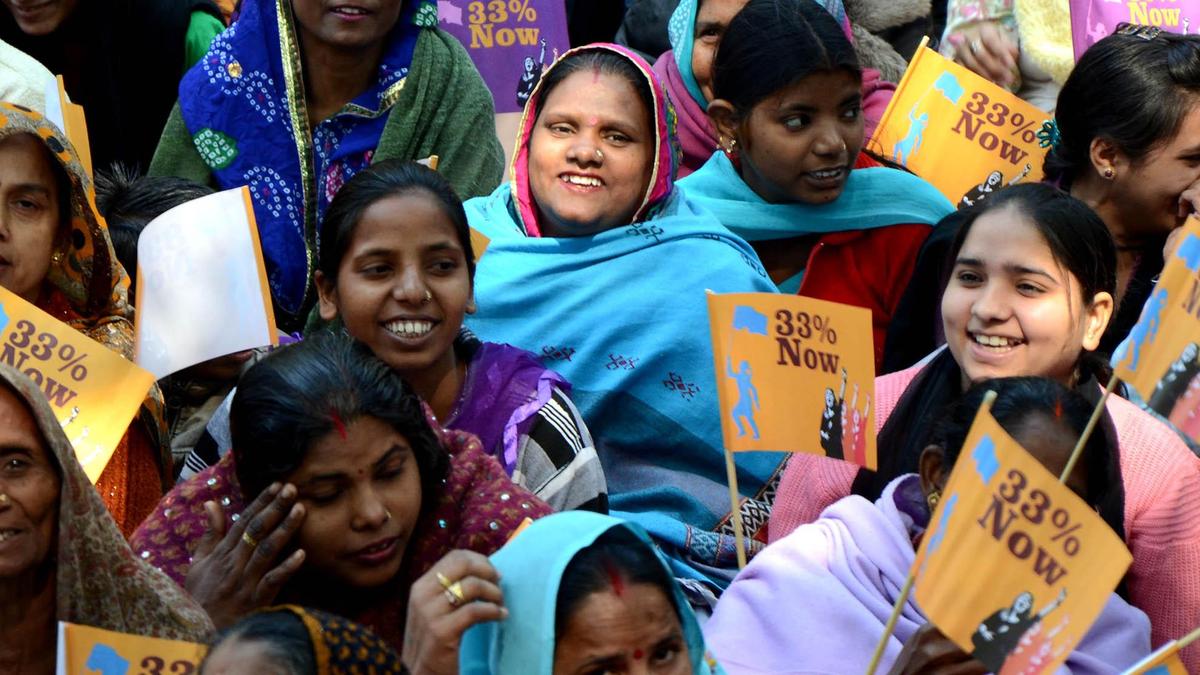
Women's Reservation Bill 2026: A Political Shell Game Exposed
India's 131st Amendment lost 298–230 on April 17, 2026 — killed by an opposition that saw a north-favoring redraw of Parliament hidden inside a women's quota.
The 33% women's reservation was never the point. On April 17, 2026, the Lok Sabha rejected the Constitution (131st Amendment) Bill, 2026 by 298 votes to 230 — well short of the roughly 361 needed for a two-thirds majority — and with it, Prime Minister Narendra Modi's attempt to redraw India's electoral map before the 2029 general election. The bill's ostensible purpose was to fast-track a female quota already enacted in 2023. Its actual mechanism was to expand the Lok Sabha from 543 to 850 seats using 2011 census data — a formula the Carnegie Endowment estimates would shift roughly 26 seats from India's southern states to the Hindi-belt north. The defeat is the most consequential parliamentary loss of Modi's third term, and it has quietly pushed women's reservation past 2029, likely to the 2034 election cycle.
What actually happened on April 16–18
The government convened a three-day special sitting of Parliament and tabled three linked bills: the Constitution (131st Amendment) Bill, the Delimitation Bill, and the Union Territories Laws (Amendment) Bill, all dated 2026. According to PRS Legislative Research, the package sought to raise the Lok Sabha ceiling to 850 seats — 815 for states and 35 for union territories — authorise a delimitation exercise based on the 2011 census rather than the ongoing 2027 count, and reserve one-third of the newly redrawn constituencies for women. The Union Territories Bill applied a parallel structure to Puducherry, Delhi and Jammu & Kashmir. All three bills required a two-thirds majority in each House.
Hours before the vote, the Modi government executed a defensive move that reframed the debate. The Ministry of Law and Justice formally notified the Nari Shakti Vandan Adhiniyam — the 106th Constitutional Amendment Act, 2023 — into force on April 16, 2026, three years after its passage. As the New Indian Express reported, the notification let ministers argue the quota was now law and only the "mechanism" of implementation remained contested. Opposition MPs called the sequencing a stunt — bringing amendments to a principal Act the government had failed to notify for over 900 days.
The National Democratic Alliance holds 293 seats and, per Al Jazeera's tally, needed roughly 361 for a two-thirds majority — a threshold requiring the support of some 68 opposition or independent MPs. It secured 298. BBC Hindi
confirmed the final tally as 298 for and 230 against, the first defeat of a government-sponsored constitutional amendment in three decades.
The trapdoor in the text
The 131st Amendment Bill was not, in operative terms, a women's reservation bill. That reservation already exists in the Constitution — Articles 330A, 332A and 334A, inserted by the 106th Amendment in 2023. What the 131st Bill did was different. It stripped out the requirement that reservation follow the "first census taken after the commencement" of the 2023 Act (i.e., the 2027 census now in the field) and replaced it with delimitation based on "the latest published census." In April 2026, that meant the 2011 count. The bill text on PRS makes the swap plain: the Act would "come into force on such date as the Central Government may, by notification in the Official Gazette, appoint," with delimitation tied to published data.
That single word — published — was the trapdoor. India began its first census in 15 years on April 1, 2026, with a reference date of March 1, 2027, according to Al Jazeera. Fieldwork is scheduled to conclude by March 2027; usable tabulated data is not expected before mid-2028. By pegging delimitation to "published" figures, the government would have redrawn 850 constituencies using population data already 15 years old — skipping the count still in the field.
Carnegie's Milan Vaishnav has done the arithmetic. In a May 2026 study, Carnegie found that reapportioning on 2011 numbers would move about 26 seats between states; on 2026 projections, 36 seats. Bihar, Uttar Pradesh and Rajasthan would gain 19 to 26 seats between them. Kerala, Tamil Nadu and Andhra Pradesh would collectively lose 15 to 21. Only Assam and Chhattisgarh — of the twenty states subject to population-based reapportionment — would stay untouched. Roughly 8% of current Lok Sabha representation is misallocated across states, Carnegie calculated, "the equivalent of about forty-four of the chamber's 543 seats." A vote in Kerala today carries about 1.75 million citizens per MP; a vote in Bihar carries 3.1 million, according to a parallel analysis by the
Takshashila Institution.
Even the government's larger 850-seat container did not fully insulate the south. Takshashila noted that at 848 seats, Uttar Pradesh alone would hold 143 — roughly equal to all five southern states combined. Arghya Sengupta of the Vidhi Centre for Legal Policy told the BBC that the "basis for this number is unclear and does not appear to be proportionate to population growth recorded in the 1971 and 2011 census." Sengupta also flagged an odd asymmetry buried in the drafting: the bill raised the Lok Sabha cap but made no matching expansion for state assemblies. Fast-growing states could gain MPs without a corresponding rise in MLAs — a mismatch with significant federal implications.
Home Minister Amit Shah defended the bill in Parliament with an argument the government has been road-testing for months. Speaking on April 17, Shah told the Lok Sabha that under a uniform "50 percent increase" model, southern states' current 129 seats would grow to 195, keeping their share of the House at roughly 24%, according to the Press Information Bureau's official record. Shah also invoked Articles 81, 82 and 170, arguing that 127 current constituencies now contain more than 2 million voters each — a violation of "one person, one vote, one value." But the pro-rata guarantee lived in ministerial speeches, not statute. As multiple analysts observed, the draft delimitation bill did not spell it out.
Who blocked it, and why
The math of the defeat is instructive. The NDA holds 293 Lok Sabha seats. The vote showed 298 in favour — meaning at most five non-NDA MPs crossed over. The 230 against reflected a disciplined INDIA bloc plus regional parties from the south and east voting as one. Congress's Rahul Gandhi told the House the bill was "not a women's reservation bill"; on X, as reported by Al Jazeera, he called it "merely an attempt to seize power through delimitation and gerrymandering." Congress MP Gaurav Gogoi alleged the government's real intent was to introduce delimitation "through the backdoor."
The most vivid opposition came from Tamil Nadu. Chief Minister M.K. Stalin publicly burned a copy of the bill at DMK headquarters in Chennai and called the delimitation package "a major historical injustice thrust upon Tamil Nadu and the southern states." Telangana Chief Minister Revanth Reddy proposed an alternative allocation formula that would weight states' fiscal contributions to the national economy, not just their headcount. Kerala, Karnataka and Telangana joined Tamil Nadu in demanding a 25-year extension of the seat freeze. The Samajwadi Party's Akhilesh Yadav — whose base is in Uttar Pradesh, the state most likely to gain seats — voted against anyway, holding out for OBC and Muslim sub-quotas within the women's reservation.
The historical parallel matters. In 2001, the 84th Constitutional Amendment froze inter-state seat allocation until the "first census after 2026" — a deal struck precisely to protect states like Tamil Nadu and Kerala that had aggressively cut fertility rates. Successive governments of all political stripes upheld that pause. Frontline magazine called the defeat "essential for the survival of Indian democracy" and framed it as a defence of the 2001 federal compact — "not only a defeat for the government," but "a victory for the opposition." The Takshashila Institution reached a similar conclusion, calling the linked bills "an affront to federalism."
The southern political economy is not just about seats. As Carnegie noted, southern states like Tamil Nadu and Kerala already contribute a disproportionate share of India's economic output and finance fiscal transfers to poorer northern states. Shrinking their parliamentary voice while continuing to draw from their exchequer represents the exact bargain the 2001 freeze was designed to prevent. In a Carnegie podcast conversation, economist Shruti Rajagopalan observed that the northern chief ministers most likely to gain — in Uttar Pradesh, Madhya Pradesh, Bihar and Rajasthan — have stayed conspicuously silent, precisely because their states rely on transfers from the south they would be gutting.
The quiet consequence: women wait until 2034
When the 131st Amendment failed, the 106th Amendment's original text survived — meaning reservation remains legally tethered to "the first census taken after the commencement of the Constitution (One Hundred and Sixth Amendment) Act, 2023," per the gazette text. That census has a reference date of March 1, 2027. Fieldwork ends March 2027; a caste-enumeration phase extends into late 2027; data tabulation typically consumes another 12 to 18 months.
PRS Legislative Research spelt out the sequencing plainly: "Considering that the next Lok Sabha elections will be held in 2029, it is unlikely that delimitation exercise based on the 2027 census will be completed before the 2029 elections. This would imply that reservation for women will not apply to the 2029 Lok Sabha election." The last Delimitation Commission, constituted in 2002, took six years to finalise its orders in 2008. Applied to the current schedule, a Commission constituted in 2028 would report around 2032–2033, making the 2034 general election — not 2029 — the earliest realistic implementation window.
Carnegie's post-mortem was blunt: "Women's reservation — despite being formally enacted — cannot take effect until after the 2027 census is completed and a new delimitation is carried out." India will therefore go to the polls in 2029 with the same 14% female Lok Sabha it has today. Modi told the Nari Shakti Vandan Sammelan on April 13, 2026 that "all parties agreed it should be implemented by 2029 in any case." That commitment is now empirically impossible.
Diplomat View
The defeat of the 131st Amendment is best read as the moment India's federal compact reasserted itself against a Hindutva-inflected majoritarianism that had, for a decade, faced no procedural check in Parliament. The BJP's central bet — that "Nari Shakti" branding would peel off enough regional MPs to smuggle through a north-tilting redraw — failed because southern chief ministers correctly identified the delimitation clause, not the quota, as the operative provision. That failure will shape three things.
First, expect the government to run against the opposition in the Bihar and West Bengal state elections on a narrative that Congress, DMK and TMC "denied women their rights" — a message analysts told BBC Hindi the BJP was already road-testing. Second, expect a serious push to constitute the Delimitation Commission the moment 2027 census data is released, timed to force a vote in the run-up to 2029. Third, and least noticed: the 106th Amendment's clock is now ticking against a 15-year sunset. Under Article 334A(2), women's reservation lapses 15 years after commencement unless Parliament extends it. If it takes effect in 2034, it expires in 2049 — a full 26 years from its 2023 enactment date, with only 15 years of actual application.
The forecast changes if the government pivots to a "pure quota" bill — reserving 33% within the existing 543 seats and decoupling it from delimitation, as The Wire has argued it should. That would pass tomorrow with 500-plus votes. That it has not been tabled tells you which reform the government actually wanted.
Catalysts to watch:
- Bihar Assembly elections (October–November 2026): first electoral test of the "opposition blocked women's rights" narrative in a state that would gain seats.
- March 1, 2027: census reference date; any delay compresses the implementation window past 2034.
- Winter Session 2026 (November–December): whether the government tables a standalone quota bill will reveal true intent.
The Bottom Line
The 131st Amendment's defeat was not a setback for women's political representation — it was a defence of federalism dressed as one. By coupling a 30-year-old reform to a north-favouring redistricting, the Modi government forced the opposition into a choice between women and the south; the opposition chose the south, and the arithmetic backed it. India's female MPs will remain 14% of the Lok Sabha through 2029, and the country's most consequential constitutional question — who Parliament represents when 250 million voters have moved north — has been deferred, not answered.
Discover more
India
India's 33% Women’s Reservation Bill
India's Lok Sabha debated a historic bill reserving 33% of seats for women, a measure aimed at transforming representation and advancing gender equity.
Global Politics
Modi's 33% Women Reservation Bill Impact
India's Women's Reservation Bill would reserve 33% of parliamentary seats for women, a reform poised to reshape political dynamics and gender representation.
India
India's Parliament Session
India's special Parliament session moved to advance women's reservation and tackle delimitation, a pivotal moment for gender equity in Indian governance.

Economics
Fed's Amex AML order puts correspondent banking on notice
Federal Reserve's Amex AML order requires board-level controls and a 90-day plan; OCC fined the bank $350 million over enterprise-wide deficiencies.