Modi's 33% Women Reservation Bill Impact
Exploring the impact of the Women's Reservation Bill in India
Model Diplomat3 min readIndia
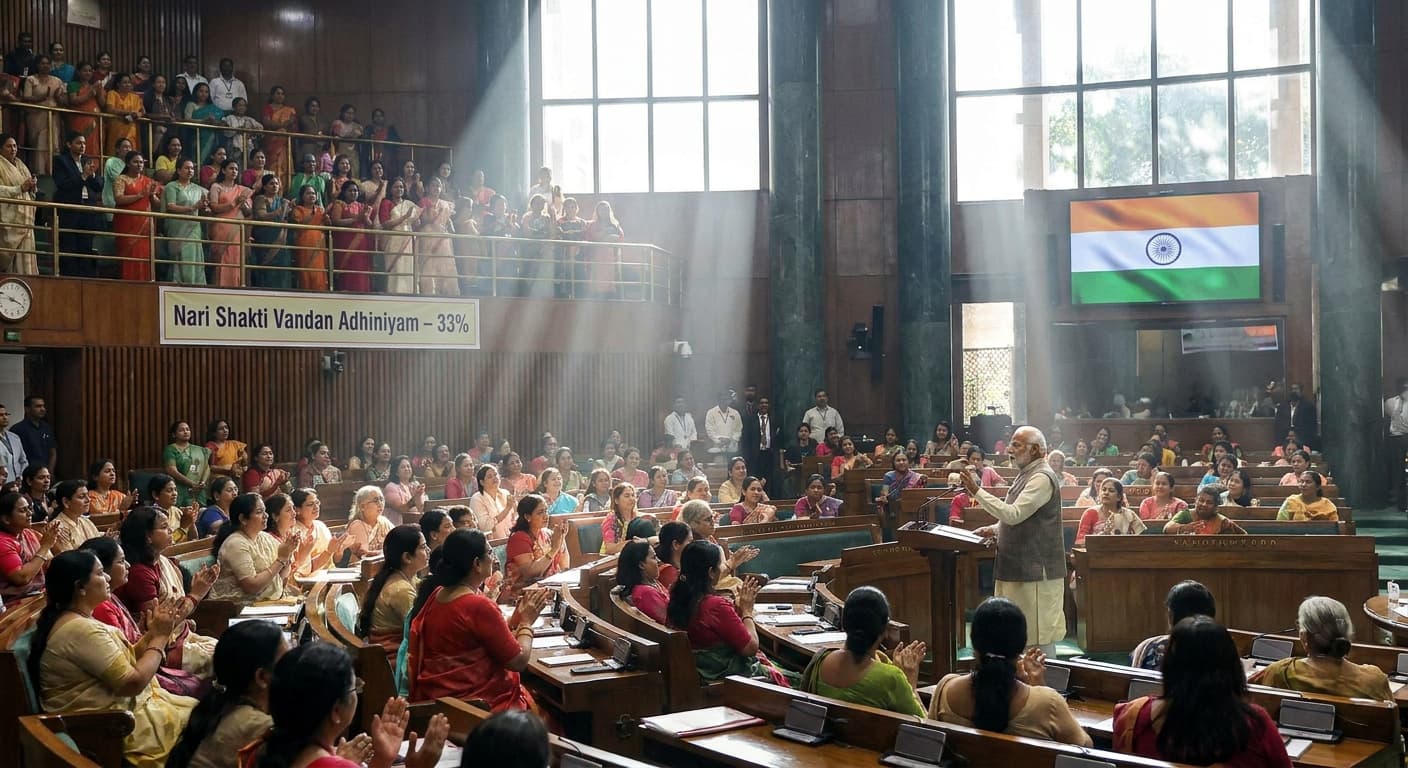
Modi pushing to get more women into India's Parliament. That could reshape politics
India’s Parliament is debating a bill to reserve 33% of seats for women, aiming to boost female representation from today’s ~14% in the Lok Sabha.
India’s Prime Minister Narendra Modi is backing a landmark bill that could transform the face of Indian politics: reserving one-third of seats in the Parliament and state legislatures for women. This Women’s Reservation Bill, long stalled since its first proposal in 1996, is suddenly stirring action in the Lok Sabha (the lower house), promising to expand women’s current representation from about 14% to a full 33%. At the same time, this effort is tied to a politically sensitive delimitation bill that redraws electoral boundaries — a potentially explosive mix.
Why women’s reservation matters in India’s political landscape
Women currently hold just 78 out of 543 seats in the Lok Sabha, roughly 14%, a stark underrepresentation in the world’s largest democracy. Globally, India lags behind many democracies in female parliamentary representation. The new bill mandates reserving one third of the seats in Parliament and state assemblies for women, a move that would immediately triple their presence if implemented.
The reasons why this matters are both symbolic and practical. Politically, increased female representation could shift legislative priorities toward issues like gender equality, healthcare, and education — historically sidelined in male-dominated chambers. The move would also align India with countries like Rwanda, where over 60% of the lower house are women thanks to reserved seats.
Modi’s push is significant because it revives a cause often overshadowed by other political priorities. Yet it also reveals internal tactics: the reservation bill is coupled with delimitation — the redraw of constituency boundaries based on the last census. Redrawing electoral maps, especially in populous and politically sensitive states such as Uttar Pradesh and Bihar, risks disrupting established vote banks, creating winners and losers among parties.
The political risks and stakes
This dual-package strategy is a high-stakes political gamble. Delimitation can drastically alter the electoral landscape by shifting which populations vote where. Opposition parties and regional leaders may resist changes that jeopardize their seats, particularly with the contentious women’s quota attached.
Moreover, the bill’s passage requires navigating coalition politics and regional interests. Parties opposed to reservation on cultural or political grounds could challenge it fiercely. Even within Modi’s Bharatiya Janata Party (BJP), which leads the ruling coalition, there are internal debates about how quickly and in what form the bill should move forward.
This move could reshape India’s electoral politics for decades. Increasing women’s representation may empower a new demographic of voters and candidates, potentially weakening established dynastic families and male-dominated political machines.
What to watch next
Key indicators include:
- How Parliament responds: Will the Lok Sabha pass both bills quickly, or face delays and amendments?
- State-level reactions: State legislatures must implement the reservation system, so resistance or support at this level will be crucial.
- Impact on upcoming elections: Will new boundaries and female quotas influence election strategies or candidates announced for key states?
- Public response: Indian voters’ acceptance of a women’s quota could be a barometer for deeper social change beyond politics.
Modi’s push taps into the ongoing global push for gender equity in governance, but the political calculus in India is uniquely complex. Success would mark a historic shift not just for women’s rights but for the country’s entire political fabric.
For more on India’s complex politics and reform challenges, see our India profile and the broader
Global Politics context.
AP News: India lawmakers debate landmark bill to reserve seats for women
Discover more

India
Modi's Women’s Reservation Bill
PM Modi's Women's Reservation Bill aims to expand women's seats in India's Parliament, a reform poised to reshape democracy and shift electoral dynamics.

India
Modi's Women's Quota
PM Modi insisted India's 33% women's quota in Parliament won't disadvantage others, framing it as a vital step toward closing the gender gap in politics.

India
Modi Proposes 33% Women Reservation in LokSab
The Modi government introduced bills to reserve 33% of Lok Sabha seats for women, a sweeping push for gender parity in Indian politics and elected office.

Economics
Fed's Amex AML order puts correspondent banking on notice
Federal Reserve's Amex AML order requires board-level controls and a 90-day plan; OCC fined the bank $350 million over enterprise-wide deficiencies.