Virginia's Redistricting Referendum
Exploring the impact of dark money on Virginia's redistricting
Model Diplomat3 min readVirginia
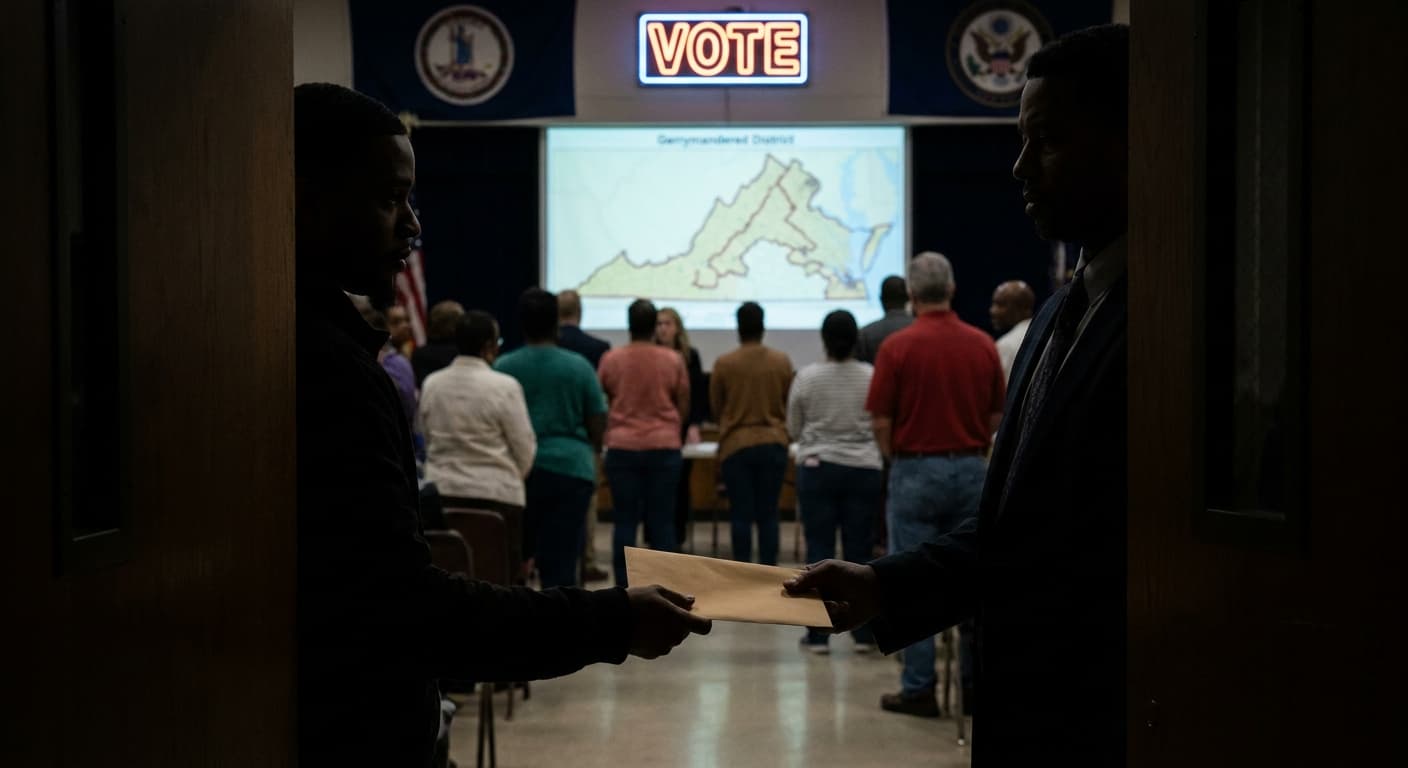
Virginia redistricting battle largely fueled by untraceable dark money
Virginia’s 2026 redistricting referendum is drawing vast sums of murky funding from national parties eager to shape future House control.
Virginia’s upcoming referendum on redistricting has become a vault for “dark money” — political funding that flows through entities obscuring donor identities. According to a Washington Post investigation published April 16, 2026, both Democratic and Republican operatives on the national level are pouring millions into the campaign, seeking to influence how Virginia’s congressional districts are drawn for the next decade Washington Post.
Why Virginia matters so much
Virginia is often a bellwether state in national politics, balancing between urban Democratic strongholds and rural Republican bases. The state’s 11 congressional districts have seen fierce swings in recent cycles, with control of the House of Representatives often pivoting on a handful of seats here.
The redistricting process currently under referendum scrutiny is meant to shift power away from state legislators and toward a more independent commission. Yet, as with many redistricting battles in the U.S., the stakes are enormous: district lines can cement partisan advantage for a decade, making it harder for the opposing party to win or even compete.
The involvement of national party committees indicates broader strategic calculations beyond Virginia’s borders. Both Democrats and Republicans recognize that securing or contesting control of the House in 2026 and 2028 hinges heavily on how districts in battleground states like Virginia are configured. Substantial, untraceable financial flows underscore the intensity and secrecy surrounding these efforts.
The dark money dimension
The Washington Post piece highlights a sharp escalation in dark money financing—funds spent through nonprofit organizations that don’t have to disclose donors under current federal rules. Unlike traditional campaign contributions, which are carefully tracked and limited, dark money can pour in from corporations, wealthy individuals, or special interest groups without public accountability.
This opacity enables national powerbrokers to exert outsized influence on state-level processes while insulating themselves from voter backlash or political fallout. The complexity and scale of these financial flows mirror similar trends seen in key states’ redistricting battles after the 2020 census, where coordinated spending drowned out local voices.
For Virginians, the flood of money complicates efforts to understand who truly controls the process and whose interests the new maps will serve. It also foreshadows ongoing battles in other states where redistricting commissions or reforms aim to curb gerrymandering, yet find themselves vulnerable to the same shadowy financing.
What to watch next
As the referendum vote approaches in November 2026, the success or failure of the redistricting commission proposal will offer a bellwether for nationwide reform efforts. A defeat could embolden partisan legislatures to redraw maps behind closed doors, continuing the cycle of gerrymandering that entrenches incumbents and frustrates voters. Passage, however, might open a path to greater transparency and fairness—if the dark money floodgates can be controlled.
Political watchers should also monitor how courts respond to challenges over redistricting and election finance transparency in Virginia and beyond. With control of the House hanging in the balance, expect more aggressive national intervention masked behind complex layers of nonprofit spending.
Virginia’s fight is not just a local issue but a frontline in the broader struggle over how American democracy is shaped—literally by the lines on a map and the invisible dollars flowing beneath them.
For further insight into U.S. redistricting politics, see our United States profile and
Global Politics pages.
Discover more

US Politics
Mejia vs. Hathaway
Analilia Mejia and Joe Hathaway face off in a pivotal New Jersey 11th District special election, a key battleground shaping the 2026 midterm landscape.
India
Congress: Modi's Delimitation Manipulation
Congress accused the Modi government of using delimitation to consolidate power in Jammu and Kashmir, urging it be separated from the women's reservation bill.

US Politics
House Republicans vs Senate
House Republicans split over DHS funding, pushing a narrow ICE and Border Patrol focus while the Senate backs a broader approach to immigration and security.

Economics
Fed's Amex AML order puts correspondent banking on notice
Federal Reserve's Amex AML order requires board-level controls and a 90-day plan; OCC fined the bank $350 million over enterprise-wide deficiencies.