Congress Faces Backlash After Defeating Key Women’s Rights Amendment
The defeat of the Constitution Amendment Bill on women’s rights draws sharp criticism, seen as a major setback in India’s gender equity progress.
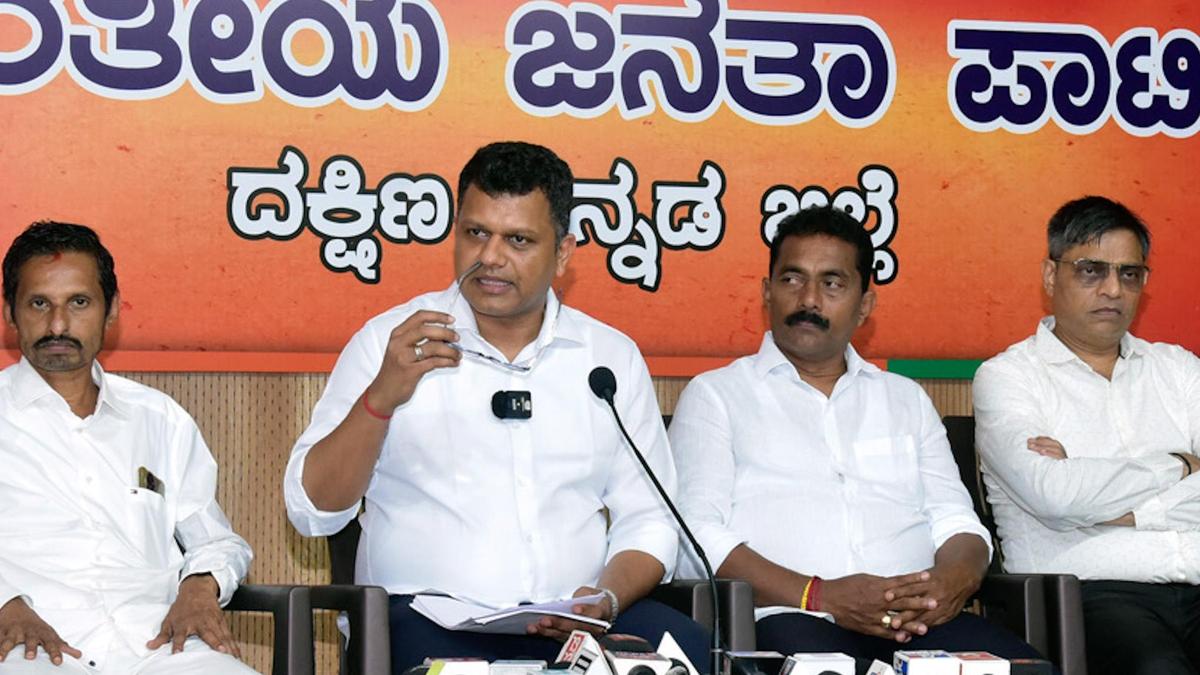
The recent defeat of the Constitution Amendment Bill intended to advance women's rights has sparked fierce criticism from political and social leaders, epitomized by Capt. Chandru Chowta’s statement branding Congress’s actions as a "betrayal" of women. The bill, which sought constitutional reinforcement of protections and rights for women, failed to secure the necessary support in Parliament, reflecting deep political divisions on gender issues.
Why This Matters
This bill aimed to strengthen the constitutional framework protecting women, potentially addressing long-standing gaps in legal and social protections from domestic violence, workplace harassment, and inequality in civic participation. Defeat of such a bill signals a lost opportunity to codify and elevate these protections at the highest legal level.
Capt. Chowta’s condemnation of Congress highlights the political implications—traditionally seen as a party aligned with progressive social causes, Congress’s opposition suggests either internal dissent or strategic repositioning. For women’s rights advocates, this signals a political environment still hostile or indifferent to gender justice reforms.
This failure must be contrasted against India’s ongoing legal reforms—such as the increasing use of rights-based laws and Supreme Court rulings expanding women’s protections. The bill’s defeat introduces uncertainty about the future trajectory of gender protection laws, especially in a polarized Parliament where advancing reform requires cross-party consensus.
Political and Social Context
India’s gender equality landscape is complex: legislative progress has been made but is often slow and contested. The Congress Party’s rejection of the bill could be balancing electoral calculations or responding to factions opposed to perceived overreach in constitutional mandates.
The backlash from activists and opposition leaders—like Capt. Chowta—can galvanize civil society to call for renewed efforts, but it also risks deepening polarization. The ruling Bharatiya Janata Party (BJP) has also courted criticism on gender issues; the defeat of the bill may reflect broader institutional challenges rather than just one party’s stance.
What to Watch Next
The key risk is momentum loss in women’s constitutional rights. Watch how women’s advocacy groups respond and whether political parties recalibrate their strategies ahead of upcoming elections or legislative sessions. The bill’s defeat could mobilize grassroots campaigns, compelling parties to revisit gender rights under public pressure.
Also watch for Congress’s internal discourse and leadership signals about their future position on women’s rights legislation. How opposition parties handle this issue could reshape India’s gender justice debate ahead of 2027’s national polls.
This development underscores the precarious nature of gender rights reforms in India’s polarized political arena, where legislative victories depend not just on policy merit but complex political calculations. Capt. Chowta’s stark language signals a growing impatience with political inertia on gender issues.
 Source: The Hindu
Explore more on  India and Global Politics.