

Diplomat Briefing
Iran's Response to US Proposal — Global Politics Briefing, May 10, 202
·5 developments
For the complete documentation index, see llms.txt.Skip to main content
Three concurrent ceasefires — in Iran, Ukraine, and along the India-Pakistan Line of Control — are all holding in name only, while the only diplomacy with real momentum is the one no one can yet call a peace deal.
The architecture of the US-Iran war has compressed into a single question: will Tehran accept, reject, or counter a 14-point memorandum of understanding that Washington — led by envoys Steve Witkoff and Jared Kushner — has placed before Pakistani mediators. The document, reported by Axios and confirmed in broad terms by Iranian and US officials, would require Iran to halt uranium enrichment for at least 12 years and surrender an estimated 440 kilograms of uranium enriched to 60 percent. In exchange, the US would lift sanctions, release frozen Iranian assets, end its naval blockade of Iranian ports, and both sides would reopen the Strait of Hormuz within 30 days of signing. On paper, the outlines of a deal exist. In practice, the gap is still wide: Iranian officials have publicly insisted they are "not negotiating their nuclear programme" at this stage — they want the war formally ended first, with UN Security Council guarantees against renewed strikes, before any discussion of enrichment. A senior Iranian parliamentary spokesperson dismissed the US document as a "wish list."
The diplomatic impasse is running alongside active combat. On May 8–9, US forces disabled two Iranian oil tankers attempting to breach the American port blockade, and struck Iranian military facilities in the Strait of Hormuz after three Navy ships came under attack. Iran simultaneously fired two ballistic missiles and three drones at the United Arab Emirates, wounding three people — the UAE's air defenses intercepted most of the salvo. Neither side has formally declared the April 8 ceasefire dead. Trump insists it is "holding." Iran's Foreign Minister Abbas Araghchi called the US strikes a "reckless military adventure" that violated the truce. The decisive actor here is Pakistan, which is transmitting messages between Washington and Tehran "day and night," according to Prime Minister Shehbaz Sharif — making Islamabad the single chokepoint through which any deal must pass. Tehran has not yet delivered its formal written response.
Making the standoff structurally harder to resolve: Iran has now created a body called the Persian Gulf Strait Authority — a government agency that vets and levies tolls on ships seeking passage through the Strait. Secretary of State Marco Rubio called it "unacceptable" and asked pointedly whether the world would accept Iran controlling an international waterway. The answer from shipping markets is already in: roughly 1,500 vessels remain bottled up in the Persian Gulf, unable to reach open sea. Oil prices remain elevated. Trump, for his part, has oscillated wildly — pausing "Project Freedom" (a US-escorted convoy initiative) on Tuesday citing deal progress, then warning the same morning that bombing at "a much higher level and intensity" would resume if no agreement materialized. Former Pentagon Middle East adviser Mick Mulroy noted the pause may have had as much to do with the fact that commercial ships refused to transit even under a US security umbrella as with any diplomatic breakthrough.
BBC |
Al Jazeera |
NPR / AP |
Washington Post
Putin's unilateral three-day truce — timed to cover the May 9 Victory Day parade in Moscow — ends Saturday night, and the ball is now visibly in his court. Ukraine accused Russia of nearly 4,000 instances of shelling and roughly 200 front-line clashes during the truce's first 48 hours; Moscow says it observed the ceasefire and was responding only to Ukrainian violations. The practical outcome: German Chancellor Friedrich Merz has publicly stated the truce can and should be extended to 30 days, and that Russia must now make that choice. UK Prime Minister Keir Starmer, Macron, and other European leaders traveled to Kyiv in a deliberate counter-signal to the 20-plus world leaders who attended Putin's parade in Moscow — a piece of stagecraft aimed at locking Trump's 30-day unconditional ceasefire demand to European diplomatic pressure. Zelensky's posture has hardened symmetrically: he told Trump in a phone call that a 30-day ceasefire is the only "real indicator" of movement toward peace, and he has refused to treat the Victory Day truce as anything other than a "theatrical show." Watch Moscow's response to the 30-day demand by Monday — that is when Washington's patience, and its threat of further sanctions, will be tested.
BBC |
The Guardian |
BBC
Four days before Trump lands in Beijing for his first China visit in nearly a decade, the pre-summit positioning has reached its most consequential phase. China's Ministry of Commerce and National Development and Reform Commission have been tasked with mapping concessions across trade, supply chain, and Taiwan — but a breakthrough on the last is assessed as "highly unlikely" by sources familiar with the preparations. The structural play is Beijing's: China rolled out new regulations in April that lay legal groundwork for punishing foreign companies seeking to shift supply chains away from China, a direct countermove against Washington's "derisk" agenda. The Trump administration has stayed conspicuously silent on those rules — a signal, one US industry source told Reuters, that the White House is "preserving strategic stability" ahead of the summit rather than fighting on two fronts while the Iran war drains political capital. The Iran war is the summit's hidden variable: Wang Yi told Araghchi in Beijing on Wednesday that reopening the Strait of Hormuz is an "urgent priority" — China imported 1.38 million barrels of Iranian crude per day in 2025, roughly 12 percent of its total oil supply, and the Strait closure is an economic body-blow that Beijing cannot absorb indefinitely. Trump's presence in Beijing could produce a US-China framework on Hormuz even if the Iran deal itself remains unsigned.
The Straits Times |
South China Morning Post |
BBC
The Iran war has done in three months what years of Trump's NATO skepticism never quite accomplished: forced European capitals to plan seriously for a US-optional alliance. Spain refused Washington access to two joint bases for Iran operations. Starmer declared publicly "this is not our war" and said he is "fed up" with the economic costs of both Putin's and Trump's actions. Germany's Defense Minister Pistorius unveiled the country's first comprehensive military doctrine since the Cold War, targeting a 460,000-strong force by the mid-2030s with Russia identified as NATO's principal threat. France's Charles de Gaulle carrier group has transited the Suez Canal; Britain's HMS Dragon is pre-positioning in the Middle East for a potential Hormuz escort mission. The operative constraint: a 2023 US law prevents Trump from unilaterally withdrawing from NATO. The practical reality: former NATO Supreme Allied Commander Townsend assessed the alliance's future as "a European NATO" — guided by Germany, France, Britain, and an increasingly assertive Poland — regardless of whether the US formally exits.
Kim Jong Un's dual announcements this week complete a years-long legal and military transition. North Korea's newly revised constitution has dropped all references to Korean unification, formally redefining the DPRK's sovereign territory as only the northern half of the peninsula — enshrining in law what Kim declared politically in January 2024. Simultaneously, Kim ordered the deployment of new 155mm self-propelled howitzers with a 60-kilometer strike range to southern border positions before year-end, directly targeting the Seoul capital region's 10 million residents. The destroyer Choe Hyon — North Korea's largest and most advanced warship — is on track for navy commissioning by mid-June, giving Pyongyang its first credible blue-water naval deterrent. Analysts note Kim has been closely studying lessons from the Iran conflict: the DPRK's state media framing of both the howitzer deployment and the destroyer program has consistently invoked "nuclear war deterrence" rather than conventional capability, signaling that Pyongyang intends its naval platforms to carry nuclear-capable cruise missiles. Seoul's liberal government, which has sought re-engagement and even shut down propaganda broadcasts, is absorbing these moves with no diplomatic response in sight.
NPR / AP |
South China Morning Post
1,500 — Commercial vessels currently bottled up inside the Persian Gulf, unable to reach open sea through the Strait of Hormuz. South Korea, which sourced over 60% of its crude through the Strait last year, has now capped domestic fuel prices as a stopgap. NPR / AP
460,000 — Troops Germany's new defense doctrine targets by the mid-2030s, including 200,000+ active-duty personnel — the largest conventional land force commitment by Berlin since the Cold War. NPR
Bahrain Is Running a Gulf-Wide Political Purge — and Setting a Template
Bahrain arrested 41 people on May 9 for alleged links to Iran's Islamic Revolutionary Guard Corps, the third major roundup since the war began in late February. In April, King Hamad's government stripped 69 people of citizenship for "sympathizing with Iran." The UAE conducted its own mass IRGC-network arrests in April. These are not routine security operations: Bahrain's Shia majority — long accused by the government of being a vector for Iranian influence — is bearing the institutional brunt of a war it had no part in starting. The London-based Bahrain Institute for Rights and Democracy has called the citizenship revocations a violation of international law; the arrested individuals have not been publicly identified. The pattern matters beyond Bahrain: Gulf states that hosted US forces during the Iran war are now using the conflict's security rationale to accelerate domestic political consolidation against Shia communities, a dynamic that will outlast any ceasefire and carry long-term regional destabilization risks that current diplomacy is entirely ignoring.
Diplomat Briefing — Daily political intelligence.
Read more:
Today's stories
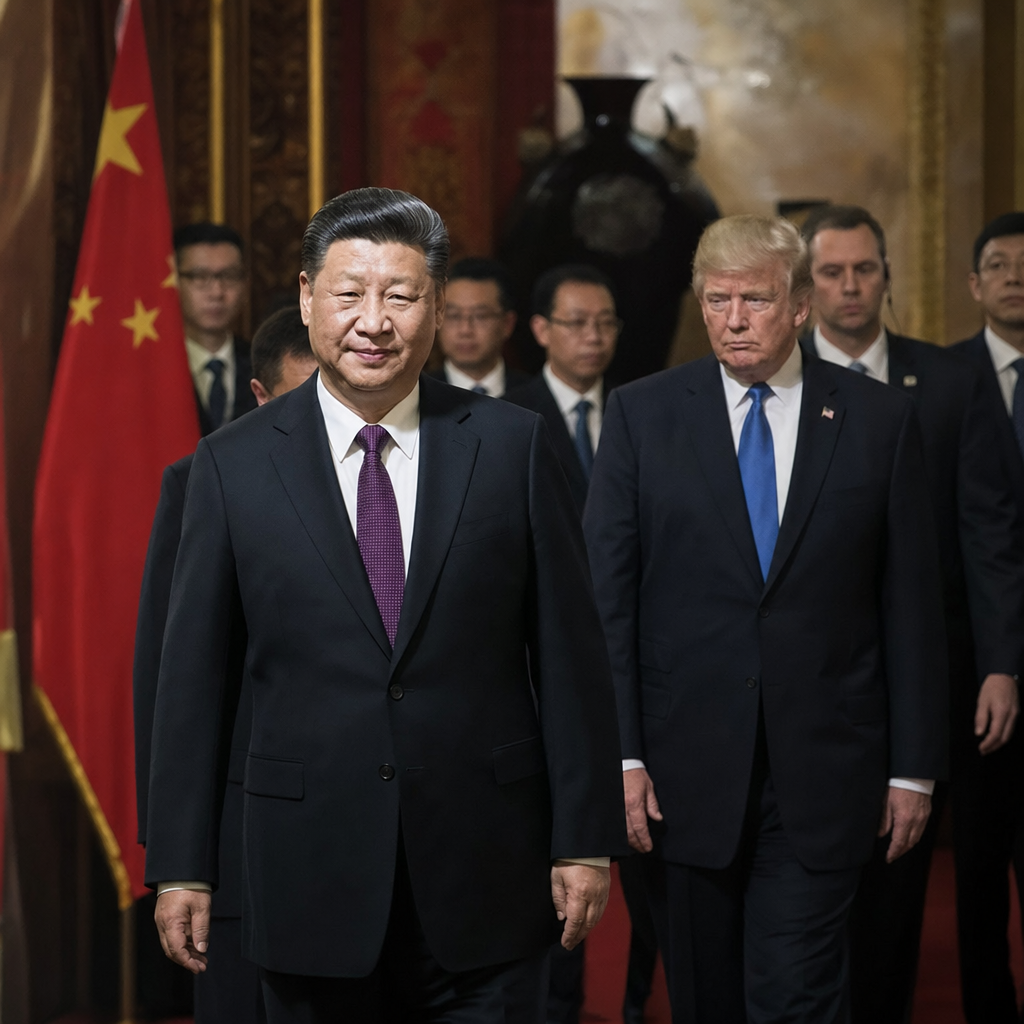
Trump's China visit reveals a power imbalance favoring Xi Jinping.
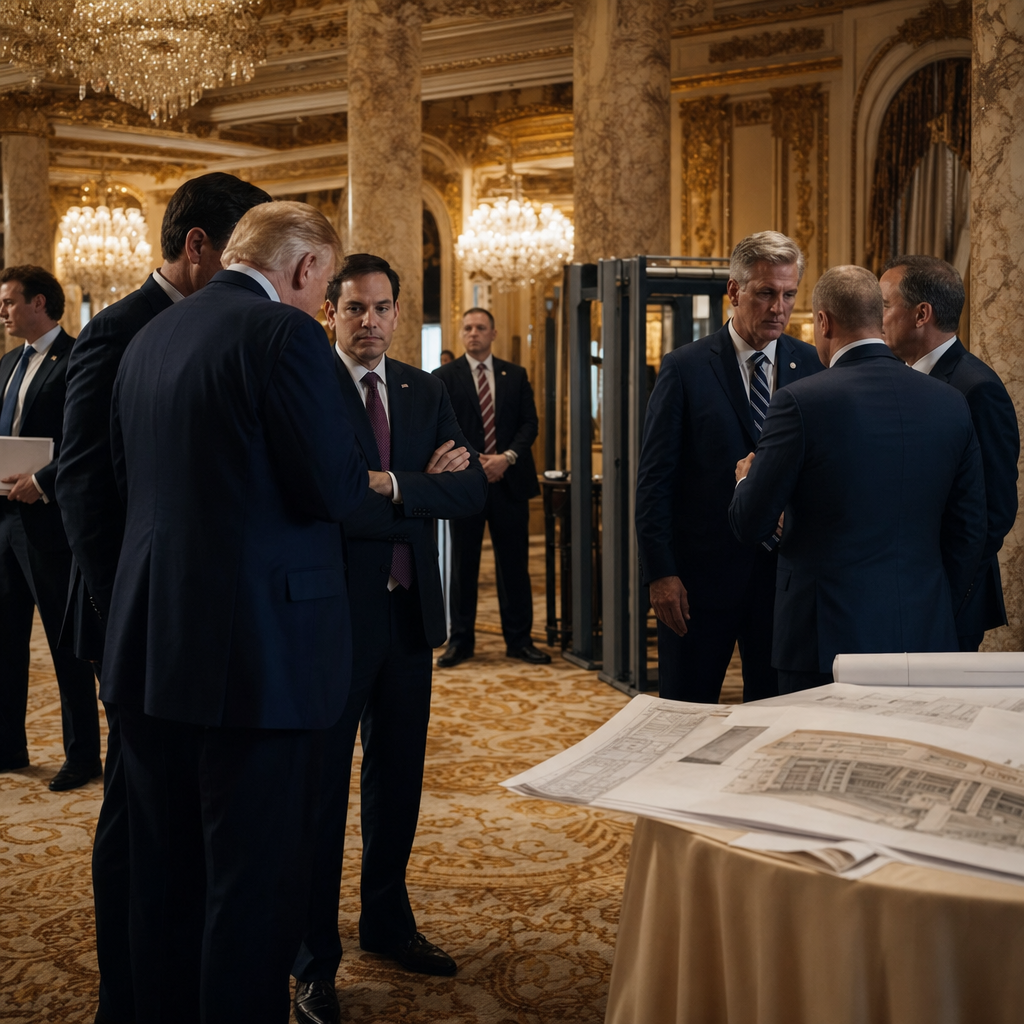
Republicans are divided over a $1 billion security request for Trump's ballroom.
The ECI's voter roll clean-up reaches 22 states, but faces political and operational hurdles.
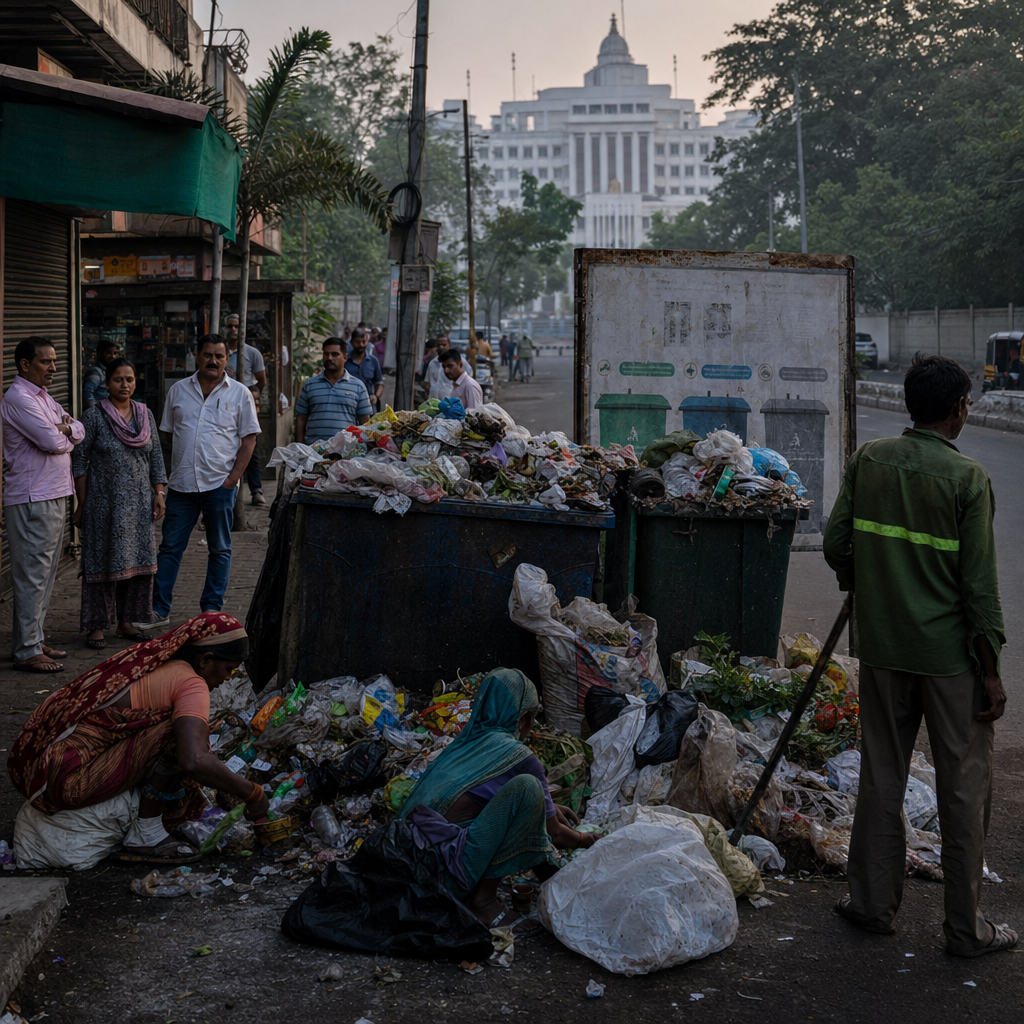
India's new waste management rules risk failing due to lack of local support.
Senate GOP leaders push for $1 billion in security funding for Trump.