

Diplomat Briefing
Trump Lands in Beijing with a Weak Hand — Global Politics Briefing, 05
·6 developments
For the complete documentation index, see llms.txt.Skip to main content
The world's two crisis arcs — Iran's strangled Strait and Ukraine's collapsed ceasefire — are converging on one summit in Beijing, where Xi Jinping holds more leverage than he's had in a decade.
Donald Trump departed Washington on Tuesday and arrived in Beijing for a less-than-48-hour state visit that was supposed to be about soybeans and Boeing orders. It is now dominated by a war. The US-Iran ceasefire — brokered by Pakistan in April after weeks of US-Israeli strikes that killed Supreme Leader Khamenei — is, in Trump's own words, on "massive life support." Iran's latest peace proposal, delivered through Islamabad on Sunday, demanded war reparations, full sovereignty over the Strait of Hormuz, an end to sanctions, and release of frozen assets — while deferring nuclear talks entirely. Trump dismissed it as "garbage." That rejection has left the Strait — through which roughly 20 percent of the world's oil and LNG normally flows — effectively blockaded for a second month, driving fuel prices and inflation that are already dragging Trump's approval ratings down.
Xi enters this summit holding leverage he did not expect to have. China is Iran's largest oil buyer, has maintained its strategic partnership with Tehran throughout the conflict, and was credited with helping push Iran toward the initial April ceasefire. Iran's FM Araghchi was in Beijing just last week to brief Wang Yi before Trump's arrival — a deliberate sequencing. US Secretary of State Rubio and Treasury Secretary Bessent have both publicly called on China to press Tehran to reopen the Strait. Trump, in an apparent contradiction, told reporters Tuesday he doesn't need Xi's help with Iran. Senior US officials privately think otherwise: Washington needs Chinese rare earth minerals to replenish missile interceptors depleted in the campaign against Iran, and the economic deliverables for the summit — a proposed US-China Board of Trade, soybean and aircraft purchases — are, per the Atlantic Council's Melanie Hart, "still in flux" with nothing nailed down ahead of arrival. Xi, meanwhile, is expected to press for concessions on the $11 billion US arms package for Taiwan. The summit runs Thursday–Friday.
Al Jazeera |
NPR |
Al Jazeera
Russia test-fired the Sarmat intercontinental ballistic missile on Tuesday, with Putin declaring it combat-ready for deployment by year's end. The RS-28 "Satan II" has a claimed range exceeding 35,000 km — suborbital flight capable of reaching any point on Earth — and Putin says its warhead yield is more than four times that of any Western equivalent. The test follows a failed 2024 attempt that produced a massive explosion at the launch site, and comes with New START — the last treaty capping US and Russian strategic warheads — having expired in February, leaving the two largest nuclear arsenals on the planet without any formal constraints for the first time in over 50 years. Trump has pushed for any successor agreement to include China; Beijing has publicly refused. The Sarmat test is timed to underscore Russia's negotiating floor on any future arms control architecture, and to signal to Washington — mid-summit week — that Moscow's strategic posture is not contingent on Ukraine diplomacy.
Russia fired more than 200 long-range drones at Ukraine overnight as the US-brokered 72-hour "humanitarian" truce — timed to overlap with Russia's May 9 Victory Day — expired. Strikes hit energy infrastructure in Mykolaiv, residential buildings and a kindergarten in the Kyiv region, and multiple sites across Kharkiv, Zhytomyr, Sumy, and Chernihiv. Zelenskyy said Russia was never observing the truce and is "preparing for new attacks." The Kremlin's Peskov confirmed the "special military operation" was resuming while simultaneously claiming the "end is drawing near" — a formulation EU foreign policy chief Kaja Kallas read as a sign Putin is "not in a strong position." Ukraine retaliated by striking distant Russian gas facilities. The core problem for Kyiv is that US-led Ukraine talks have been largely crowded out by the Iran crisis, and a reported Washington proposal for a new ceasefire is drawing concern in Kyiv for lacking any security guarantees.
Defence Minister John Healey announced Tuesday that Britain will contribute Typhoon fighter jets, mine-hunting autonomous systems, drone boats, and HMS Dragon — an air defence destroyer already en route to the Middle East — to a multinational mission to restore commercial shipping through the Strait of Hormuz. The announcement came at a virtual summit of defence ministers from more than 40 nations, co-hosted by the UK and France. The £115 million package is explicitly framed as defensive and independent of the US blockade — a distinction Downing Street has deliberately maintained, with London refusing to endorse Washington's naval blockade of Iranian ports while still treating Hormuz reopening as its "number one priority." The political subtext is domestic: Healey used the announcement to publicly back Prime Minister Keir Starmer, who is facing calls to resign from dozens of Labour MPs.
Benjamin Netanyahu's governing coalition moved toward collapse Tuesday after ultra-Orthodox faction Degel HaTorah publicly called for the Knesset to be dissolved, saying it has "no trust in Netanyahu anymore." The trigger: Netanyahu told ultra-Orthodox leaders he would not advance draft-exemption legislation before elections. Israel's Supreme Court ordered the state to begin conscripting Haredi men last year; the military needs the manpower; Netanyahu's coalition partners need the exemption. A parliamentary dissolution vote is expected next week, which would put elections roughly three months out — Israeli media are widely reporting September as the target date, with a legal deadline of October 27. Former PM Naftali Bennett, running with centrist Yair Lapid, is leading in polls. Netanyahu would remain acting PM through any transition — and would face it while managing active military operations in Lebanon, Gaza, and the aftermath of the Iran war.
EU foreign ministers in Brussels unanimously agreed Monday to impose sanctions on leaders of Hamas and of the Israeli settler movement in the occupied West Bank — a decision unlocked by a single political change: the April 2026 election defeat of Viktor Orbán in Hungary, who had single-handedly vetoed earlier attempts for years. French FM Jean-Noël Barrot confirmed the agreement covers both Hamas figures and settler leaders and organisations. The bloc stopped short of banning settlement goods or suspending the EU-Israel trade agreement, with Italy and others seeking more time, but Spain and Ireland signalled they are prepared to push for stronger measures if the broader process stalls. A committee will now finalise the individual sanctions list. The episode illustrates how one government's domestic election result can unblock years of EU foreign policy paralysis.
380 — Palestinians killed in Lebanon during the April 16 "ceasefire," bringing the total death toll since Israel's March 2 invasion to over 2,800. Israel's air force has struck more than 1,100 sites in Lebanon since the truce nominally began, while Hezbollah chief Naim Qassem declared Tuesday his group's weapons are "not part of negotiations." Al Jazeera
112 — Nations co-sponsoring a Bahrain-led UN Security Council resolution calling for freedom of navigation through the Strait of Hormuz, including the EU's majority, India, South Korea, and most Gulf states. A previous resolution was vetoed by China and Russia. Al Jazeera
Museveni's Seventh Term Formalises Africa's Longest-Running Authoritarian Entrenchment
While every diplomatic eye was on Beijing and Tehran, Yoweri Museveni was sworn in Tuesday in Kampala for a seventh presidential term — extending a 40-year grip on Uganda that he once said represented Africa's core governance failure. The January election was held under a nationwide internet blackout, with Human Rights Watch documenting mass arrests, two disappeared senior opposition leaders, and at least one rally death. Opposition leader Bobi Wine received 24.7 percent of the vote and alleged massive ballot-stuffing. Museveni twice amended Uganda's constitution to erase term and age limits. Why it matters beyond Uganda: Museveni's uncontested re-coronation normalises a template — constitutional manipulation, selective repression, landslide numbers — that is being replicated across the continent, and the international community's near-silence this week, consumed by the Hormuz crisis and the Beijing summit, makes it dramatically cheaper to repeat.
Diplomat Briefing — Daily political intelligence.
Read more:
Today's stories
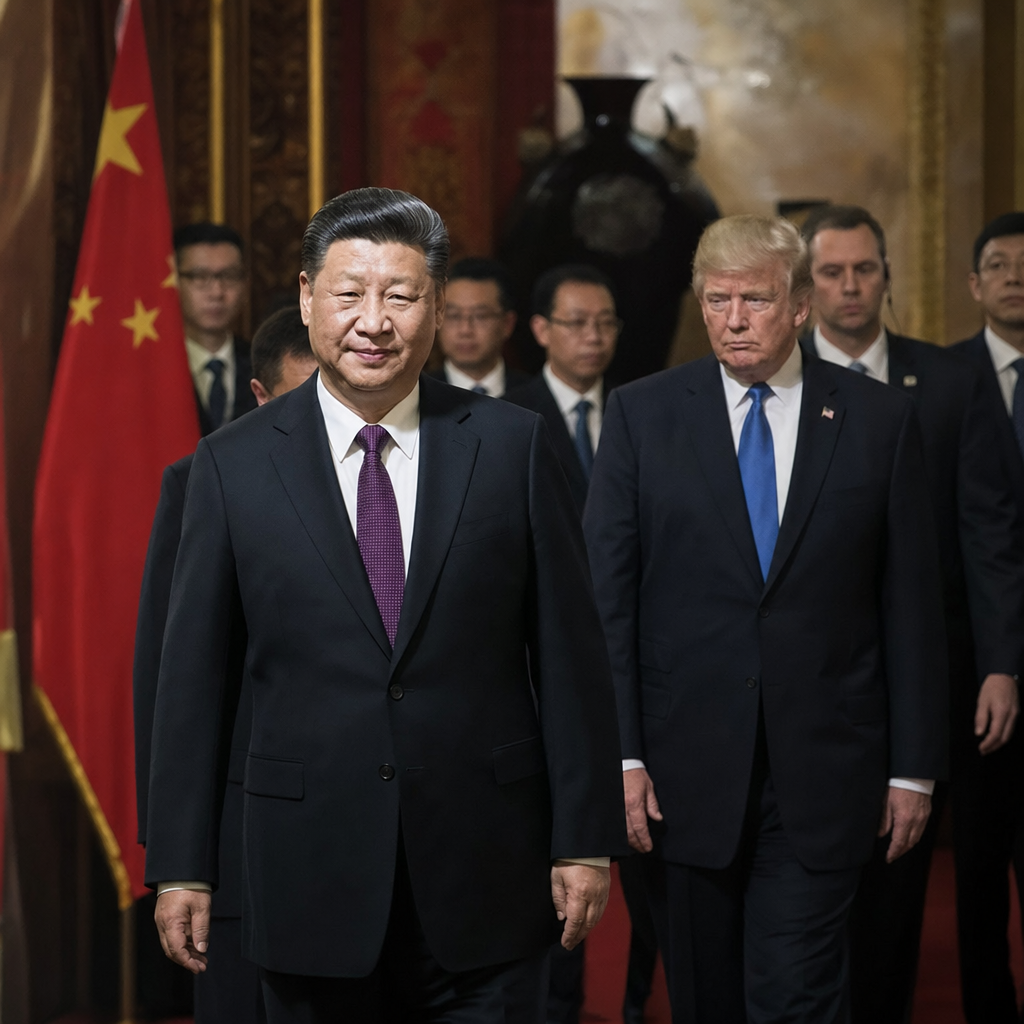
Trump's China visit reveals a power imbalance favoring Xi Jinping.
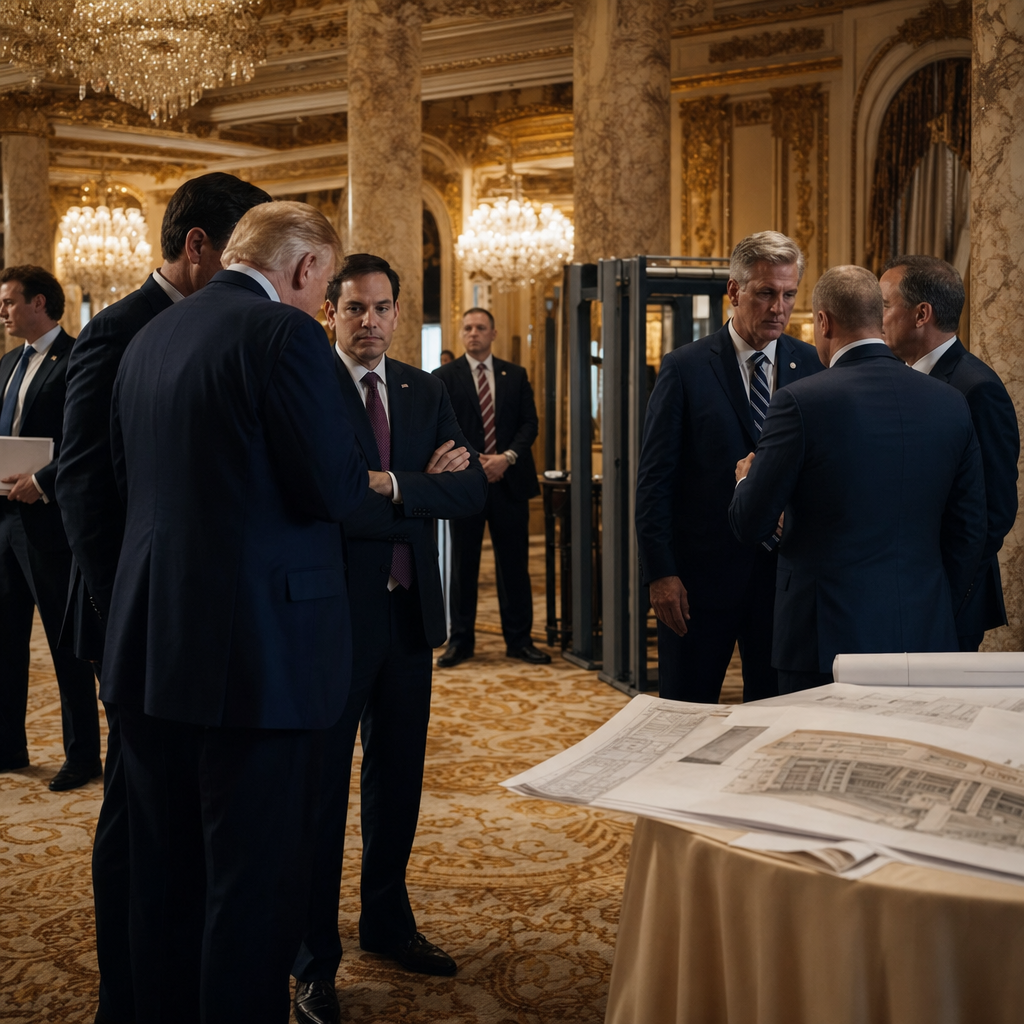
Republicans are divided over a $1 billion security request for Trump's ballroom.
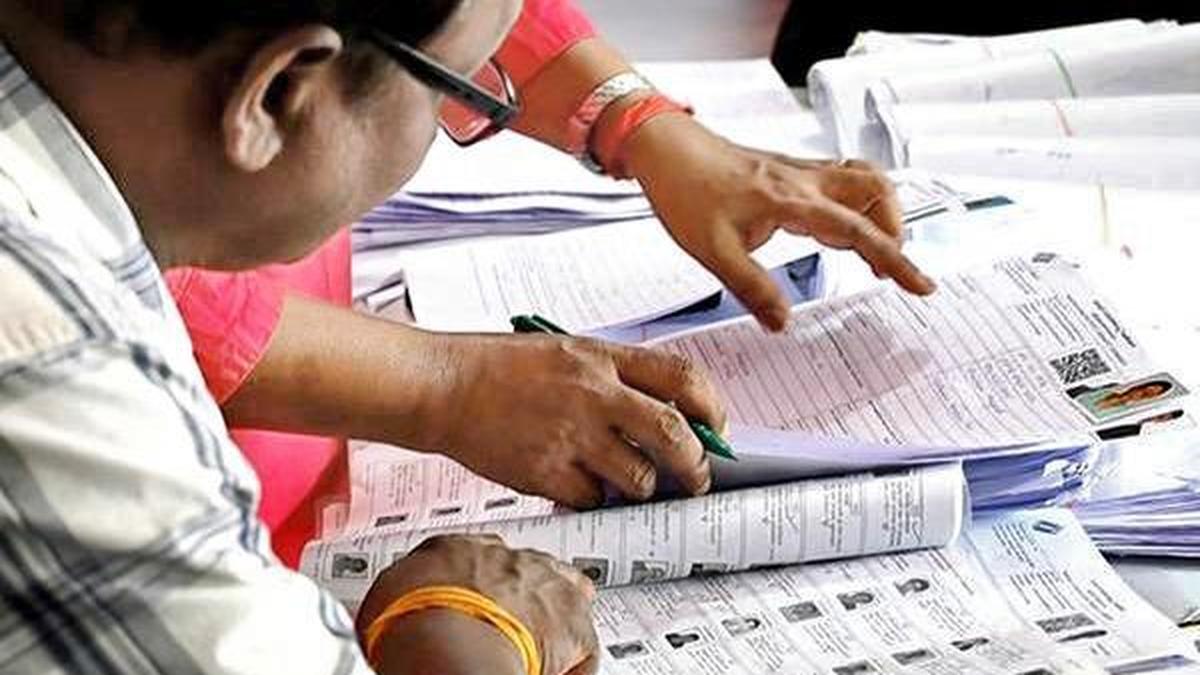
The ECI's voter roll clean-up reaches 22 states, but faces political and operational hurdles.
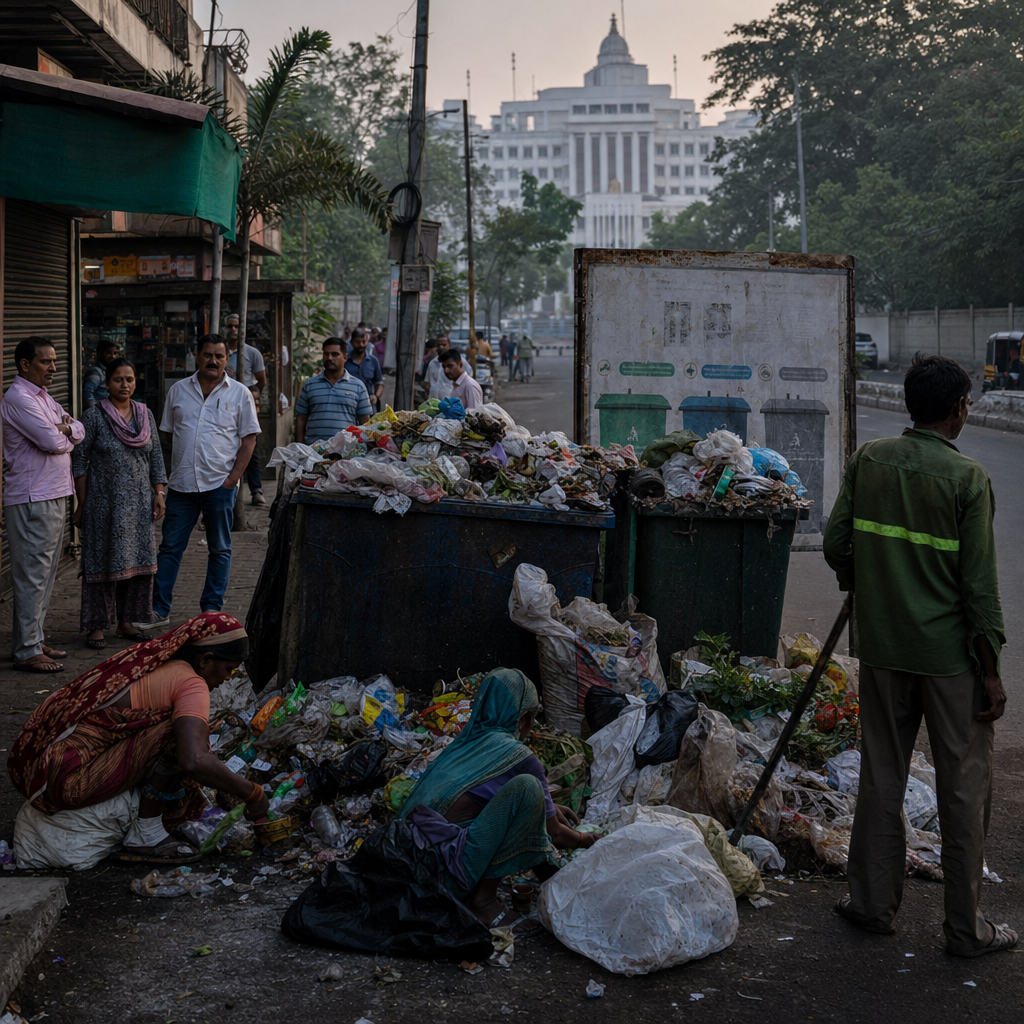
India's new waste management rules risk failing due to lack of local support.
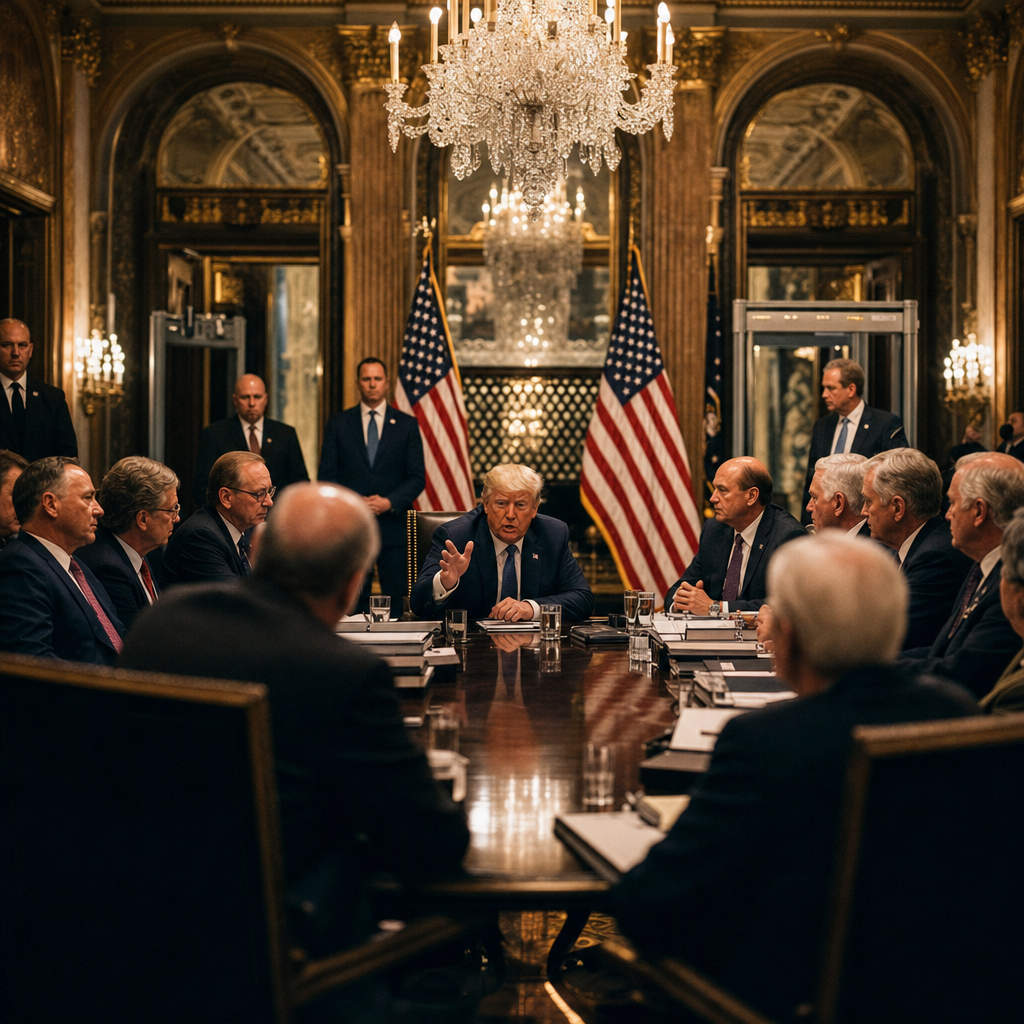
Senate GOP leaders push for $1 billion in security funding for Trump.