Zelensky Critiques US Russian Oil Sanctions
Ukraine's president escalates response to US oil waiver.
Model Diplomat7 min readUkraine
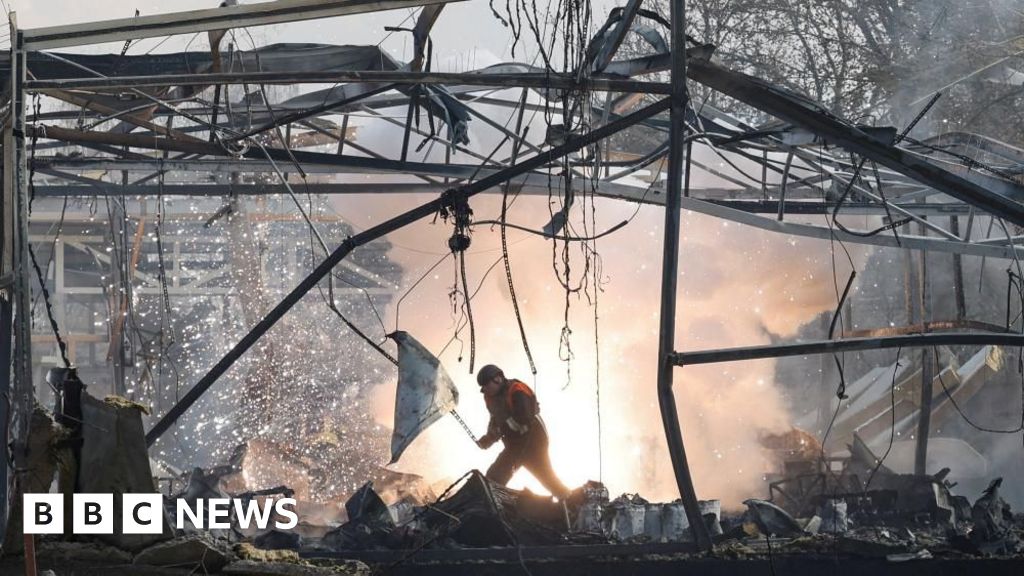
Zelensky's Oil-Waiver Fight With Washington Turns Kinetic
Ukraine's president called the US Russian-oil sanctions waiver a $10 billion gift to Moscow. Four months on, Kyiv is answering with drones, not diplomacy.
On April 19, 2026, Ukrainian President Volodymyr Zelensky said 110 tankers of Russia's shadow fleet held over 12 million tons of oil worth roughly $10 billion to the Kremlin — money he called "a resource that is directly converted into new strikes against Ukraine," according to BBC News. His condemnation of the Trump administration's rolling sanctions waiver has not moved Washington. What it has done is furnish Kyiv with the political cover to attack Russian oil infrastructure and shadow-fleet tankers directly — a shift that, by July 2026, has drawn the United Kingdom and France into interdictions the White House itself will not authorise.
That is the story behind the diplomatic dispute. The US–Ukraine argument over General License 134 is no longer about persuading Treasury Secretary Scott Bessent to reverse course. It is about what Kyiv now feels entitled to do because he will not.
What Washington actually did
The waivers date to the US–Israel war on Iran and Tehran's effective closure of the Strait of Hormuz, which normally carries roughly one-fifth of global seaborne oil. On March 12, 2026, the Treasury's Office of Foreign Assets Control issued General License 134, authorising the delivery and sale of Russian-origin crude and petroleum products already loaded on vessels — including OFAC-sanctioned vessels — through April 11. The order was updated one week later as
GL 134A, signed by OFAC Director Bradley T. Smith.
The text is narrow on its face. It covers only oil loaded before March 12 and excludes cargoes involving Iran, North Korea, Cuba, and Russian-occupied Ukrainian territory. It says nothing about the G7 price cap or payment channels. In practice, according to the Council on Foreign Relations, "GL 134A effectively suspended the cap on Russian oil for covered cargoes for U.S. persons," CFR wrote. That is the loophole Zelensky is attacking.
Bessent has extended the licence twice: on April 17 through May 16, and again on May 19 through June 17, telling markets the goal was to "provide the most vulnerable nations with the ability to temporarily access Russian oil currently stranded at sea," Al Jazeera reported. He framed the policy as a supply-management tool for India, the Philippines and South Korea while the Strait of Hormuz remains closed.
The number Kyiv keeps citing
Zelensky's $10 billion figure — first delivered from Paris on March 13 alongside French President Emmanuel Macron — is the ceiling estimate for the initial 30-day tranche of roughly 100 million barrels, Al Jazeera reported. It has since been superseded by harder numbers. The Atlantic Council's Energy Sanctions Dashboard
estimates that Russia has moved approximately 300 million barrels to international markets since the waivers were issued, with Indian imports of Russian crude rising 41 percent month-on-month in March — levels not seen since before the 2022 invasion.
The most authoritative counter-estimate comes from the Stanford Freeman Spogli Institute. Its May 11 assessment concludes that extending GL 134 through December 2026 would generate an additional $36.1 billion in Russian export revenues — equivalent to 2.1 percent of GDP and 13.3 percent of total exports, Stanford FSI reported. Those gains, the report argues, flow primarily to Rosneft and Gazprom, entities that the Yale Humanitarian Research Lab has linked to the forcible transfer of Ukrainian children — a policy classed as crimes against humanity by the March 2026 UN Independent International Commission of Inquiry.
That framing is important because it lands the waiver in the vocabulary of international humanitarian law, not energy policy. It is also the framing Kyiv is now using operationally.
What Zelensky said, precisely
On April 19, on X, Zelensky wrote:
"Every dollar paid for Russian oil is money for the war. This is a resource that is directly converted into new strikes against Ukraine."
He added that the extension would allow the sale of "more than 110 tankers" of shadow-fleet crude — worth about $10 billion — and demanded that "Russian tankers are stopped, not allowed to deliver oil to ports," according to France 24 and
RFE/RL. Two days earlier, in a separate row with Brussels, Zelensky had already accused European allies of "blackmail" for pushing Ukraine to reopen the Druzhba pipeline to Hungary and Slovakia, telling reporters in Kyiv that restoring transit "is no different from lifting sanctions on the Russians,"
BBC News reported.
That is a Ukrainian president fighting a two-front sanctions war — against the American waiver and against European pipeline exemptions — with the same argument: no exceptions, no matter the energy shock.
The pivot from complaint to interdiction
Washington did not blink. What happened instead is that the coalition around Ukraine began enforcing the sanctions regime kinetically while the White House loosened it on paper.
On June 14, Royal Marines and National Crime Agency officers roped down from Chinook helicopters onto the shadow-fleet tanker MT Smyrtos in the English Channel — the first UK-led interdiction of a Russian oil tanker. The Cameroon-flagged vessel had loaded 700,000 barrels at Ust-Luga and was bound for Port Said, according to the UK Ministry of Defence. The MoD statement described the shadow fleet as "over 700 vessels" carrying 75 percent of Russia's sanctioned oil and a "critical lifeline for the Kremlin." Its captain, Ajay Pant, was charged with supplying prohibited oil to a third country and is due at Bournemouth Crown Court on July 16,
BBC News reported.
The MoD explicitly invoked Article 110 of the UN Convention on the Law of the Sea — the right of visit to a stateless vessel — to justify the boarding. That legal framework had, per analyst Peter Caddick-Adams, "sat in place for 11 weeks" with more than 200 sanctioned tankers passing unchallenged through the UK's exclusive economic zone before Downing Street acted, Al Jazeera reported. Zelensky thanked Prime Minister Keir Starmer publicly for "principled resolve." Two weeks earlier, France had launched a similar operation to seize the tanker Grinch in the Mediterranean,
BBC News reported.
Ukraine itself has gone further. Kyiv has struck at least seven shadow-fleet tankers with drones and mines over recent months, and on July 4 hit the Ust-Luga oil terminal outside St Petersburg — knocking out an estimated 60 percent of the port's capacity, Zelensky told reporters, according to BBC News. He acknowledged in the same message that allies had privately asked him to scale back attacks on Russian energy infrastructure to relieve global fuel prices. He refused.
Who benefits, who loses
The distributional picture from the waivers is now legible.
Russia is the clearest beneficiary. Reuters and Bloomberg estimates cited by the Council on Foreign Relations put the extra revenue at roughly $150 million per day, or $3.3–5 billion in March alone, before subsequent extensions. According to the International Energy Agency, Russia's crude exports in April rose by 250,000 barrels per day to 4.9 million bpd, per Al Jazeera.
India is the immediate commercial winner. Indian refiners agreed to purchase about 60 million barrels of Russian crude at premiums of $5–15 above Brent, CFR reported. Russian crude now supplies roughly 20 percent of Indian imports, per BBC News.
China is a quiet loser. Bessent explicitly said the extension was designed "to reroute existing supply to countries most in need by reducing China's ability to stockpile discounted oil," according to Al Jazeera. That is a rare piece of transactional sanctions logic aimed at Beijing rather than Moscow.
Ukraine and the European sanctions coalition absorb the strategic cost. The Atlantic Council's analysis is blunt: "The Russia general license issued in March 2026 effectively superseded the price cap, easing both restrictions on Russian oil majors and the price cap itself." The G7 cap — lowered by the EU to $44 — is now a paper regime for anyone relying on US enforcement.
The historical parallel
There is a precedent for what Zelensky is doing. In 2019, when the Trump administration first-term granted sanctions waivers to buyers of Iranian oil, Israel did not lobby Washington to reverse them; it began striking Iranian oil tankers itself, contributing to what became the "tanker war" of 2019–2020 in the Gulf of Oman. Zelensky's shift to strikes on Russian tankers and refineries, coupled with UK and French interdictions, follows the same template. When the hegemon writes a waiver, aligned states enforce the underlying norm with force.
That parallel matters for the White House's own leverage. Bessent's waivers were meant to preserve US market power over the oil price. Every drone strike on a Novorossiysk-bound tanker and every Royal Marines boarding in the Channel demonstrates that the sanctions regime survives without American enforcement — and it survives in a form Washington no longer controls.
What to watch
- The Bournemouth Crown Court hearing on July 16, 2026, where MT Smyrtos captain Ajay Pant faces charges under the Russia (Sanctions) (EU Exit) Regulations 2019. A conviction would be the first Western criminal precedent for shadow-fleet crewing.
- The next OFAC extension of General License 134. Bessent extended it to June 17; the pattern of 30-day rolls will test whether Congress — where Senators Jeanne Shaheen and Elizabeth Warren have called the waiver an "indefensible gift" to Putin, per
Al Jazeera — moves to constrain the executive's use of general licences.
- The status of the Strait of Hormuz. Bessent has tied the waiver's justification to the closure. Any resumption of Gulf traffic removes the market rationale and forces the administration to choose between renewal on political grounds alone and letting the licence lapse.
- Ukrainian strikes on Baltic export terminals. Ust-Luga was hit on July 4; Primorsk, from which the Forwarder loaded on June 12, is the next likely target. Kyiv has effectively signalled that as long as GL 134 remains in force, its answer will not be a diplomatic protest — it will be a drone.
The Bottom Line
Zelensky's critique of the US Russian oil sanctions waiver has already lost the argument in Washington — Bessent has extended General License 134 twice, and Stanford estimates a full-year extension gifts Moscow $36.1 billion. What Kyiv extracted instead is the political permission to enforce the sanctions regime with drones and marines. The story of the waiver is no longer about American policy; it is about who is prepared to police Russian oil when America will not.
*
Discover more
Conflict & Security
Moscou transforme le 9-Mai en test de loyauté
Moscou transforme le défilé du 9-Mai en test de loyauté envers le Kremlin, plaçant la Russie, l'Ukraine et Zelensky au cœur d'un bras de fer symbolique tendu.

Global Politics
Zelensky Slams New Western Sanctions Amid Str
Zelensky criticizes US sanctions waivers that funded Russia's war efforts, urging stronger action from allies at NATO summit.

Conflict & Security
Drone Warfare Killing Aid Workers at Unprec
Over 1,000 humanitarian workers killed in three years as cheap armed drones collapse legal protections. Gaza, Sudan, Ukraine, and DRC see deliberate targeting of aid convoys and hospitals with zero prosecutions.
Global
World Normalises Taliban as Afghan Women Eras
UN data shows Afghan women erased from public life as Russia recognises the Taliban, EU hosts officials in Brussels, and ICC warrants for gender persecution go unenforced.