U.S. Cuts Refugee Maternal Care in CAR
Aid reductions threaten childbirth safety for refugees.
Model Diplomat3 min readAfrica
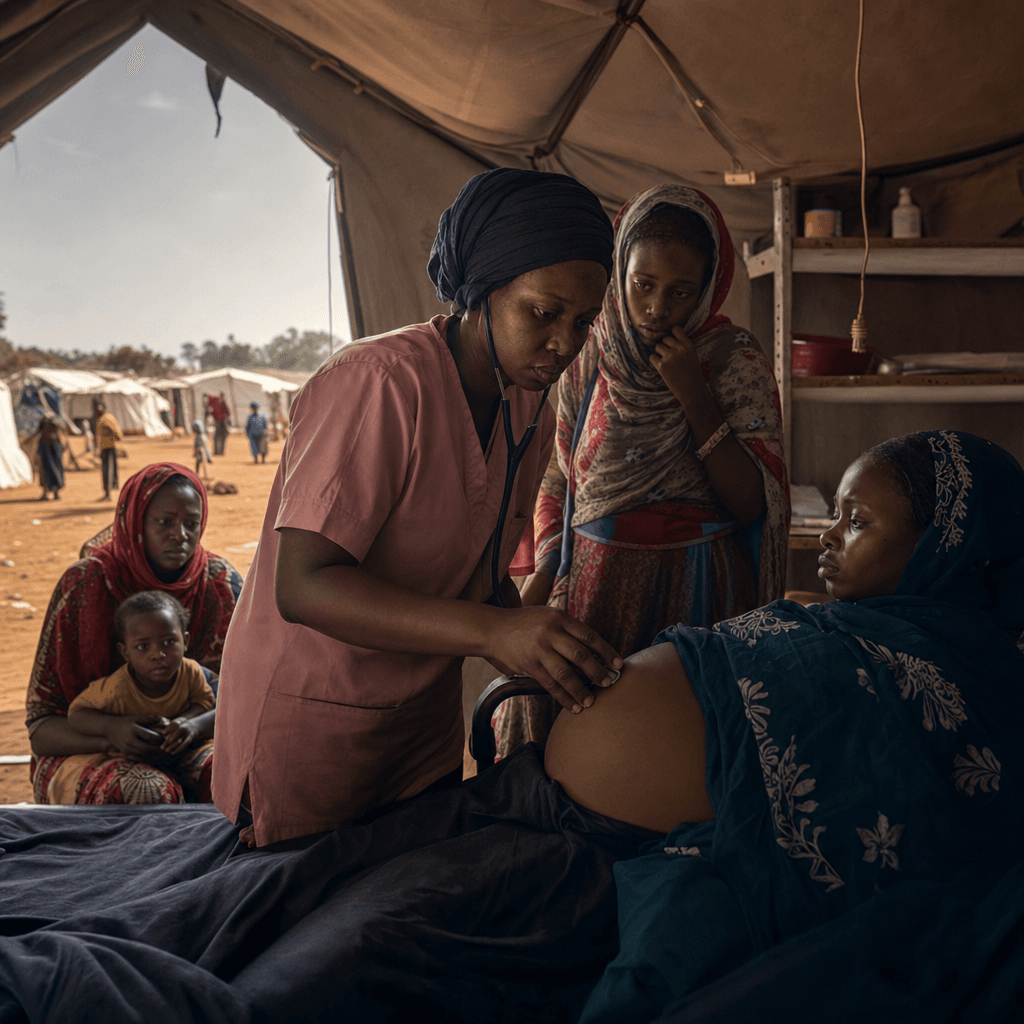
U.S. Funding Cuts Gut Refugee Maternal Care in CAR
Sweeping Washington aid cuts dismantle birth clinics in the Central African Republic as Sudanese refugees overwhelm local healthcare.
Sudanese refugee women in the remote Vakaga province of the Central African Republic (CAR) are facing skyrocketing risks of death during childbirth. A report by Al Jazeera reveals that the intersection of the massive refugee influx from the war in Darfur and deep cuts in U.S. foreign assistance has pushed the local healthcare system to the brink of collapse. For pregnant women trying to survive the regional
conflict, the withdrawal of Washington’s funding has turned an already dangerous transition into a lethal one.
Redefining National Interest
This crisis is a direct consequence of a deliberate policy shift in U.S. foreign aid. Since early 2025, the second Trump administration has systematically terminated thousands of foreign assistance grants, stripping roughly 92 percent of funding from the U.S. Agency for International Development (USAID), as reported by NPR. The administration has framed these cuts as a victory for domestic taxpayers, asserting that international aid should only support programs that directly make America safer. To that end, Secretary of State Marco Rubio defended the decision to suspend family planning funding, declaring that the U.S. would no longer subsidize global reproductive health programs. This pivot rewards domestic conservative actors but leaves fragile states to bear the strategic fallout.
The Ground Impact in Birao
In the frontier town of Birao, the fallout is stark. The United Nations Population Fund (UNFPA), which historically managed local clinics, saw its U.S. grants cut entirely as part of a blanket $377 million defunding of the agency, according to the Council on Foreign Relations. Consequently, four midwifery posts funded by the UNFPA in Birao have been closed, and critical transit infrastructure that transported pregnant women to the district hospital has ceased operations. Refugee women, many of whom are fleeing Darfur and walking for days while malnourished or infected with malaria, are arriving at understaffed local clinics too late. According to health workers on the ground, the lack of prenatal monitoring means complications like breech presentation go unnoticed, leading to a surge in preventable stillbirths and maternal deaths. While European partners have attempted to step into the breach, non-U.S. donor funding is insufficient to plug the structural deficit.
What to Watch Next
The immediate trajectory of maternal mortality in the Sahel will depend on whether EU nations can coordinate a parallel funding mechanism to bypass Washington’s retreat from Global Politics. The critical next milestone is the fiscal year 2027 U.S. budget negotiations in Congress, where the White House’s proposal to permanently eliminate global family planning funding will face legislative scrutiny. If congressional appropriators approve this budget framework, it will lock in these structural funding gaps for the foreseeable future. In the meantime, the security situation in Darfur remains highly volatile, suggesting that the flow of refugees into Vakaga province will continue to accelerate as local CAR hospitals lose the capacity to treat them.
Discover more

US Politics
SNAP Food Assistance Faces Legal Challenges
In 2026, SNAP faces stricter eligibility rules and mounting legal challenges, threatening food assistance for the millions of Americans who rely on the program.

Conflict & Security
Drone Warfare Killing Aid Workers at Unprec
Over 1,000 humanitarian workers killed in three years as cheap armed drones collapse legal protections. Gaza, Sudan, Ukraine, and DRC see deliberate targeting of aid convoys and hospitals with zero prosecutions.

Global
World Normalises Taliban as Afghan Women Eras
UN data shows Afghan women erased from public life as Russia recognises the Taliban, EU hosts officials in Brussels, and ICC warrants for gender persecution go unenforced.
Conflict & Security
West Africa Food Crisis: Three Shocks in 2026
Conflict, climate extremes, and the Strait of Hormuz closure drive a severe food crisis in West and Central Africa, with fertilizer prices surging 80% and millions displaced.