Women’s Reservation in India
Quota law passed but implementation delayed until 2029
Model Diplomat7 min readIndia
Women's Reservation in India: The Quota That Passed But Won't Take Effect
India's 33% women's quota is law — but its rollout was defeated 298–230 in the Lok Sabha in April 2026, tying representation to a fight over southern political power.
The 106th Amendment reserving one-third of Lok Sabha and state assembly seats for women is now in force — the Union Law Ministry notified it on April 16, 2026 — and yet not a single seat will be reserved before the 2029 general election, because Prime Minister Narendra Modi's attempt to fast-track it collapsed 298–230 on the Lok Sabha floor the very next day. The story of women's reservation in India has stopped being a story about women. It is now a story about which states get more seats when Parliament finally reopens after a 55-year freeze — and the government just lost that fight for the first time in a decade.
What is actually on the books
The Constitution (One Hundred and Sixth Amendment) Act, 2023 — branded the Nari Shakti Vandan Adhiniyam — inserts Articles 330A, 332A and 334A into the Constitution. Per the gazetted bill text, "as nearly as may be, one-third… of the total number of seats to be filled by direct election to the House of the People shall be reserved for women," with a matching provision for state assemblies and the Delhi assembly. A sub-quota applies within seats already reserved for Scheduled Castes and Scheduled Tribes. The reservation runs for 15 years, extendable by Parliament, with reserved constituencies rotated after each delimitation.
The catch sits in the same text. Article 334A ties commencement to "an exercise of delimitation… undertaken for this purpose after the relevant figures for the first census taken after the commencement" of the Act. Parliament's own research service, PRS Legislative Research, has spelled out the sequence bluntly: census first, delimitation next, quota after. Nothing else in the law fills the gap.
The 2023 Act passed 454–2 in the Lok Sabha and unanimously in the Rajya Sabha, as the BBC reported at the time. Home Minister Amit Shah confirmed on the floor of the House that implementation would only come after 2029. That has not changed.
The April vote that changed the politics
The government tried to change it anyway. On April 16, 2026, Modi convened a three-day special session and tabled three bills: the Constitution (131st Amendment) Bill, the Delimitation Bill, and the Union Territories Laws (Amendment) Bill. Together they would have expanded the Lok Sabha's maximum strength from 550 to 850 seats, allowed delimitation on the basis of the 2011 census rather than waiting for the ongoing Census 2027, and used the newly created seats to accommodate the women's quota in time for 2029. Al Jazeera reported that Modi's National Democratic Alliance held 293 seats — 67 short of the 360-vote two-thirds threshold that Article 368(2) demands for a constitutional amendment.
The gap did not close. On April 17, the Press Information Bureau recorded that the 131st Amendment Bill "could not have the required majority" and that the two dependent bills "were not proceeded further." State-run
Akashvani News put the numbers on the record: 298 in favour, 230 against, out of 528 members present. The
NUS Institute of South Asian Studies noted this was the first constitutional amendment to fail on the floor during Modi's tenure.
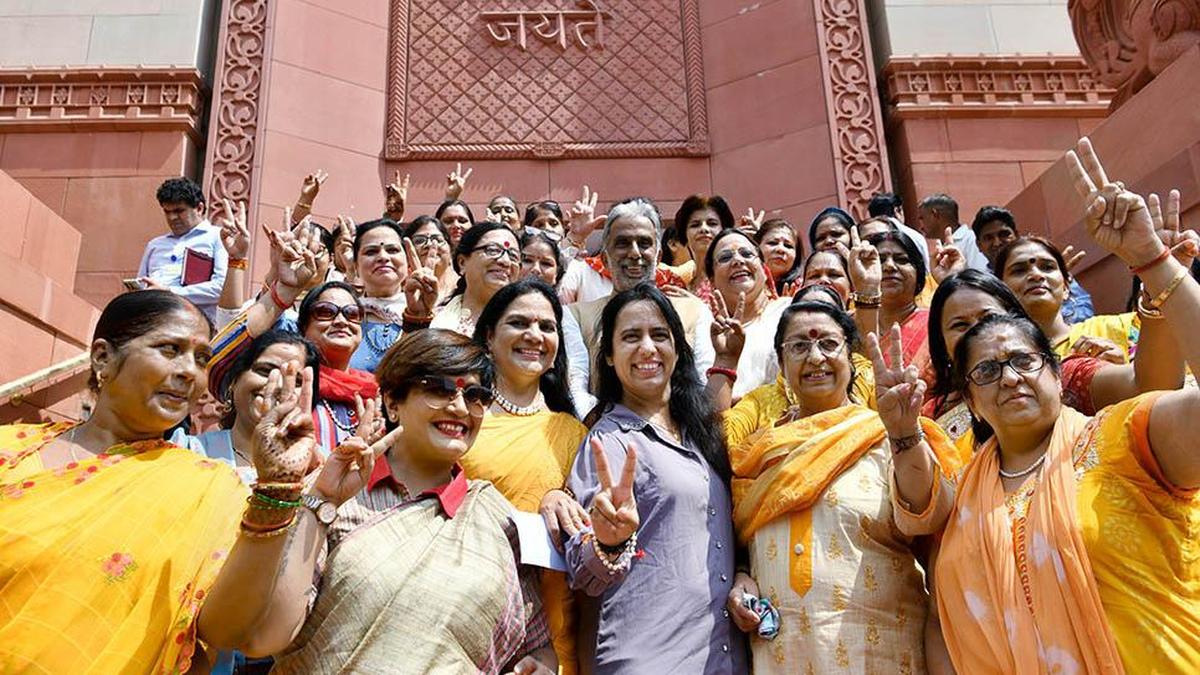
The optics were brutal. NDA women MPs staged a protest inside the Parliament complex. Modi, addressing the nation on April 18, accused the opposition of committing "foeticide" against the women's law, per ISAS. Leader of the Opposition Rahul Gandhi countered that the package "has no connection to women's reservation" and was "merely an attempt to seize power through delimitation and gerrymandering," according to Al Jazeera.
The real fight is federal, not gender
Here is what most coverage misses: the vote was never fundamentally about women. The Carnegie Endowment for International Peace put it plainly — the women's quota "functioned as a vehicle to push through a broader reengineering of India's electoral design."
That design touches the third rail of Indian federalism. Parliamentary seats have not been reapportioned across states since the 1971 census, following freezes enshrined in the 42nd Amendment (1976) and extended by the 84th Amendment (2002). The freeze protected southern states — Tamil Nadu, Kerala, Karnataka, Telangana — whose success at lowering fertility would otherwise have cost them seats to the more populous Hindi-belt north. A 2011-based delimitation, even if capped to prevent absolute losses, would shift the Lok Sabha's centre of gravity northward toward BJP strongholds. The BBC reported that the four southern states had lobbied for a further 25-year freeze.
The Delimitation Bill's fine print did not help. Arghya Sengupta of the Vidhi Centre for Legal Policy told the BBC that the choice of 850 as the new ceiling "does not appear to be proportionate to population growth" between 1971 and 2011, and that state assemblies would not expand in parallel — creating a mismatch where fast-growing states would gain MPs without a matching rise in MLAs. The Carnegie analysis noted that the government's repeated assurance that no state would lose seats "contained no such guarantee" in the legal text.
Timing sealed the defeat. The ISAS brief is direct: the session was called days before assembly elections in Tamil Nadu and West Bengal, with no prior consultation. Regional parties whose votes the BJP needed — the DMK, Trinamool Congress, Samajwadi Party — read that timing as an ambush and voted accordingly.
Who benefits from the delay — and who pays
The BJP's political calculation is now purely narrative. Home Minister Amit Shah, replying in the Lok Sabha, warned the opposition would face "the anger of women… not just in the 2029 Lok Sabha elections, but at every level." The party has already road-tested that line in the ongoing Tamil Nadu and West Bengal campaigns, per ISAS. As Modi's
Carnegie profile documented, the BJP's outreach to women — Ujjwala LPG, maternity leave, self-help-group schemes, the Nari Shakti brand — is a decade-long project. The 2026 defeat gives it a new grievance to run on without any obligation to nominate more women, which it has consistently declined to do: only 16% of BJP candidates in 2024 were women, per
Australia's AIIA drawing on Election Commission data.
The immediate losers are named. The Congress and its INDIA-bloc partners are boxed into defending a "no" vote on a nominally pro-women bill — even though most had publicly offered to back the quota if de-linked from delimitation, per ISAS. Southern regional parties, whose federal case is defensible, will carry the political cost of a gender frame they did not choose.
The structural loser is the quota itself. A Carnegie analysis published when the law was enacted noted that India ranked 141 out of 185 countries for women's political representation. Women hold 13.6% of Lok Sabha seats in the 18th house — down from 14.3% in 2019 — and roughly 9% of state assembly seats. The contrast with the panchayati raj tier is stark: after 30 years of the 73rd Amendment quota,
ORF reports that 44.4% of rural local government seats are held by women, ahead of Germany and the UK. The gap is not sociological. It is legislative — and now, again, procedural.
What the government said next
Facing a bill that had passed but could not commence, the Centre issued FAQs on April 19. According to the New Indian Express, the government reiterated that the aim remained "timely implementation of 33% quota by 2029 elections" and framed delimitation and Lok Sabha expansion as prerequisites the opposition had blocked. That framing collides with the calendar. Phase I of Census 2027 — house-listing operations — only began on April 16, 2026, according to the
Press Information Bureau. Population enumeration is scheduled for February 2027. Historical precedent suggests final data takes another year, delimitation up to five more.
That means the quota's earliest credible commencement date — absent a fresh political deal — is a general election held after 2029, not the one that will be fought in it.
Diplomat View
The 131st Amendment's defeat is the single most consequential parliamentary event of Modi's third term, and its meaning is the opposite of its framing. This was the government losing a vote on Lok Sabha reapportionment — the most explosive federal question in India since linguistic reorganisation — while trying to use women's representation as political cover. The forecast: a slimmer, de-linked bill will surface in the winter session or in early 2027, once Tamil Nadu and West Bengal have voted, and it will pass with opposition support because none of the INDIA parties can afford a second "no" once the delimitation trojan horse is removed. But the quota still will not activate before 2029, because the 2023 Act's own text — Article 334A — makes census-plus-delimitation a hard precondition, and neither will complete in time. What would change this call: a Supreme Court petition succeeding in reading Article 334A as directory rather than mandatory; or the BJP nominating one-third women candidates unilaterally in 2029, which its 16% track record makes unlikely.
What to watch
- Monsoon session, July–August 2026: whether the government tables a de-linked women's reservation implementation bill using the existing 543-seat Lok Sabha, as most opposition parties have publicly offered to back.
- Tamil Nadu and West Bengal assembly results, 2026: a strong BJP showing weakens the southern federal case; a weak one hardens the freeze consensus.
- February 2027: Census population enumeration phase. Without it, no fresh delimitation is legally possible under the current 84th Amendment framework.
The Bottom Line
India's women's reservation law is on the books but cannot take effect, and the April 2026 defeat of the 131st Amendment proves the delay is now a federal fight, not a gender one. The BJP will campaign on the quota it cannot implement; the opposition will defend a "no" vote it did not want to cast; and Indian women will remain 13.6% of the Lok Sabha until at least the 2030s — not because Parliament refused to pass a quota, but because it passed one it tied to a census, a delimitation, and a southern veto it has not yet found the votes to overcome._
Discover more
India
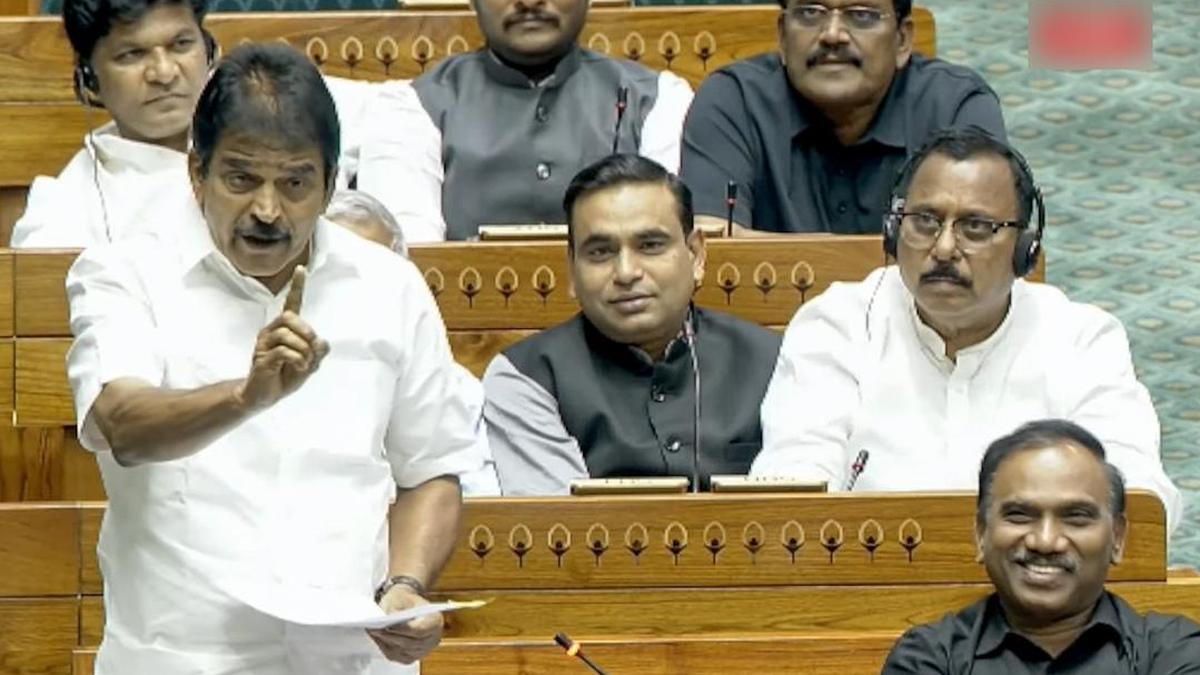
India's Women’s Reservation Debate
Congress MP K.C. Venugopal calls for an all-party meeting on women's reservation, citing concerns that delimitation could undermine fair representation.
India
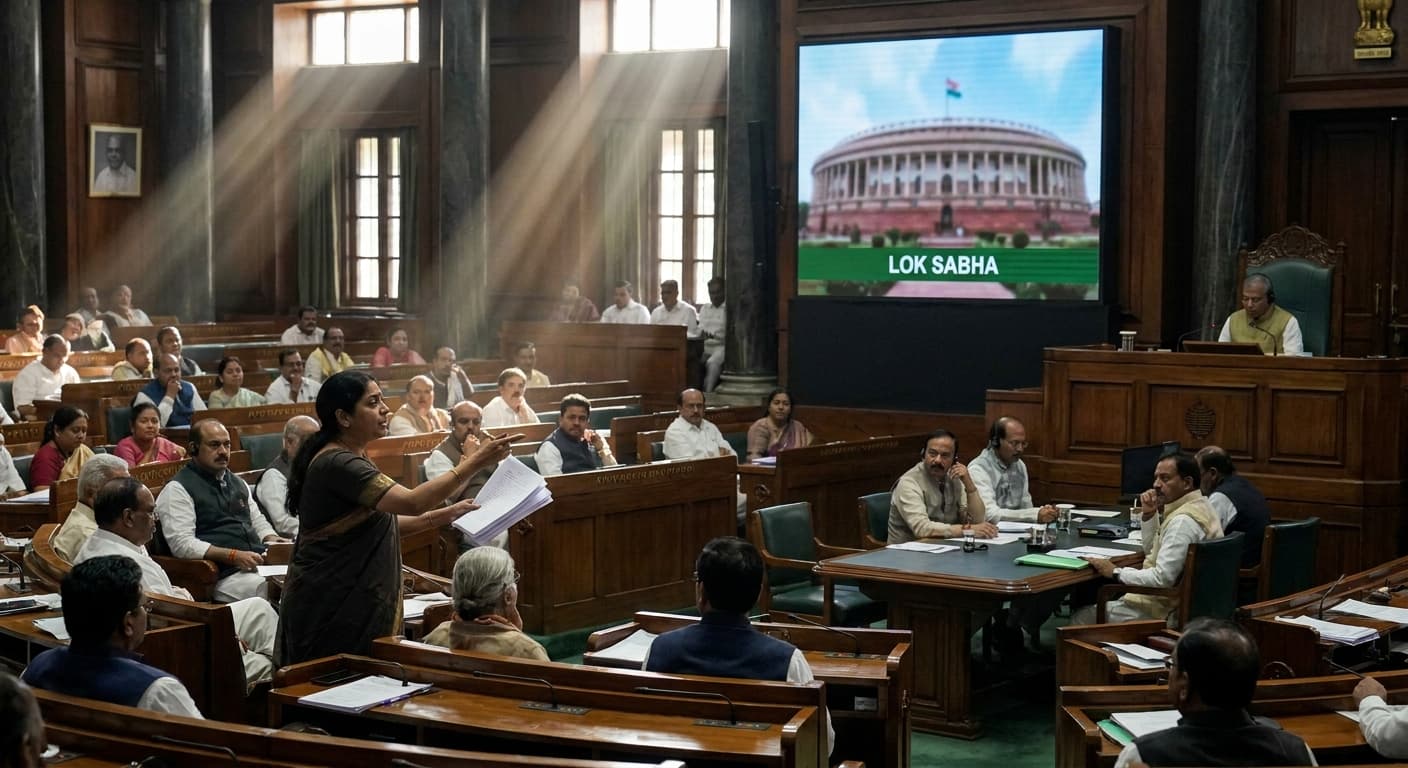
India's Parliament Session
India's special Parliament session moved to advance women's reservation and tackle delimitation, a pivotal moment for gender equity in Indian governance.
Global Politics
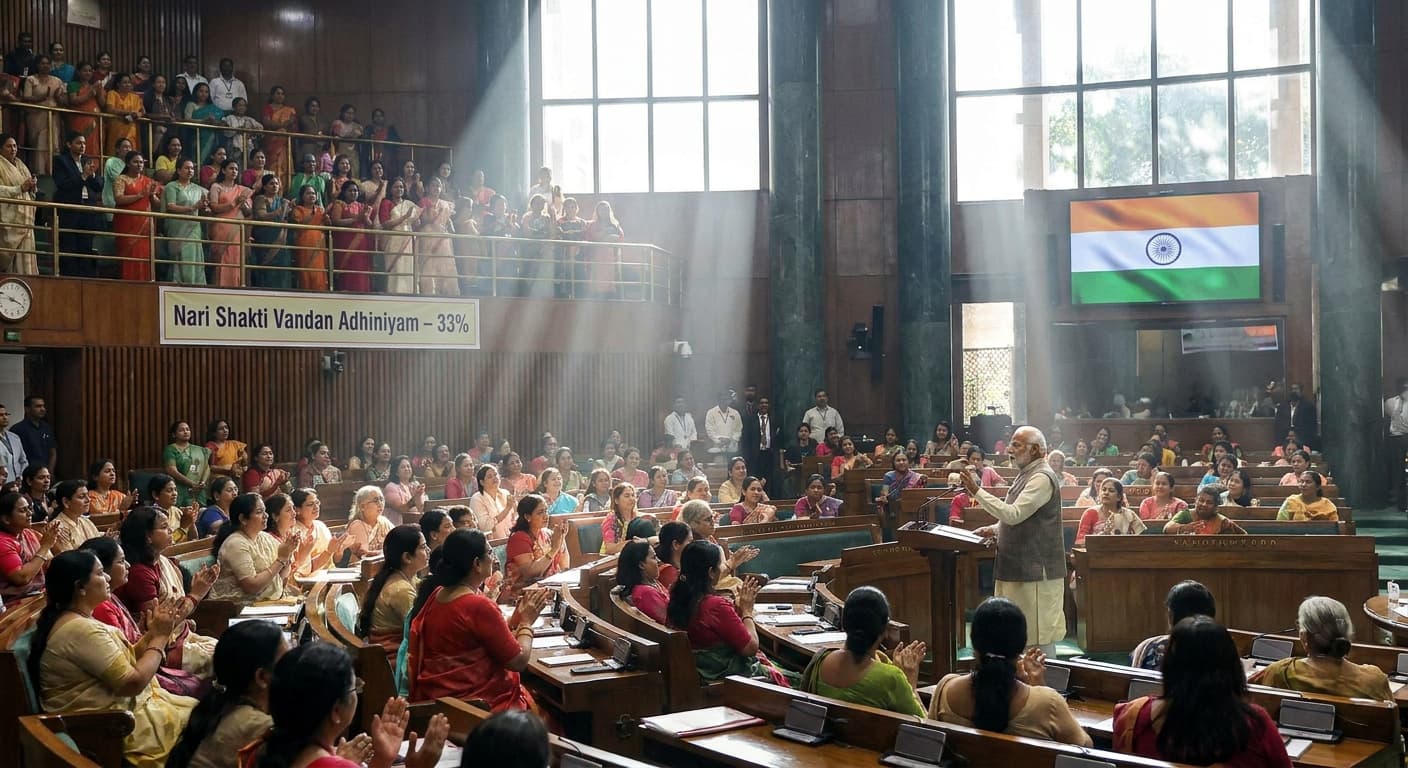
Modi's 33% Women Reservation Bill Impact
India's Women's Reservation Bill would reserve 33% of parliamentary seats for women, a reform poised to reshape political dynamics and gender representation.

Conflict & Security
Drone Warfare Killing Aid Workers at Unprec
Over 1,000 humanitarian workers killed in three years as cheap armed drones collapse legal protections. Gaza, Sudan, Ukraine, and DRC see deliberate targeting of aid convoys and hospitals with zero prosecutions.

