Women’s Reservation Bill
A look at the failed Women's Reservation Bill in India
Model Diplomat9 min readIndia
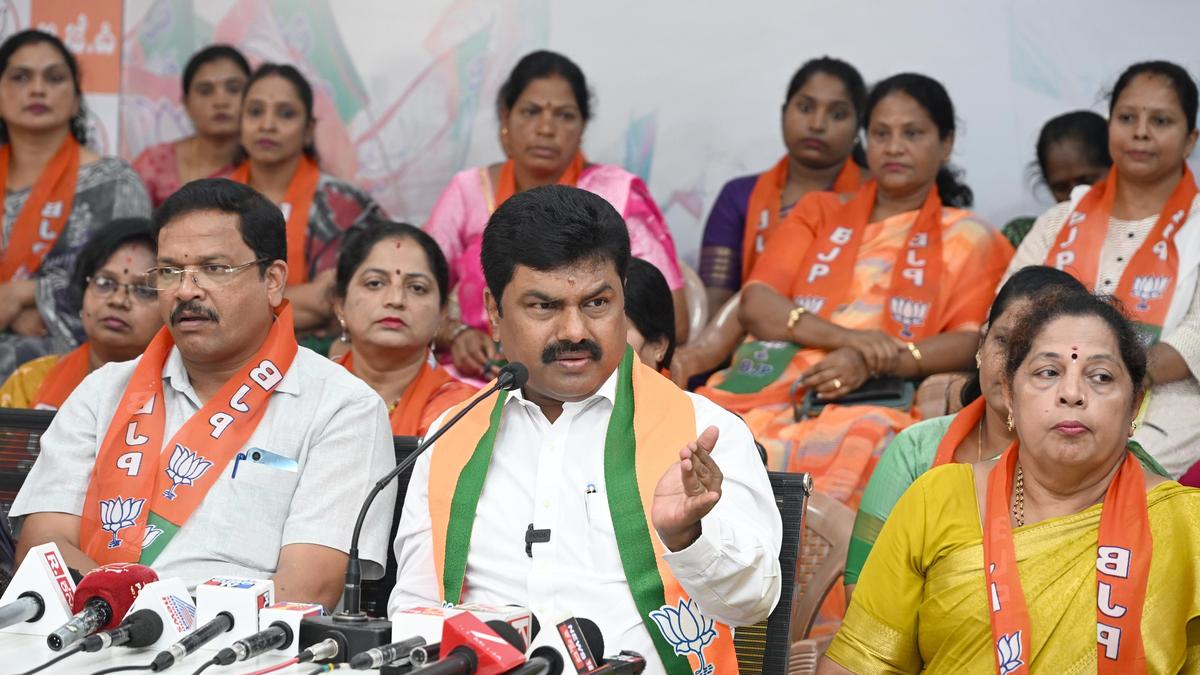
Women's Reservation Bill: How Modi's 850-Seat Trap Backfired
India's Women's Reservation Bill was defeated 298–230 on April 17, 2026 — not on the quota itself, but on the delimitation clause tied to it. Three months on, the reform remains frozen.
The Women's Reservation Bill did not fail because Indian lawmakers rejected a third of Lok Sabha seats for women. It failed because Prime Minister Narendra Modi's government bundled that quota with a plan to expand parliament to 850 seats and redraw the country's electoral map on 2011 census data — and the opposition decided the map mattered more than the milestone. That bundling was a choice, not a necessity. On April 17, 2026, 528 MPs voted: 298 in favour, 230 against. The Constitution (131st Amendment) Bill needed 352. It was the first constitutional amendment the Modi government has lost since coming to power in 2014, according to The Indian Express. Three months on, the 2023 Women's Reservation Act sits notified but unimplemented, women's share of the Lok Sabha remains around 14%, and the reform is again a hostage of the census clock.
What the bill actually did — and why it split parliament
The 106th Constitutional Amendment Act of 2023, the Nari Shakti Vandan Adhiniyam, already reserves one-third of Lok Sabha and state assembly seats for women. Section 5 of that Act ties activation to "an exercise of delimitation… after the relevant figures for the first Census taken after commencement" have been published, as The Hindu reported in March 2026. That built-in delay is the political fact under everything that followed: the reform exists on paper but produces no additional woman MP until India both counts its 1.4 billion people and redraws its map. The Union Cabinet cleared the census only on December 12, 2025, with houselisting scheduled between April and September 2026 and population enumeration in February 2027.
The Modi government's April 2026 package tried to short-circuit that wait — on its own terms. According to the Carnegie Endowment for International Peace, the 131st Amendment Bill would have raised the constitutional ceiling on the Lok Sabha from 550 to 850 seats — 815 for states, 35 for Union Territories — and, crucially, would have removed the requirement that reapportionment follow every census, letting parliament pick which census to use. The accompanying Delimitation Bill 2026 authorised the exercise on 2011 census data, timed for the 2029 general election. Home Minister Amit Shah told the Lok Sabha the objective was "one person, one vote, one value," pointing out that 127 constituencies now hold more than 2 million voters each, according to a
Press Information Bureau statement.
Notified on April 16, 2026 — the eve of the vote — the 2023 Act's coming into force was itself part of the choreography, as Scroll.in reported. Opposition parties read the sequencing as coercion: back the delimitation package or be branded as blocking women's rights. Congress MP Gaurav Gogoi alleged the intent was to introduce delimitation "through the backdoor," a line picked up by
Al Jazeera in its April 16 dispatch. Rahul Gandhi went further, calling the plan "merely an attempt to seize power through delimitation and gerrymandering."
The opposition's counter-offer was blunt. "We support reserving 33% seats for women based on the current strength of parliament. We also want a further freeze on expanding overall seats… until population trends stabilise," Communist Party of India (Marxist) MP John Brittas told the BBC. That single sentence is the analytical core of what happened: every serious party in the house says it supports the quota; almost none support redrawing the map to deliver it.
The real fight: north India's gain, south India's loss
Strip away the rhetoric and the arithmetic is stark. India has not redistributed Lok Sabha seats since the 1971 census. Since then, the four southern states — Tamil Nadu, Kerala, Karnataka and Telangana — have driven fertility down faster than the Hindi belt. A population-based reapportionment on 2011 data delivers seats to Uttar Pradesh, Bihar, Madhya Pradesh and Rajasthan, and freezes the south's national weight. That is the same map that most favours the BJP, which draws the bulk of its parliamentary strength from the north.
Shah tried to defuse this on the floor. His own numbers, reported by BBC Tamil, showed Tamil Nadu rising from 39 MPs (7.18% of 543) to 59 (7.23% of an 850-seat house) — a nominal increase in seats but a statistical flatline in influence. The Vidhi Centre for Legal Policy's Arghya Sengupta told the BBC that the "basis for this number is unclear and does not appear to be proportionate to population growth recorded in the 1971 and 2011 census." Sengupta also flagged an unexplained asymmetry: state assemblies were not being expanded in step, "creating a mismatch: fast-growing states could gain more MPs without a corresponding rise in MLAs." Tamil Nadu Chief Minister M. K. Stalin burned copies of the bill outside the Secretariat, called it a "massive historic injustice," and urged citizens to fly black flags in protest.
What the 131st Amendment would have changed
| Parameter | Current (1971-based) | Proposed (2011-based) |
|---|---|---|
| Lok Sabha seats (max) | 550 (543 filled) | 850 (815 states + 35 UTs) |
| Women's reservation | 33% of expanded house | 33% of expanded house |
| Basis for delimitation | Frozen since 1971 census | 2011 census, effective 2029 |
| Tamil Nadu MPs (Shah projection) | 39 (7.18%) | 59 (7.23%) |
| Vote, 17 April 2026 | — | 298 for / 230 against (needed 352) |
| Source: Constitution (131st Amendment) Bill 2026; PIB releases; Carnegie Endowment analysis, May 2026. |
The Takshashila Institution's post-mortem framed the second-order objection differently. Its analysis, published on April 28, 2026, argued that expansion to 850 seats is unlikely to fix parliament's real dysfunction: with sitting days already about half those of the UK or Australia, and each MP averaging fewer than one starred oral question, "one can only imagine what it would be for an 850-seat Parliament." The reform, in that reading, treats an apportionment symptom rather than the institutional disease.
The angle the wire missed: women's reservation is now a proxy war
The single most important line about April 17, 2026, comes not from the government but from an opposition-leaning commentator. Writing in Frontline, Delhi University's Apoorvanand argued that the opposition "defeated a government attempt to alter the structure and fabric of Parliament and State Legislatures under the pretext of women's reservation." He posed the question the government has not answered publicly: "Can women's reservation not be applied within the existing strength of 543 members? Why is an expansion of the House necessary to grant 33 per cent reservation to women?"
The answer, buried in the 2023 Act's own text, is that the amendment government itself wrote in 2023 requires a fresh delimitation before the quota takes effect. The government has since sent — as The Hindu reported on March 9, 2026 — "informal feelers" to opposition leaders about amending the 106th Amendment to drop that delimitation prerequisite. Those feelers went nowhere; the government instead reached for the delimitation package it wanted anyway.
The ISAS-NUS analysis of April 20, 2026 identified three procedural failures that turned a bill with broad in-principle support into a defeat: bundling the quota with the seat expansion and 2011-census delimitation; introducing legislation "without any prior consultation with opposition parties or floor management"; and calling a special session days before the Tamil Nadu and West Bengal assembly elections — states where delimitation was already toxic and where the government "could have been convened after the polls or the law introduced in the coming monsoon session."
The 2026 state election results have since re-scrambled everything. Stalin's DMK lost Tamil Nadu to actor-turned-politician Joseph Vijay's TVK, which on Sunday installed Vijay as chief minister with 108 seats plus outside support, according to the BBC. In West Bengal, Mamata Banerjee's Trinamool Congress fell to the BJP — its first standalone conquest of a major eastern state — with the party sweeping women and urban voters that had long anchored Banerjee, per a
BBC analysis. Both verdicts complicate the standard reading. Yes, the BJP was punished electorally in Tamil Nadu's Dravidian heartland, which weaponised the delimitation trap. But it also breached Bengal, where women voters were assumed lost.
Winners, losers, and what to watch next
The winners of April 17 are counter-intuitive. Stalin gained a national platform on federalism even as he lost his state. The DMK's argument that delimitation would "punish" southern states for governing well entered the national conversation — the Economist had already flagged the fight as one of India's defining political battles of the decade. The Congress, which had spent a year losing news cycles, briefly recaptured the opposition's centre of gravity — Rahul Gandhi personally led the floor argument that "this is not a women's reservation bill." Regional non-NDA parties from the CPI(M) to Samajwadi Party held together in a way they had not on the Citizenship Amendment Act or the abrogation of Article 370.
The losers are less obvious than the wire suggested. Modi lost a legislative vote for the first time in 12 years, and the government has since begun campaigning explicitly on that defeat — Modi told the nation on April 18 that the opposition had "committed a sin by opposing women reservation," according to the ISAS briefing. But the deeper loser is the reform itself. The 2023 Act is now in force but inoperative, and the government's own preferred fix — the seat-expansion package — is dead for this parliament. Women's representation in the Lok Sabha, at roughly 14%, will not move before 2029 at the earliest, and only if delimitation happens on terms the south accepts.
298 – 230
Lok Sabha vote on the Constitution (131st Amendment) Bill, April 17, 2026 — 54 votes short of the 352-vote two-thirds majority. First constitutional amendment defeated in the Modi era.
Source: Lok Sabha Secretariat, via Akashvani News, 18 April 2026.
Six previous women's reservation bills have failed since 1996, always because of caste sub-quota fights within the pro-reservation camp — the argument that a reservation without OBC or Muslim carve-outs would benefit only upper-caste women, most sharply made by AIMIM's Asaduddin Owaisi as Al Jazeera reported when the 2023 bill passed. The 2026 defeat is the first that has nothing to do with sub-quotas and everything to do with federalism — a category change that the government has not publicly acknowledged. Women's reservation has been absorbed into the north–south struggle over India's constitutional geometry, and it will be resolved on those terms or not at all.
Diplomat View
The defeat of the 131st Amendment is not, as government spokespeople claim, opposition misogyny; it is not, as opposition rhetoric claims, a durable defence of federalism. It is a stalemate that locks India's most consequential social reform to its most contentious structural one. Our forecast: the 33% quota will not be operational for the 2029 general election. The government's next serious attempt will come in the monsoon session of 2026 or the budget session of 2027 — likely a narrower amendment to the 106th Amendment dropping the pre-delimitation trigger while leaving seat totals untouched — timed to the census houselisting conclusion in September 2026. That would give the BJP a face-saving win on women's representation without conceding the delimitation fight, which it can revisit after 2029. What would change this forecast: a decisive BJP recovery in the 2027 Uttar Pradesh assembly election that emboldens another push, or a Supreme Court intervention on the 2023 Act's self-imposed delay. Neither is priced in.
Forward look:
- Monsoon session 2026 (July–August): watch for a narrower amendment removing the delimitation trigger from the 106th Amendment — the fix Law Minister Kiren Rijiju hinted at in February 2026.
- September 2026: completion of the census houselisting phase; population enumeration follows in February 2027.
- 2027 Uttar Pradesh assembly election: the political test that determines whether the government re-opens delimitation or lets it die until after 2029.
The Bottom Line
The Women's Reservation Bill was defeated because Modi's government tried to smuggle a north-tilted redrawing of India's electoral map inside a gender-empowerment package — and the opposition, for the first time in this parliament, held together to stop it. The 2023 quota is now law, in force, and inert; nothing changes until either the government drops the delimitation prerequisite it wrote into its own 2023 statute, or the south agrees to a map it has every incentive to reject. Until one of those happens, women's 14% share of the Lok Sabha is not a scandal the government is fixing — it is a hostage in a federal war it started.
Discover more
India
India's 33% Women’s Reservation Bill
India's Lok Sabha debated a historic bill reserving 33% of seats for women, a measure aimed at transforming representation and advancing gender equity.
India
India's 131st Amendment Bill
The Lok Sabha passed the 131st Amendment Bill, clearing a path for a 33% women's reservation in Parliament by 2029 and breaking a two-decade-long impasse.

India
India's Delimitation Plan
India's delimitation plan would expand the Lok Sabha to 850 seats and boost women's representation, but it stokes regional tensions and political concerns.

Conflict & Security
Drone Warfare Killing Aid Workers at Unprec
Over 1,000 humanitarian workers killed in three years as cheap armed drones collapse legal protections. Gaza, Sudan, Ukraine, and DRC see deliberate targeting of aid convoys and hospitals with zero prosecutions.