Women’s Reservation Bill 2026
India's women's reservation bill defeated amid political maneuvering.
Model Diplomat9 min readIndia
Women's Reservation Bill 2026: Why India's 33% Quota Just Collapsed
India's Constitution (131st Amendment) Bill fell 298–230 in Lok Sabha on April 17, 2026 — Modi's first constitutional defeat and a warning shot on delimitation.
The Constitution (One Hundred and Thirty-First Amendment) Bill, 2026 was never really a women's reservation bill. It was a delimitation bill wearing women's reservation as cover — and on April 17, 2026, the Lok Sabha saw through it, defeating the amendment 298–230 — the first constitutional-amendment loss any Modi government has suffered since 2014. The most awkward fact for the ruling Bharatiya Janata Party (BJP) is not that the opposition blocked a gender-parity reform. It is that the parties fielding the most women candidates voted against, and the party fielding the fewest voted for.
What was actually on the floor
The government convened a three-day special sitting of Parliament from April 16 to 18, 2026 and introduced a legislative package that treated three distinct reforms as a single take-it-or-leave-it bundle. The Constitution (131st Amendment) Bill would have raised the ceiling on the Lok Sabha from 550 seats to 850 and stripped out the requirement that seats be reapportioned after every census, according to the Carnegie Endowment for International Peace. The Delimitation Bill, 2026 laid down the framework for redrawing constituencies, and a Union Territories Laws (Amendment) Bill extended the exercise to Delhi and Puducherry.
The women's quota is already law: the Constitution (106th) Amendment Act, 2023 — the Nari Shakti Vandan Adhiniyam — reserves one-third of Lok Sabha and state assembly seats for women, and the Union Law Ministry formally brought it into force by gazette notification on April 2, 2026. But the 2023 Act ties activation of the quota to a fresh census and a subsequent delimitation. Nothing changes on the ground until those two steps are done. The 131st Amendment was the vehicle Modi's government chose to run both errands at once — and, as
PRS Legislative Research notes, to fold in the Union Territories in the process.
The vote — and what it hides
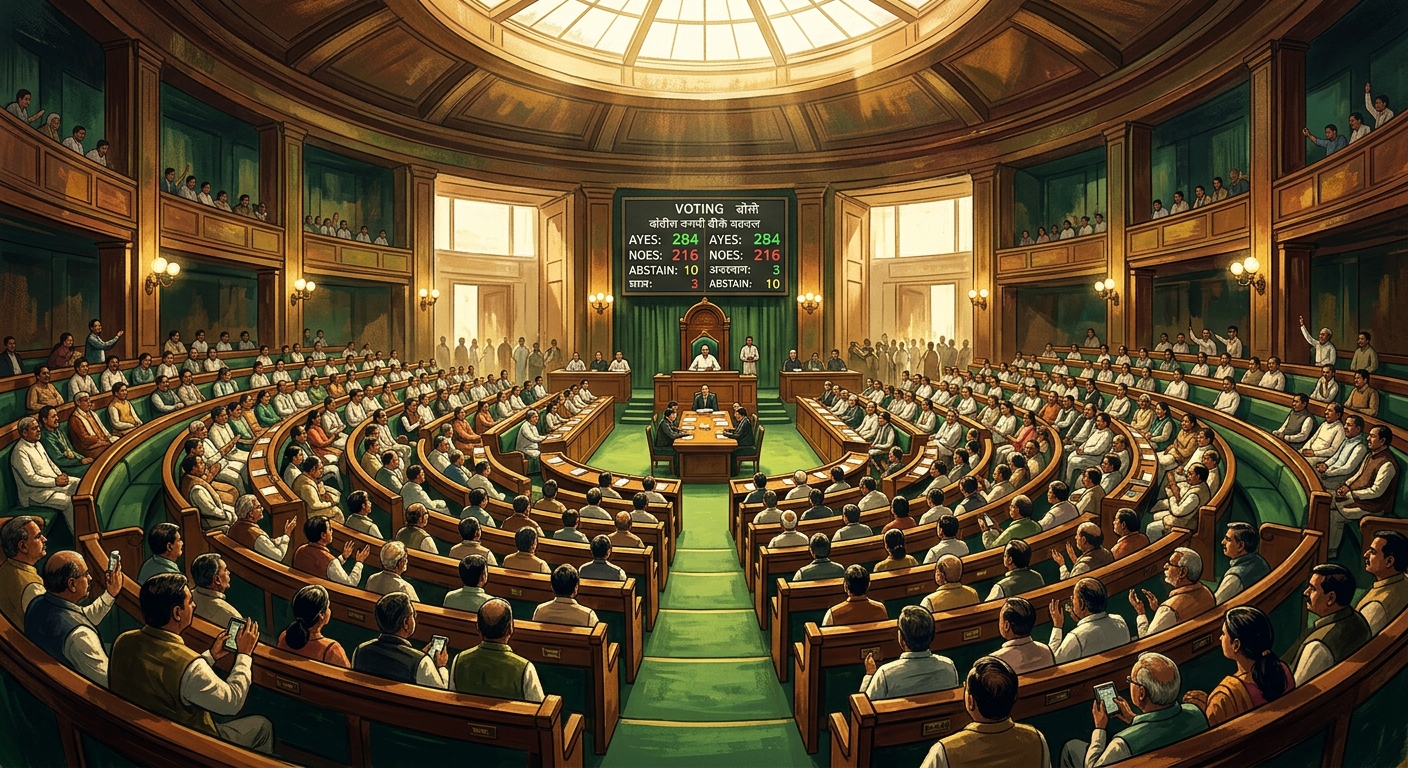
The arithmetic was always tight. Modi's National Democratic Alliance holds 293 seats in the Lok Sabha; a constitutional amendment under Article 368(2) needs a two-thirds majority of members present and voting, which on a full-strength floor works out to 360 votes, Al Jazeera reported before the session. The government picked up 298 — exactly 62 short. The Press Information Bureau's post-session bulletin was terse: "the Constitution (One Hundred and Thirty-First Amendment) Bill, 2026 could not have the required majority as per Article 368(2)… no further action was taken." Both dependent bills were dropped, according to the
Press Information Bureau.
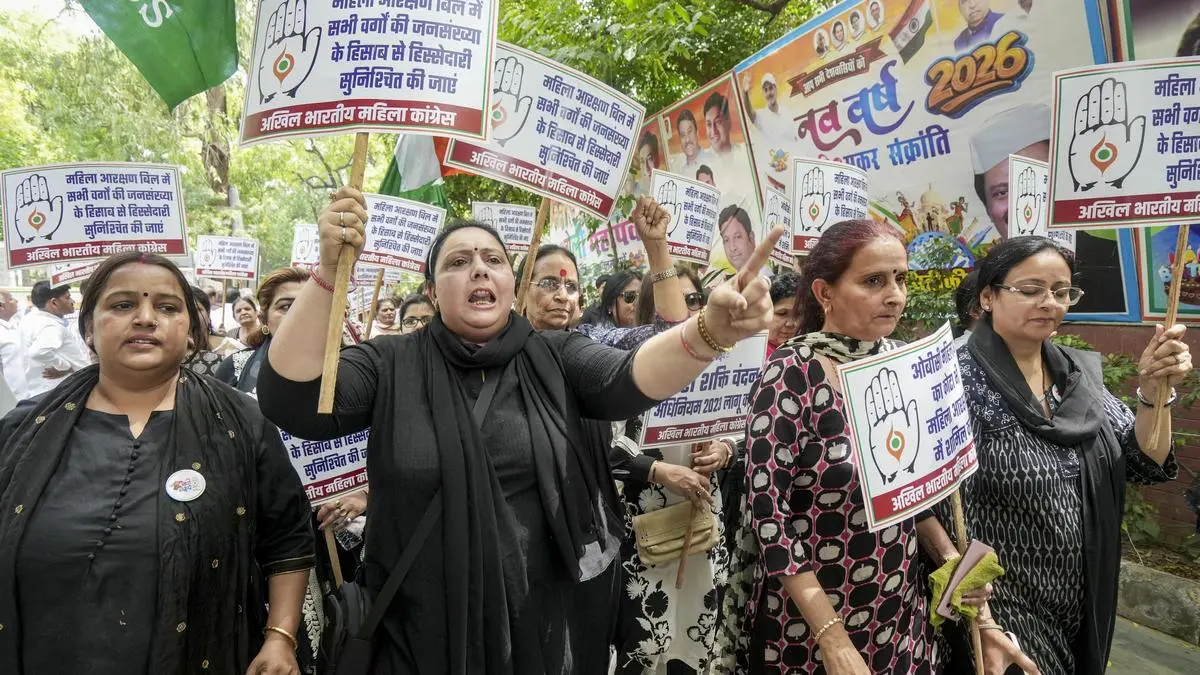
Read the numbers in reverse. The BJP has never once fielded a slate that meets the 33% threshold it says it wants to enshrine in the Constitution. In the 2024 general election, 16% of BJP candidates and 13% of Congress candidates were women, according to an NUS Institute of South Asian Studies analysis of the post-session debate — while Naveen Patnaik's Biju Janata Dal ran 33%, Lalu Prasad's Rashtriya Janata Dal 29%, and Mamata Banerjee's Trinamool Congress 25%. Almost every party that already exceeds the proposed quota in practice voted against the bill; the ruling party that has never met it voted for.
That is the paradox at the heart of this defeat. It is also why "the opposition killed women's reservation" is not what happened.
The real fight: 543 → 850
What the opposition actually blocked is the biggest redrawing of India's electoral map since 1971. Parliamentary constituencies have not been reapportioned across states since the delimitation carried out on the 1971 census — successive governments froze the exercise to protect southern states that curbed fertility earlier from being politically penalised for their success. The 131st Amendment would have thawed that freeze and used the 2011 census data as the basis for a new allocation, per the BBC.
Southern chief ministers read the map and did the math. Tamil Nadu, Kerala, Karnataka and Telangana account for roughly a fifth of India's 1.4 billion people but a shrinking share of its population growth. On the arithmetic of the last complete census, seats would drift decisively north — into precisely the Hindi belt where the BJP dominates. Home Minister Amit Shah told the House that the number of MPs from South India would in fact rise from 129 to 195 under a pro‑rata expansion; but the text of the bill contained no such guarantee, and Arghya Sengupta of the Vidhi Centre for Legal Policy told the BBC the figure's "basis is unclear and does not appear to be proportionate to population growth recorded in the 1971 and 2011 census."
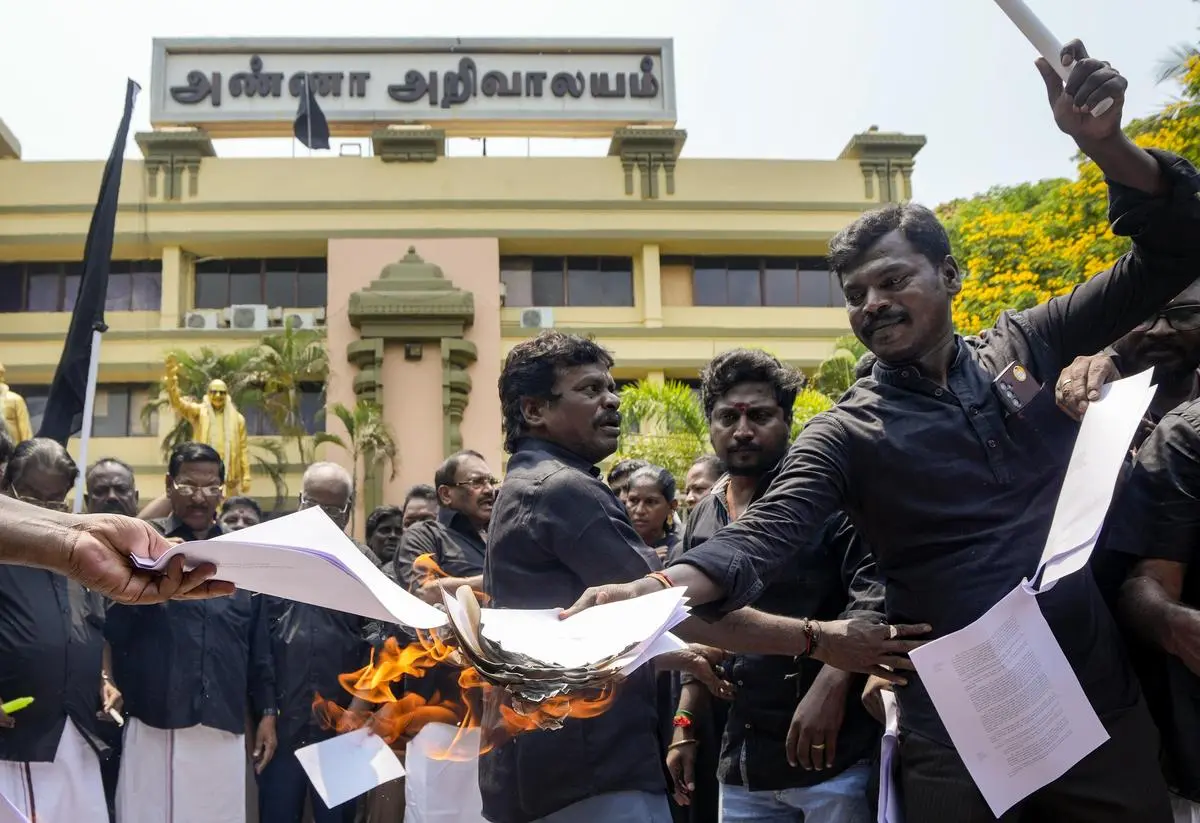
Tamil Nadu Chief Minister M. K. Stalin burned a copy of the bill and raised a black flag. Congress leader Rahul Gandhi called it, in a line the opposition rallied around, "an attempt to seize power through delimitation and gerrymandering," per Al Jazeera. Samajwadi Party MP Akhilesh Yadav pressed the sub‑quota question — whether Muslim and OBC women would be carved out — that had haunted every previous version of the bill since 1996. John Brittas of the CPI(M) told the BBC his party would support a 33% quota "based on the current strength of parliament" but wanted the seat cap frozen. The linkage, not the reservation, was the objection.
Why Modi tied them together
Because he had to. The 2023 Act itself makes women's reservation conditional on a fresh census and delimitation, as the Carnegie Endowment's Milan Vaishnav noted in the aftermath. Without a delimitation, the 33% quota cannot activate before the 2029 general election, and possibly not before 2034. Delinking the two bills would have handed the opposition a clean 33% victory on the existing 543 seats — and left the government with no lever to reopen the 1971 freeze.
Tying them together was the leverage play. Refusing meant refusing "empowerment"; accepting meant accepting the redraw. The bet was that opposition parties would not risk being seen to kill women's reservation on the eve of state elections in Tamil Nadu, West Bengal, Assam and Kerala. It failed because the opposition, for the first time in Modi's twelve-year tenure, voted as one bloc on a constitutional amendment.
"This has nothing to do with empowering women. It is an attempt to change the country's electoral map, using and hiding behind India's women." — Rahul Gandhi, Leader of the Opposition, Lok Sabha, April 17, 2026, as
quoted by ISAS
Modi's response, in a nationwide television address on April 18, was to accuse the opposition of "foeticide" for killing the legislation and to promise electoral punishment. He then took the argument straight into the campaign in Tamil Nadu and West Bengal.
The state-poll test — and why it was inconclusive
The state results in April and early May 2026 were meant to settle the political question of who paid the price. They did not.
In West Bengal, the BJP won a landslide — 207 of 294 assembly seats, ending Mamata Banerjee's three-term Trinamool government, per BBC reporting on the count. Modi's team is reading this as vindication: the opposition blocked women's reservation, and the woman-led party that voted against it collapsed in the state where its women-first welfare model was born. That story is undermined by two things. The BJP had been polling around 39% in Bengal for three cycles; the swing was small, and analysts including Yogendra Yadav told NDTV the Election Commission's special intensive revision of the electoral rolls — which struck an estimated three million names, disproportionately Muslim — was decisive in tight constituencies.
In Tamil Nadu, the story is worse for both sides. The DMK, which led opposition to delimitation, was routed — but not by the BJP. It was routed by film-star Vijay's Tamilaga Vettri Kazhagam (TVK), which took 108 of 234 seats in its debut election, per the BBC. The BJP won exactly one seat. Vijay had cast the BJP as his ideological adversary. The Modi campaign's claim that Tamil Nadu punished the DMK for opposing delimitation collides with the fact that Tamil Nadu also refused to reward the BJP for proposing it.
What comes next
The Nari Shakti Vandan Adhiniyam remains on the statute book, and the government retains every political incentive to reintroduce a slimmed-down version. The most likely path is a decoupled bill in the monsoon session of 2026 — women's quota on the current 543 seats, delimitation deferred to a later, separate fight after the 2027 census results are published. That is roughly what the CPI(M), Congress and the DMK have said they would support. It is not what Modi wants, because it hands the opposition a headline win and removes the government's biggest post-2027 lever over the southern states.
The bigger prize the government is still chasing is the population count itself. India's decadal census, launched in early 2026 and now folded into a caste-enumeration exercise, is scheduled to produce provisional data in 2027, per Home Minister Amit Shah. Only after publication can any lawful delimitation commission be constituted. The quota clock starts then, not before.
Women's representation in the 18th Lok Sabha is 13.6% — 74 of 543 seats — down from 14.4% in 2019, according to BJC journal analysis and the U.S.
Congressional Research Service's IPU-sourced statistics, which rank India 163rd out of 181 legislatures worldwide at 9.5% across both houses. The average globally is 27.4%. India will not close that gap in the 2029 election under any legislative pathway now visible.
What to watch next
- Monsoon session, July–August 2026. Whether the government tables a decoupled women's reservation bill or holds out for a fresh 131st Amendment. Kiren Rijiju's parliamentary affairs office is the tell.
- Census publication window, mid‑2027. The legal trigger. Nothing on delimitation or women's quota can move before the Registrar General releases provisional counts.
- Supreme Court challenges. Petitions from southern states seeking a declaratory freeze on population-based delimitation. A favourable ruling would kill the government's leverage in the 131st Amendment's next iteration.
- BJP candidate list, Uttar Pradesh 2027. If the party moves toward 33% women candidates unilaterally, the political case for the quota changes. If it does not, the opposition's charge that this was never about women is validated by the BJP itself.
Diplomat View
The defeat of the Constitution (131st Amendment) Bill is not the death of women's reservation in India — that fight was won in 2023 and lost to a census delay. It is the first successful constitutional pushback on Modi's use of gender reform as a wrapper for a redistribution of federal power. The forecast: a slimmer women's quota bill likely passes in the monsoon session or in 2027, on the current 543 seats, without linkage to delimitation. The forecast shifts if the BJP secures two-thirds of the Rajya Sabha in the 2026 biennial elections, at which point the linkage strategy becomes viable again. It also changes if the Supreme Court blocks population-based delimitation, in which case the fight shifts entirely to the terms of expansion. The one thing this vote proved is that the Modi government's constitutional supermajority — always synthetic, always dependent on opposition fragmentation — is no longer available on federalism questions. The quota is the symptom; the federal map is the disease — and that fight runs through 2029.
The Bottom Line
The Women's Reservation Bill 2026 failed because it was not one bill but three, and the two hidden inside — an 850-seat Lok Sabha and a 2011-census delimitation — would have shifted political power decisively northward. Modi's government bet the opposition would not risk being seen to kill women's empowerment on the eve of four state polls, and lost that bet on a floor vote of 298 to 230. The 33% quota will still arrive, but on the existing 543 seats and no earlier than the 2029 election — and the real fight, over who redraws India's political map after the 2027 census, has only just begun._
Discover more
India
BJP's Misunderstanding of Women's Quota Needs
The BJP's linking of the Women Reservation Bill to delimitation risks delaying women's empowerment in India, misreading the aspirations of female voters.
India
BJP's Delimitation Strategy
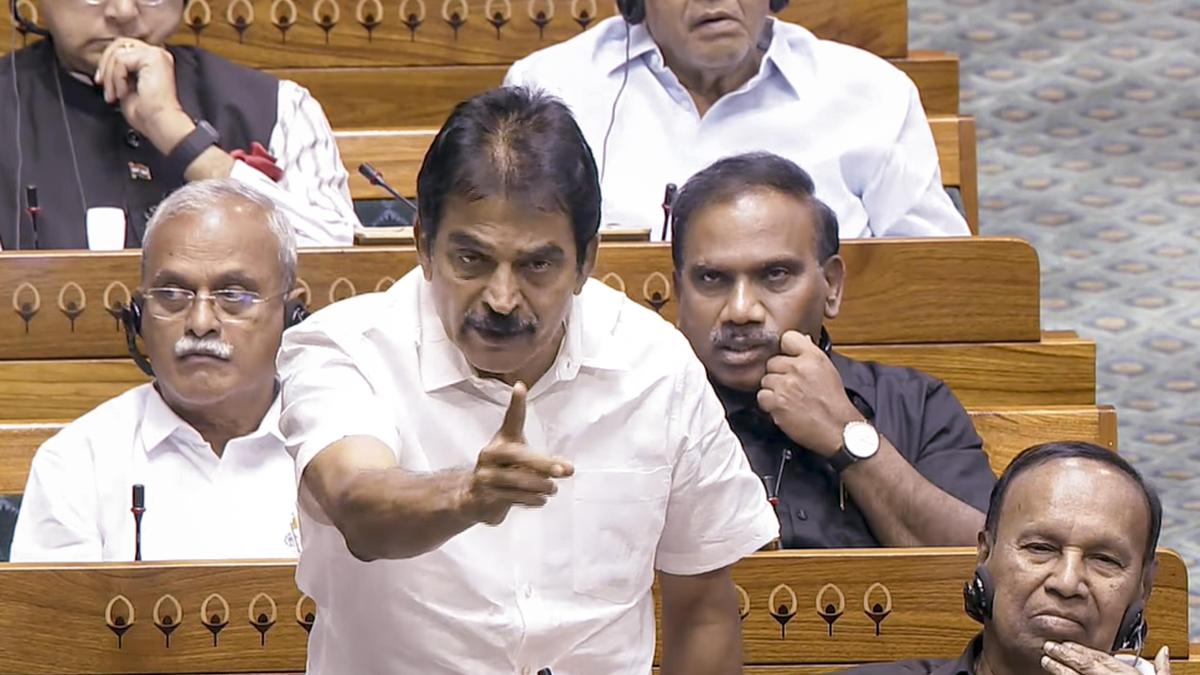
Congress leader K.C. Venugopal claims the BJP uses women's reservation to advance delimitation, raising fears over electoral fairness ahead of the 2029 polls.
India
Congress Accuses Modi of Stalling Women's Law
Congress accuses Modi of stalling women's reservation law by linking it to delimitation, revealing a deeper electoral strategy.

Economics
Fed's Amex AML order puts correspondent banking on notice
Federal Reserve's Amex AML order requires board-level controls and a 90-day plan; OCC fined the bank $350 million over enterprise-wide deficiencies.