Women Surge in Unreserved Panchayat Seats
Exploring women's representation in Indian panchayats
Model Diplomat8 min readIndia

Women Surge in Unreserved Panchayat Seats: Behind the Number
India's government says women now win 49.75% of 24.41 lakh panchayat seats — including "significant numbers" of unreserved ones. The Centre has no data to prove the second half.
On April 22, 2026, five days after the Modi government's Constitution (131st Amendment) Bill collapsed on the floor of the Lok Sabha, the Ministry of Panchayati Raj released a headline number designed to change the subject: women now make up 49.75% of India's 24.41 lakh elected panchayat representatives, and are winning unreserved seats "in significant numbers." The claim is politically load-bearing — it is the government's evidentiary anchor for the reservation architecture the opposition just refused to expand. But the ministry's own submissions to Parliament, and a decade of quasi-experimental scholarship, tell a more careful story: the surge is real in absolute terms, thin at the margin, and entirely undocumented at the level that would matter most.
What the numbers actually say
The topline is well-attested. According to The Hindu, the ministry's April 22 statement pegs the count at 12.14 lakh women out of 24.41 lakh elected panchayat representatives, or 49.75%. That is a globally unusual figure:
Observer Research Foundation places India in the top tier of countries for women's local-government representation, ahead of France, the United Kingdom, Germany and Japan.
Below that headline the picture fragments. State-wise data tabled in Parliament in April 2025, and reviewed by The Hindu, show that of the 19 states and union territories which have legislated a 50% quota — a list the Ministry of Panchayati Raj set out in a written answer available on Sansad — only 10 exceed the mandated share, and none by more than about five percentage points. Four jurisdictions still fall short: Gujarat (49.96%), Haryana (42.12%), Tripura (45.25%) and the merged UT of Dadra & Nagar Haveli and Daman & Diu (31.97%). Five more, including Andhra Pradesh, Himachal Pradesh, Madhya Pradesh and Sikkim, cluster at the 50% floor almost exactly, suggesting quota compliance rather than a cultural pull past it.
The upper end is real but concentrated. Uttarakhand tops the table at 56.01%, followed by Chhattisgarh (54.78%), Assam (54.6%), Maharashtra (53.47%), Tamil Nadu (52.98%) and Kerala (52.41%), per the ORF compilation of ministry data. In Uttar Pradesh, which retains the constitutional minimum of 33%, women's share is 33.34% — a rounding-error surplus, not a surge.
The missing denominator
The claim that women are winning unreserved seats in significant numbers is where the evidence gets thin. Officials from the Ministry of Panchayati Raj told The Hindu directly, in the April 22 story, that "the Ministry did not maintain any specific data on the absolute number of women elected to panchayat positions from reserved and unreserved seats, and neither did it maintain PRI-wise data centrally." In other words, the Centre is asserting the trend without holding the ledger.
The state-level evidence is real but sparse. Uttarakhand's July 2025 three-tier polls are the cleanest example. As reported by Dun City News, women won 171 of 358 zila panchayat seats — including 10 from unreserved constituencies, the toughest tier in local governance. Nominations skewed female from the start: 37,356 of 63,569 candidacies (about 59%) were filed by women, with more than 11,000 Scheduled Caste and 2,400 Scheduled Tribe women in that pool.
Gujarat, one of the states officially below the quota, offers a parallel data point at village scale. Reporting by The Mooknayak documents Dalit women — Premilaben Makwana in Patan and Ranjanben Parmar in Sabarkantha — winning sarpanch posts from general seats rather than reserved ones. The Madhya Pradesh government's own release, cited by
New Kerala, claims women now hold more than 11,600 sarpanch positions and surpass 50% across all three PRI tiers.
None of these datapoints add up to the systematic, PRI-wise, reserved-vs-unreserved breakdown the Centre now needs to sustain its argument in Parliament. That gap matters because it is exactly the metric the political fight has turned on.
Why the ministry needed this number now
The timing is not incidental. On April 17, 2026, the government's Constitution (131st Amendment) Bill — which sought to operationalise the 2023 Women's Reservation Act by tying it to a redrawing of Lok Sabha seats — was defeated 298–230, well short of the two-thirds majority Article 368 requires. The Press Information Bureau confirmed the defeat in its post-session summary, noting that "the Constitution (One Hundred and Thirty-First Amendment) Bill, 2026 could not have the required majority… no further action was taken." Two dependent bills — the Delimitation Bill, 2026 and the Union Territories Laws (Amendment) Bill, 2026 — died with it.
As the NUS Institute of South Asian Studies noted, this was the first time under Prime Minister Narendra Modi that a constitutional amendment was blocked on the floor. The opposition's objection was not to women's reservation itself but to its bundling with an expansion of the Lok Sabha from 543 to 850 seats, based on the 2011 census — a move that would redistribute political weight toward the demographically heavier north. The Carnegie Endowment's
Milan Vaishnav and colleagues observed that "the quota for women functioned as a vehicle to push through a broader reengineering of India's electoral design."
Against that backdrop, the ministry's Panchayati Raj Day dossier is a rear-guard move: the panchayat record becomes the government's proof-of-concept that reservation "works" and that Parliament's refusal to expand it is politically costly. Prime Minister Modi's own address in Madhubani, Bihar on April 24, 2025 (the previous year's iteration) had already road-tested the framing: Bihar as the first state to give women 50% panchayat reservation, women from Dalit and Mahadalit communities emerging as "true social justice."
What the peer-reviewed evidence shows
The academic literature is where the government's story runs into the strongest headwind. In a 2024 study analysing more than 14,000 gram panchayats in Rajasthan across four election cycles (2005, 2010, 2015 and 2020), Varun Karekurve-Ramachandra and Gaurav Sood, writing for VoxDev, find "no evidence of quotas increasing women's chances of getting elected in an open seat in the next cycle." Their standard errors, they note, are tight enough to rule out gains larger than five percentage points. A robustness check on 20,000-plus panchayats in Uttar Pradesh produces the same null.
The mechanism they identify is unglamorous but consequential. When the researchers phoned representatives elected to reserved seats using their official numbers, "about 88% of the calls were answered by someone other than the representative, typically a male relative such as a husband, father, or son." For open-seat winners, roughly 80% of the mostly male incumbents answered directly. Formal representation, in short, has not dislodged informal gatekeeping.
A parallel 2025 paper by Simon Chauchard, Rachel Brulé and Alyssa Heinze in World Development sharpens the point: what they call the "gender quota paradox" is that India's quotas have delivered "globally unprecedented numbers of women to power formally, while granting them limited power in practice, and more broadly delegitimising women's political leadership on a societal scale with common acceptance of the 'proxy' narrative." That "sarpanch pati" phenomenon is not folklore. ORF's 2023 review notes a 2008 Punjab study in which
75% of elected women representatives reported proxy participation by their husbands, and the paradigm has not disappeared. In March 2025 in Chhattisgarh's Kabirdham district — a state with 50% reservation since 2008 — six newly elected women panches had their oaths taken by their husbands, prompting the suspension of the panchayat secretary,
BBC Hindi reported.
None of that invalidates the Centre's headline number. It reframes it. The "surge" in unreserved wins is happening at the margin of a system where control over the office often still flows through male kin — and where the state that governs it does not measure the very variable it is now touting.
The historical parallel: what the IMF found in West Bengal
There is a more optimistic reading, but it is narrower than the ministry's language. A long-running IMF study of West Bengal panchayats — where the pradhan seat was randomly rotated for women — found that the share of female pradhans in never-reserved councils was 11%, but rose to 18.5% in councils reserved for a woman in both 1998 and 2003. In other words: two full cycles of exposure roughly doubled women's win rate in the following open election. That is real, and it is the mechanism the government implicitly invokes.
But two exposure cycles is 10 years, and the effect is a rise from 11% to 18.5% — not the near-parity the 49.75% national headline suggests. India's genuine over-performance sits in a handful of states with strong self-help-group networks and long histories of women's political mobilisation: Kerala, Tamil Nadu, Karnataka, Maharashtra, Odisha. Uttarakhand, whose 2025 poll furnishes the most concrete "unreserved surge" evidence, has both a matrilocal hill culture in some districts and an unusually feminised electorate due to male out-migration.
Diplomat View
The government's April 22, 2026 claim is best read not as a data release but as a legislative rescue operation for a defeated bill. The 49.75% headline is real; the "significant numbers" in unreserved seats is state-level anecdote, not audited statistics, and by the ministry's own admission there is no central register to prove it. The forecast: expect the BJP to lean harder on the panchayat record through the Tamil Nadu and West Bengal state polls, and to reintroduce a re-drafted 131st Amendment in the 2026 monsoon session, decoupled from the most contentious delimitation clauses. Watch for two things that would falsify this call — a Ministry of Panchayati Raj order commissioning PRI-wise disaggregated data on reserved vs unreserved wins (which would signal it is preparing to defend the number empirically), and a Supreme Court intervention on the "sarpanch pati" oath cases, which would put the proxy problem on the constitutional docket. If either happens, the Centre is playing offence, not defence, and the empirical scaffolding of the women's reservation debate — currently a wire frame — starts to acquire weight.
What to watch
- Monsoon Session 2026 (July–August): whether the government reintroduces a stripped-down 131st Amendment focused solely on operationalising the 2023 Women's Reservation Act.
- Tamil Nadu and West Bengal assembly polls (May 2026 completion, results feeding into July analysis): the first ballot-box test of Modi's charge that opposition parties "committed foeticide" by killing the amendment.
- 2027 Census reference date: the constitutional trigger, under the 2023 Women's Reservation Act, for actual implementation of one-third reservation in Parliament and state assemblies. Without it, the panchayat data remains the government's only working proof.
- Ministry of Panchayati Raj data release cycle: any move to publish PRI-wise, reserved-vs-unreserved win data would be the single most important signal that the "unreserved surge" claim is being converted from talking point to policy record.
For a fuller view of how these local shifts intersect with national politics, see Model Diplomat's India coverage.
Discover more
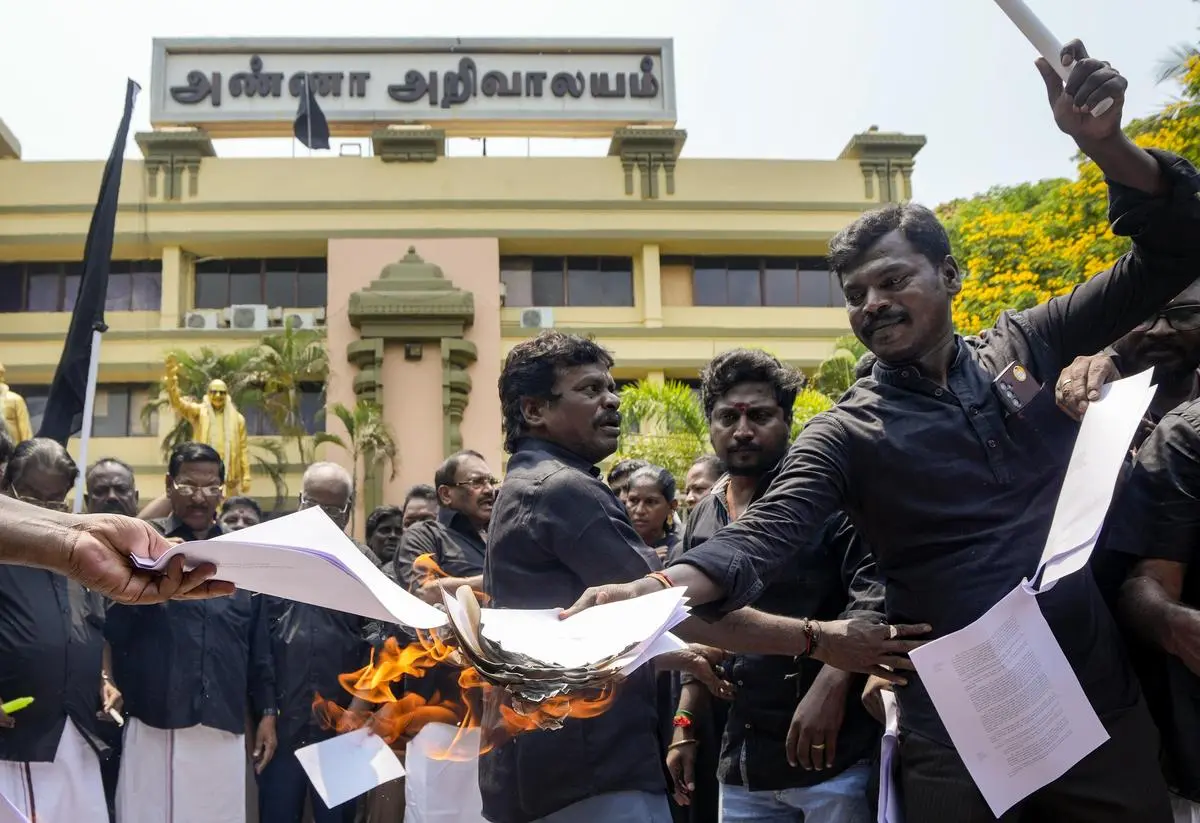
India
Women’s Reservation Bill 2026
The Constitution (131st Amendment) Bill, 2026 was defeated in Lok Sabha, revealing deeper political conflicts over women's reservation and delimitation.
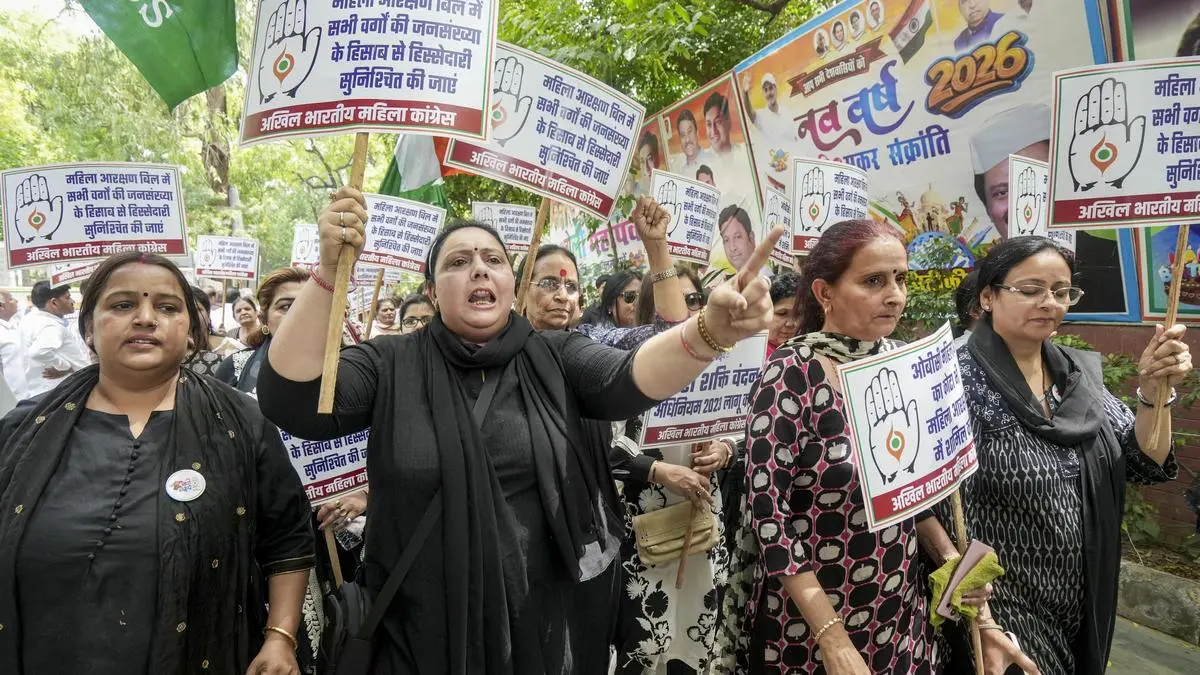
India
BJP's Misunderstanding of Women's Quota Needs
The BJP's linking of the Women Reservation Bill to delimitation risks delaying women's empowerment in India, misreading the aspirations of female voters.
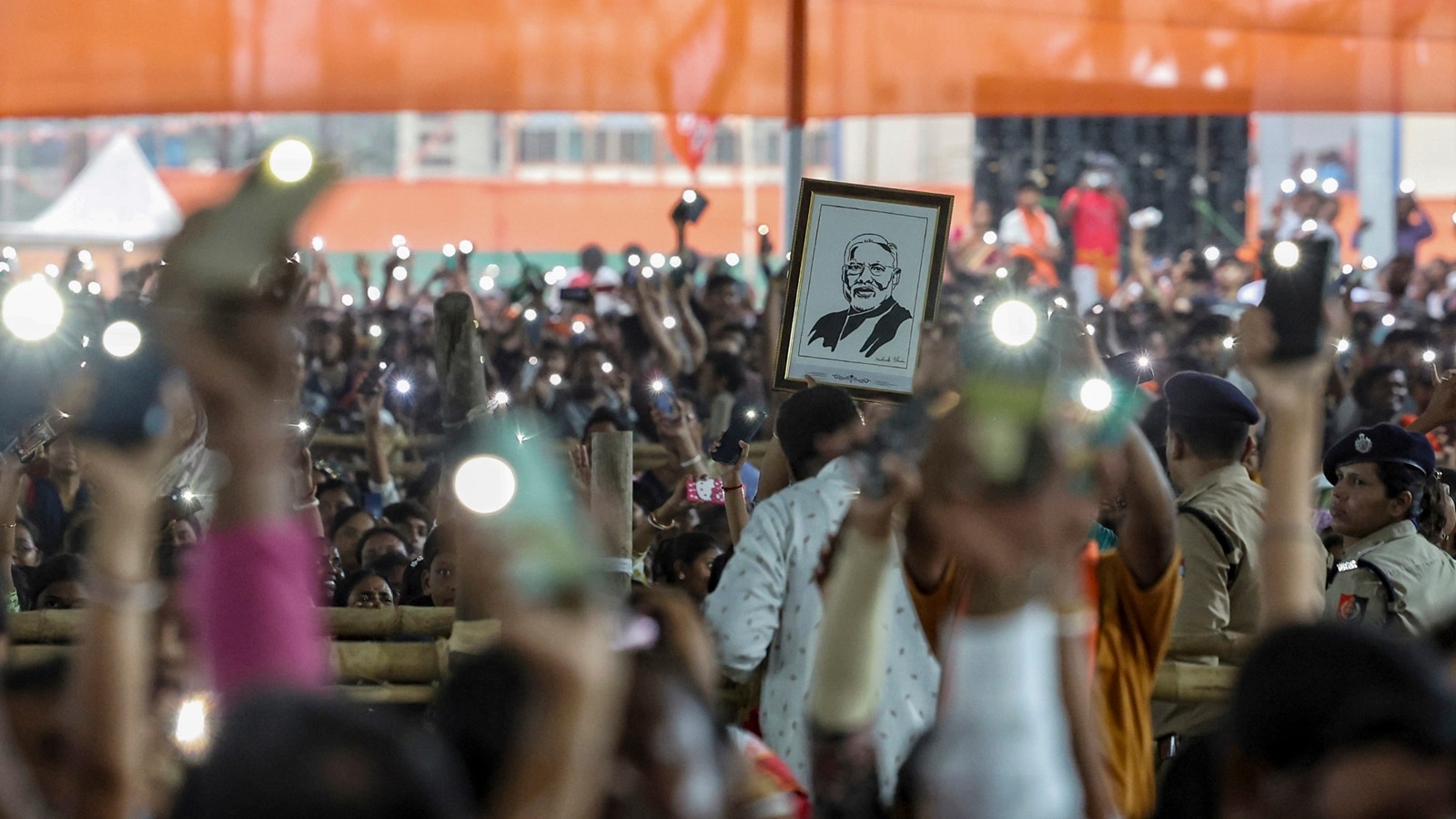
India
Modi's Women’s Convention in Varanasi
Modi's Varanasi rally frames women's reservation as a national mission, targeting the 2027 Uttar Pradesh elections with a strategic narrative.

Conflict & Security
Drone Warfare Killing Aid Workers at Unprec
Over 1,000 humanitarian workers killed in three years as cheap armed drones collapse legal protections. Gaza, Sudan, Ukraine, and DRC see deliberate targeting of aid convoys and hospitals with zero prosecutions.