Mahila Congress Postcard Push for Women's Quo
Postcard campaign demands immediate women's reservation in Lok Sabha
Model Diplomat8 min readIndia
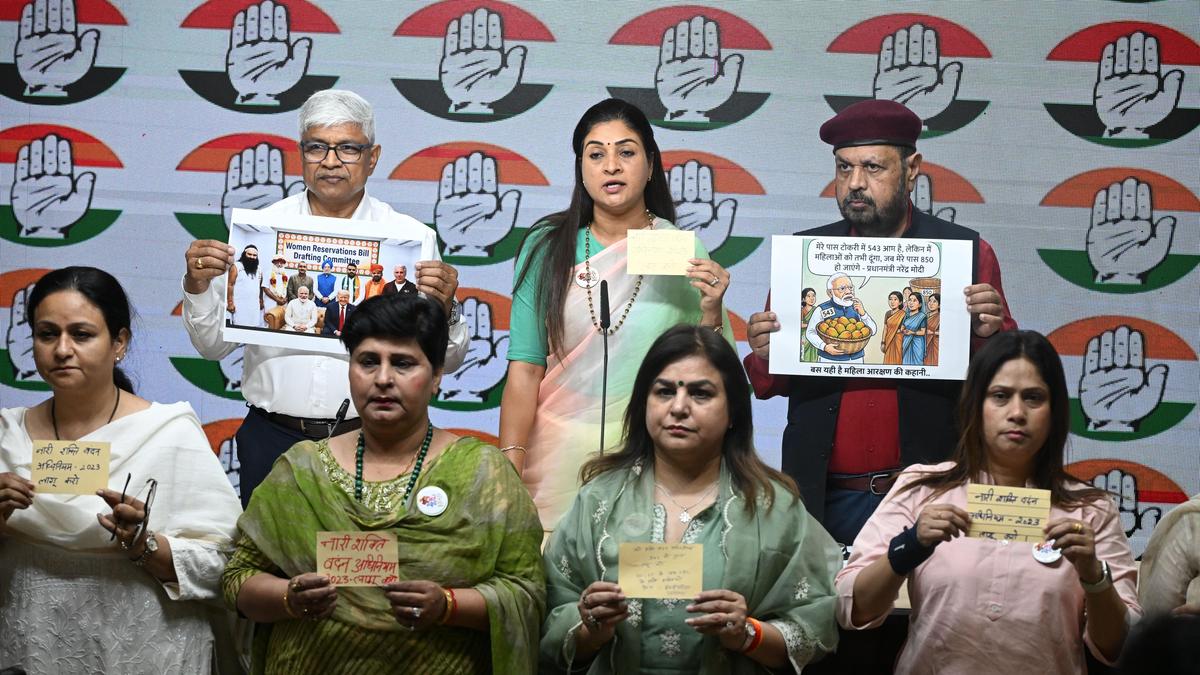
Mahila Congress Postcard Push for Women's Quota Puts Modi on the Clock
Alka Lamba's Mahila Congress is mailing one million postcards to PM Modi demanding India's 33% women's reservation apply to the current 543 Lok Sabha seats — not wait for delimitation.
The All India Mahila Congress (AIMC) launched a nationwide postcard campaign on April 22, 2026, targeting one million letters to Prime Minister Narendra Modi ahead of the Monsoon Session, demanding that the 33% women's quota passed in 2023 be enforced on the current 543-seat Lok Sabha rather than deferred to a post-census delimitation. The campaign is not really about postcards — it is a bid to sever women's reservation from delimitation, five days after the government's attempt to fuse them was voted down in the Lok Sabha. That legal delinking, if forced, would let a third of India's parliament be reserved for women at the 2029 election. If it fails, the quota drifts toward 2034.
The move behind the mail
AIMC chief Alka Lamba announced the drive at a Delhi press conference on April 22, saying district units would collect roughly 10 lakh handwritten postcards through May and June, all addressed to the Prime Minister's Office, demanding immediate implementation of the Nari Shakti Vandan Adhiniyam on the existing 543 seats and an OBC sub-quota within it. The Hindu confirmed the launch and the OBC framing in its national coverage, and the
Daily Pioneer reported the same 33% demand tied to today's Lok Sabha strength.
The timing is deliberate. Five days earlier, on April 17, 2026, the Modi government's Constitution (131st Amendment) Bill — the vehicle that would have operationalised the 2023 women's quota by expanding the Lok Sabha to 850 seats — was defeated on the floor. The Press Information Bureau's own end-of-session statement records the outcome bluntly: the bill "could not have the required majority as per Article 368(2) of the Constitution of India on its motion for consideration, no further action was taken," and the two enabling bills fell with it, per the PIB session summary. The vote was 298 to 230 — short of the 360 needed — according to BBC Marathi's
tally.
That defeat is the first time in 12 years a Modi-government constitutional amendment has been rejected on the floor. It is also the pivot on which the postcard campaign turns.
The legal knot the postcards attack
The 2023 law — formally the Constitution (106th Amendment) Act, the Nari Shakti Vandan Adhiniyam — reserves one-third of Lok Sabha and state assembly seats for women, but by its own text takes effect only "after an exercise of delimitation is undertaken for this purpose after the relevant figures for the first census taken after the commencement" of the Act. That sequencing clause is the trap. The Carnegie Endowment's post-defeat analysis puts it plainly: "women's reservation — despite being formally enacted — cannot take effect until after the 2027 census is completed and a new delimitation is carried out."
The Centre notified the 2023 Act on April 16, 2026 — the same day it introduced its expansion bills — giving the quota formal legal life without triggering it, as the India Press Agency reported. Home Minister Amit Shah told parliament during the debate that "reservation for women will be ensured in the delimitation exercise to be carried out after the Census conducted post-2026," according to the government's
own record of his speech. That is the government's position: quota after census, census after 2026, delimitation after that.
Mahila Congress is arguing the opposite in the simplest possible medium. If 33% is applied to the current house, roughly 181 of 543 seats become reserved. The party's implicit calculation: nothing in the 2023 Act prevents parliament from amending its own sequencing clause. What it needs is political pressure, and postcards are cheaper than paid media.
The number that keeps the argument alive
Congress has a real gap to point at. Women hold 74 of 543 seats in the 18th Lok Sabha — 13.62% — a slight decline from 14.4% in 2019, according to a Congressional Research Service brief prepared for U.S. lawmakers on India's 2024 vote (IF12686). That places India 141st of 185 countries in the Inter-Parliamentary Union's global ranking of women's parliamentary representation — behind Nepal, Bangladesh and Pakistan — as the
ISAS-NUS brief on the 2023 bill noted.
The BBC's post-election IPU analysis put India in the same cohort as the United States, Portugal and Indonesia — 27 parliaments worldwide where the share of women fell in the 2024 election cycle, halting a decade of gradual progress, BBC News reported. Trinamool Congress fields 38% women; the BJP sits at 12%, Congress at 14%, per an
academic review of the 2024 result. The women's-quota deficit, in other words, exists inside every major party — including the one now running the postcard drive.
Why the government prefers the long road
The BJP has a rational political interest in the sequencing it chose. Delimitation based on the 2011 census would expand the Lok Sabha to 850 seats and shift seats decisively toward the Hindi belt, where the party dominates, and away from the four southern states — Tamil Nadu, Kerala, Karnataka and Telangana — which capped their fertility earlier and have asked for the freeze to be extended another 25 years, BBC News reported. The women's quota is the political sweetener that makes an otherwise combustible redistribution palatable.
Al Jazeera's April coverage captured Rahul Gandhi's response to the package: "The proposal that the government is now bringing has no connection to women's reservation. It is merely an attempt to seize power through delimitation and gerrymandering," he told his followers on social media. Even Punjab Chief Minister Bhagwant Mann, from the rival Aam Aadmi Party, has publicly aligned with the Congress position that the quota should apply first to the current 543 seats, per IPA.
That is the crack the postcards are pushing through. If the opposition can convert "implement the quota now" from a Congress talking point into a mass women-voter demand, the Modi government faces a choice between two politically costly options: bring back a standalone women's amendment on the current 543 seats — and lose the delimitation lever it just tried to use — or hold the line and cede the "delayer of women's rights" label to the opposition ahead of the 2027 state cycle.
The historical parallel that matters
Postcard campaigns work in Indian politics when they hit an incumbent already committed rhetorically to the demand. The template is the 1990 postcard push around the Mandal Commission and, more recently, the Shaheen Bagh CAA drive of January 2020, when the Friends of Shaheen Bagh collected 1,800 letters on their first weekend, Al Jazeera reported. The Mahila Congress target — one million letters in two months — is orders of magnitude larger, but it is aimed at a policy Modi himself called "among the most significant decisions of our times" when the 2023 bill passed.
That is the trap for the government. Amit Shah told parliament during the April debate, according to the PIB transcript, that "when opposition parties go into elections, they will have to face the anger of women." The postcards are engineered to invert that sentence.
What women voters actually did in 2024
The subtext of every party's calculation is that Indian women now vote in larger numbers than men and are consolidating into a distinct bloc. In 2024, the BJP won 37% of male voters but 36% of female voters — a rare underperformance among women, according to a Lokniti-CSDS post-poll cited by Al Jazeera. The Council on Foreign Relations' Yashwant Deshmukh went further: "Women appear to be voting more than men, and they are voting as a bloc. They have become a bigger issue in Indian politics than religion and caste," he
told CFR.
That is the audience the postcards are ultimately aimed at — not the PMO mailroom.
Diplomat View
The Mahila Congress postcard campaign will not, on its own, force the government to implement the 33% quota on the current 543 seats. Modi's NDA needs the opposition for a two-thirds majority on any amendment and has no incentive to give up the delimitation-women's-quota bundle it built. But the campaign has already achieved a subtler goal: it forces every subsequent BJP move on delimitation to be measured against a specific, gendered counter-demand with a physical paper trail. Congress has effectively booked the women's-quota issue as its own ahead of state polls in West Bengal, Tamil Nadu and Kerala in 2026 — states where women's turnout is already outrunning men's, per Lokniti. Expect the government to respond in the Monsoon Session with either a narrower amendment reviving the 850-seat plan minus the most contentious southern seat losses, or a rhetorical counter-mobilisation via BJP Mahila Morcha. The forecast changes if: (a) the 2026 census produces preliminary results faster than expected, giving the BJP a fresh path to delimitation before 2029; (b) a southern-state coalition, joined by AAP's Mann, formally endorses the Congress position, giving it two-thirds arithmetic; or (c) the Supreme Court is moved to rule on whether the notified 2023 Act can be implemented on the current seat map without delimitation. Any of those three would break the current stalemate — the postcards alone will not.
What to watch next
- Monsoon Session opening (expected mid-July 2026): whether Mahila Congress delivers the postcard bundles physically to the PMO and whether the Speaker admits a private member's bill delinking the 33% quota from delimitation.
- First census results (expected 2027): the constitutional trigger. Any published preliminary data reopens the delimitation clock and, with it, the women's-quota clock.
- State elections in West Bengal, Tamil Nadu, Kerala and Assam (2026): the Congress and its allies will campaign on immediate implementation; the female-voter bloc's response will tell every party whether the postcard demand has political legs beyond the mailroom.
The bottom line: Alka Lamba's postcards are not asking Modi to pass a new law — they are asking him to enforce one he already signed. The Mahila Congress bet is that a million handwritten letters make the 2023 Act's sequencing clause politically untenable before the 2027 census makes it legally moot. If it works, the 2029 Lok Sabha will be one-third female on 543 seats; if it fails, women's representation in India stays stuck near 14% for another parliamentary cycle.
Discover more
India
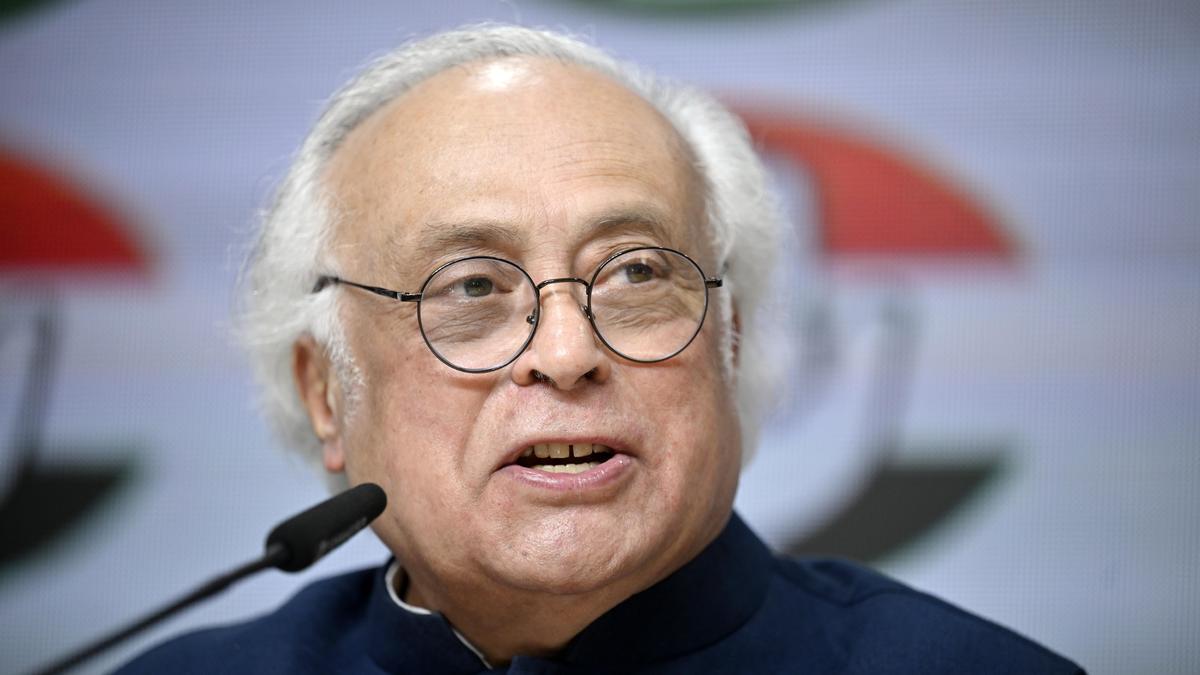
Congress Accuses Modi of Stalling Women's Law
Congress accuses Modi of stalling women's reservation law by linking it to delimitation, revealing a deeper electoral strategy.
India
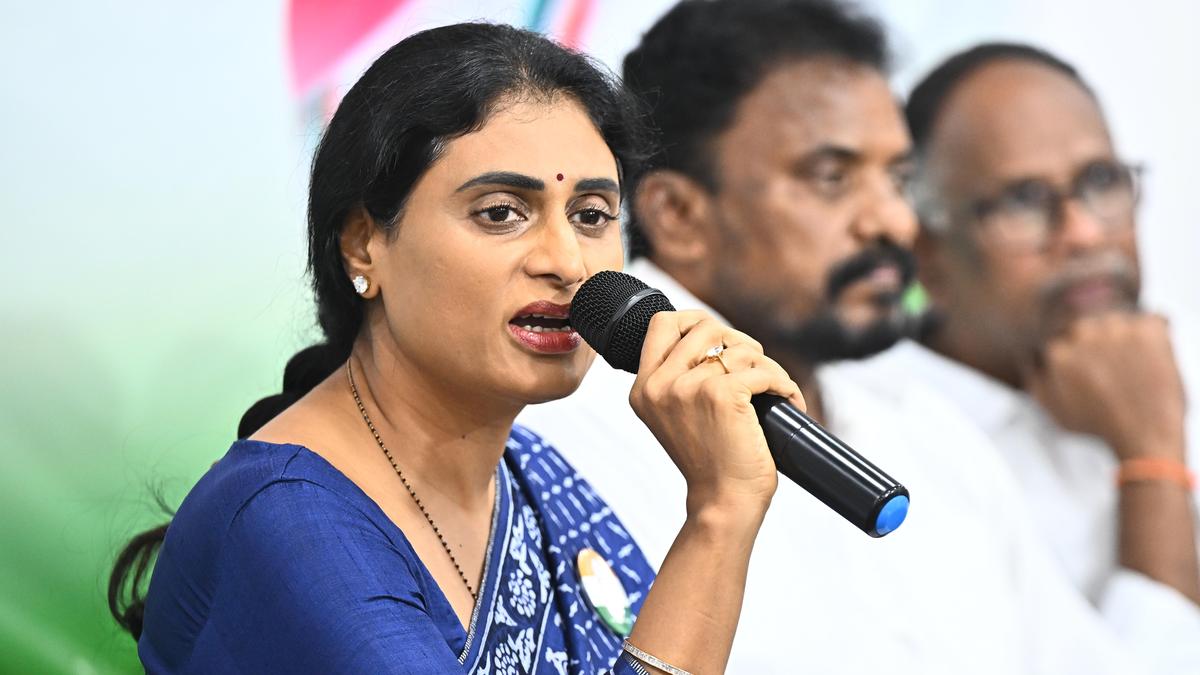
Congress Advocates 33% Women’s Quota
Congress calls for a 33% women's reservation in the existing 543 Lok Sabha seats, countering Modi's plan to expand the house to 850 seats.

Conflict & Security
Drone Warfare Killing Aid Workers at Unprec
Over 1,000 humanitarian workers killed in three years as cheap armed drones collapse legal protections. Gaza, Sudan, Ukraine, and DRC see deliberate targeting of aid convoys and hospitals with zero prosecutions.

Global
World Normalises Taliban as Afghan Women Eras
UN data shows Afghan women erased from public life as Russia recognises the Taliban, EU hosts officials in Brussels, and ICC warrants for gender persecution go unenforced.