Why Zimbabwe Can't Meet US Lithium Demand
Exploring barriers to Zimbabwe's lithium exports to the US
Model Diplomat7 min readAfrica
Why Zimbabwe Won't Fill the Pentagon's Lithium Order
The DLA is buying 16,000 tonnes of battery-grade lithium to break China's grip. Africa's biggest lithium producer, Zimbabwe, is structurally locked out — here's why.
The US Defense Logistics Agency (DLA) has opened bids for up to 36 million pounds — roughly 16,000 tonnes — of battery-grade lithium carbonate over five years, a purchase valued at close to $300 million and pitched as a strike against Chinese dominance of the battery supply chain, Mining Index Zimbabwe reported. Africa's largest lithium producer is effectively barred from bidding. Zimbabwe's mines are 90% Chinese-owned, its February 25, 2026 export ban on lithium concentrate blocks any near-term shipment, and it has zero domestic capacity to make battery-grade carbonate — meaning Washington's flagship "diversification" tender will, on the current facts, be filled by Australia, Chile or Argentina, not the country that sits on the third-largest reserves in the world. The DLA's diversification push and Harare's beneficiation push are colliding — and the loser is US energy security.
The tender that reframed the market
The DLA solicitation is the largest lithium acquisition the National Defense Stockpile (NDS) has ever attempted. Its statutory footing is 50 USC §98e-2, the multiyear procurement authority for domestically processed critical minerals inserted into the FY2024 NDAA. That statute lets the Pentagon lock in five-year fixed-price contracts — but only for material "processed in the United States by domestic sources," a phrase that includes qualifying-country processors under the Trade Agreements Act.
The volume matters. The Fiscal Year 2026 Annual Materials Plan, published in the Federal Register in August 2024, listed just 50 metric tonnes of "Lithium Ion Materials" as a potential disposal — a rounding error against the current tender. In practice, the DLA is going from a token holding to what the Atlantic Council calls a "break-the-glass" strategic buffer against Chinese chokepoints, per its
Project Vault analysis published earlier this year.
That build-out sits on top of grim numbers. The GAO found in its June 2024 review that over 90% of materials the Pentagon identified in shortfall in FY2023 had zero or one domestic supplier, and that closing all shortfalls would require $18.5 billion. The Council on Foreign Relations put the stockpile's total assets at just $1.3 billion as of March 2023, arguing in its
June 2026 brief that the NDS covers less than half of defense production needs in a conflict scenario.
Zimbabwe's leverage — and its trap
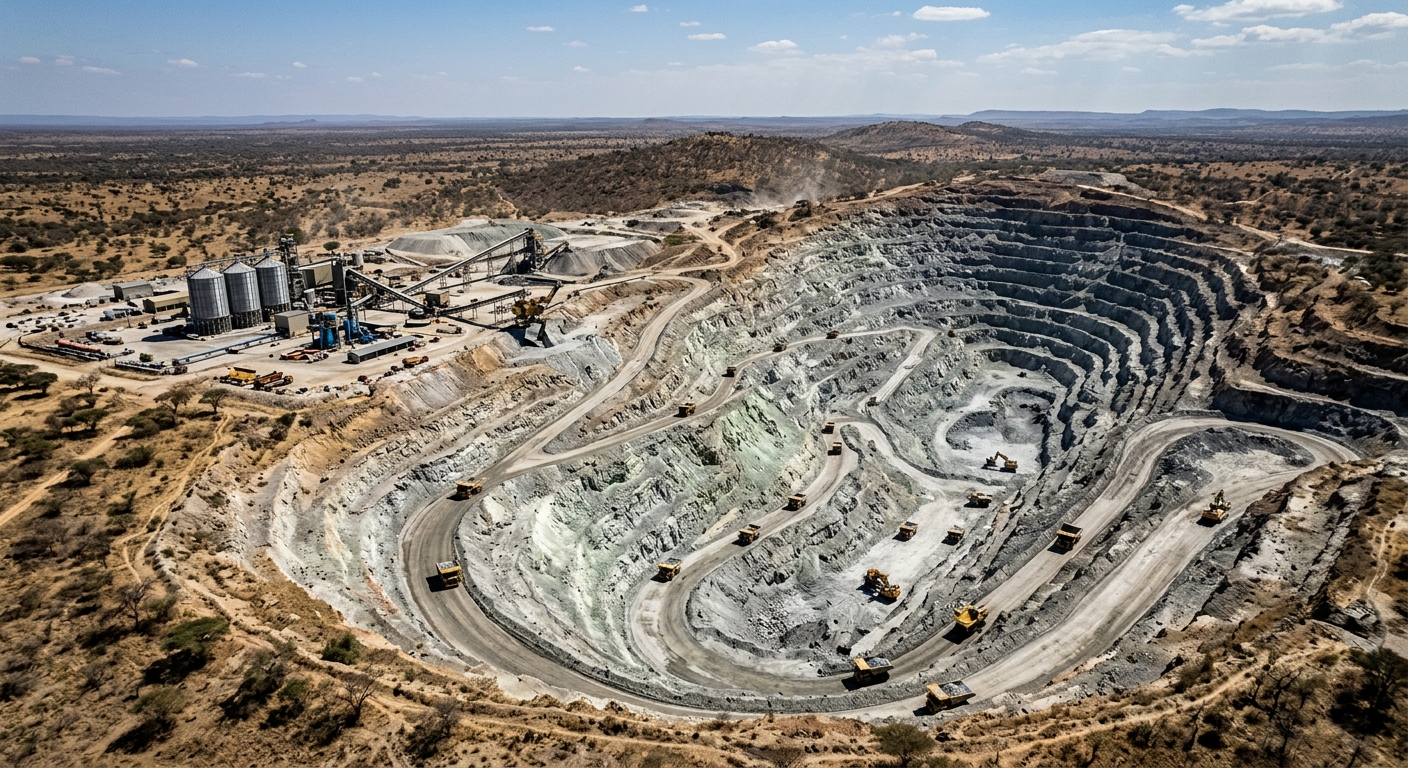
On paper, Zimbabwe should be a natural bidder. Al Jazeera, citing government data, reports Zimbabwe exported 1.128 million tonnes of spodumene concentrate in 2025, up 11% year-on-year, and Q1 2026 lithium earnings more than doubled to $178.6 million, according to figures from the Minerals Marketing Corporation of Zimbabwe published by
Al Jazeera on June 18.
Three structural facts, however, make Zimbabwe a non-starter for the DLA tender as written.
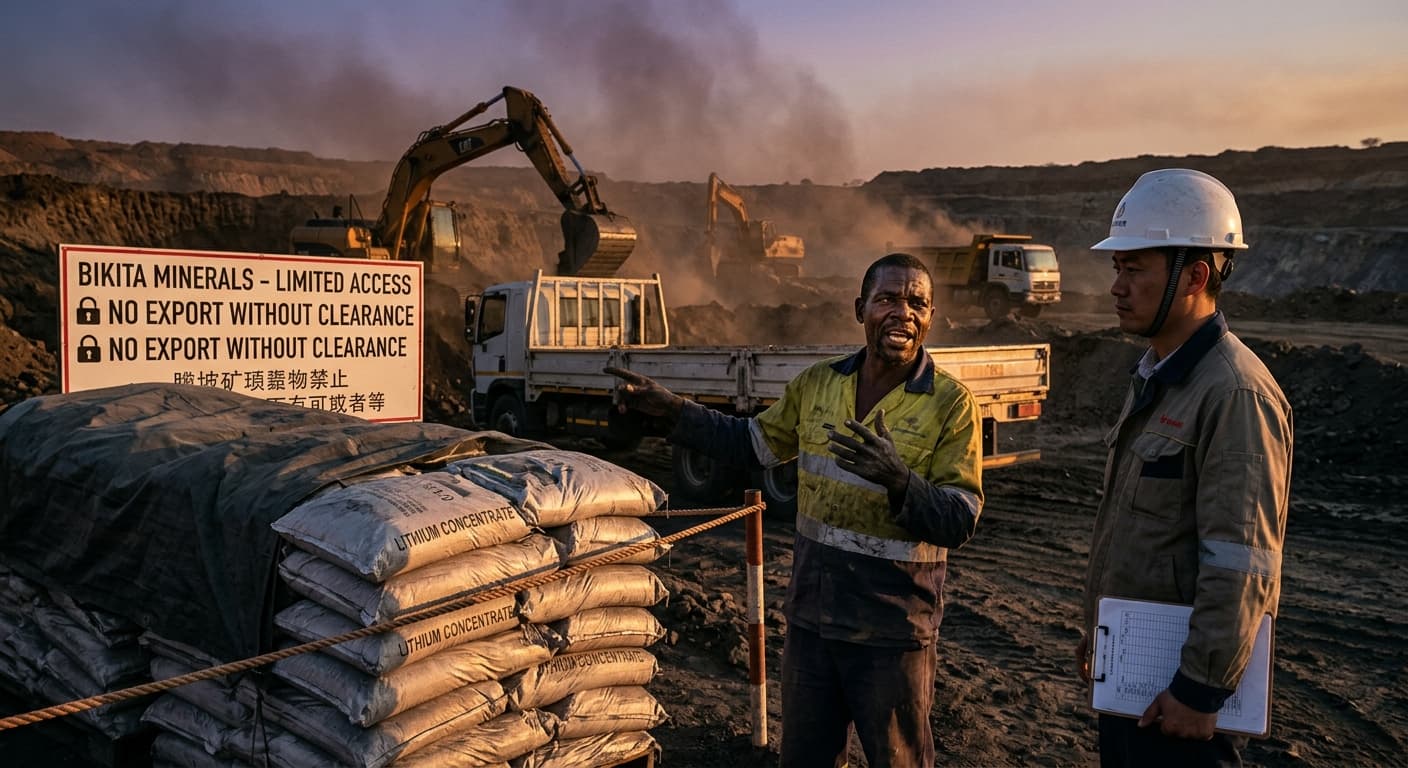
First, the ore itself is Chinese. A South African Institute of International Affairs paper, SAIIA Occasional Paper 362, documents more than $1 billion in Chinese lithium investment in Zimbabwe since 2021: Sinomine's $180 million buy of Bikita Minerals in 2022, Zhejiang Huayou Cobalt's $422 million takeover of the Arcadia mine the same year, Chengxin's stake in Sabi Star, Yahua's $130 million at Kamativi. A London School of Economics analysis of the Huayou–Arcadia deal notes the transaction transferred control of one of the world's largest hard-rock deposits from Australian to Chinese hands under Zimbabwe's
1961 Mines and Minerals Act, which gives the president near-total discretion over concessions.
Second, the export ban is a hard stop. On February 25, 2026, Minister of Mines Polite Kambamura suspended exports of all raw minerals and lithium concentrate "with immediate effect," including material in transit, per the Al Jazeera report. The original 2027 deadline announced by former minister Winston Chitando in June 2025 was collapsed forward by roughly 11 months. Premier African Minerals confirmed the disruption in a
regulatory filing to the London market, noting the ministry cited "continued malpractices during the exportation of minerals." A subsequent
Premier update said exports would resume only "under a controlled framework, with approvals and quotas being granted to qualifying producers" that meet beneficiation criteria.
Third, Zimbabwe cannot yet make what the DLA is buying. Battery-grade lithium carbonate is two processing steps removed from spodumene concentrate. The most advanced Zimbabwean facility — Huayou's $400 million Arcadia plant — produces lithium sulphate, an intermediate. Sinomine's $500 million lithium sulphate plant at Bikita is not yet built, and Bikita Minerals itself only expects to commission its first phase in Q2 2027 at 60,000 tonnes per year. No Zimbabwean plant produces battery-grade lithium carbonate today. The refining step still happens in China.
The sanctions ghost still shapes the deal
The formal barrier US buyers used to cite — sanctions — is gone. On March 4, 2024, President Biden signed Executive Order 14118 terminating the national emergency with respect to Zimbabwe, and OFAC published a
final rule removing 31 CFR part 541 from the Code of Federal Regulations effective April 17, 2024. Zimbabwe's country-level sanctions program no longer exists.
What remains is more surgical and, for the DLA, more consequential. President Emmerson Mnangagwa, First Lady Auxillia Mnangagwa, and business kingpin Kudakwashe Tagwirei — figures at the center of the state's mineral apparatus — remain designated under the Global Magnitsky program for corruption and human rights abuse. Any DLA contract that traced back to entities they control would trip 50%-rule blocking. The state-owned Mutapa Investment Fund, which now anchors government participation in lithium via its Sandawana joint venture with Huayou and Tsingshan, remains politically radioactive for US defense procurement even where it is not technically sanctioned.
The Trump administration has doubled down on the transactional turn. Zimbabwe rejected the "America First Global Health Strategy" — an aid-for-minerals framework Washington has offered to some 20 African states, per the Observer Research Foundation — citing sovereignty and biological-data concerns. Harare has not been sitting at the US critical-minerals table. It has not signed onto the
Lobito Corridor initiative either, the flagship US–Angola–DRC–Zambia project through which the DFC has been channelling copper and cobalt financing.
The DLA will buy — just not from Africa's biggest producer
The realistic universe of bidders for the July tender is narrow. Australia's Pilbara, Mineral Resources and IGO produce spodumene at scale and increasingly send it to Korean and Japanese converters that qualify as "designated country" processors under the Trade Agreements Act. Chile's SQM and Albemarle produce battery-grade carbonate directly from brine. Argentina's Salta and Catamarca operations are Western-owned. Domestic capacity is only now coming online: the Department of Energy's record of decision on Lithium Nevada's Thacker Pass authorised a Loan Programs Office loan for a battery-grade lithium carbonate plant, but first product is not expected until late in the decade.
Zimbabwe would need three things to bid competitively before this contract expires in 2031: a battery-grade carbonate line (four years to permit and build at best); a non-Chinese equity partner in at least one large mine (no such deal is on the horizon); and an OFAC general licence explicitly ring-fencing lithium sector transactions from the Mnangagwa designations. None of these is impossible. None is happening now.
The SAIIA analysis is blunt about who ultimately wins from Zimbabwe's beneficiation strategy: Chinese firms, which have moved concentrate production onshore in Zimbabwe to secure cheaper feedstock while keeping the high-margin refining step at home. The Institute for Security Studies' Africa Futures programme reached the same conclusion, arguing the
beneficiation policy has entrenched Chinese monopoly rather than diversified it, because Chinese threats to scale down operations — as Bikita did in 2024 — have repeatedly extracted policy concessions from Harare.
The DLA tender is designed to bid up non-Chinese lithium prices and starve Chinese refiners of Western battery contracts. But because Zimbabwe's mines are Chinese-owned and its concentrate goes to Chinese refineries, any DLA-driven price signal for battery-grade carbonate outside China raises the value of Chinese refining margins on Zimbabwean feedstock. Washington's diversification premium partly subsidises the very supply chain it is trying to break.
Diplomat View
Zimbabwe will not be a meaningful supplier to the US National Defense Stockpile before 2029 — and possibly not this decade. The February 2026 export ban, the near-total Chinese ownership of operating mines, the absence of any domestic battery-grade carbonate line, and the residual Global Magnitsky exposure of state actors combine into a barrier no single policy fix removes. The forecast changes only under three conditions: (1) a Western equity entry — Rio Tinto, KoBold, or an Australian major — into a large Zimbabwean lithium asset with US DFC support; (2) commissioning of a non-Chinese-controlled battery-grade carbonate facility in-country; and (3) an OFAC general licence explicitly ring-fencing lithium sector transactions from the Mnangagwa designations. Absent those, the DLA's $300 million tender will flow to Australia, Chile and Argentina, and the strategic message from Harare's ban will be read in Beijing as an invitation, not a warning. The story of Africa's biggest lithium producer becoming a US supplier is not a 2026 story. It is a 2030 story — if the equity map changes first.
What to watch
- August 2026: DLA solicitation closing and initial award notifications; watch for which country's processors qualify under Trade Agreements Act designations.
- Q4 2026: Zimbabwe Ministry of Mines expected to publish the "controlled framework" for concentrate export quotas cited in Premier African Minerals' March 2 update; the fine print will reveal whether any non-Chinese producer can export at all.
- Q2 2027: Bikita Minerals' first-phase lithium sulphate plant scheduled to commission — the first credible test of whether Zimbabwe can move up the value chain without Chinese refining backstop.
- FY2027 NDAA markup (spring 2027): Congress is expected to revisit the definition of "domestic source" under 50 USC §98e-2 — the single legislative lever that could make African-processed lithium eligible for future DLA contracts.
Discover more

US Politics
House Ethics Committee Pushes Sexual Miscond.
The House Ethics Committee has shifted responsibility for sexual harassment settlement records to the Office of Congressional Workplace Rights, complicating disclosure efforts.

International Relations
Pakistan's Key Role in US-Israel-Iran Meddle
Pakistan is seeking to mediate the US-Israel-Iran conflict, balancing high-stakes diplomacy against severe economic pressures and steep regional challenges.

US Politics
SNAP Food Assistance Faces Legal Challenges
In 2026, SNAP faces stricter eligibility rules and mounting legal challenges, threatening food assistance for the millions of Americans who rely on the program.

Economics
Fed's Amex AML order puts correspondent banking on notice
Federal Reserve's Amex AML order requires board-level controls and a 90-day plan; OCC fined the bank $350 million over enterprise-wide deficiencies.