Warsh Takes the Fed Helm as Trump Presses for Cuts
[Kevin Warsh enters the Fed under White House pressure, with independence, inflation and the June 16-17 rate meeting now the real test.]
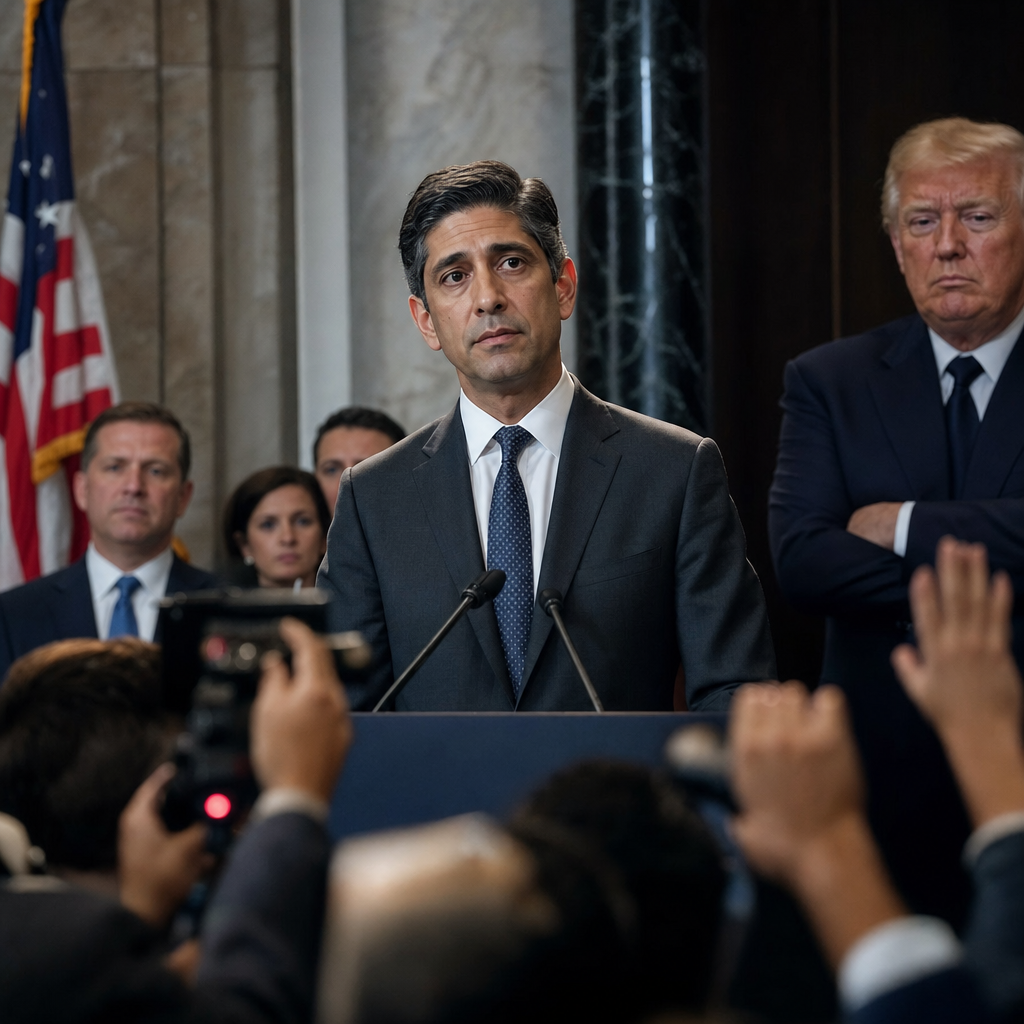
Kevin Warsh was sworn in on Friday as chair of the Federal Reserve, replacing Jerome Powell after a contentious confirmation that split the Senate largely along party lines, with only Sen. John Fetterman breaking with Democrats to advance him,  Al Jazeera. President Donald Trump used the White House ceremony to publicly insist that Warsh should be “totally independent,” even as Trump has spent months demanding lower rates and more direct control over Fed policy,
  CNN. The immediate power shift is clear: Trump gets a Fed chair he chose; the question is whether Warsh can prove he is not just a conduit for White House preferences.
A White House ceremony with a political purpose
Swearing in a Fed chair at the White House is not normal. AFP noted through  France24 that the last central bank chief to do so was Alan Greenspan in 1987, under Ronald Reagan. That setting mattered: it turned a formal transition into a signal that the White House intends to stay visibly engaged in monetary policy. Trump amplified that message by praising Warsh as someone who would have the “full support” of his administration, while also claiming he expected him to become one of the Fed’s great chairs,
  USA Today.
The more important institutional detail is that Powell is not disappearing. France24 reported that Powell intends to remain on the Board of Governors, an unusual but not unprecedented move that keeps a rival power center inside the Fed while Warsh takes the chairmanship. That makes this less a clean handoff than a managed contest over the central bank’s direction, a theme worth tracking in  Global Politics and United States coverage alike.
Warsh inherits an economy, not just an office
Warsh is stepping into the job while inflation is elevated and the labor market is mixed, leaving the Fed squeezed between its two mandates. CNN reported that inflation has reaccelerated, mortgage rates have climbed, and the administration is facing a more volatile economic backdrop than when Warsh was first nominated, CNN. AFP’s reporting through France24 said April consumer inflation hit 3.8 percent, while policymakers at the last Fed meeting signaled rate hikes may be needed if inflation stays above target, France24.
That is why the chairmanship itself does not equal policy control. Warsh is one of 12 voting members, and the Federal Open Market Committee sets rates collectively, not by presidential preference, Al Jazeera. In practice, Trump has gained leverage over the agenda, but not a guaranteed outcome. If inflation stays sticky, Warsh will be forced to defend a hold — or even a hike — against a president who wants easier money to lower borrowing costs and stimulate growth, CNN.
What to watch next
The next decision point is the Fed’s June 16-17 meeting, Warsh’s first as chair, Al Jazeera. If the committee holds rates steady, Trump may quickly discover that installing a loyal appointee does not produce immediate policy compliance. If Warsh leans toward cuts, markets will read that as the first sign that the Fed’s independence is being redefined from the inside. Either way, the real test is not the oath of office. It is whether Warsh can keep Trump onside while preserving enough credibility to move markets when he finally has to act.