Rubio’s Cuba Squeeze
Exploring Rubio's impact on U.S.-Cuba relations amid sanctions.
Model Diplomat3 min readNorth America
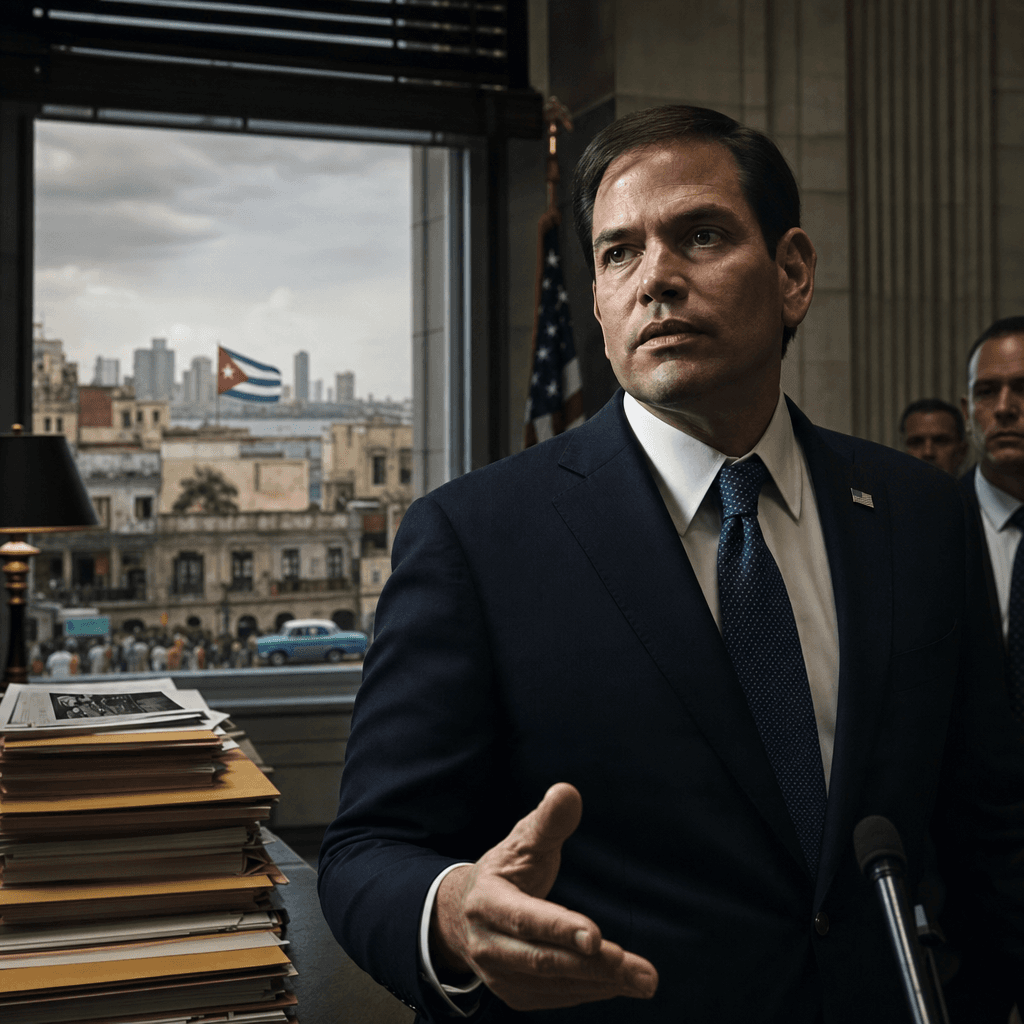
Rubio’s Cuba squeeze may become his legacy
Trump is pairing sanctions, a murder indictment and military signaling; Rubio is using the campaign to force Havana into concessions or collapse.
Rubio told reporters Cuba is a national security threat and said a peaceful deal is “not high,” as Washington unsealed murder and conspiracy charges against former president Raúl Castro over the 1996 shootdown of two civilian planes that killed four people, including three Americans (BBC;
The Washington Post). Trump then said he may be the president who finally acts on Cuba, which is the clearest sign yet that the White House is treating the island less as a diplomatic problem than as a coercive test case (
Al Jazeera;
The Guardian).
The leverage is economic, not military — yet
The pressure point is Cuba’s economy. Washington has kept up a fuel blockade and sanctions while offering $100 million in humanitarian aid on terms that bypass the Cuban state and its military-run conglomerate, GAESA (BBC;
BBC). That matters because Cuba is already living through blackouts of up to 20 hours, chronic fuel shortages and basic-service breakdowns that make time work against Havana, not Washington (
BBC).
This is the core power dynamic: the United States is not waiting for Cuba to negotiate from strength; it is trying to remove Cuba’s ability to wait at all. The reported US military buildup in the Caribbean, including the arrival of the aircraft carrier Nimitz and its strike group, is meant to reinforce that message, even if the administration still frames diplomacy as the preferred path (The Guardian;
Al Jazeera).
For Global Politics, this is a familiar pattern: economic strangulation first, legal escalation second, force posture third. For
United States politics, it also plays cleanly to Rubio’s base. He is a Cuban-American hawk with deep credibility in the Florida exile community, and the Cuba file gives him a signature issue inside an administration that prizes hard power over process (
The Guardian;
BBC).
Who wins, who loses
The immediate winners are Rubio and the Cuban-American hardliners who have spent decades pushing regime change. Trump also wins politically if he can claim he did what “other presidents” would not, especially after openly boasting that he may be the one to topple Havana’s government (The Guardian;
Al Jazeera).
The losers are clearer: Miguel Díaz-Canel’s government, the military-linked economic system around GAESA, and ordinary Cubans already absorbing the costs of shortages and outages (BBC;
BBC). The bigger risk, as one former Biden western hemisphere official put it in
The Guardian, is that “pressure succeeds” before Washington has a transition plan: “There’s no plan on what comes next.”
What to watch next
The next decision point is whether Washington follows the indictment with a concrete ultimatum or a back-channel bargain, and whether Havana responds with concessions on reforms, aid distribution or intelligence ties to Russia and China (BBC;
Al Jazeera). If the carrier group stays in the Caribbean and sanctions keep tightening, the issue stops being whether the US can increase pressure and becomes whether it has a credible plan if Cuba starts to crack.
Discover more
US Politics
Next Generation Republicans
A leaked survey shows 39% of Republicans under 30 do not identify as MAGA, revealing a split in the GOP's future leadership.
Global Politics
Trump's Conflicting Messages on Iran War
Trump's mixed messages on Iran reflect a strategy of audience management, benefiting Tehran amid a complex geopolitical landscape.

Conflict & Security
Drone Warfare Killing Aid Workers at Unprec
Over 1,000 humanitarian workers killed in three years as cheap armed drones collapse legal protections. Gaza, Sudan, Ukraine, and DRC see deliberate targeting of aid convoys and hospitals with zero prosecutions.

Global
World Normalises Taliban as Afghan Women Eras
UN data shows Afghan women erased from public life as Russia recognises the Taliban, EU hosts officials in Brussels, and ICC warrants for gender persecution go unenforced.