North Korea’s footballers are using Seoul to project power
Pyongyang’s women’s team has turned a rare match in the South into a soft-power win, while Seoul uses the game to test whether sport can reopen a closed channel.
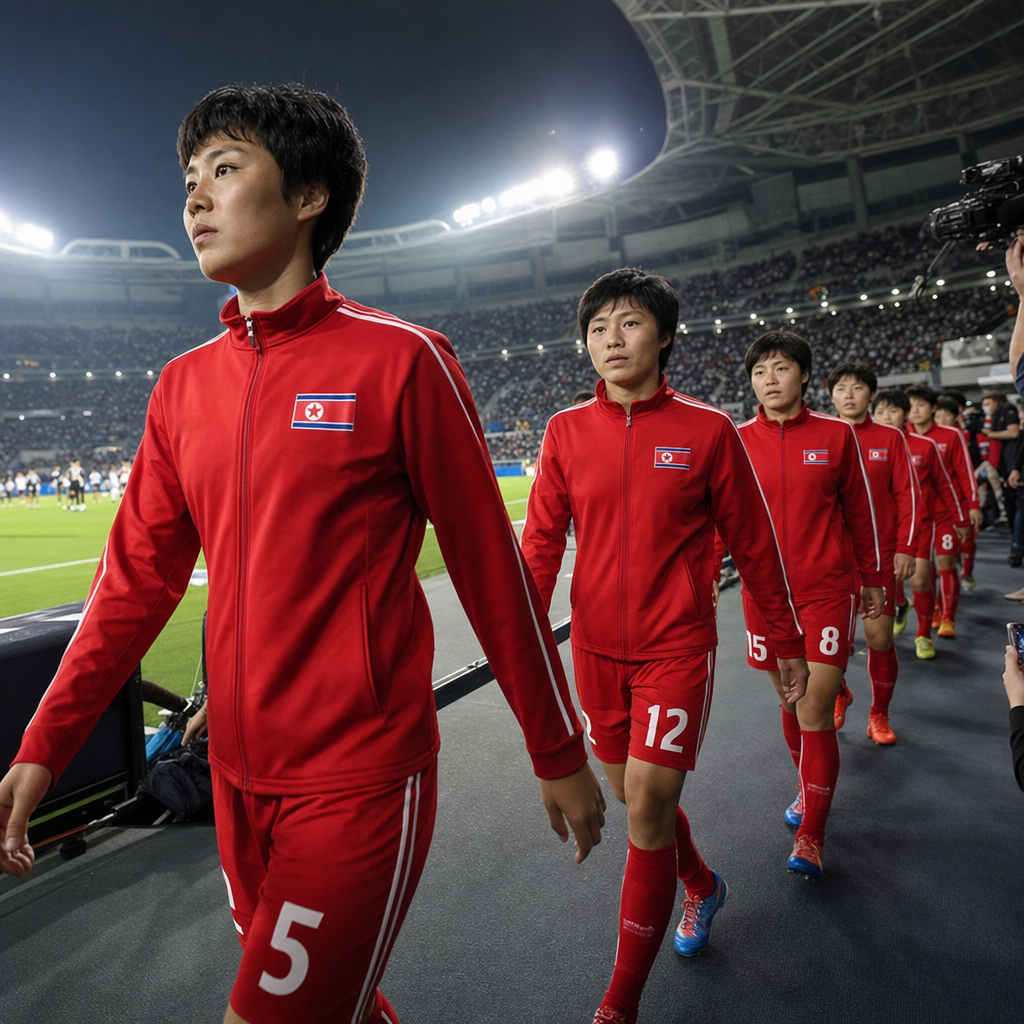
North Korea has already extracted the main dividend from this trip: its Naegohyang women’s club beat Suwon FC Women 2-1 in Suwon and advanced to the Asian Women’s Champions League final, the first North Korean athletes to cross into South Korea since 2018, according to  BBC News and
  Yonhap News Agency. That matters because Pyongyang gets exactly what it wants from women’s football abroad — visibility, prestige and the image of a disciplined, successful state — without having to make any political concessions.
Sport is the least expensive form of diplomacy
North Korea’s women are not an accident of policy; they are a deliberate showcase. BBC reports that the team sits 11th in FIFA’s women’s rankings, the second-highest in Asia, and has won recent youth World Cups, a record that stands in sharp contrast to the men’s side. Yonhap noted that North Korean state media quickly framed the semi-final only as a 2-1 win over the “ROK” club, while omitting the rain, the crowd reaction and the unusual atmosphere around the match. That selective coverage tells you how Pyongyang is treating the trip: as a controlled proof of competence, not as a step toward reconciliation.
For a regime under sanctions and short on conventional economic leverage, that is useful. Sport gives Kim Jong Un an arena where the state can still claim superiority, especially in a women’s program that has delivered results while broader ties with Seoul and Washington have collapsed. In  Global Politics terms, this is not a peace gesture; it is narrative management.
Seoul is testing a low-risk opening
South Korea is also getting something out of the match, though less immediately tangible. The BBC and AFP/France 24 reported that local NGOs, with government backing, brought in spectators to cheer both sides, and that South Korean fans even shouted “Naegohyang” for the visitors. That is a small but meaningful signal: President Lee Jae Myung’s government is looking for ways to lower the temperature with Pyongyang without paying a strategic price. A football match is a low-cost way to do that.
The problem is that the structural politics still run the other way. The North has formally abandoned reunification, called the South a “hostile state,” and kept its military pressure on. Yonhap News Agency noted that KCNA’s coverage carefully scrubbed out the most human details of the event. That is the real power dynamic here: Seoul wants engagement to create optionality, while Pyongyang wants spectacle without softening its line.
What to watch next
The next decision point is Saturday’s final against Japan’s Tokyo Verdy Beleza at the same Suwon venue, as reported by BBC Sport and  France 24. If Naegohyang wins, Pyongyang gets a cleaner propaganda win: a North Korean team lifting a continental title on South Korean soil. If it loses, the trip still serves its purpose by normalizing a limited return of North Korean athletes to the South. Either way, the football itself is secondary. The real question is whether this becomes an isolated sporting exception or a template for more carefully managed contact.