Serbia Students Demand Early Elections from V
Students rally for early elections amid government control.
Model Diplomat3 min readEurope
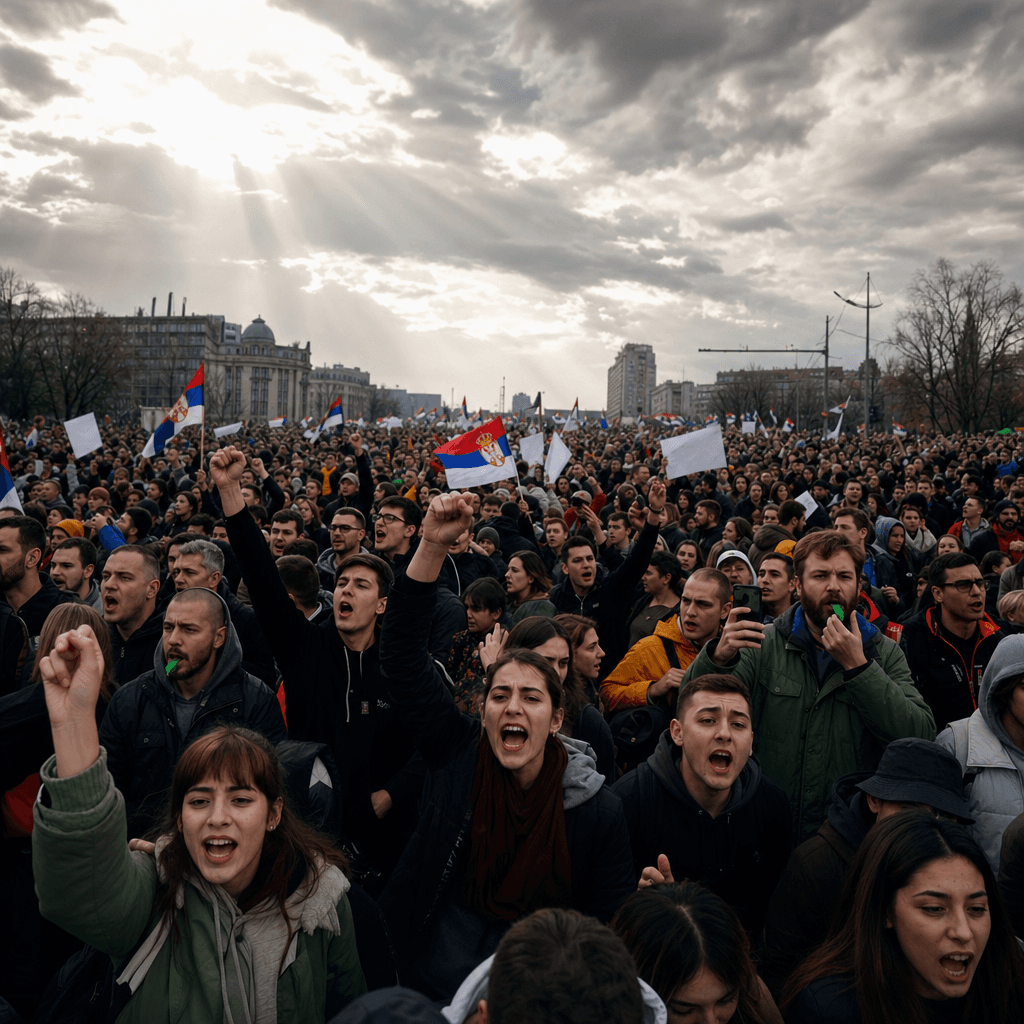
Serbia’s Students Pressure Vucic for Early Elections
Thousands filled Belgrade’s streets, but Aleksandar Vucic still controls the election calendar, the security response, and the state megaphone.
Tens of thousands of Serbs rallied in Belgrade on Saturday in a student-led antigovernment protest demanding early elections, while President Aleksandar Vucic said parliamentary voting could be held between September and November this year, according to Al Jazeera,
Associated Press and
BTA. Vucic still holds the stronger leverage: he can delay, define, and frame the vote, even as the students try to turn street momentum into an electoral challenge.
What changed
The protest movement did not begin as a standard opposition campaign. It was sparked by the November 2024 collapse of a railway station canopy in Novi Sad that killed 16 people, after which students and other demonstrators linked the disaster to corruption and negligence in public works, Al Jazeera reported. That anger forced then-prime minister Milos Vucevic to resign, but it did not dislodge the center of power in Belgrade. The target has now shifted to Vucic himself, and students are betting that anti-corruption sentiment can be converted into votes, not just crowds,
AP.
That is why this matters beyond Serbia’s borders and why it belongs on Global Politics: the protests have become a test of whether an entrenched incumbent can absorb a mass youth movement without conceding real power. AP quoted a Belgrade political scientist saying the students have become a force that can challenge the ruling Serbian Progressive Party, while also noting they still lack a leader and a detailed program that could unify them into a governing alternative,
AP. That is the students’ strategic problem: public sympathy is wide, but political organization remains thin.
How Vucic is playing it
Vucic is using the state to slow the street. Serbia’s railway company canceled all trains to and from Belgrade on Saturday, a move Al Jazeera said was aimed at preventing people from reaching the capital, Al Jazeera reported. His loyalists gathered in a camp outside the presidency building, and both Al Jazeera and AP said there were concerns about violence, including attacks on protesters and journalists around earlier gatherings,
Al Jazeera,
AP. He has also branded critics as “terrorists” and foreign agents, a message designed to keep his base consolidated and make the protests look destabilizing rather than civic,
Al Jazeera,
AP.
The external pressure is real but limited. The Council of Europe’s human rights commissioner, Michael O’Flaherty, has criticized Serbia’s handling of the unrest, and AP noted that democratic backsliding could put about 1.5 billion euros in EU funding at risk, Al Jazeera,
AP. That matters because Serbia still wants EU entry while keeping close ties to Russia and China; Brussels has leverage, but not enough to force a quick settlement.
What to watch next
The next decision point is whether Vucic turns his September-to-November window into a formal election call, and whether the students can keep the coalition broad enough to exploit it. If turnout stays high and the rallies remain peaceful, the protest movement strengthens its claim to represent the public mood. If the police, loyalist camps, or transport disruption trigger violence, Vucic gets the stronger political payoff: he can argue that order matters more than reform.
Discover more
India
Romanian Coalition Party Demands PM Resign
Romania's Social Democrats withdrew from coalition, joining far-right AUR to topple PM Bolojan, risking €10 billion in EU funds by August 2026.
India
BJP's Misunderstanding of Women's Quota Needs
The BJP's linking of the Women Reservation Bill to delimitation risks delaying women's empowerment in India, misreading the aspirations of female voters.
India
UN Expert Albanese: India Violates Law
UN Rapporteur Francesca Albanese accuses India of breaching international law, spotlighting human rights concerns in Kashmir and prompting diplomatic pushback.

Conflict & Security
Drone Warfare Killing Aid Workers at Unprec
Over 1,000 humanitarian workers killed in three years as cheap armed drones collapse legal protections. Gaza, Sudan, Ukraine, and DRC see deliberate targeting of aid convoys and hospitals with zero prosecutions.