Vance's Gambit: Iran Deal Amidst Chaos
VP Vance launches urgent talks on Iran's nuclear program.
Model Diplomat3 min readMiddle East
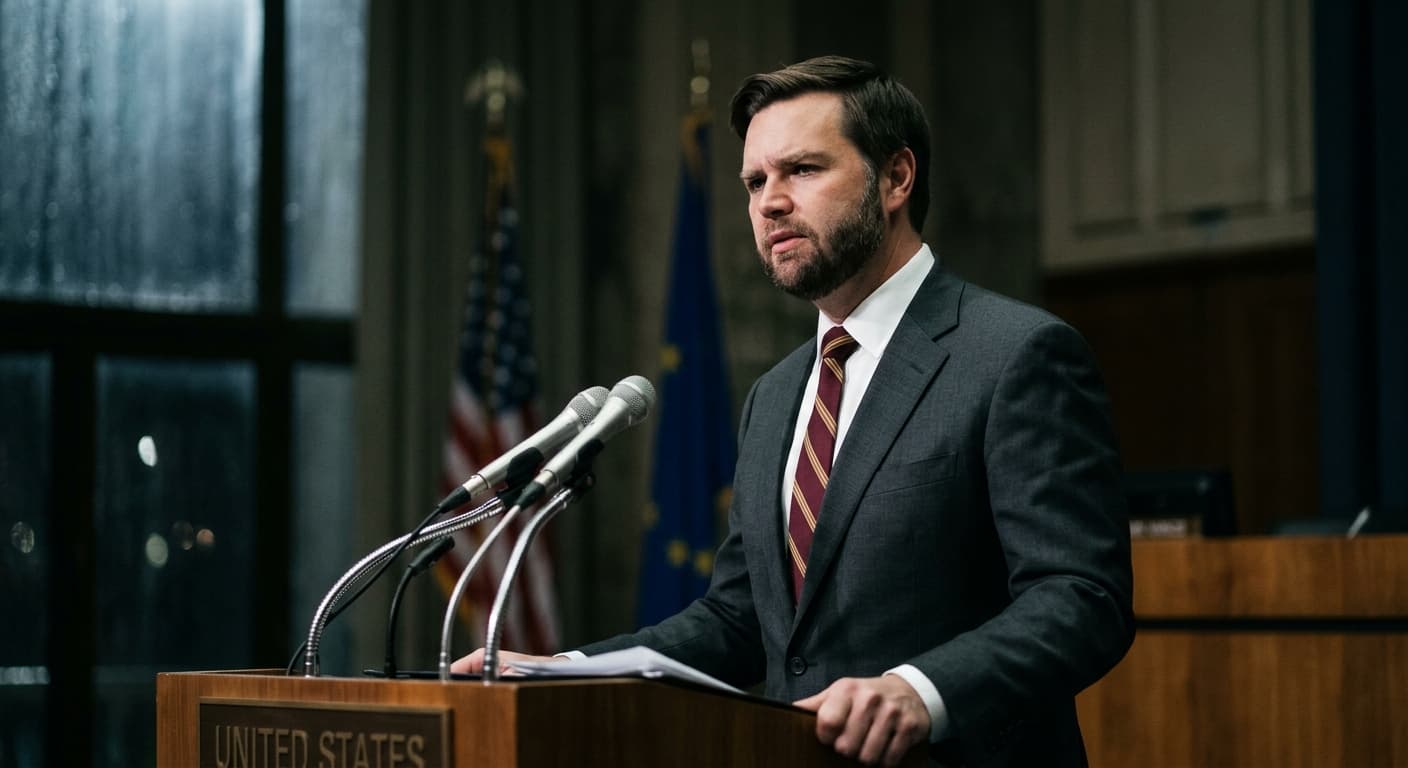
Vance's Gambit: Racing to Lock Down Iran Deal as Hormuz Burns
VP arrives to launch 60-day nuclear sprint, but Strait closure and Lebanon fighting threaten to collapse the ceasefire.
United States Vice President JD Vance landed in Switzerland on Sunday to formalize negotiations on Iran's nuclear program and the fragile ceasefire, a political mission that doubles as a test of whether Trump's high-stakes diplomacy can survive the chaos already engulfing it.
Al Jazeera reported his arrival at Emmen Air Base just before 6 a.m. local time, hours after Tehran's delegation—including parliamentary speaker Mohammad Bagher Ghalibaf and Foreign Minister Abbas Araghchi—touched down in Switzerland.
The stakes are blunt. The framework signed last week sets a 60-day deadline for negotiators to hammer out technical details on Iranian uranium stockpiles, asset releases, sanctions relief, and regional ceasefires—decisions that will reshape oil markets and the Middle East's entire military balance. But three obstacles are already unraveling the deal before serious talks even begin.
First, Iran's Islamic Revolutionary Guard Corps closed the Strait of Hormuz on Saturday, declaring the vital waterway shut in response to what it calls Israeli violations of the ceasefire in Lebanon. According to the Economic Times, the Guards warned commercial vessels would "be at risk" approaching the strait. Yet U.S. Central Command disputed the claim—55 merchant ships carried over 17 million barrels of oil through on Saturday alone. Vance himself told Fox News before departure that he'd seen "no evidence" the strait was truly closed. This is leverage posturing dressed as a fait accompli.
Second, Lebanon's ceasefire is disintegrating. The Associated Press noted that fighting between Israel and Hezbollah killed 47 people in Lebanon and four Israeli soldiers in the first days after the deal. Neither Israel nor Hezbollah signed it. Netanyahu has pledged to keep forces in southern Lebanon; Hezbollah refuses to halt unless Israel withdraws. Vance's presence signals a last-ditch American effort to thread this needle, but his own office says he'll stay "a day or two"—leaving the real work to special envoy Steve Witkoff and Jared Kushner.
Third, Trump is already threatening to undermine his own deal. On Saturday he posted that if no agreement materializes in 60 days, the U.S. would levy tolls on Hormuz "for services rendered as the Guardian Angel to the countries of the Middle East." This is not a negotiating tactic—it's a tell. Trump is preparing his base (and himself) for failure.
The Iranian delegation's focus is precise: Al Jazeera's correspondent reported they want action on cessation of hostilities in Lebanon, lifting the maritime blockade, reopening Hormuz, releasing frozen assets, and sanctions relief on oil and petrochemicals. They're not expecting comprehensive deals in Lucerne—just the initiation of implementation. That's the floor, not the ceiling.
Pakistan's Prime Minister Shehbaz Sharif and army chief are also in Switzerland as mediators, signaling that if this collapses, the regional fallout lands on Islamabad, not Washington.
Watch whether Iran holds the Hormuz closure claim for more than 72 hours. If they do, oil prices spike, markets lose confidence in the 60-day process, and Vance's symbolism evaporates. If they back down quietly, you'll know they're more invested in the deal than their rhetoric suggests—and that Vance's fast trip accomplished its actual task: political cover for serious technical negotiations happening behind him.
Discover more

Global Politics
US Seizes Iranian Ship, Tensions Surge
The US seizure of the Iranian ship Touska highlights a shift in control over the Strait of Hormuz, favoring Iran's strategic position.
Global Politics
Trump's Conflicting Messages on Iran War
Trump's mixed messages on Iran reflect a strategy of audience management, benefiting Tehran amid a complex geopolitical landscape.

International Relations
Pakistan's Key Role in US-Israel-Iran Meddle
Pakistan is seeking to mediate the US-Israel-Iran conflict, balancing high-stakes diplomacy against severe economic pressures and steep regional challenges.

Conflict & Security
Drone Warfare Killing Aid Workers at Unprec
Over 1,000 humanitarian workers killed in three years as cheap armed drones collapse legal protections. Gaza, Sudan, Ukraine, and DRC see deliberate targeting of aid convoys and hospitals with zero prosecutions.