Vance Heads to Switzerland for Iran Talks
US and Iran engage in crucial peace negotiations.
Model Diplomat3 min readMiddle East
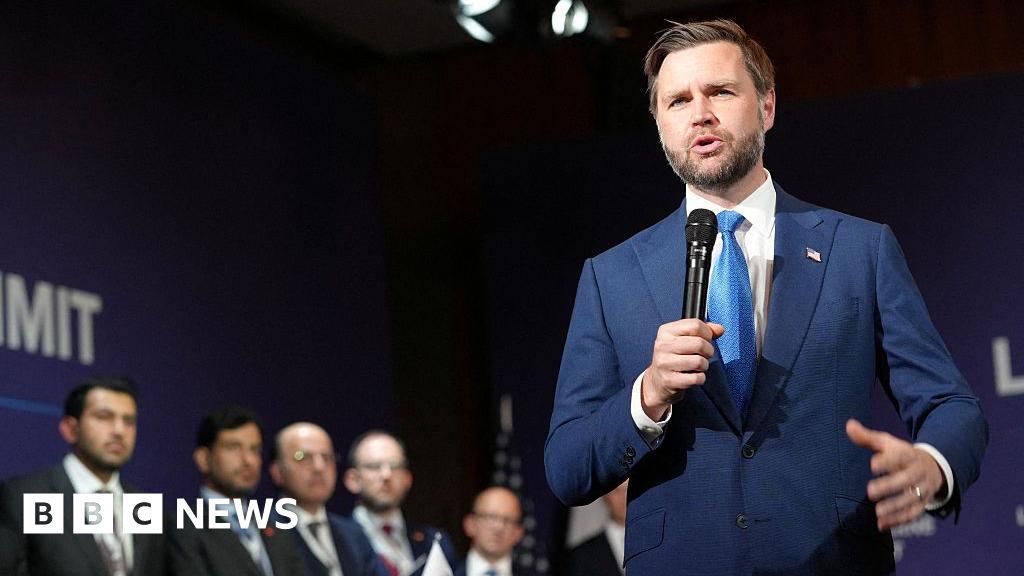
Vance Heads to Switzerland as Iran Deal Hits First Test
US and Iran open direct talks with 60-day deadline, but Lebanon violence and Hormuz threats already straining the fragile ceasefire.
The BBC reports that US and Iranian officials arrived in Switzerland on Sunday for high-level direct talks on implementing an initial peace agreement signed just days prior. Vice President JD Vance leads the American delegation—joined by Trump's son-in-law Jared Kushner and special envoy Steve Witkoff—while Iran's Foreign Minister Abbas Araghchi and Parliamentary Speaker Mohammad Bagher Ghalibaf represent Tehran. The talks occur at the Bürgenstock mountaintop resort, with Pakistan and Qatar mediating.
The headlines are the nuclear dossier and Lebanon. But the real test of this deal isn't the diplomacy—it's whether either side can deliver on ground.
The Deal on Paper—and the Cracks
Trump and Iranian President Masoud Pezeshkian signed a 14-point Memorandum of Understanding last week at Versailles, committing both sides to a ceasefire across "all fronts," the reopening of the Strait of Hormuz, and a final agreement within 60 days. The deal includes a $300 billion reconstruction fund for Iran and US termination of "all types of sanctions"—a massive ask for Washington before nuclear details are settled.
On paper, the nuclear piece is deferred: Iran commits to not developing weapons, and uranium stockpiles will be downblended under International Atomic Energy Agency supervision. The mechanism for handling that enriched material remains undefined. That's what Vance is there to hammer out.
But the plan depends on an assumption that nobody at the Bürgenstock resort actually believes: that Israel will stop attacking Hezbollah in Lebanon.
Lebanon Is the Trap Door
According to Reuters affiliate DNYUZ, US intelligence agencies have warned the Trump administration that Israeli Prime Minister Benjamin Netanyahu is likely to remain intent on continuing attacks in Lebanon—which is not a signatory to this agreement and has explicitly denounced it. Israel has occupied roughly 5% of southern Lebanon and says it has no intention of withdrawing.
The signal was unmistakable: On Saturday, within hours of the ceasefire agreement with Hezbollah, Israel launched fresh strikes on Nabatieh in southern Lebanon, killing 16 people. Iran's Islamic Revolutionary Guard Corps responded by announcing the Strait of Hormuz was closed.
The US military disputed the claim, noting that 55 merchant ships and 17 million barrels of oil transited on Saturday alone—tracking data shows they did.
This is brinksmanship dressed as compliance. Iran gets to signal strength to its domestic hardliners. The US gets to deny closure of a critical shipping lane and keep oil prices from spiking ahead of negotiations. Both sides post for their bases while the clock runs down.
The Real Leverage
Vance's priority is not winning an argument—it's delivering something Netanyahu can live with and Tehran can claim victory on. That means pressuring Israel on Lebanon while insuring Iran that US sanctions relief is real. Vance told reporters his "two big things" are the nuclear issue and the Lebanon ceasefire.
But here's the asymmetry: Trump has leverage over Iran (sanctions, dollars, reconstruction funds) but limited formal leverage over Netanyahu, who controls whether Hezbollah fires or not. The MOU hinges on an outcome the US cannot unilaterally deliver.
Iran knows this. It's why the Hormuz closure threat appeared the moment Israel struck. It's a warning: if the US won't stop Israel, shipping disruption becomes Iran's tool. Trump preempted that by warning on Truth Social that no tolls will be imposed during the 60-day ceasefire—but that only holds if both sides keep showing up to talk.
What To Watch
The next critical date is August 20—the 60-day deadline. Before then:
- First 10 days: Do the technical working groups (formed
per Qatar's announcement) actually produce movement on uranium disposition? Or do they stall?
- Israel's moves: Does Netanyahu order a major operation in Lebanon, or maintain a low hum? One large strike could collapse the talks.
- Sanctions relief mechanics: Can the US deliver on unfreezing assets and lifting restrictions without Congress moving? That's not in Vance's hands alone.
If the Hormuz stays open and Israel holds its fire, the 60 days become real. If either breaks, the whole structure collapses. Vance isn't negotiating a peace deal; he's managing an expiration date.
Discover more

Global Politics
US Seizes Iranian Ship, Tensions Surge
The US seizure of the Iranian ship Touska highlights a shift in control over the Strait of Hormuz, favoring Iran's strategic position.

International Relations
Pakistan's Key Role in US-Israel-Iran Meddle
Pakistan is seeking to mediate the US-Israel-Iran conflict, balancing high-stakes diplomacy against severe economic pressures and steep regional challenges.
Global Politics
Trump's Conflicting Messages on Iran War
Trump's mixed messages on Iran reflect a strategy of audience management, benefiting Tehran amid a complex geopolitical landscape.

Conflict & Security
Drone Warfare Killing Aid Workers at Unprec
Over 1,000 humanitarian workers killed in three years as cheap armed drones collapse legal protections. Gaza, Sudan, Ukraine, and DRC see deliberate targeting of aid convoys and hospitals with zero prosecutions.