US Terror Label Risks Military Action in BRA
Brazil warns of US military risks from terror designation.
Model Diplomat8 min readSouth America
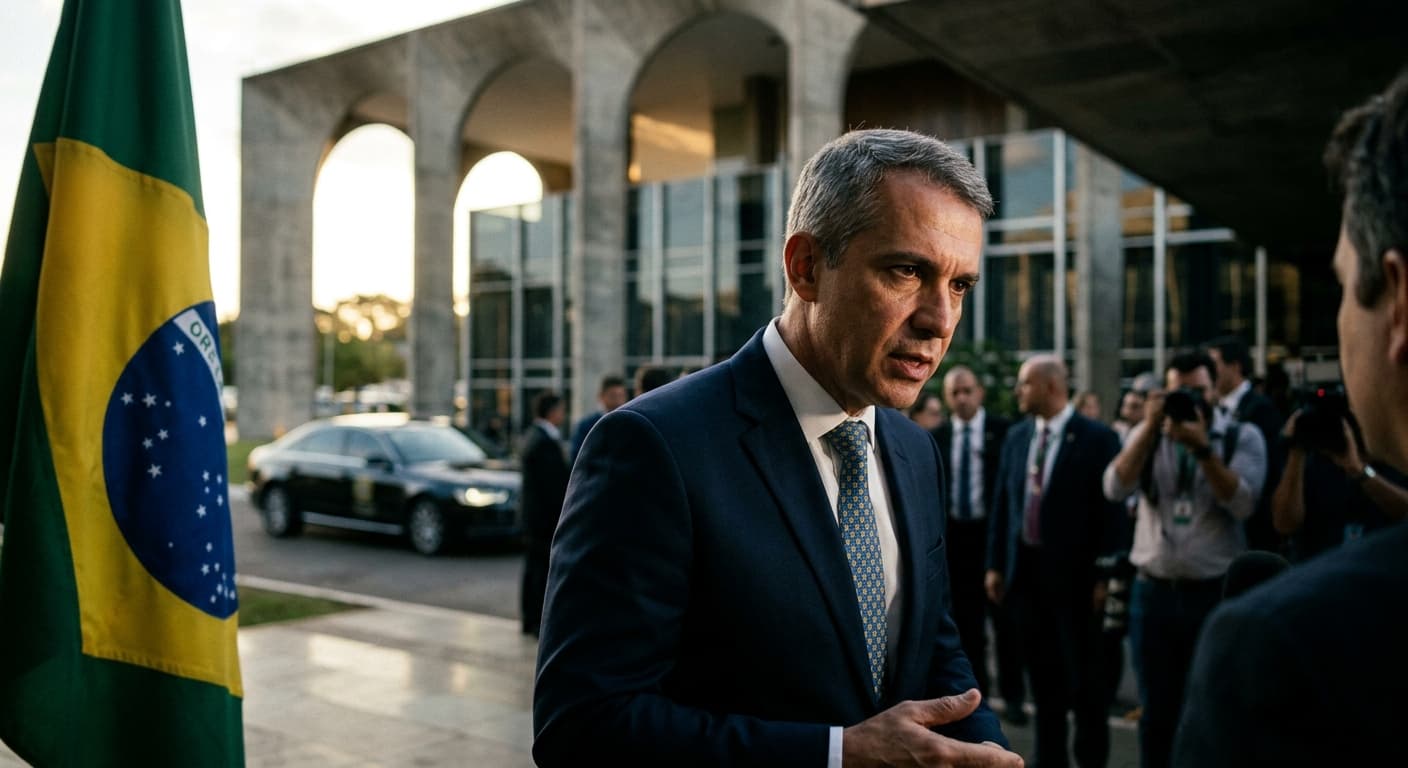
Itamaraty Warns of US Military Risk Over PCC-CV Terror Label
Brazil's foreign ministry told Congress the June 5 US terrorist designation of PCC and Comando Vermelho could justify extraterritorial force — and unlock sanctions on Pix, banks, and correspondent lines.
Brazil's foreign minister Mauro Vieira told the Chamber of Deputies on July 6, 2026 that the June 5 US decision to designate the Primeiro Comando da Capital (PCC) and Comando Vermelho (CV) as Foreign Terrorist Organizations could legally justify unilateral US military or covert action on Brazilian soil — a warning that reframes what markets have been treating as a diplomatic irritant as a first-order sovereign-risk event. The core argument of this feature: the terror label is not really about the gangs. It is the legal switch that lets Washington reach into Brazil's payment system, banks, and dollar-clearing pipes with counter-terror-finance tools that Brasília has almost no room to refuse. That is what the Itamaraty document — first disclosed by O Tempo and
Rádio Itatiaia — is really flagging.
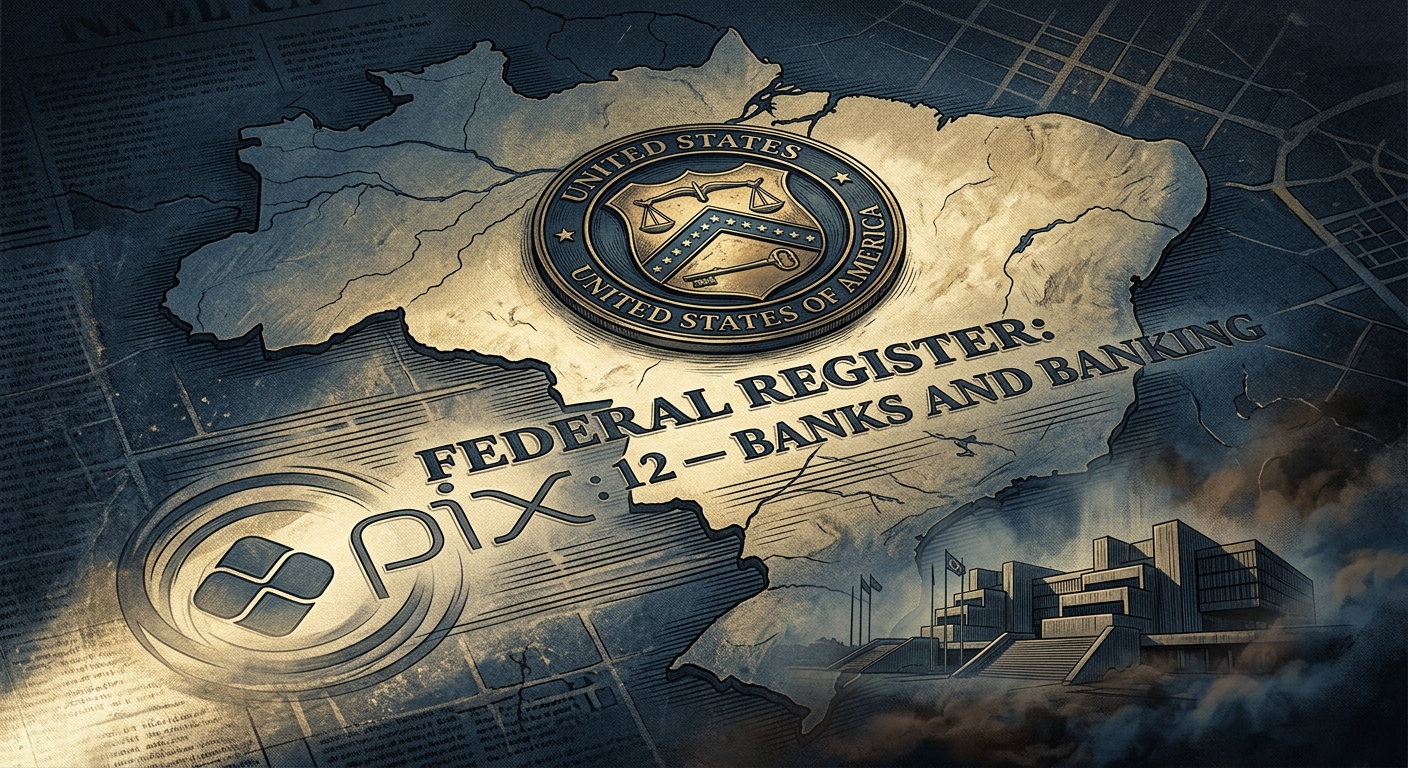
What the June 5 order actually does
The designation was published in the Federal Register on June 5, 2026, signed by Secretary of State Marco Rubio, layering a Foreign Terrorist Organization (FTO) label under Section 219 of the Immigration and Nationality Act on top of a Specially Designated Global Terrorist (SDGT) listing under Executive Order 13224. A companion Rubio determination that same day authorises the Treasury to freeze assets tied to PCC and CV without prior notice, on the argument that warning would enable rapid capital flight, according to BBC News Brasil.
That combination is the operative point. The Congressional Research Service, describing the identical playbook applied to Mexican and Venezuelan groups earlier this cycle, notes that FTO/SDGT status "brings to bear additional prosecutorial and enforcement options, secondary sanctions possibilities, and immigration-related policy tools," including secondary-sanctions exposure for any "foreign financial institution" that "knowingly conducted or facilitated any significant transaction on behalf of any person whose property and interests in property are blocked," per CRS Insight IN11205. Translation: a Brazilian bank that clears a payment for a firm later found linked to the PCC is no longer just a compliance defendant — it is a candidate for US correspondent-banking exile.
Rubio's own language, on a separate but analogous case, makes the doctrine explicit. Asked in September 2025 about a lethal US strike on a Venezuelan boat, the Secretary told reporters: "The President has designated these as terrorist organizations, which is what they are. When you flood American streets with drugs, you are terrorizing America, and that's going to end," according to a State Department transcript. The Itamaraty is reading that transcript the same way any prosecutor would.
Why Itamaraty went public with the sovereignty argument
The document Vieira sent to Congress does two things at once. It concedes, as BBC News Brasil reported when the designation was announced, that this is "the biggest defeat of the Lula government in its relationship with Trump since the 2025 tarifaço." And it puts on the record — a domestic-political record, weeks before an October presidential election — that Brasília sees a legal pathway from an FTO listing to a Venezuela-style kinetic operation.
That is not paranoia. On January 3, 2026, US forces captured Nicolás Maduro and flew him to New York on narco-terrorism charges after his government's affiliate — the Cartel de los Soles — was designated an FTO, according to a CRS in-depth briefing. The same document confirms that "since September, the U.S. military has carried out lethal strikes on drug vessels at sea, some purportedly tied to TDA or the Cartel of the Suns." São Paulo prosecutor Lincoln Gakiya, who has spent two decades investigating the PCC, told
BBC News Brasil that once a group is on the FTO list, "the CIA becomes responsible for these investigations" and "military operations or CIA operations could take place inside Brazilian territory even without the Brazilian government's consent."
Analysts across the Brazilian foreign-policy spectrum see a Venezuela-scale intervention as unlikely. What they take seriously is the coercive middle range: drone surveillance without consent, unannounced OFAC actions on Brazilian citizens and firms, and — the piece that matters for the Selic curve — the threat of secondary sanctions on Brazilian financial institutions.
The real target is the payment system, not the gangs
Follow the calendar. The Section 301 determination from the US Trade Representative landed on June 2, 2026, four days before the FTO took effect. It proposes a 25% tariff on Brazilian imports and mentions Pix, Brazil's central-bank-operated instant-payments system, more than 20 times, according to an Atlantic Council analysis — the first Section 301 case in history to treat a country's domestic payment infrastructure as a trade barrier. In 2025, Pix handled US$6.7 trillion in transactions.
Two days later the terror label activated. The Peterson Institute for International Economics reads the sequence as one strategy, not two. "With the FTO designation in effect, US pressure on PIX gains substantial steam, eroding Brazil's ability to resist it," Marcus Noland and Martin Chorzempa write in a June PIIE brief, because the "material support" statute under 8 U.S.C. § 1189 covers "financial services" and "currency or monetary instruments" — which puts payment processing "squarely within the statute's reach. And with the PIX owned, operated, and regulated by the Central Bank of Brazil, the FTO designation and 'material support' threat now hangs over the entire Brazilian financial system."
The Peterson analysts spell out what Washington can now demand under counter-terror-finance cover: foreign-provider access to Pix, separation of the Central Bank's ownership from its regulatory role, stricter know-your-customer rules on fintech participants, and expanded information-sharing with US authorities. The demands are identical to what the USTR filing wants for Visa, Mastercard, and Apple — but repackaged. As PIIE puts it: "These asks are much harder to refuse when packaged as counter-terror-finance compliance than the market-access demands favoring Visa or Apple."
Treasury moved almost immediately. On July 1, 2026, OFAC published the first sanctions round against a network accused of laundering for the PCC, hitting two individuals and three Brazilian companies, according to BBC News Brasil. The market read the message: the compliance perimeter now runs through any Brazilian counterparty whose flows touch Pix.
Who wins, who loses
The direct beneficiaries in Washington's frame are US payment networks — Visa, Mastercard, and Apple Pay — that USTR argues are disadvantaged by Pix's mandatory participation rules, capped fees, and free access for retail users. The indirect beneficiary is Flávio Bolsonaro, whose Washington trip preceded the announcement by 24 hours and who has staked his October campaign on positioning Lula as soft on organized crime, as Al Jazeera reported.
The direct losers are the two-thirds of Brazil's financial system that touches dollar clearing. Any pullback by US correspondent banks — even a discretionary one, driven by risk officers rather than regulators — raises the price of every hedged Brazilian import contract and every dollar-funded corporate loan. Brazil's Central Bank, already running the Selic at a restrictive level with fiscal fundamentals strained, would then be negotiating structural changes to Pix in what PIIE calls "the shadow of US Treasury banking enforcement."
The second-order loser is a country not in the story: the European Central Bank. Brussels has been building the digital euro on the same public-infrastructure logic that underpins Pix. If the FTO-plus-Section-301 template holds against Brazil, the ECB's digital euro pilot — explicitly framed by executive board member Piero Cipollone as public payment infrastructure — has just watched its precedent for defending payments sovereignty get gutted in real time.
The domestic politics have already flipped
The uncomfortable data point for Brasília is not diplomatic. It is a Quaest poll from June 20, 2026 showing that 60% of Brazilians agree with classifying the PCC and CV as terrorist organizations, according to BBC News Brasil. That number explains why Lula's own July response to Trump has been calibrated: he calls the factions "terrorists for Brazilian communities" but "not the terrorists Trump wants" and rejects being treated "as a little republic," per
BBC News Brasil. The Chamber's Foreign Relations and Defense Committee has already approved a bill by Deputy Luiz Philippe de Orleans e Bragança (PL-SP) reclassifying the PCC, CV and 11 other Latin American groups as terrorist entities under Brazilian law — a move that, ironically, would deepen the exposure Itamaraty is warning about by importing the US framework into domestic statute.
Brazil's Antiterrorism Law (Lei 13.260/2016) requires ideological, political, religious, or discriminatory motive — a standard the Supreme Federal Tribunal has read to exclude economically-motivated criminal factions, according to BBC News Brasil. The Bolsonaro-aligned bill would rewrite that. Lula's veto threat, if the text passes both houses, is the next domestic-political flashpoint.
What markets should watch
- July 15, 2026 — the deadline PIIE identifies as the moment the Section 301 track "must resolve into action or accommodation." Public hearing on the tariffs already convened July 6.
- Second half of July — next OFAC round on PCC/CV networks. The universe of Brazilian firms and individuals designated determines whether the July 1 action was a signal or a template. Correspondent-bank derisking of any named entity will show up in FX and CDS within 48 hours.
- August-September — Brazilian Congress vote on the Orleans e Bragança bill and a Lula veto decision.
- October 4, 2026 — first round of the Brazilian presidential election. A Flávio Bolsonaro win reframes every Section 301 and FTO demand as a negotiation between allies; a Lula second-round win hardens the sovereignty confrontation.
Diplomat View
The consensus reading — that Trump's PCC/CV designation is a political favor to the Bolsonaro clan with limited economic bite — is wrong, and it is wrong in a specific and falsifiable way. The designation's real function is to give the US Treasury a counter-terror-finance lever over Pix and Brazil's correspondent-banking rails that trade law alone could not deliver. Our call: within 90 days of July 6, 2026, at least one systemically important Brazilian financial institution will publicly disclose a US enforcement inquiry tied to PCC/CV material-support exposure; within 180 days, the Central Bank will announce at least one structural concession on Pix governance framed as AML/CFT compliance rather than trade. This forecast is revised if (a) OFAC halts new PCC/CV designations after the July 1 round, or (b) the Section 301 process is suspended before the November election. Absent those conditions, the sovereignty question Itamaraty raised in its Chamber filing is not about troops on Brazilian soil. It is about who writes the rules for the payment system that moved US$6.7 trillion last year — and the answer, quietly, has already started to shift.
The Bottom Line
The June 5 US terrorist designation of the PCC and Comando Vermelho is not a security measure aimed at Brazilian gangs — it is the legal instrument that gives Washington counter-terror-finance authority over Brazil's Pix system, its banks, and its dollar-clearing pipes. Itamaraty's July 6 warning to Congress is best read not as a fear of Marines in Rio, but as the first official Brazilian acknowledgment that the real intervention is already underway inside the financial system. The country that most needs to watch what happens next is not Brazil — it is the eurozone.
Discover more
Global Politics
Xi Jinping Calls China-Russia Ties 'Precious'
Xi Jinping's description of China-Russia ties as 'precious' reflects a strategic imbalance, with Beijing dictating terms in the partnership.
Global Politics
US-Iran Tensions Rise
Tensions escalate in the Strait of Hormuz as Iran and the US clash over maritime control, with a ceasefire hinging on a contested MoU paragraph.
US Politics
Virginia's Redistricting Referendum
Virginia's redistricting referendum is drawing a flood of dark money, shaping future elections and the fight for congressional control amid party stakes.

Conflict & Security
Drone Warfare Killing Aid Workers at Unprec
Over 1,000 humanitarian workers killed in three years as cheap armed drones collapse legal protections. Gaza, Sudan, Ukraine, and DRC see deliberate targeting of aid convoys and hospitals with zero prosecutions.