US-Iran Tensions Rise
Inside the Hormuz crisis of July 2026
Model Diplomat8 min readMiddle East
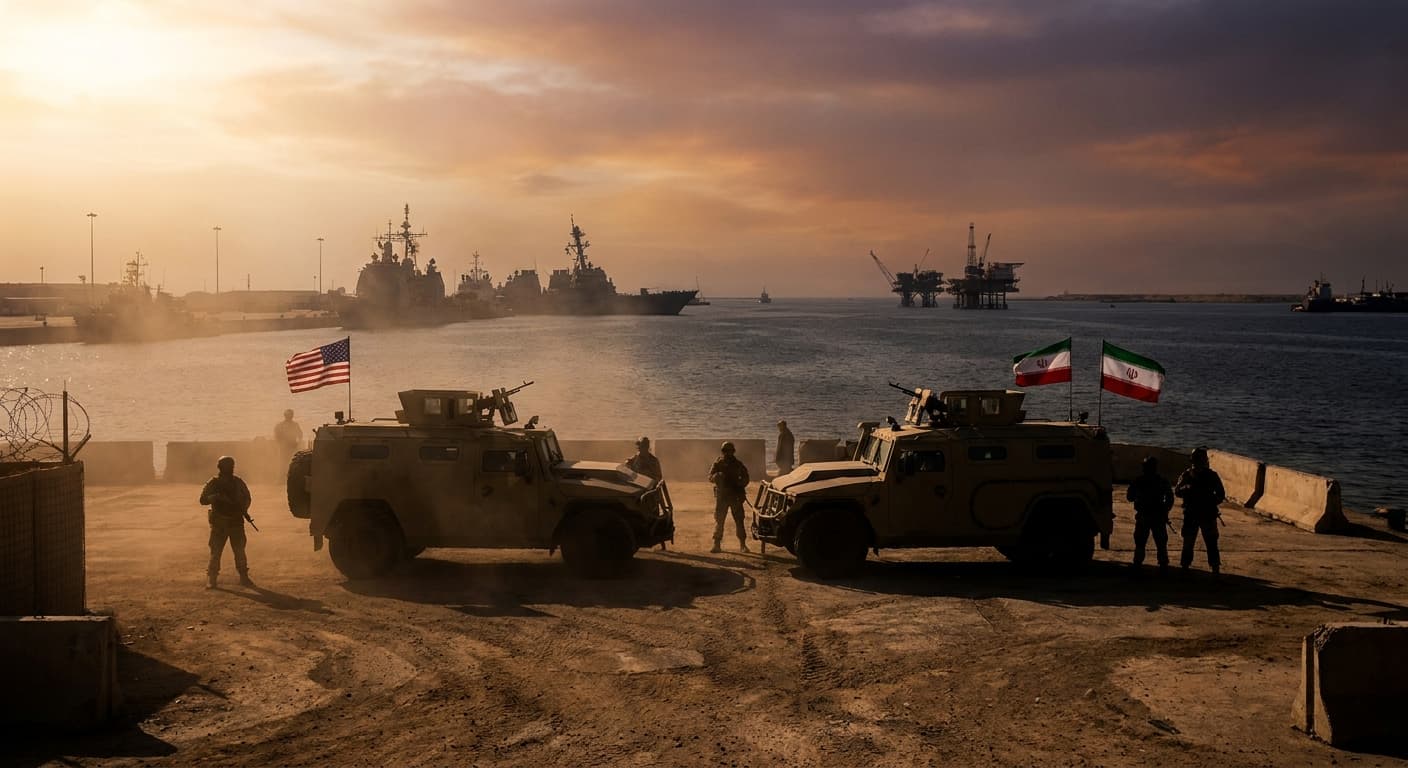
US–Iran Tensions Rise as Hormuz Ceasefire Frays
A tanker on fire off Oman, a Trump ultimatum during Khamenei's funeral, and a 14-point deal held together by one contested paragraph — inside the Hormuz crisis of July 2026.
A tanker was on fire off the coast of Oman early on July 7, 2026 — the third commercial vessel struck in the Strait of Hormuz in the twelve days since Iran and the United States signed a memorandum meant to end their four-month war. The ceasefire has not collapsed. It is being renegotiated at sea, one hull at a time. The load-bearing claim of this story: the escalation is not about the nuclear file — it is a fight over Article 5 of the June 17 MoU, and specifically whether the Islamic Revolutionary Guard Corps gets to license every ship that passes through the world's most important oil chokepoint. That is the leverage Tehran has left, and it is the leverage a battered regime under its untested new Supreme Leader cannot afford to concede.
What actually happened
The July 7 strike, first reported by Al Jazeera via the Associated Press, follows the same template as the June 25 attack on the Singapore-flagged Ever Lovely and the June 27 drone strike on the Panama-flagged MT Kiku. In each case, the vessel was transiting the southern corridor near Oman — the route the multinational Joint Maritime Information Center calls clear of mines, and the route Iran's newly created Persian Gulf Strait Authority has declared unauthorised. According to the
BBC, US Central Command hit ten Iranian coastal military targets after the Kiku strike; the IRGC in turn launched ballistic missiles and drones at the Ali al-Salem base in Kuwait and the US Fifth Fleet's Port Salman facility in Bahrain.
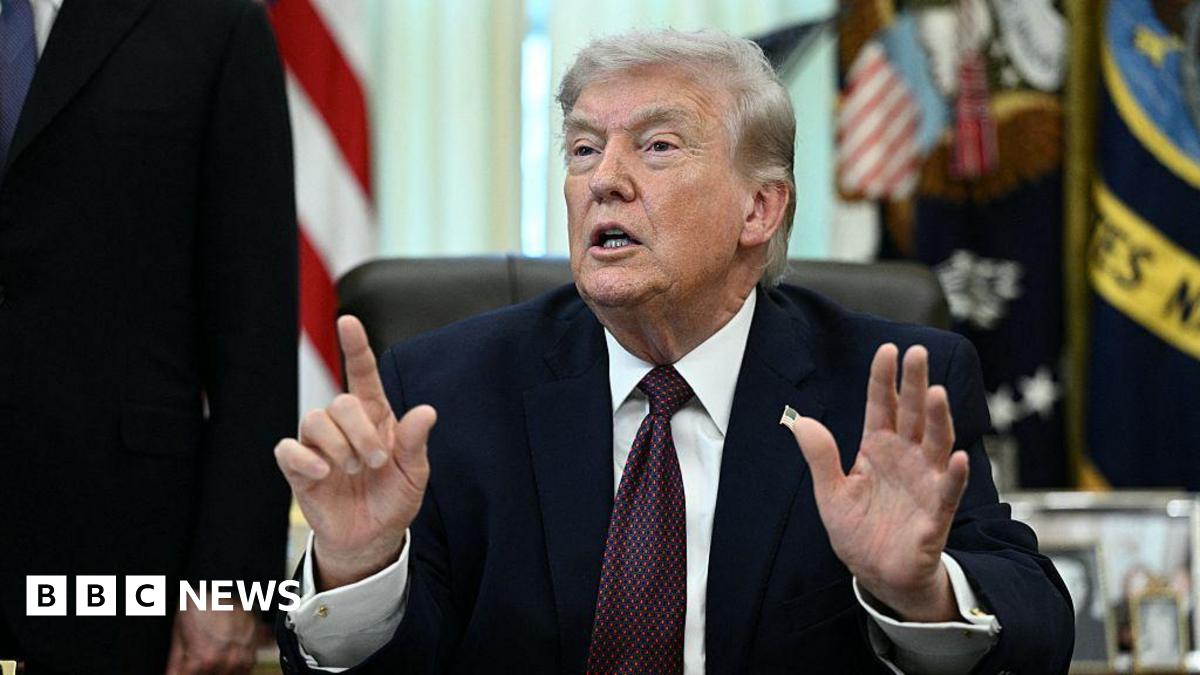
President Donald Trump's response on July 6 was to raise the stakes verbally rather than kinetically. At the White House, he told reporters the United States would either reach a deal with Tehran or "finish the job," per Channel News Asia, adding: "I'd rather make a deal, because I don't want to affect 91 million people." The warning landed as the funeral cortège of the late Ayatollah Ali Khamenei — killed by a US-Israeli airstrike on February 28 — inched through Tehran on a 10-kilometre route thronged by mourners chanting "our revenge is inevitable," according to the
BBC.
Iran's response, from Supreme National Security Council secretary Ali Larijani, called the threat "delusional," Nikkei Asia reported. But the more revealing move came the same day: Tehran quietly reappointed a familiar figure —
Al Jazeera reported the return of a senior security official — signalling that the new leadership intends to consolidate, not compromise.
The fight is over Article 5
The full text of the 14-point MoU signed on June 17 at the G7 summit in Evian-les-Bains was read to reporters by a senior US official and reproduced by the BBC. The disputed paragraph is short enough to quote in full:
"Upon the signing of this MOU, the Islamic Republic of Iran will make arrangements using its best efforts for the safe passage of commercial vessels with no charge for 60 days, only from the Persian Gulf to the Sea of Oman and vice versa… The Islamic Republic of Iran will conduct dialog with the Sultanate of Oman to define the future administration and maritime services in the Strait of Hormuz."
Two words carry the entire war-and-peace question: "best efforts." Washington read that as Iran using its coastline to secure freedom of navigation. Tehran read it as recognition that ships transit Hormuz under Iranian administration. On June 20 Iran's Persian Gulf Strait Authority — an entity already under US sanctions — decreed that "no vessel is permitted to pass through the Strait of Hormuz without a valid passage permit issued by the PGSA," according to BBC Verify. Iran's lead negotiator, parliament speaker Mohammad Bagher Ghalibaf, was blunter still: the strait "will not return to pre-war conditions," and Iran will "receive a fee for services,"
Al Jazeera reported.
That is why the shooting continues. Every vessel that crosses on the JMIC's southern corridor without an Iranian permit is, to the IRGC, a challenge to sovereignty. Every strike on such a ship, to CENTCOM, is a ceasefire violation. Its statement after the June 26 strikes called Iranian conduct "unwarranted aggression against commercial shipping" that "clearly violated the ceasefire." The MoU is not collapsing — it is being interpreted at gunpoint.
What Tehran has left, and what it doesn't
Iran's negotiating hand is thinner than the rhetoric suggests. Its ballistic missile industry has been degraded across two campaigns — Operation Midnight Hammer in June 2025 and Operation Epic Fury from February 2026, per IISS. Its known enrichment infrastructure at Fordow, Natanz and Isfahan is inoperable;
CSIS satellite imagery shows "virtually zero" rehabilitation activity. The regime's founding generation is dead or dying. Its new Supreme Leader, Mojtaba Khamenei, has not been seen in public since the February 28 strike that killed his father, wife and 14-month-old niece, according to
Al Jazeera — an absence one Tehran resident told the outlet made the state look unable to "maintain the security of its leader for a few minutes."
What survives is the chokepoint. Roughly one-fifth of global oil and LNG passes through Hormuz in peacetime. Since the June 17 deal, transits have crept back — 172 vessels between June 18 and June 27, then 48 on July 1 and 38 on July 2, per Al Jazeera's OPEC+ tracker — but that is a fraction of the pre-war baseline of about 130 crossings a day.
The Gulf International Forum's assessment is that Mojtaba's selection was engineered by the IRGC as "a pliable and reliable figure capable of preserving internal cohesion while maintaining a hard external line." Read against the tanker attacks, that framing explains the tempo: every unauthorised transit the IRGC lets pass unpunished erodes the one asset the Islamic Republic still controls.
Why oil markets are wrong-footed
The counter-intuitive fact is that markets are pricing this crisis at zero. Brent crude for September delivery settled at roughly $72 a barrel on July 6 — below its $72.48 close on February 27, the day before the war began, Al Jazeera reported. Seven OPEC+ producers announced on July 5 they will add 188,000 barrels per day from August. Traders are betting the ceasefire holds and that Saudi and Emirati pipeline capacity — the East-West line, ADCOP, and the Iraq-Türkiye link — plus a rebuilding of US Strategic Petroleum Reserve pulls, absorb the risk premium.
That bet has two vulnerabilities. First, the combined pipeline capacity falls far short of the 20 million barrels that moved through Hormuz daily before the war, per Sparta Commodities analyst June Goh, cited by Al Jazeera. Second,
BBC analysis notes mine-clearance in the strait could take up to six months, meaning any resumption of Iranian hostility instantly re-closes the deep-water channel. Insurance premiums, not tanker missiles, will be the tell — and they have already spiked twice since June 17.
The nuclear file has quietly moved
The most-cited framing of US-Iran tensions — enrichment — has become the second-order issue. Carnegie's Jane Darby Menton put it directly: "The Strait of Hormuz has emerged as a more credible 'nuclear option' for Iran than its nuclear program." Iran's stockpile of roughly 400–440 kg of 60%-enriched uranium is unaccounted for, per
IISS, and Iranian parliament suspended IAEA cooperation last July, expelling inspectors, as documented by the
Stimson Center. But rebuilding industrial-scale enrichment "looks unlikely in the immediate future," Carnegie's Mohammad Ayatollahi Tabaar told the same panel — and any visible reconstitution invites a third round of strikes.
Hormuz is different. It is deniable, calibrated and immediate. Every drone launched against a container ship is a message that the ceasefire's economic dividend flows only if the IRGC's permit regime is accepted. That is a negotiating strategy the surviving Iranian leadership can execute even in decapitated form.
The Doha channel — and its ceiling
While the ships burn, Steve Witkoff and Jared Kushner have been in Doha meeting Qatari Emir Sheikh Tamim bin Hamad Al Thani and Prime Minister Sheikh Mohammed bin Abdulrahman. Tehran denies these are direct talks. Iran's technical delegation is present, but Foreign Minister Abbas Araghchi and Ghalibaf are not — an absence Vice President JD Vance described as "a Persian negotiating tactic," per
Al Jazeera. The near-term deliverable is not a peace deal. It is the release of $6 billion in frozen Iranian assets and a written protocol on Hormuz transit that neither side has to publicly own.
The ceiling on Doha is Mojtaba himself. Trump publicly called the son's succession "unacceptable," per the Stimson Center. The new Supreme Leader has, in the analyst Joaquin Matamis's phrase, been "twice attacked during negotiations." A leader whose family was killed in a strike his negotiating partner ordered is not built for concession diplomacy.
What to watch
- The August 16 MoU deadline. The 60-day extension signed on June 17 lapses in mid-August. Either a follow-on agreement covering Hormuz administration, sanctions relief and Iran's $300 billion reconstruction fund is initialled, or the ceasefire falls back on ad-hoc extensions.
- The next Doha round. Qatar said the next US-Iran meeting would follow Khamenei's July 9 burial in Mashhad. Whether Iran sends Araghchi in person — or keeps him at arm's length — signals whether Tehran is prepared to sign anything binding.
- Mojtaba Khamenei's first public appearance. Israeli Defence Minister Israel Katz has publicly threatened to kill him. His continued invisibility is a live rebuttal to any Iranian claim of restored state capacity.
- The next tanker. A fourth strike on a commercial vessel — or, worse, mass casualties — will force Trump into a decision the July 6 speech telegraphed but did not commit to.
Diplomat View
The forecast: the Trump-Pezeshkian MoU holds through August, but only because both sides have found it more useful as a framework for managed escalation than for peace. Tehran will keep testing the southern corridor with deniable strikes to force de facto recognition of the PGSA permit regime; CENTCOM will keep responding proportionally against coastal targets. Oil markets will treat this as noise until an attack causes casualties or hits an LNG carrier — at which point the $72 Brent floor breaks and OPEC+'s August production increase becomes irrelevant. The trigger that would revise this forecast is not a nuclear announcement but a mine incident in the deep channel, or a decision by Mojtaba Khamenei — should he appear — to elevate Ali Larijani or the IRGC's Ahmad Vahidi as a supra-presidential war council. That would signal Tehran has chosen suppression over succession, and made Hormuz its permanent leverage rather than its temporary one. The bottom line: the US-Iran conflict has not ended, it has been converted into a slow-motion argument over one paragraph of one document, fought at sea with drones and tankers. Whichever side blinks first on Article 5 loses the peace.
Discover more

Global Politics
Lebanon Ceasefire Amid US Blockade on Iran
Israel and Lebanon entered a 10-day ceasefire as a U.S. naval blockade on Iran took hold, sharply escalating tensions across an already volatile Middle East.
Global Politics
Trump's Bold Move
Trump announced a U.S. exit from Iran with or without a deal, a bold move that heightens tensions across the Middle East and risks serious diplomatic fallout.

US Politics
US Military Funding Request for Iran Looms
The White House Budget Director signals a formal funding request for military operations against Iran, foreshadowing rising tensions and congressional clashes.

Economics
Fed's Amex AML order puts correspondent banking on notice
Federal Reserve's Amex AML order requires board-level controls and a 90-day plan; OCC fined the bank $350 million over enterprise-wide deficiencies.