US Strikes 80+ Targets in Southern Iran
Ceasefire collapses as US hits Iranian positions in Hormuz
Model Diplomat5 min readMiddle East
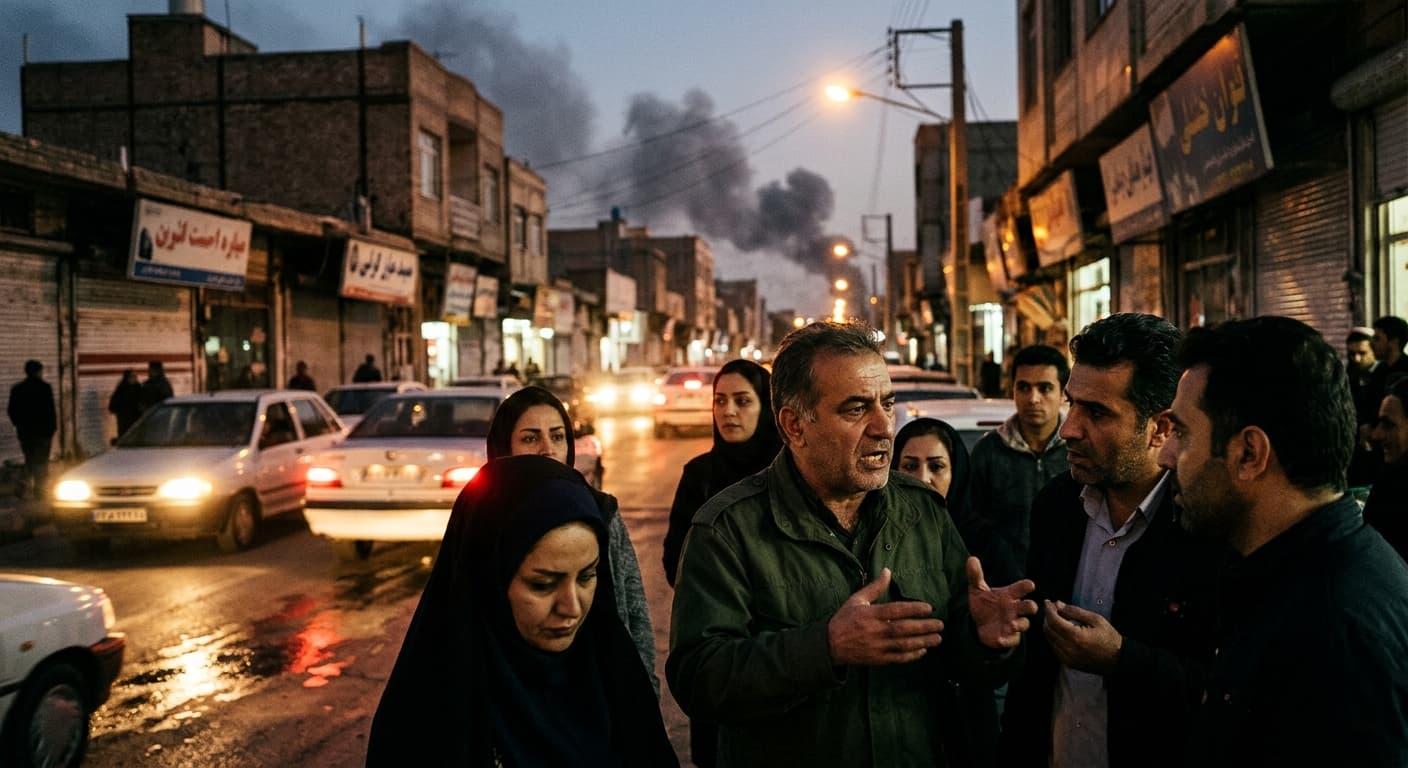
US Strikes 80+ Targets in Southern Iran as Hormuz Truce Collapses
The July 8 CENTCOM strikes on Bandar Abbas, Bushehr and Sirik have shredded the 21-day US-Iran ceasefire and put Kharg Island in Trump's sights.
On July 8, 2026, US Central Command hit more than 80 targets across southern Iran in two waves inside 24 hours, and President Donald Trump declared the three-week-old ceasefire "over." The immediate trigger was an Iranian drone strike on three tankers in the Strait of Hormuz on July 6–7. The deeper story is that the June 17 Memorandum of Understanding was a diplomatic instrument written to fail: its Article 5 left the world's most important oil chokepoint governed by a clause both sides read as their own veto — and the collapse is now dragging Kharg Island, China's floating oil reserve and the Israeli general staff back into the frame.
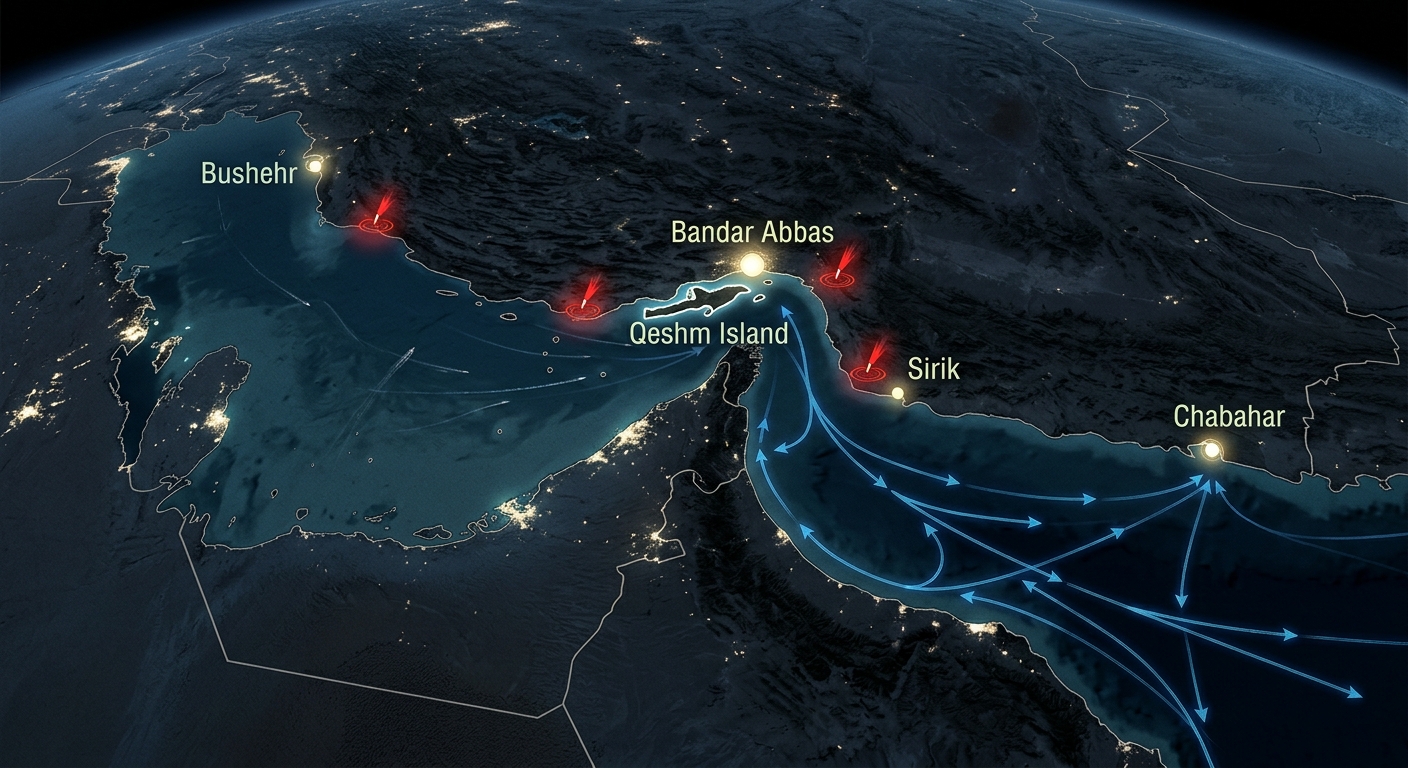
What CENTCOM hit, and why the geography matters
The first wave, which CENTCOM said lasted approximately four hours, struck "over 80 targets with precision munitions" — Iranian air-defence systems, coastal radars, anti-ship missile batteries, command nodes and "more than 60 Islamic Revolutionary Guard Corps small boats in and near the strait," according to a CENTCOM statement reported by Al Jazeera. Iranian state media said the strikes hit Qeshm Island, Bandar Abbas and Sirik, injuring civilians by shrapnel at Sirik's commercial pier. The Iranian army said eight air-force and navy personnel were killed in Bandar Abbas and Bushehr, according to
IRNA.
The second wave, announced by CENTCOM on X, targeted Iranshahr, Konarak, Chabahar and Bushehr, plus a railway bridge at Aq Qala in the northeast — an unusual outlier from the Hormuz cluster. Iranian officials told Fars news that the Chabahar strikes hit a maritime control tower and a depot; the BBC reported power cuts in Chabahar and a fire at an IRGC barracks in Bushehr. One fireman was killed at Iranshahr airport, and IRGC guardsman Mohammadreza Khazini became the first identified fatality of the exchange, according to
IRNA cited by the BBC.
Iran's response was symmetrical in the language it used but limited in what it hit. The IRGC said it launched "85 major" strikes on US military installations in Bahrain — including the Fifth Fleet headquarters at Port Salman — and on Ali Salem Airbase in Kuwait, and downed a US MQ-9 drone. Air-raid sirens sounded in both Gulf states, and Al Jazeera reported no confirmed US casualties. That is the significant number: Tehran matched the count, not the damage — a signal that Mojtaba Khamenei's new inner circle wants to preserve the MoU's shell while contesting its interpretation.
The clause that broke the ceasefire: MoU Article 5
The 14-point MoU signed at Versailles by Trump and Iranian President Masoud Pezeshkian on June 17 turns on a single sentence. Article 5 commits Iran to "make arrangements using its best efforts for the safe passage of commercial vessels, with no charge for 60 days only, from the Persian Gulf to the Sea of Oman, and vice versa," per the NPR full text of the agreement.
Tehran reads that clause as a grant of managerial authority over the strait — the right to designate a "safe route" hugging its own coast, to declare a section of Omani territorial waters a "restricted zone," and to attack tankers that use the US Navy's southern corridor. Washington reads it as a bare non-obstruction obligation. Iran's Foreign Ministry spokesman Esmaeil Baghaei restated Tehran's version on July 8, arguing Iran alone has "responsibility in determining arrangements for the safe passage of ships," per Al Jazeera. Former Pentagon NATO operations director David Des Roches told the same outlet the attacks were an attempt to "instil a new normal beyond the terms of the MoU."
The ambiguity was almost certainly deliberate. Article 5 also requires Iran to hold talks with Oman on "future administration and maritime services" in the strait, and leaves open the possibility of transit fees after the 60-day window — a provision Iranian ambassadors have already flagged as their intended revenue base. UN Assistant Secretary-General Elizabeth Spehar told the Security Council on July 2 that the June 17 MoU remained the only viable de-escalation architecture, but warned of "the acute risks of further escalation." Six days later, both sides tested those risks simultaneously.
Who benefits, who loses
The signalling was calibrated on both sides, but the collateral damage is landing squarely on third parties.
Gulf capitals are the immediate losers. The tankers hit in the July 6–7 attacks were the Qatari LNG carrier Al Rekayyat, the Saudi-owned Wedyan (operated by Bahri) and the Liberian-flagged Cyprus Prosperity. Qatar's foreign ministry spokesman Majed Al Ansari held Iran "fully legally responsible," per Al Jazeera, and the GCC condemned the strikes on Bahrain and Kuwait as a "flagrant violation" of sovereignty. Yet those same states depend on the strait for their own exports. The Economist reported that Gulf delegations sent to Tehran during Khamenei mourning ceremonies "went unrewarded," with one official privately describing Tehran's new posture as
"a return of imperial Persian ambition".
China is the quiet variable. Beijing spent 2025 stockpiling roughly one billion barrels of discounted Iranian and Russian crude, and Chinese refiners entered the war with a cushion that has already absorbed a 44% drop in imports between February and May, according to Kpler data reported by Reuters. The Huajin Aramco refinery start-up has been pushed to Q3 and PetroChina indefinitely postponed a 200,000-bpd Dalian restart. Trump's warning that the US "may take over" Kharg Island — which handles roughly 90% of Iran's crude exports — targets China's supply chain more than Iran's regime, which has spent years building pipeline and small-port workarounds that
analysts say could function without Kharg, according to E&E News.
Israel is the covert winner. Walla and other Israeli outlets reported that the IDF is updating operational plans in coordination with CENTCOM for a possible resumption of the war, per Al Jazeera. The MoU had frozen the Lebanon front and pushed Iran's nuclear file into a 60-day negotiation. Every day the ceasefire wobbles, Prime Minister Benjamin Netanyahu's argument that Operation Midnight Hammer "softened" but did not eliminate Iran's capability gains renewed political traction — and the US Department of War on July 9 hosted him at the Pentagon, where Defense Secretary Pete Hegseth publicly credited him for enabling
"the finishing touches" on the June 21, 2025 strikes on Fordow, Natanz and Isfahan.
Oil markets are the transmission belt. Brent crude rose more than 5% intraday on July 8 to $78, its highest in two weeks, per Al Jazeera markets coverage. That is still well below the peaks seen when the strait was fully closed in March, but it reversed a slide toward pre-war levels — reintroducing an inflation risk premium that the Federal Reserve and European Central Bank had begun to discount. Rory Johnston of Commodity Context warned that a serious Kharg operation could remove 2 million barrels/day and, if Iran retaliated against Gulf energy infrastructure, push oil toward $200.
Discover more
US Politics
House Ethics Committee Pushes Sexual Miscond.
The House Ethics Committee has shifted responsibility for sexual harassment settlement records to the Office of Congressional Workplace Rights, complicating disclosure efforts.
US Politics
SNAP Food Assistance Faces Legal Challenges
In 2026, SNAP faces stricter eligibility rules and mounting legal challenges, threatening food assistance for the millions of Americans who rely on the program.
India
Congress Accuses Modi of Stalling Women's Law
Congress accuses Modi of stalling women's reservation law by linking it to delimitation, revealing a deeper electoral strategy.
Conflict & Security
Guatemala: El Niño 2026–27 becomes regional security test
UNICEF: 25.8M children face El Niño risks in Latin America; Guatemala maps 188 municipalities for drought and food insecurity amid regional security test.