U.S. Revokes Iran Oil Waiver, Escalates Ties
Washington's move jeopardizes Islamabad MoU negotiations.
Model Diplomat7 min readMiddle East
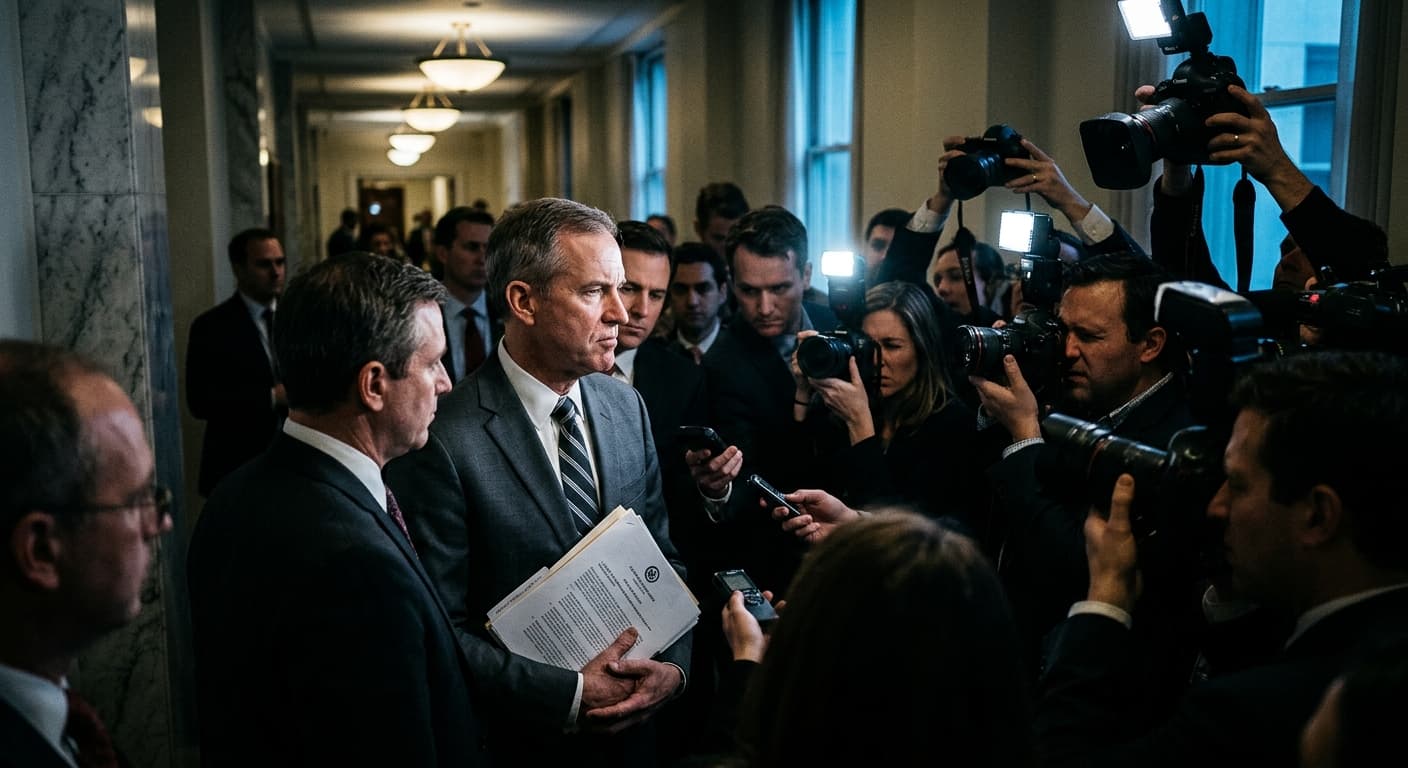
U.S. Yanks Iran Oil Waiver, Puts Islamabad MoU on the Brink
Washington revoked Iran's oil sanctions waiver on July 7, 2026, and struck 80 targets across Hormozgan hours later. The 60-day ceasefire deal is now on life support.
The Trump administration revoked Iran-related General License X1 at midday on July 7, 2026 — 20 days into a 60-day negotiating window — and within hours U.S. Central Command hit more than 80 targets along Iran's southern coast. The revocation is not a walk-away; it is a coercive reset, designed to reprice Iran's leverage over the Strait of Hormuz before the Islamabad Memorandum of Understanding's August 16 negotiating deadline, and it puts the entire Tehran–Washington bargain — frozen assets, nuclear "status quo," a $300bn reconstruction fund — on a 10-day fuse before secondary sanctions on Iranian crude snap back in full on July 17.
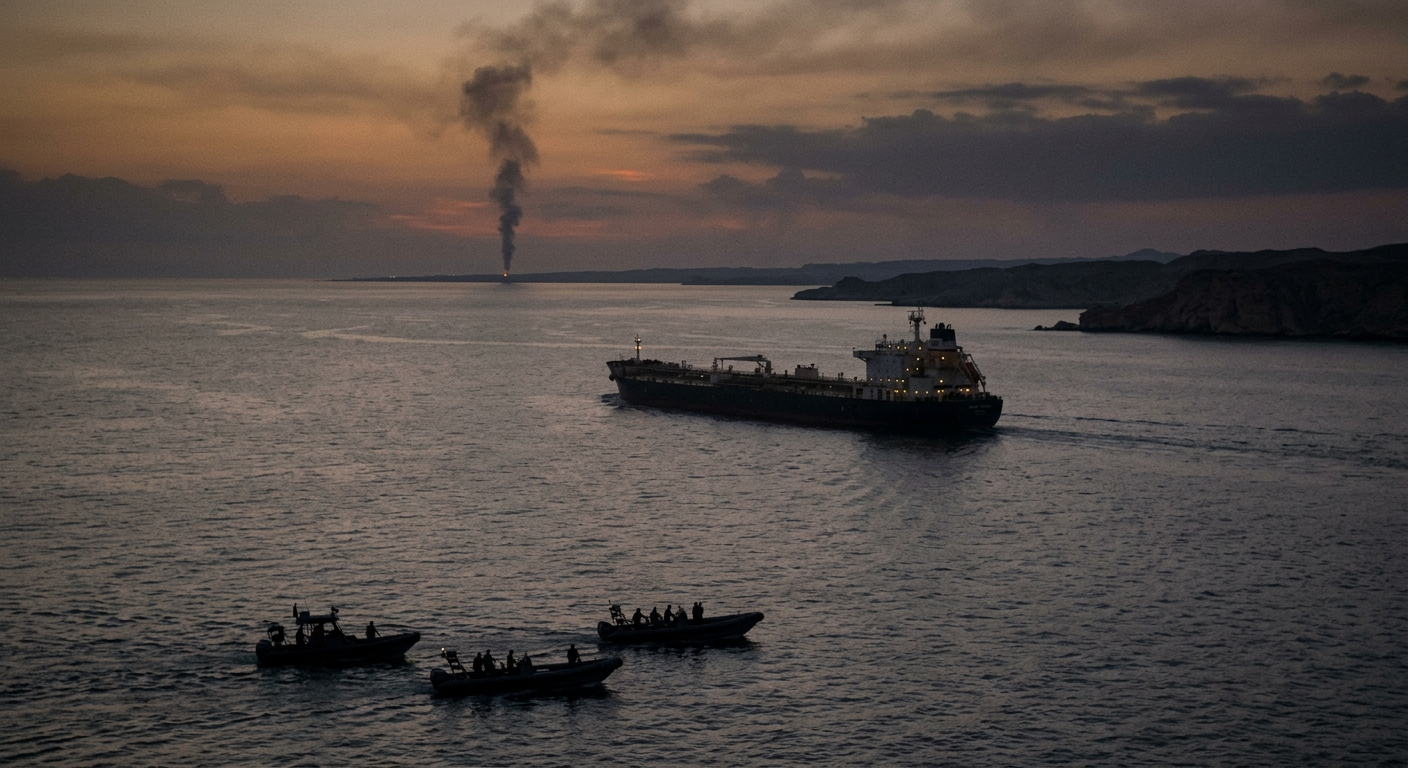
The immediate trigger was maritime, not diplomatic. Iran's Islamic Revolutionary Guard Corps fired projectiles at three commercial tankers transiting the strait on July 6–7, striking the Qatari LNG carrier Al Rekayyat, the Saudi-flagged supertanker Wedyan, and a Marshall Islands-flagged vessel. The U.S. Navy-led Joint Maritime Information Center raised the threat level to "severe" for the first time since mid-June, Al Jazeera reported. Qatar's foreign ministry held Iran "fully legally responsible"; Riyadh joined the condemnation. That is the surface. Underneath is a fight over who writes the rules for 20% of seaborne oil.
What Treasury actually did — and what it did not
The Office of Foreign Assets Control revoked General License X1, the successor authorization to the original GL X issued on June 22, 2026 that had permitted "the Production, Delivery and Sale of Crude Oil" of Iranian origin through August 21. The revocation notice — listed on OFAC's Iran sanctions page — provides a wind-down window of roughly 10 days for existing counterparties, after which secondary sanctions under Executive Order 13902 and the underlying petroleum-sector determinations reactivate.
Read narrowly, Treasury did not tear up the memorandum. The MoU's other provisions — the ceasefire's first article, the down-blending of Iranian enriched uranium under IAEA supervision, and the $300bn reconstruction framework — remain nominally in force. But the oil waiver was the deal's only tangible U.S. deliverable. The full text released by the BBC commits Washington, at Point 10, to "issue waivers for the export of Iranian crude oil, petroleum products and derivatives and all associated services including banking, transactions, insurances, transportation, etc." — the operative language runs "immediately upon the signing of this MOU and until the termination of sanctions."
That language is what Iran is now waving in the air. Deputy Foreign Minister Kazem Gharibabadi called the revocation a "blatant violation" of Articles 1, 2 and 10 of the Islamabad MoU, according to Al Jazeera's live coverage. Foreign ministry spokesman Esmail Baghaei framed the move as proof of the "bad faith, inconsistency, and unreliability" of the U.S. government,
the BBC reported. Iran has not yet claimed the tanker attacks; it also has not denied them.
The legal architecture Iran cannot escape
Even before the waiver's removal, the sanctions superstructure was intact. Under 31 CFR § 561.204, foreign financial institutions that "knowingly conduct or facilitate any significant financial transaction" involving the National Iranian Oil Company are cut off from U.S. correspondent accounts unless the Secretary of State certifies a "significant reduction exception." The last such exception was issued in 2018. General License X was the only route around that wall — a temporary regulatory tunnel, not a repeal.
That is why the Atlantic Council's energy team warned on July 2 that the waiver would only "meaningfully reshape global crude trade" if Treasury paired it with comfort letters for U.S. banks. It never did. Major banks stayed sidelined; Indian refiners reportedly settled cargoes in yuan through ICICI Bank's Shanghai branch under the earlier March waiver. When Treasury pulls the license, there is nothing residual protecting the trade — the counterparty risk simply reverts to its January 2026 state.
Congress had, in parallel, been preparing to force the outcome anyway. H.R. 8220, introduced in the 119th Congress, would nullify Iran-related General License U — the March 2026 precursor — and bar the Secretary of Treasury from authorizing "any transactions otherwise prohibited by law that are ordinarily incident and necessary to the sale, delivery, or offloading of crude oil or petroleum products of Iran." A Congressional Research Service brief,
IF12952, notes that NSPM-2 — Trump's own February 2025 memorandum — directs the State Department to "drive Iran's export of oil to zero." The revocation aligns the license file with the President's own written policy. It was always the more defensible bureaucratic position.
Who benefits, who loses
Iran gains negotiating leverage in the near term, and loses revenue over the medium term. The IRGC has now demonstrated three times in 12 days — the Ever Lovely on June 25, the MT Kiku on June 27, and Tuesday's triple strike — that it can raise the Hormuz risk premium at will. As one analyst told Al Jazeera's liveblog, "Iran is doing this for premeditated reasons… to advance its position in negotiations by putting further pressure on the United States." Brent snapped back sharply on July 8 after four-month lows earlier in the week, Al Jazeera reported. Higher oil prices squeeze Trump domestically; that is the coercion in Iran's playbook.
But Iran cannot actually sell the oil. Deputy oil officials conceded on July 1 that Iran could not export "a single barrel" during the U.S. blockade, per Al Jazeera. And banks, insurers and shippers who watched GL X evaporate in 15 days will not re-engage under any successor license without watertight legal comfort — the exact "credible dollar-denominated transactions" the Atlantic Council said Treasury had failed to build. Even if a new deal restores the paper waiver, the private-sector infrastructure that would give it commercial force has been trained to disbelieve it.
The clear loser is President Masoud Pezeshkian's moderate faction. Al Jazeera's Tehran correspondent reported on June 20 that new Supreme Leader Mojtaba Khamenei had handed Pezeshkian responsibility for the deal only after "explicit acceptance of responsibility" — a political tripwire. Hardline MPs have already demanded the Iranian parliament be fully reopened to potentially block the MoU. Every additional U.S. escalation vindicates the hardline case that direct talks with Washington are a mistake, and undermines chief negotiator Mohammad Bagher Ghalibaf, who staked his authority on the Islamabad framework.
The quiet winner is Israel. Every Israeli political faction opposed the June 17 deal, the BBC noted when the MoU was signed at Versailles. The collapse of the oil waiver — and, more importantly, the erosion of any sanctions relief pathway — accomplishes what Israeli negotiators could not achieve at the table. Jerusalem does not need the MoU to fail formally; it only needs it to fail commercially.
The primary document Iran is now weaponizing
The Islamabad MoU was drafted at speed and reads that way. The U.S. account provided verbatim to reporters on June 17 has Point 10 committing the Treasury Department to waivers covering "crude oil, petroleum products, and derivatives, and all associated services, including banking transactions, insurances, transportation, etc." — with no performance conditions on Iran attached.
That drafting choice is now the fulcrum. U.S. officials told reporters this week that the memorandum was always "performance-based," according to tippinsights — a claim
flatly contradicted by the WANA English report and by the plain text of Point 10. Iran will bring that text to Doha; Washington will bring evidence of IRGC missile fire on civilian LNG carriers. Both are documented. Neither side has an obvious legal exit.
Forward look
- July 17, 2026: The wind-down period expires. Secondary sanctions on Iranian crude, banking, insurance and transportation snap back in full. Chinese "teapot" refineries and Indian buyers face renewed secondary-sanctions exposure.
- August 16, 2026: The 60-day MoU negotiating window closes. Without an extension, the ceasefire's legal architecture lapses; Ghalibaf has already said Iran will not permit inspections of bombed nuclear sites, and Trump has publicly repeated the "finish the job" threat.
- Next Doha round (undated): Qatar and Pakistan are pushing to reconvene mediators after the funeral processions for the former supreme leader. The $6bn tranche of the $12bn in frozen Iranian assets held in Qatar is the near-term deliverable both sides need — Washington to prove good faith, Tehran to blunt the hardline critique that the deal has yielded nothing.
Diplomat View
The Islamabad MoU is not dead — it is a hostage. Washington has demonstrated that it can withdraw the deal's only tangible economic benefit in a single OFAC notice, on 10 days' warning, without formally repudiating the framework. Tehran has demonstrated that it can raise the Hormuz risk premium — and Brent — with a single IRGC missile salvo, also without formally repudiating the framework. Both sides now know the marginal cost of coercion, and both are pricing it into the next round.
The forecast: the MoU limps to August 16, is extended for 30 days, and Treasury issues a narrower successor license — capped by volume, restricted to Chinese and Indian buyers using non-dollar rails, conditioned on IRGC restraint in Hormuz. That is the equilibrium the maximum-pressure architecture actually points to, not zero exports and not GL X's blanket authorization. What would break this forecast: a mass-casualty incident on a Qatari or Saudi tanker, an Israeli strike on Iranian nuclear infrastructure during the ceasefire, or a formal Iranian withdrawal from the MoU by parliament. Absent those, expect a smaller, uglier, more conditional version of the same deal — negotiated under the shadow of every future OFAC revocation Washington can now credibly threaten.
The Bottom Line
The revocation of General License X1 is Washington signaling that sanctions relief in the Tehran–Washington deal is revocable at will, and Tehran signaling that the Strait of Hormuz risk premium is likewise on tap. The Islamabad MoU survives on paper because both sides need its legal shell; commercially, it is already gone. The next real test is not August 16 — it is whether Treasury issues a narrower successor license before the July 17 snap-back, because that, and not the diplomatic communiqués, is where the deal actually lives or dies.
Discover more

US Politics
SNAP Food Assistance Faces Legal Challenges
In 2026, SNAP faces stricter eligibility rules and mounting legal challenges, threatening food assistance for the millions of Americans who rely on the program.

US Politics
House Ethics Committee Pushes Sexual Miscond.
The House Ethics Committee has shifted responsibility for sexual harassment settlement records to the Office of Congressional Workplace Rights, complicating disclosure efforts.
India
Romanian Coalition Party Demands PM Resign
Romania's Social Democrats withdrew from coalition, joining far-right AUR to topple PM Bolojan, risking €10 billion in EU funds by August 2026.

Economics
Fed's Amex AML order puts correspondent banking on notice
Federal Reserve's Amex AML order requires board-level controls and a 90-day plan; OCC fined the bank $350 million over enterprise-wide deficiencies.