U.S. Revokes Iran Oil Waiver Amid Tensions
Sanctions rollback coincides with military strikes in Hormuz.
Model Diplomat8 min readMiddle East
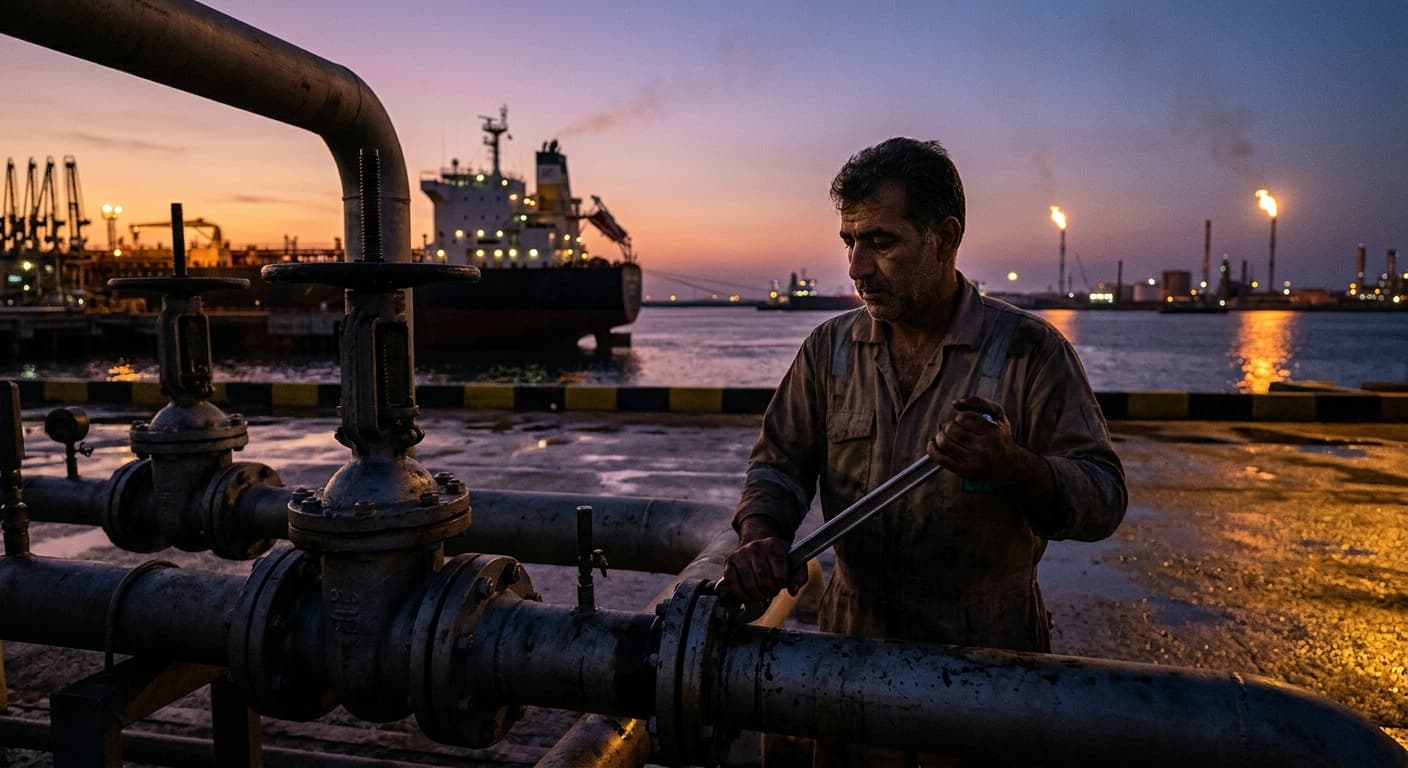
U.S. Kills Iran Oil Waiver After Hormuz Strikes, MoU Cracks
OFAC revoked Iran's oil sanctions waiver on July 7, 2026 after three tankers were hit in the Strait of Hormuz — pushing the 21-day-old Tehran-Washington MoU to breaking point.
The Islamabad Memorandum of Understanding held for exactly 20 days. On July 7, 2026, the U.S. Treasury's Office of Foreign Assets Control issued General License X1, revoking the authorisation that had let Iran legally sell crude — and CENTCOM followed within hours with strikes on more than 80 targets in southern Iran. The revocation itself is not the story; it is the choreography. Washington paired a sanctions rollback with kinetic force, gave Iran a 10-day wind-down to July 17, and dared Tehran to escalate before the 60-day negotiating window expires on August 16. The signal is that the Trump administration has abandoned the theory that oil-revenue relief can be traded for good behaviour in the Strait, and is now betting that a shorter, harder squeeze — under an active MoU — will produce concessions the June deal did not.
What Treasury actually did
OFAC's list of Recent Actions logs the July 7 filing as an "Issuance of Amended Iran-related General License," and the agency's Iran Sanctions page identifies it specifically as "Iran General License X1 — Revocation and Wind Down of June 21, 2026 Authorization for the Production, Delivery and Sale of Crude Oil" from Iran, per the Office of Foreign Assets Control. The action rescinds authorisation for any new transactions after Tuesday and terminates all wind-down activity at 12:01 a.m. EDT on July 17, 2026,
Al Jazeera reported, citing the Treasury statement.
The revoked license had been in effect only 16 days. Treasury issued the original General License X on June 21 to implement Point 10 of the MoU, which — in the full text carried by the BBC — committed the U.S. Treasury to "issue waivers for the export of Iranian crude oil, petroleum products and derivatives and all associated services including banking, transactions, insurances, transportation, etc." until sanctions were fully terminated. GL X covered ancillary services banking, shipping and insurance — the plumbing without which Iranian barrels cannot move through Western-facing markets. Its withdrawal restores the pre-June architecture of maximum pressure in a single stroke.
Iran responded within hours. Deputy Foreign Minister Kazem Gharibabadi, in a post on X, called the revocation a "blatant violation" of Articles 1, 2 and 10 of the Islamabad MoU and warned that Tehran would "take decisive actions to safeguard its national interests and security," Al Jazeera reported. Iran's foreign ministry, quoted by the
BBC, said the move proved the "bad faith, inconsistency, and unreliability" of the U.S. government.
The trigger, and why the sequencing matters
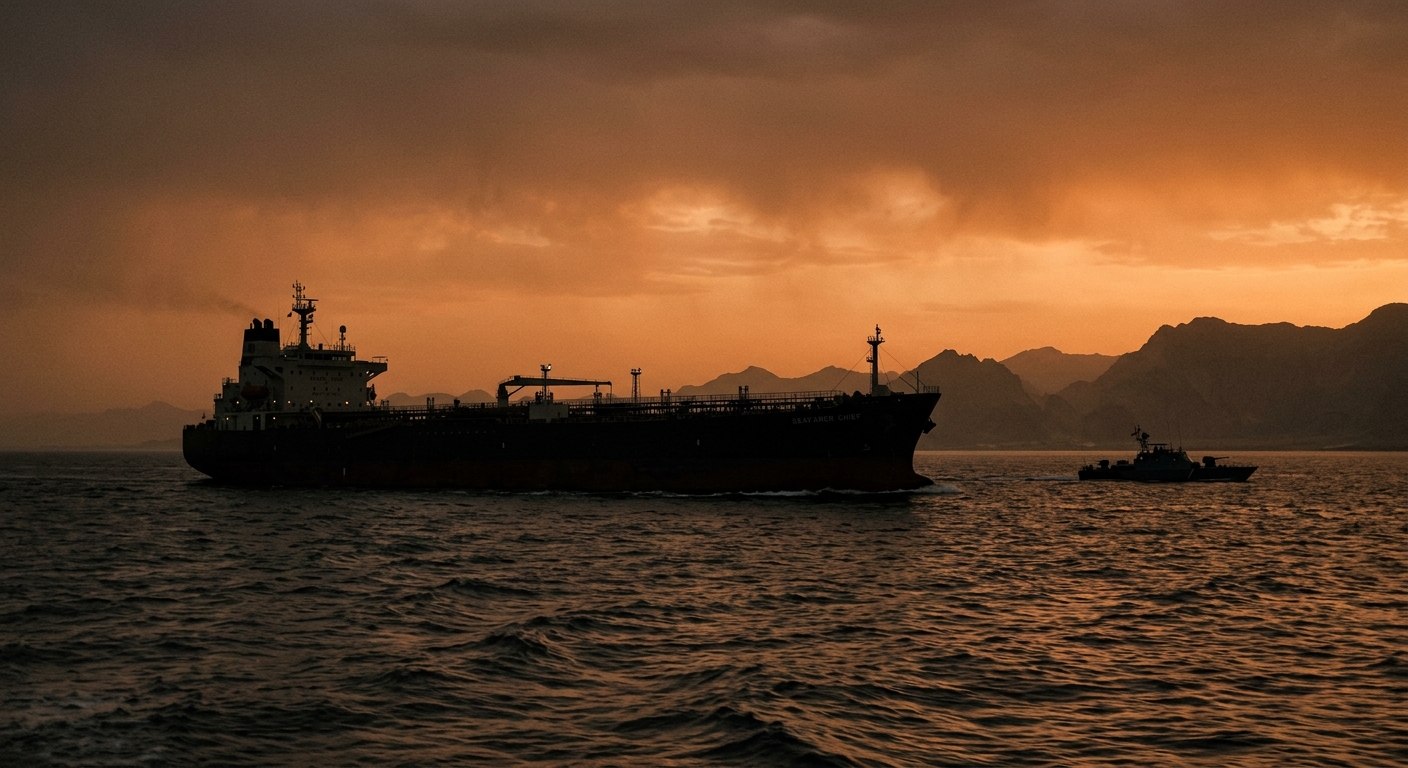
The precipitating events were three separate strikes on commercial shipping. On Monday night, the U.K. Maritime Trade Operations centre reported a tanker had been hit by an "unknown projectile" 8 nautical miles off Limah, Oman. On Tuesday, Qatar's foreign ministry spokesman Majed al-Ansari said the Qatari-flagged Al-Rekayyat had been targeted, and Saudi Arabia said its tanker Wadyan had been struck in the Strait, per the BBC. Iran has neither confirmed nor denied responsibility, but insists that vessels transiting outside its designated route face "risk of collision."
The U.S. response layered sanctions and strikes in the same 24-hour window. CENTCOM said its forces "began launching a series of powerful strikes against Iran to impose heavy costs for targeting and attacking commercial shipping crewed by innocent civilians in an international waterway," according to a post Al Jazeera quoted. The strikes hit Sirik, Qeshm and Bandar Abbas, and CENTCOM claims more than 60 IRGC small boats were destroyed alongside missile launchers, coastal radar and command nodes.
The load-bearing point analysts should not miss: the waiver was revoked while the MoU remains formally in force. Washington did not tear up the deal. It executed the escalation clause U.S. officials had signalled from the start — that the license was performance-based. As one U.S. official told Al Jazeera, the waiver "was dependent on the behaviour of Iran, and… sanctions would be rolled back as negotiations proceeded." That framing keeps the July 17 deadline reversible: if Iran de-escalates in Hormuz before wind-down expires, GL X can be reissued.
Who actually gets squeezed
Not Iran's revenue base — at least not immediately. The Atlantic Council's Sam Rothbardt noted on July 2, 2026 that Iranian oil has flowed throughout the maximum-pressure years via "shadow fleet and other sanctions-evasion mechanisms, with China absorbing the majority of exports while benefiting from deep discounts," according to the Atlantic Council. Chinese teapot refineries — nominally independent but operating under state-controlled import quotas — clear payments through non-dollar channels and have limited exposure to U.S. banks. Under sanctions, they buy cheaper barrels; under a waiver, discounts narrow. That is why some Iranian barrels barely moved during GL X's brief life: sellers held out for higher prices while U.S. banks stayed sidelined for fear of compliance liability.
The Dutch institute Clingendael, in a March 2026 analysis of the UN snapback sanctions, made the argument bluntly: "China's domestic economic trajectory… matters far more for Iran's export prospects than any renewed UN sanctions," per Clingendael. The same logic applies to a unilateral U.S. waiver. Its revocation removes a legal path for Western-facing banks and insurers to re-engage — but does not sever the shadow-fleet channel that never left.
The real losers sit elsewhere:
- Indian refiners who had begun rerouting through legal dollar channels. The Atlantic Council noted that during a March waiver, Indian refiners "reportedly routed payments in yuan through ICICI Bank's Shanghai branch"; the July 17 cutoff pushes them back to workarounds.
- U.S. compliance departments at banks that spent three weeks writing procedures for a license that no longer exists.
- Iranian moderates around President Masoud Pezeshkian, who staked their standing on the MoU.
Al Jazeera reported that hardliners around Supreme Leader Mojtaba Khamenei had already framed Pezeshkian as too willing to concede on Hormuz; the revocation now hands them a domestic case that the U.S. was never going to honour Article 10.
The immediate winners are Brent-long traders and Gulf producers. Brent September futures rose as much as 3% on Wednesday, reaching $76.07 a barrel — the highest since June 23, per Al Jazeera. Saul Kavonic of MST Marquee told the outlet passage through the Strait could remain "below 50 percent of pre-war levels for many months with periodic flare-ups."
The MoU architecture is buckling, not broken
Two other MoU commitments were already sputtering before July 7. Point 6 of the MoU, per the BBC, envisions a $300 billion reconstruction fund — but "the US is not required to pay 'a cent of money' to Iran." At the Doha technical round that concluded June 30, Iran and the U.S. haggled over whether $6 billion or $12 billion of frozen Iranian assets would be released, and Vice President JD Vance insisted the funds must be used to buy U.S. agricultural products,
Al Jazeera reported. Tehran read that as "supervised, conditional money rather than sovereign relief," in the words of one analyst quoted by
Al Jazeera.
IAEA inspections remain the third fissure. IAEA chief Rafael Grossi has said inspectors "will have to have access" under the MoU; Iran denies any schedule has been set. The Congressional Research Service's brief on U.S. sanctions on Iran, per Congress.gov, records that the February 4, 2025 Trump National Security Presidential Memorandum directing "maximum pressure" on Iran was never rescinded — GL X was a carve-out inside a still-standing pressure architecture. That is why revocation was procedurally trivial: the machinery was warm.
Iran, for its part, is exercising its own leverage. Al Jazeera's Tehran correspondent framed it plainly: "For the Iranians, it's a strategic decision to assert control and sovereignty over the Strait of Hormuz. Because, for Tehran, the Strait of Hormuz is the ultimate deterrence and also the biggest leverage that Tehran has on the negotiating table," in an Al Jazeera report. Iran's Fars news agency has floated the idea that under a final deal, the Strait would be managed by Iran in coordination with Oman — possibly with transit fees. That is a non-starter in Washington. It may also be a non-starter in Riyadh and Doha, both of which openly blamed Tehran for this week's tanker attacks — the first public break by Gulf capitals from the "quiet mediator" posture they held during the war.
For readers tracking the wider conflict arc, the MoU is now a document Iran will cite in every future venue — including the UN Security Council — as evidence of U.S. bad faith, even as Tehran itself hedges on Hormuz obligations. Both sides get a legal narrative; neither gets the deal.
What to watch
- July 17, 2026, 12:01 a.m. EDT — GL X1 wind-down ends. Any Iranian crude sale executed after that timestamp exposes counterparties to secondary sanctions. Watch for a last-minute OFAC amendment if Doha talks resume.
- August 16, 2026 — the 60-day MoU negotiating window closes. Absent a follow-on agreement, the ceasefire loses its scaffolding. Iranian parliament speaker Mohammad Bagher Ghalibaf has already called the MoU "the beginning of a difficult and winding road."
- Next Doha round (unscheduled) — Qatari mediators told
- Brent above $80 — the political trigger. Kavonic's forecast implies elevated prices are the new baseline; a sustained move above $80 would revive the domestic U.S. political cost Trump paid during the June war, and could force a partial reissue.
Diplomat View
The Islamabad MoU is not dead — but it is now, functionally, a Hormuz agreement with an oil-sanctions annex that Washington controls unilaterally. Our forecast: the July 17 wind-down will hold, but Treasury will quietly reissue a narrower GL X2 within four to six weeks if Iran refrains from further shipping attacks and admits IAEA inspectors to at least one declared site. That is the deal Trump wanted from the start — leverage on demand, conditionality without a formal renegotiation. It falls apart under two conditions: a fourth tanker attack that produces casualties (which would harden the Gulf coalition against Tehran and end U.S. political appetite for any waiver), or a hardline consolidation in Tehran that pushes Pezeshkian aside before August 16. Watch the Bahrain and Kuwait base postures and the Iranian parliament's re-opening schedule; those, not the Doha talks, will tell you which scenario is winning.
The Bottom Line
The revocation of General License X1 is not the collapse of the Tehran-Washington deal — it is the deal working as the Trump administration designed it: sanctions relief on a tripwire, revocable in hours, decoupled from formal MoU withdrawal. Iran keeps the paper agreement to litigate Washington's bad faith; the U.S. keeps the ability to squeeze Iranian revenue whenever a tanker burns. The real question is not whether the MoU survives August 16, but whether either side still wants it to.
Discover more
US Politics
SNAP Food Assistance Faces Legal Challenges
In 2026, SNAP faces stricter eligibility rules and mounting legal challenges, threatening food assistance for the millions of Americans who rely on the program.
US Politics
House Ethics Committee Pushes Sexual Miscond.
The House Ethics Committee has shifted responsibility for sexual harassment settlement records to the Office of Congressional Workplace Rights, complicating disclosure efforts.
India
Romanian Coalition Party Demands PM Resign
Romania's Social Democrats withdrew from coalition, joining far-right AUR to topple PM Bolojan, risking €10 billion in EU funds by August 2026.
Conflict & Security
Guatemala: El Niño 2026–27 becomes regional security test
UNICEF: 25.8M children face El Niño risks in Latin America; Guatemala maps 188 municipalities for drought and food insecurity amid regional security test.