US Rescinds Syria's Terror Designation
A pivotal shift in US-Syria relations and regional dynamics
Model Diplomat7 min readMiddle East
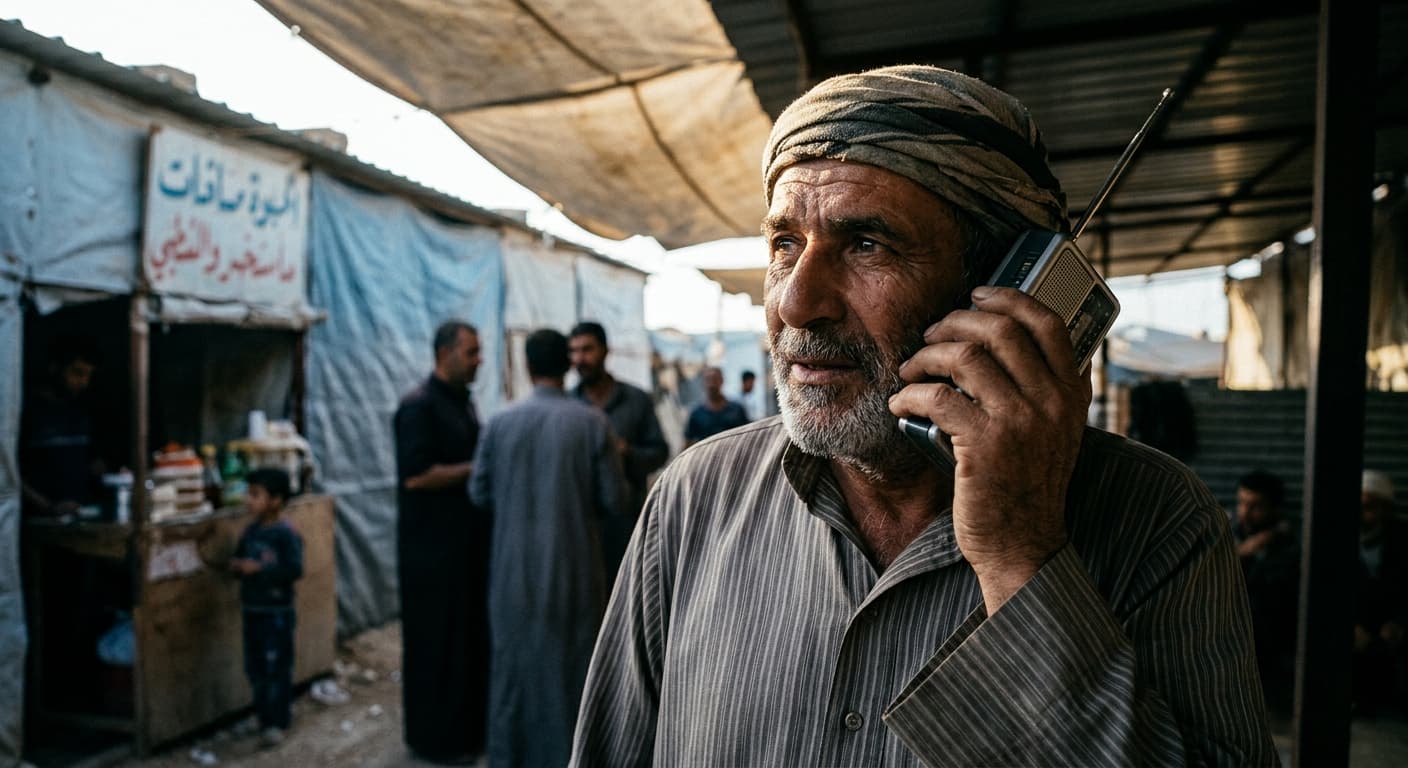
US Drops Syria From Terror Blacklist, Sealing Sharaa's Rehabilitation
Washington notified Congress on July 8, 2026 that it will rescind Syria's 47-year-old terror designation — unlocking investment, isolating Israel's skeptics, and betting on Ahmed al-Sharaa.
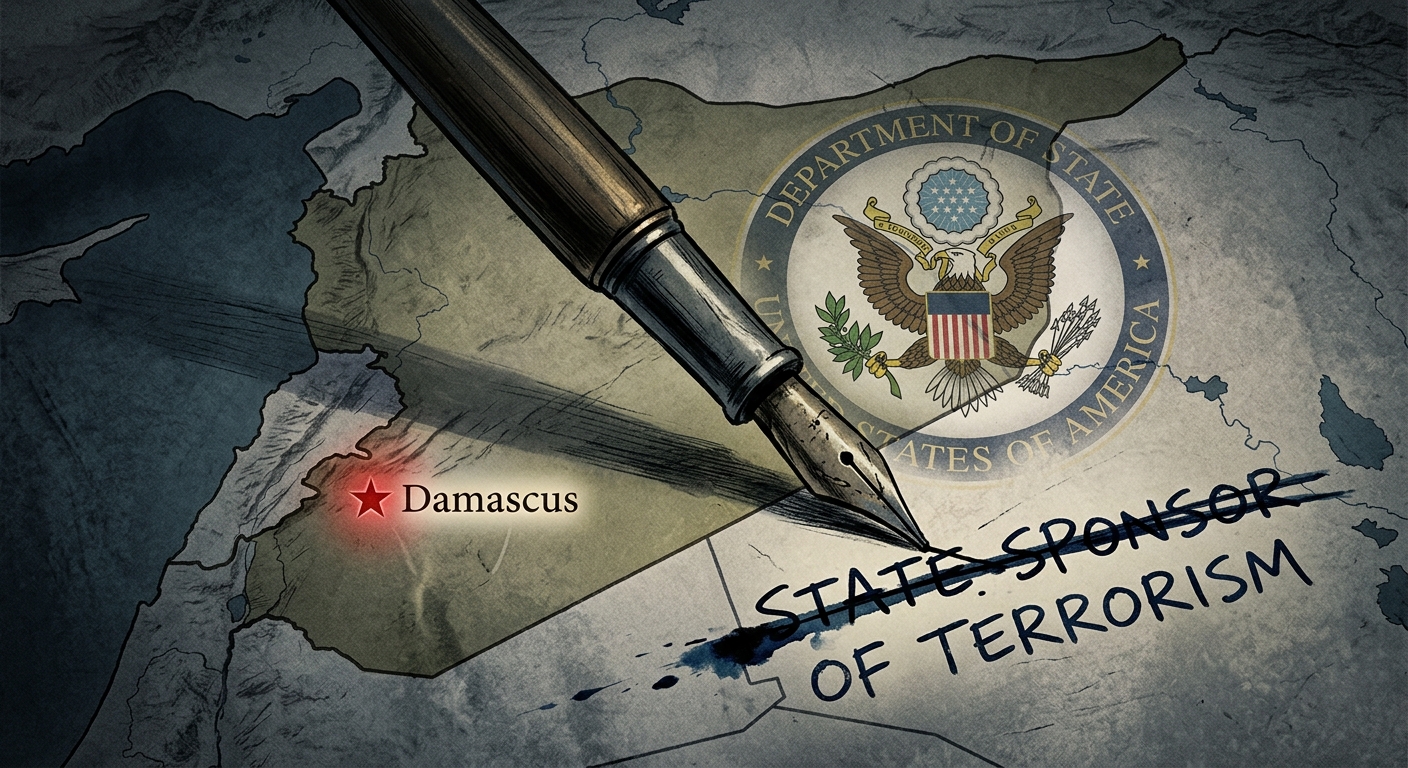
Secretary of State Marco Rubio notified Congress on July 8, 2026 that the United States will rescind Syria's designation as a State Sponsor of Terrorism after a statutory 45-day review, ending a label first imposed on Damascus on December 29, 1979. The move, announced as President Donald Trump met Syrian President Ahmed al-Sharaa on the sidelines of a NATO summit in Ankara, is not a routine diplomatic upgrade. It closes the legal architecture that Washington has spent 18 months dismantling — and hands Sharaa, a former al-Qaeda affiliate with a $10 million US bounty on his head as recently as 2024, the last piece of paper he needed to sell Syria to American capital and Gulf sovereign funds. The winner is not Washington. It is Riyadh.
What the paperwork actually does
Rubio's statement, published by the State Department's Office of the Spokesperson, frames the rescission as the payoff for "positive changes and counterterrorism actions taken by the Syrian government" and "formal assurances" from Sharaa that Damascus "will not support acts of international terrorism in the future," according to the Department of State. The administration is using the second of the two statutory pathways under Section 40 of the Arms Export Control Act (22 U.S.C. 2780(d)) — a 45-day pre-notification the president must justify by certifying that the government has not supported terrorism in the preceding six months and has given forward-looking assurances, as spelled out in a 2020 Congressional Research Service insight on
Sudan's removal.
Congress can block the rescission only through a joint resolution of disapproval, which the president can veto — a bar that has never been cleared in the six previous delistings, from Iraq in 1982 through Sudan in 2020. Absent such a resolution, the designation lapses on August 22, 2026. When it does, only Iran, North Korea and Cuba will remain on the list, per
Al Jazeera's tally of the SST roster.
The practical effect is that Section 6(j)-type export controls, dual-use licensing restrictions, foreign-aid prohibitions and — most importantly for investors — the secondary-liability halo around Syria business dealings all fall away. Trump had already scrapped the underlying sanctions architecture with Executive Order 14312 on June 30, 2025, terminating six Assad-era emergency orders. The SST label, however, kept US and international banks skittish. That was the piece Sharaa needed removed.
The rehabilitation, in 18 months
Sharaa's forces reached Damascus on December 8, 2024, after a 12-day offensive that ended 53 years of Assad rule. Every subsequent step of the US embrace has been sequenced — and choreographed with Riyadh, Ankara and Doha.
The pattern is unmistakable. Trump lifted broad sanctions in Riyadh in May 2025 during a summit that CSIS's Natasha Hall described as an announcement calculated to "please his Saudi hosts," according to the think tank's analysis. The Foreign Terrorist Organization designation of Hayat Tahrir al-Sham was revoked on July 8, 2025, exactly one year before the SST rescission — a symmetry unlikely to be accidental. In November 2025, the UN Security Council voted 14–0 (China abstaining) to delist Sharaa from the ISIL/al-Qaeda sanctions list, and the Treasury Department removed him from the Specially Designated Global Terrorist list days later, per
Al Jazeera's UNSC coverage. In December 2025, the House folded a Caesar Act repeal into the FY2026 National Defense Authorization Act, as
Al Jazeera reported. By June 2026, the Congressional Research Service could conclude that the United States "no longer maintains a comprehensive Syria Sanctions program," in its
Syria and U.S. Policy brief.
The SST rescission is the capstone, not the beginning.
Who benefits — and it isn't Washington
The immediate winner is Sharaa, who now controls a Syrian government that the World Bank and IMF can lend to without a legal cloud, that US and European banks can process payments for, and that Gulf sovereign wealth funds can deploy into without secondary-sanctions risk. Syrian central bank governor Abdulkader Husrieh called earlier US sanctions relief a "miracle" in comments quoted by Reuters and cited in Al Jazeera's Caesar Act coverage.
The larger beneficiary is Saudi Arabia. The Kingdom's KSRelief agency announced 454 projects worth $1.4 billion in September 2025, and Riyadh has pledged more than $6 billion in reconstruction financing linked to a Saudi–Syrian investment-protection pact signed in August 2025, according to the Gulf International Forum. In February 2026, Saudi Investment Minister Khalid al-Falih led a delegation to Damascus to sign strategic contracts across aviation, telecommunications, infrastructure and real estate, per the same forum's
investment tracker. Gulf International Forum analyst Madeline Stahle notes that Saudi firms now "dominate upstream technical services and field rehabilitation" in Syria's energy sector, while the UAE embeds itself in ports and Qatar in power generation and LNG diplomacy.
That is the second-order shift the wire coverage largely misses. The United States is issuing the license; the Gulf is providing the capital. Atlantic Council researchers reckon the reconstruction bill at over $250 billion against a shrunken $21 billion GDP — a gap only sovereign-wealth-scale financing can close, and one Congress has shown no appetite to fund. What Washington has done, in effect, is remove the last legal impediment to a Gulf-led reconstruction that will lock Syria into the Riyadh–Ankara–Doha commercial orbit for a decade.
The loser is Israel
Prime Minister Benjamin Netanyahu had urged Trump not to lift sanctions and remains suspicious of Sharaa and the foreign fighters folded into Syria's new security forces, according to reporting by the BBC. Israeli aircraft have continued to strike Syrian military installations well beyond the occupied Golan Heights through 2025 and 2026, and the Trump administration has publicly urged restraint without imposing costs. The SST rescission proceeded despite what Al Jazeera called a "lack of tangible progress" on Trump's stated demand that Syria join the Abraham Accords.
Trump's June 2026 suggestion that Syria could take the lead in disarming Hezbollah — a role Sharaa flatly rejected, per Al Jazeera analyst Nawar Hawach of the International Crisis Group — telegraphs where the administration wants this heading: a Sunni-led counterweight to what remains of Iran's Axis of Resistance, absorbing missions Israel has performed since 2024. Sharaa is willing to seal the border, break smuggling networks and coordinate quietly with Washington. He is not willing to invade Lebanon on Israel's behalf.
For Netanyahu, the message from Ankara is clear: the White House will rehabilitate Damascus without conditioning it on normalization with Israel. That is the first time in the Trump-era Middle East that an Arab capital has been given a full US embrace without an Abraham Accords deposit slip attached.
Congress: theatre, not veto
The 45-day clock runs to August 22, 2026. Congressional opposition exists but is fragmentary. House Foreign Affairs Chair Brian Mast (R-FL), initially a skeptic, ultimately shepherded the Caesar Act repeal through the NDAA in December 2025, telling the House floor that Congress was "giving Syria a chance to chart a post-Assad future." Senate Foreign Relations ranking member Jeanne Shaheen (D-NH) and chair Jim Risch (R-ID) issued a bipartisan statement in November 2025 calling for repeal of remaining sanctions, per Al Jazeera. Shaheen visited Damascus in August 2025 with Republican Congressman Joe Wilson and, in her words to
NPR, came away persuaded that "it's a nascent central government. And I think it's important for us to do everything we can to ensure that that government continues to move forward."
The votes to force a joint resolution of disapproval, then override a certain presidential veto, do not exist. The FY2026 defense appropriations act even includes a waiver authority allowing US assistance to vetted Syrian forces notwithstanding SST restrictions, per the CRS's Syria: Transition and U.S. Policy report. Congress has already legislated for a post-designation Syria.
Diplomat View
The SST rescission is being read in Washington as a counterterrorism story. It is not. It is an industrial policy story dressed in a counterterrorism suit. Trump's team has removed the last legal fence around Syria at the precise moment that Saudi Arabia, the UAE, Qatar and Türkiye are competing to embed their firms in Syrian energy, ports, telecoms and finance. American companies will follow — but as junior partners in a Gulf-anchored reconstruction, not as leads. That is a durable strategic realignment: for the first time since the 1970s, the Levantine reconstruction economy will be built with Gulf capital, Turkish contractors and Syrian labor, with US sanctions law functioning as the on/off switch rather than the design principle.
The forecast we would revise if any of three things happens: a mass-atrocity event against Alawites, Druze or Christians on Sharaa's watch that gives Congress a bipartisan hook to invoke a joint resolution before August 22; a documented Syrian intelligence link to a terrorist act abroad in the six-month look-back window, which would legally torpedo Rubio's certification under 22 U.S.C. 2780(d); or an Israeli strike deep inside Damascus that forces Sharaa to publicly retaliate and pulls Washington into a choice between its new client and its oldest regional ally. Absent one of those shocks, this is done.
What to watch next:
- August 22, 2026 — Statutory rescission takes effect unless Congress passes a joint resolution of disapproval and overrides a veto.
- Fall 2026 IMF/World Bank Annual Meetings — First forum at which a fully delisted Syria can be integrated into a formal donor-coordination architecture; watch for a US-chaired Syria reconstruction task force.
- UAE posture — Whether Abu Dhabi aligns with the Saudi–Qatari–Turkish consensus on a unified Syria or, as
SETA analysts warn, drifts toward an Israeli-aligned "axis of fragmentation" backing Druze or SDF separatism.
The Bottom Line
Washington did not rehabilitate Ahmed al-Sharaa on July 8. It ratified a rehabilitation that Saudi Arabia, Türkiye and Qatar had already engineered, and it did so without extracting the Abraham Accords deposit that Israel expected. The SST rescission is best read not as the end of Syria's isolation but as the moment the United States conceded that the next chapter of Levantine order will be written in Riyadh, financed by the Gulf, and legally underwritten — but no longer directed — from Washington.
Discover more
US Politics
SNAP Food Assistance Faces Legal Challenges
In 2026, SNAP faces stricter eligibility rules and mounting legal challenges, threatening food assistance for the millions of Americans who rely on the program.
US Politics
House Ethics Committee Pushes Sexual Miscond.
The House Ethics Committee has shifted responsibility for sexual harassment settlement records to the Office of Congressional Workplace Rights, complicating disclosure efforts.
US Politics
Virginia's Redistricting Referendum
Virginia's redistricting referendum is drawing a flood of dark money, shaping future elections and the fight for congressional control amid party stakes.

Economics
Fed's Amex AML order puts correspondent banking on notice
Federal Reserve's Amex AML order requires board-level controls and a 90-day plan; OCC fined the bank $350 million over enterprise-wide deficiencies.