US-Iran Talks: Disputed Agreements Unveiled
Conflicting claims highlight deep rifts in negotiations.
Model Diplomat3 min readMiddle East
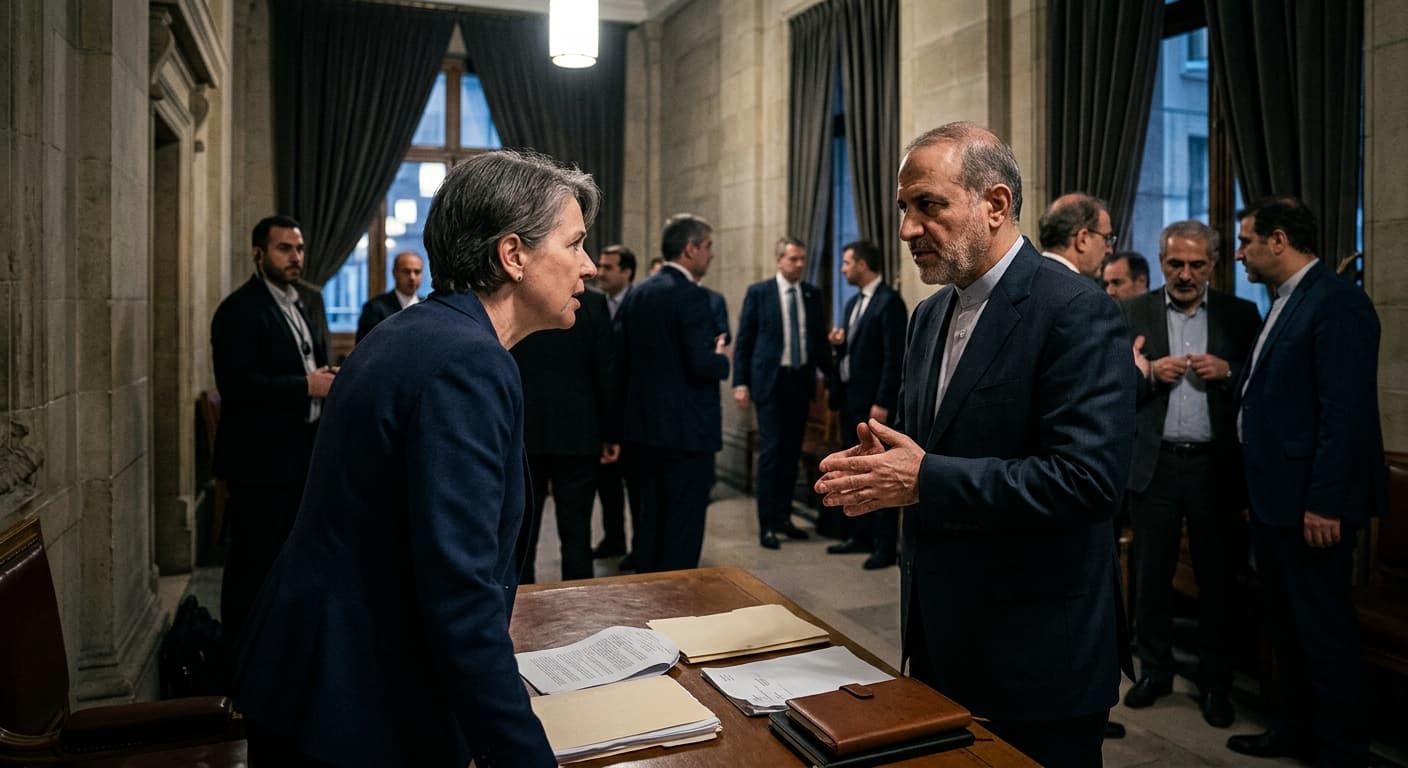
US Claims Iran Agreed to Inspectors; Tehran Flatly Denies It
On Day 1 of Swiss talks, Washington waives oil sanctions and claims nuclear concessions—but Tehran's denials and dueling statements reveal deep rifts on what was actually agreed.
The first day of high-level US-Iran talks in Switzerland exposed a fundamental problem: the two sides cannot even agree on what they agreed to. Vice President JD Vance claimed Iran had committed to allowing International Atomic Energy Agency (IAEA) inspectors back into the country, calling it "a major milestone." On Tuesday, Iran's Foreign Ministry spokesman Esmaeil Baghaei flatly denied this, saying
Iran "has not met with IAEA Director General Grossi and has no clear schedule for IAEA inspectors to examine Iranian nuclear facilities."
The dispute extends far beyond nuclear language. Washington has moved quickly on oil sanctions: the US waived sanctions on Iranian petroleum for 60 days, freeing an estimated 67 million barrels stored on tankers in the Gulf. But Iran's Foreign Minister Abbas Araghchi insists
sanctions relief has already been granted broadly—"Oil and petrochemical exports have been waived, the blockade has been lifted, some frozen assets have been released," while Vance frames any asset release as conditional on future Iranian compliance. Iran claims
$12 billion in frozen assets will be released immediately; Washington has not confirmed this figure or timeline.
Why This Matters
These are not semantic gaps—they reflect deeper power asymmetries in the negotiation. Iran is weaponizing ambiguity to lock in economic relief domestically while leaving Washington room to claim it extracted nuclear concessions. Vance has tied future asset unfreezing to "continued progress and verification," a lever Tehran refuses to accept. Back in Tehran, Iran's central bank governor preemptively stated frozen funds "will not necessarily be spent on basic goods" and Iran can purchase "other non-sanctioned goods," undercutting Trump and Vance's claim that unfrozen money would buy American agricultural products.
On the Strait of Hormuz, the friction is territorial. Iranian Parliament Speaker Mohammad Bagher Ghalibaf declared "the administration of the Strait of Hormuz will never go back to the way it was before the war," while Washington expects the strategic waterway to remain fully open to international shipping. Iran has extracted a commitment to coordination mechanisms and communication lines—a face-saving concession that preserves Tehran's de facto control.
The mediators—Pakistan and Qatar—announced a "roadmap towards reaching a final deal within 60 days" and pledged technical talks to continue. But that timeline masks the real obstacle: mistrust is structural. As one analyst told Bloomberg, "the absence of trust is truly a hugely complicating factor. Each side wants to make sure the other is keeping to their end of the commitment before they make any concessions."
What to Watch
The next test arrives in Lebanon. Both sides committed to a "de-confliction cell" to end military operations there, and Iran's Araghchi called this "the first real test" of the agreement's durability. Israel, not party to the Swiss talks, has rejected conditions on its operations: Prime Minister Netanyahu said the IDF "has no restrictions" in preventing threats to Israeli communities. If fighting in Lebanon resumes or intensifies, the entire nuclear and sanctions negotiation collapses.
Watch also for the nuclear working group that begins technical discussions this week. Iran's insistence that IAEA access remain within existing safeguards agreements is a hard line; Washington's demand for "highest level nuclear inspections" is incompatible with it. The 60-day window is real, but the gap between what each side claims it agreed to suggests they are negotiating entirely different deals.
Discover more

Global Politics
US Seizes Iranian Ship, Tensions Surge
The US seizure of the Iranian ship Touska highlights a shift in control over the Strait of Hormuz, favoring Iran's strategic position.

International Relations
Pakistan's Key Role in US-Israel-Iran Meddle
Pakistan is seeking to mediate the US-Israel-Iran conflict, balancing high-stakes diplomacy against severe economic pressures and steep regional challenges.
Global Politics
Trump's Conflicting Messages on Iran War
Trump's mixed messages on Iran reflect a strategy of audience management, benefiting Tehran amid a complex geopolitical landscape.

Conflict & Security
Drone Warfare Killing Aid Workers at Unprec
Over 1,000 humanitarian workers killed in three years as cheap armed drones collapse legal protections. Gaza, Sudan, Ukraine, and DRC see deliberate targeting of aid convoys and hospitals with zero prosecutions.