US-Iran Strikes and Gulf Unity Crisis
Tensions rise as US-Iran strikes threaten Gulf cooperation.
Model Diplomat8 min readMiddle East
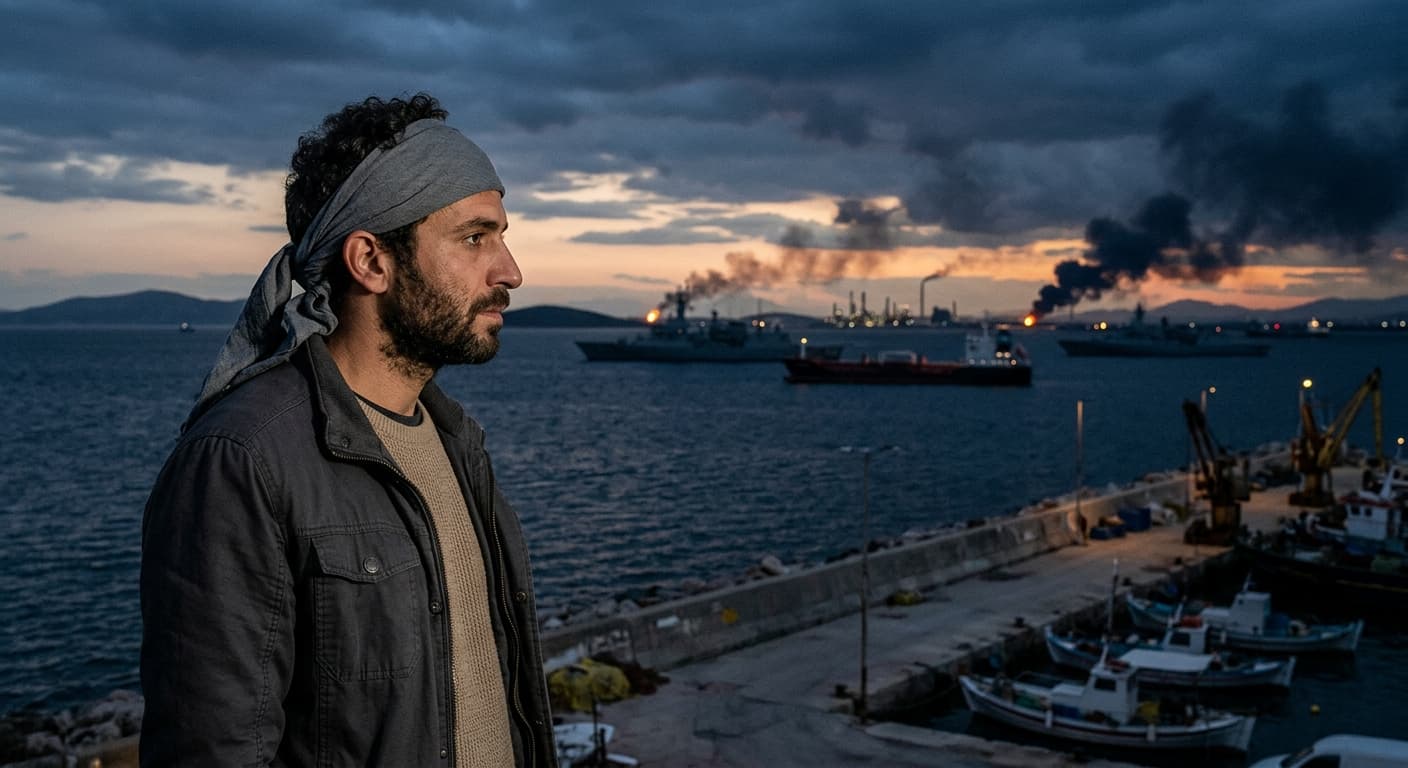
Hormuz tollbooth war: US-Iran strikes split the Gulf
Renewed US-Iran strikes on July 8-9, 2026 target Gulf bases and Iranian ports as Qatar and Pakistan scramble to save the Hormuz MoU — and expose a widening Saudi-UAE rift.
The renewed US-Iran exchange that hit six Gulf-hosted bases on July 9, 2026 is not a war restart — it is a negotiation being conducted with missiles over who gets to run the Strait of Hormuz, and its most durable casualty is Gulf unity. Riyadh wants to freeze Iran out with a non-aggression pact and pipelines. Abu Dhabi wants to finish the job. Doha and Muscat want a deal at almost any price. Twenty-two days after Presidents Donald Trump and Masoud Pezeshkian electronically signed the Islamabad Memorandum of Understanding, the exchange of fire is proving that the MoU's central ambiguity — who administers the world's most important oil chokepoint — cannot be papered over by a 14-point document.
What actually happened
US Central Command struck roughly 90 targets across Iran's southern coastline on the night of July 8, hitting missile and drone storage, maritime traffic control centres, and the Tehran-Mashhad rail bridge at Aq Qala, according to a running tally by Al Jazeera. That followed a first wave of more than 80 targets on July 7 that CENTCOM said was retaliation for Iranian drone attacks on three tankers — the Marshall Islands-flagged Al Rekayyat, the Saudi-flagged Wedyan, and the Liberia-flagged Cyprus Prosperity — near Oman's territorial waters,
BBC News reported.
Iran's Islamic Revolutionary Guard Corps struck back on July 9 at four US bases in Kuwait and Bahrain — Camp Arifjan, Ali Al Salem, Naval Support Activity Juffair, and Sheikh Isa — and hit a Patriot battery in Kuwait and a satellite antenna in Qatar. Kuwait's Ministry of Defence said its air defences engaged three ballistic missiles, one cruise missile, and 10 drones; one injury was reported from falling debris, according to NPR. At least 14 people were killed by the second wave of US strikes inside Iran,
The Irish Times reported.
Speaking at the NATO summit in Ankara, Trump called the MoU "over" but left the door to talks open. Parliament Speaker Mohammad Bagher Ghalibaf, Iran's chief negotiator, posted on X: "If you strike, you'll get hit." Iran buried Supreme Leader Ali Khamenei — killed on the war's first day, February 28 — in Mashhad hours after the exchange, Al Jazeera reported.
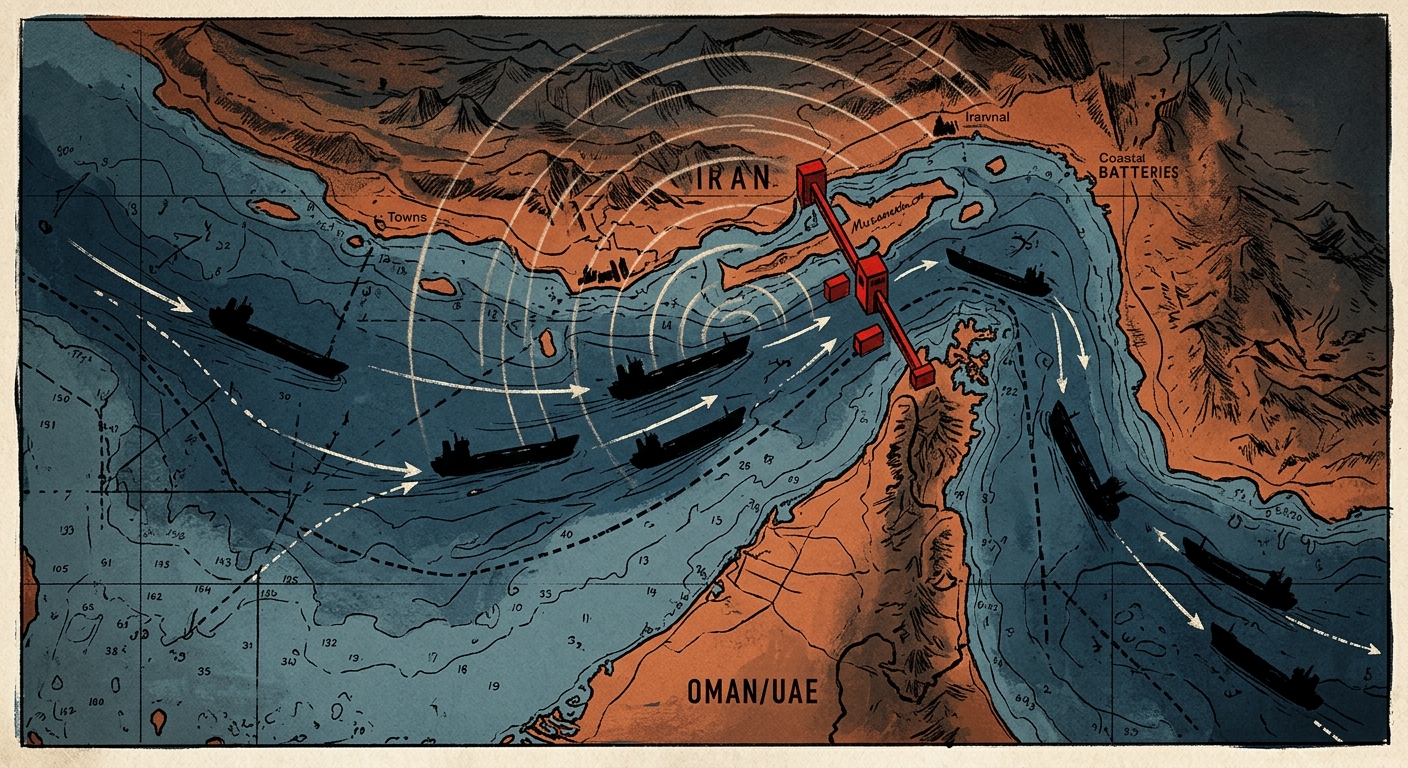
The fight is Article 5, not the nuclear file
Read carefully, the MoU is not primarily a nuclear deal. It is a Hormuz deal. Its fifth clause commits Iran to "make arrangements using its best efforts for the safe passage of commercial vessels, with no charge for 60 days only, from the Persian Gulf to the Sea of Oman," while requiring Tehran to open talks with Oman on "the future administration and maritime services in the Strait of Hormuz." The full text was published by the BBC on June 18.
Iran reads that language as a grant of managerial authority. The US reads it as an obligation to unblock. Ebrahim Azizi, a spokesman for Iran's parliamentary national security commission, put the Iranian position bluntly on X: "Recognise the new and Iranian order in the Strait of Hormuz."
The Council on Foreign Relations, in a July 9 analysis by Heidi Crebo-Rediker and Edward Fishman, calls the deal what it functionally is: "a Hormuz deal." Their calculation — that Tehran believes it could extract up to $40 billion a year from service fees, roughly the size of its recent annual oil-export revenues — explains why Iran will not concede the point cheaply, CFR noted. That is the tollbooth Iran is fighting for; the strikes are the price.
The US Treasury made the American position operational on July 7 by revoking the 60-day sanctions waiver that had let Iran sell already-loaded cargoes — the MoU's single tangible near-term benefit for Tehran, according to Al Jazeera's Tehran bureau. Ghalibaf's ministry called it a breach of "good faith."
UN Secretary-General António Guterres has been leaning on the primary document that both sides ostensibly still recognise. In an April Security Council stakeout, Guterres told parties to respect "navigational rights and freedoms" as affirmed by UN Security Council Resolution 2817, and on July 8 his spokesperson warned that "a return to full-scale hostilities would have catastrophic consequences," according to the
UN Press briefing.
The Gulf split is the story
The exchange has surfaced a rift Washington's diplomats had been managing quietly for a year. The Gulf Cooperation Council issued a formal condemnation of the Iranian strikes on Bahrain and Kuwait through Secretary-General Jasem Mohamed AlBudaiwi, who called them "a grave breach of international law and the United Nations Charter." Qatar, the UAE, and Oman condemned Iran individually. But under the surface, the six states are not pulling in the same direction.
Brookings scholar Jeffrey Feltman documents the divergence in stark fiscal terms: during the strait's closure, Saudi Arabia's oil revenues rose by about $9 billion and Oman's by nearly $6 billion, thanks to their non-Hormuz export routes, while the UAE lost more than $1.5 billion despite higher prices, and Qatar, Kuwait, and Bahrain were hit hardest. That asymmetry helps explain the UAE's April 28 exit from OPEC and its dash to double the Habshan-Fujairah bypass to 3.6 million barrels per day.
Carnegie's Frederic Wehrey and colleagues warn of a "bidding war" for scarce US Patriot interceptors that could pit Riyadh against Abu Dhabi. Reporting from the Gulf International Forum by Katherine Bauer describes Riyadh's calculus more baldly: MBS has assessed that "kinetic retaliation against Tehran might draw the Iran-backed Houthi movement in Yemen more directly into the conflict, threatening Saudi Arabia's alternative oil export route to the Red Sea," which is exporting roughly 7 million barrels per day throughout the war, Gulf International Forum reported. That is why Saudi Arabia has floated a regional non-aggression pact with Iran —
MP-IDSA reports Riyadh proposed the pact to insulate itself from future spillover.
The UAE has moved the other way. It reportedly struck Iran's Lavan Island refinery in April as the ceasefire was being locked in, and it champions a resumption of US-led "Project Freedom" convoy operations in the strait — a mission Saudi Arabia and Kuwait consider escalatory. Qatar and Oman, meanwhile, are actively brokering. Qatari Prime Minister and Foreign Minister Sheikh Mohammed bin Abdulrahman Al Thani phoned Iranian Foreign Minister Abbas Araghchi on July 9 to press implementation of the MoU. Oman is negotiating the Article 5 administration framework directly with Tehran — the same day, Stimson Center's Joaquin Matamis notes, that the IRGC hit the Singapore-flagged Ever Lovely on a designated IMO route, a signal Muscat can read only one way.
The upshot: the GCC cannot present a united front to either Washington or Tehran, and both sides know it. That is a structural change, not a tactical one. As Carnegie's analysis puts it, "Some reporting already portrays a Saudi-led axis that favors diplomacy with Iran, versus an Emirati team that wants the United States and Israel to 'finish off' the Islamic Republic."
Markets are the constraint on both sides
Brent crude jumped 4.2% to $77.24 on July 8, the highest in two weeks, reversing a decline from an April high of $126, Al Jazeera reported. US retail gasoline was at $3.79 a gallon on July 8, down from a $4.48 May peak but still well above the $2.98 pre-war level. That number, more than any diplomatic cable, is the ceiling on how far Trump can push a renewed war.
Traffic through the strait had recovered only to 108 verified crossings over the weekend of July 3-5, according to data from Kpler cited by Al Jazeera — roughly a third of the pre-war rate of 120-140 per day, with more than 550 ships stranded on either side. War-risk insurance premiums, previously around 0.25% of hull value, are running at 2.5-5% and are unlikely to return to pre-crisis levels for months, insurance brokers told the outlet.
UN News reported on July 9 that shipping through the strait was again at a "near-standstill," and the IMF has quietly cut its global growth forecast citing the risk, according to the UN spokesperson's briefing of July 8.
The non-obvious beneficiary
The clearest winner from the July 8-9 escalation is not Iran, whose infrastructure took another beating, and not the US, which spent inventory. It is the United Arab Emirates' argument that the Strait of Hormuz is a strategic vulnerability that must be engineered around, not negotiated over. Every ballistic missile that flies toward Juffair strengthens the case in Abu Dhabi for accelerating the Fujairah bypass, deepening security cooperation with Israel, and moving out of OPEC's orbit — precisely the moves Riyadh has spent two years trying to slow.
The second beneficiary is Oman. If the strait's administration ends up in an Iran-Oman-managed framework — with a Saudi/UAE veto — Muscat's diplomatic weight jumps a tier. Carnegie's scenarios flag the possibility of "Muscat as the new Dubai" for Iranian financial flows if the UAE keeps cracking down.
The loser, quietly, is the GCC as a bloc. Its condemnations still emerge under AlBudaiwi's letterhead, but the strategic playbooks behind them diverge on almost every substantive question: Israel, deterrence posture, insurance regimes, pipeline geography, and how much US reliability is worth pricing in.
What to watch next
- The 60-day MoU clock. Signed June 17, the negotiating window expires August 16, 2026 unless extended by mutual consent under Point 3 of the text. Watch for whether Doha and Islamabad can broker an extension before then, or whether the deal collapses into "de facto" implementation with no final agreement.
- The Treasury waiver. Reinstatement of the oil-export waiver revoked on July 7 is Iran's price of admission back to the table. If it stays revoked past mid-July, expect further tanker attacks calibrated to force Washington's hand.
- Mojtaba Khamenei's first public appearance. Iran's new supreme leader has not appeared in public since his father's assassination on February 28.
BBC News reported he is still absent from the funeral cycle that ended July 9. His first public message will set the ceiling on Ghalibaf's negotiating room.
- A UN Security Council session on Resolution 2817 compliance. Guterres has invoked it twice; a formal review vote would force Russia and China to choose sides on Hormuz freedom of navigation — a choice Beijing has spent a year avoiding.
Diplomat View
The MoU will probably survive July, but not because either principal wants it to. It will survive because Qatar and Pakistan cannot afford its collapse, because Saudi Arabia has been telling Washington privately that a return to full war endangers its Vision 2030 investment pipeline, and because Brent crude at $77 is already priced closer to the ceiling of what Trump's domestic gasoline politics can absorb. Expect a face-saving Article 5 fudge — Oman-administered "service fees" branded as safety charges, a US-tolerated 60-day extension, and a nuclear framework kicked into 2027.
The forecast changes if any of three things happens. A mass-casualty event at Juffair or Al Udeid — the July 9 salvos came close — would force Trump into a response that cannot be walked back. A public appearance by Mojtaba Khamenei with maximalist language would harden Tehran's floor. Or a Saudi decision to formally sign a non-aggression pact with Iran, cutting Washington out of Gulf security architecture, would tell you the American security umbrella has been repriced in Riyadh — and that the real story of 2026 was never the strikes, but what the Gulf built while watching them.
Read more on regional conflict.
Discover more
US Politics
House Ethics Committee Pushes Sexual Miscond.
The House Ethics Committee has shifted responsibility for sexual harassment settlement records to the Office of Congressional Workplace Rights, complicating disclosure efforts.
US Politics
Virginia's Redistricting Referendum
Virginia's redistricting referendum is drawing a flood of dark money, shaping future elections and the fight for congressional control amid party stakes.

India
Delhi CM Rekha Gupta Blasts Opposition's Delm
Delhi CM Rekha Gupta's remarks on women's quota defeat reveal BJP's strategy for the 2029 Lok Sabha elections, focusing on delimitation.
Conflict & Security
Guatemala: El Niño 2026–27 becomes regional security test
UNICEF: 25.8M children face El Niño risks in Latin America; Guatemala maps 188 municipalities for drought and food insecurity amid regional security test.