Guatemala: El Niño 2026–27 becomes regional security test
Climate exposure in Guatemala's Dry Corridor could test regional coordination.
Model Diplomat9 min readCentral America
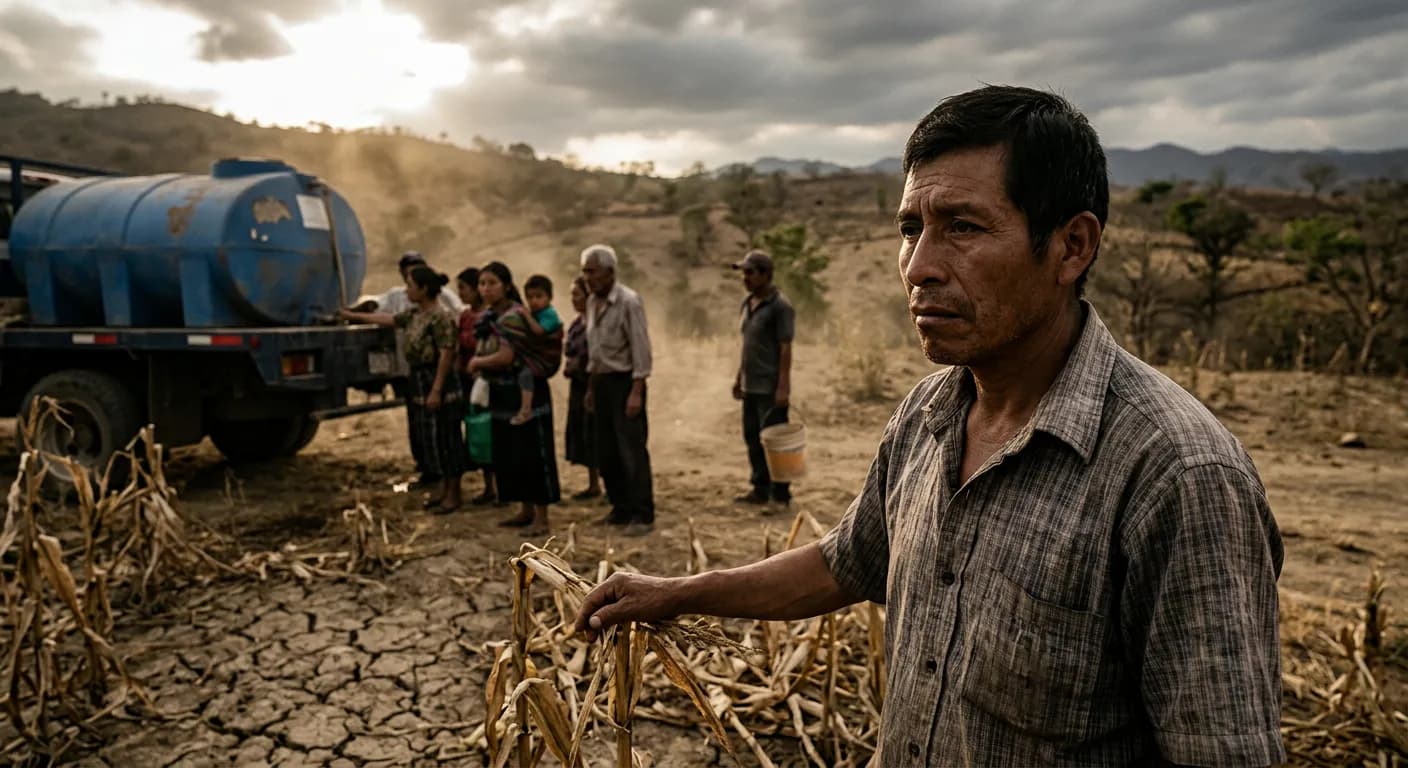
Guatemala: El Niño 2026–2027 turns climate exposure into a regional security test
Guatemala’s El Niño problem is no longer just a harvest problem. On September 30, 2026, UNICEF estimated that at least 25.8 million children across Latin America and the Caribbean faced growing risks from droughts and floods; in Guatemala, food insecurity could become a test of regional coordination as rural livelihoods deteriorate and pressure builds across borders. Pre-emptive coordination among Guatemala, neighboring governments, United Nations agencies and donors could reduce that risk. At least 25.8 million children in Latin America and the Caribbean are exposed to
El Niño is strengthening and is forecast to peak toward the end of 2026, with the strongest conditions expected between September and November. The World Meteorological Organization puts the probability of persistence through February 2027 at nearly 100%. The hazards are uneven: drought, heat, water stress and wildfires threaten Central America and the Caribbean, while wetter conditions could increase flooding and landslides along parts of western and southern coastal South America. OPSAa
El Niño 2026-2027: Climate Risk & Humanitarian Outlook for Latin America and the
That pattern matters for security because it does not create one shared emergency. It creates linked pressures: crop losses in Guatemala and the Central American Dry Corridor, public-health risks, competition over water and food, and possible movement by households whose rural incomes no longer cover basic needs. The evidence does not establish a direct causal chain from El Niño to migration or conflict. It does establish the conditions in which governments may face greater pressure to manage displacement, humanitarian access and borders.
Key Takeaways
- Guatemala’s exposure is concentrated in food and water insecurity. The United Nations Office for the Coordination of Humanitarian Affairs (OCHA) identified 188 Guatemalan municipalities as at risk in a preliminary September analysis.
Guatemala: Análisis conjunto preliminar sobre posibles impactos humanitarios del
- The agricultural shock is already regional. Across 354 assessed communities in Guatemala, Honduras and El Salvador, 78.6% of maize-growing households reported losses of 75–100%, while 64.2% had maize reserves for three weeks or less.
- The regional threat is simultaneous but geographically different. Central America faces drought and heat risks, while some coastal areas of South America face heightened flood and landslide exposure.
- Children face a broad humanitarian burden. UNICEF estimated that 25.8 million children—about one in seven in the region—were exposed to growing drought and flood risks.
At least 25.8 million children in Latin America and the Caribbean are exposed to
- The strategic response window is before the peak. The evidence points to late 2026 and early 2027 as the period when early financing, food assistance, water measures and cross-border planning could have the greatest preventive value.
OPSAa
Drought, crops and the Central
| Indicator | Figure or assessment | Significance |
|---|---|---|
| Children exposed across Latin America and the Caribbean | At least 25.8 million; roughly one in seven | Shows the scale of regional humanitarian exposure |
| Guatemalan municipalities prioritized for El Niño risk analysis | 188 | Defines the preliminary national planning footprint |
| Assessed communities in Guatemala, Honduras and El Salvador | 354 communities | Basis for the agricultural-loss findings |
| Maize-growing households reporting 75–100% losses | 78.6% | Indicates severe damage to staple-food production |
| Households with maize reserves of three weeks or less | 64.2% | Signals limited resilience before the next harvest |
| Probability El Niño persists through February 2027 | Nearly 100% | Establishes a prolonged planning horizon |
| Probability of a “very strong” event in fall and winter 2026–2027 | More than 90% | Indicates a high-end climate-risk scenario |
| Eastern equatorial Pacific sea-surface-temperature anomaly | More than +2°C | Supports the assessment that El Niño is intensifying |
| Postrera maize-planting intentions in assessed communities | Approximately 27,500 households; down 62% from the first cycle | Suggests a second weak agricultural season and longer seasonal food shortages |
Guatemala’s risk is local, but the pressure is regional
OCHA’s preliminary joint analysis, published September 9, examined the possible humanitarian effects of El Niño through Guatemala’s humanitarian network. Sectoral groups reviewed the 188 municipalities prioritized by Guatemala’s Secretariat for Food and Nutritional Security, or SESAN, and identified possible needs arising from the climate scenario. The exercise drew on a workshop held July 16, 2026, before the September regional outlook was published. Guatemala: Análisis conjunto preliminar sobre posibles impactos humanitarios del
The significance is not simply the number of municipalities. It is the breadth of the planning problem. A drought emergency affects food production, household income, water access and health at the same time. When these systems deteriorate together, households may reduce meals, sell productive assets, withdraw children from school or seek income elsewhere. The supplied evidence supports the first parts of that chain, but it does not quantify how many Guatemalans have migrated or how many may do so.
The regional assessment points to a particularly exposed agricultural corridor. In Guatemala, Honduras and El Salvador, 78.6% of maize-growing households surveyed across 354 communities reported losses between 75% and 100%. Nearly two-thirds had maize reserves lasting three weeks or less. El Niño 2026-2027: Climate Risk & Humanitarian Outlook for Latin America and the Those figures describe a narrow but important exposure: rain-fed rural households dependent on staple crops and operating with little time between production loss and food stress.
The Oxfam assessment adds a forward-looking indicator. Its July–August assessment covered 354 communities in 58 municipalities across 15 departments and more than 91,000 rural households. Focus-group participants reported planting intentions for the postrera maize cycle of approximately 27,500 households, a 62% reduction from the number that planted during the first cycle, alongside a 67.3% reduction in cultivated area. Drought, crops and the Central
That combination suggests a persistent shock, not a single failed harvest. Oxfam described the agricultural cycle as deteriorating and warned that the seasonal shortage period could extend beyond its usual duration. It recommended multipurpose cash transfers, safe water, storage and sanitation support. Those are humanitarian measures with a security function: they can help households remain viable in place and ease pressure on local authorities.
The regional security calculation
The available evidence does not report conflict incidents linked to El Niño, nor does it provide a forecast for migration from Guatemala. That limitation matters. Climate stress is not an automatic cause of violence or displacement. Its effects depend on access to markets, public assistance, land and water governance, household assets and the ability of governments to coordinate.
The strategic calculation is preventive. If Guatemala’s food and water pressures worsen while neighboring countries face similar agricultural losses, national responses may compete for financing, supplies and political attention. A fragmented response would leave governments managing movement and insecurity after households have exhausted their coping options.
The opposite is also possible. Early coordination could align food assistance, water support, health surveillance and agricultural planning across the Dry Corridor. The evidence supports the need for differentiated readiness because the region faces contrasting hazards rather than one uniform event. El Niño 2026-2027: Climate Risk & Humanitarian Outlook for Latin America and the A coordinated approach would not eliminate migration or insecurity, but it could reduce avoidable pressure on communities and border authorities.
The Pan American Health Organization reported that eight countries or territories in the region had issued official national or subnational emergency or alert declarations for hazards associated with El Niño. It identified acute food insecurity in the Central American Dry Corridor—Guatemala, Honduras and El Salvador—as one of the region’s most significant documented health impacts. El Niño Phenomenon in the Americas Region
That framing places Guatemala inside a regional public-health and humanitarian system. Health authorities must prepare for food insecurity while tracking heat, water scarcity and other climate-related hazards. The same report described flood and disease risks in parts of the Andes and successive hydrological extremes in Panama. Governments may therefore seek assistance for different hazards at the same time, complicating regional diplomacy.
Children and essential services
UNICEF’s September 30 estimate broadens the picture beyond agricultural producers. It found that at least 25.8 million children in Latin America and the Caribbean faced growing risks from the most severe drought and flooding, with existing inequalities and disruptions to essential services increasing their vulnerability. At least 25.8 million children in Latin America and the Caribbean are exposed to
“At least 25.8 million children in Latin America and the Caribbean – an estimated one in seven – face growing risks from the most severe drought and flooding as the El Niño phenomenon takes hold across the region.” — UNICEF, September 30, 2026 (
The statement is a regional estimate, not a Guatemala-specific caseload. Its value for policy is that it identifies service continuity as part of the emergency. Food assistance alone will not address interrupted water access, schooling or health services. Guatemala’s response therefore needs to connect humanitarian operations with national and local service delivery.
The evidence also indicates that gender and household-care burdens are relevant. In the Oxfam assessment, women represented 49.9% of participants overall and 57.0% in Guatemala, reflecting their roles in water management, backyard production and household care. Drought, crops and the Central This suggests that response design should account for who manages water and food at household level. The source supports that operational implication, though it does not provide a separate estimate of women’s exposure to migration or violence.
What governments can coordinate before the peak
The evidence supports three immediate coordination priorities.
First, governments and humanitarian agencies can use Guatemala’s 188-municipality risk prioritization to align targeting, rather than allowing separate institutions to produce incompatible geographic lists. OCHA’s analysis provides a planning base, while the regional findings show that the same corridor crosses national boundaries. Guatemala: Análisis conjunto preliminar sobre posibles impactos humanitarios del
El Niño Phenomenon in the Americas Region
Second, donors and agencies can finance assistance before agricultural losses become household food shortages. Oxfam specifically identified cash transfers, safe water, storage and sanitation support. Drought, crops and the Central The strategic value is preventive: preserving purchasing power and household production may reduce the need for crisis movement later.
Third, regional actors can coordinate information on food, water and health risks. The outlook is not uniform, and a drought response in Guatemala cannot simply be replicated in a flood-prone coastal area elsewhere. El Niño 2026-2027: Climate Risk & Humanitarian Outlook for Latin America and the A common regional picture would help governments distinguish local emergency needs from cross-border pressures.
These measures are not guarantees. The sources do not quantify the financing required, identify a regional diplomatic mechanism or announce a migration agreement. They do establish that the threat is foreseeable, that Guatemala’s risks are already mapped and that the most severe agricultural impacts are concentrated in communities with limited reserves.
What to Watch
- September–November 2026: Forecast conditions are expected to strengthen toward the end of 2026, making this the next decisive window for Guatemala’s food, water and agricultural preparedness.
- Through February 2027: The World Meteorological Organization expects El Niño to persist through this period, while PAHO cites a more than 90% probability of a “very strong” event during the fall and winter of 2026–2027.
El Niño Phenomenon in the Americas Region
- Guatemala’s operational response: Watch whether the 188 municipalities identified through the SESAN and humanitarian-network analysis receive coordinated food, water, health and agricultural assistance. No specific implementation deadline or announced diplomatic meeting is identified in the available material.
The Bottom Line
Guatemala’s El Niño exposure is a regional security concern because crop losses, depleted maize reserves and water stress can move quickly from household survival to cross-border governance. The evidence does not show that El Niño will cause migration or conflict. It shows a narrower point: the Dry Corridor is still a place where early coordination can prevent a food shock from becoming a regional political one.
Discover more

Economics
Fed's stress-test overhaul is a capital-smoothing exercise
Federal Reserve finalized stress-test overhaul: two-year averaging for bank capital buffers and public input, expected to halve volatility.
Global Politics
US-Iran Tensions Rise
Tensions escalate in the Strait of Hormuz as Iran and the US clash over maritime control, with a ceasefire hinging on a contested MoU paragraph.

International Relations
U.S.–Iran Peace Deal
A narrow US-Iran deal on nuclear and regional issues could reshape Middle East diplomacy, offering a pragmatic path forward despite grand bargain obstacles.

Conflict & Security
Drone Warfare Killing Aid Workers at Unprec
Over 1,000 humanitarian workers killed in three years as cheap armed drones collapse legal protections. Gaza, Sudan, Ukraine, and DRC see deliberate targeting of aid convoys and hospitals with zero prosecutions.