UN Chief Warns of Moscow's Kyiv Threats
Guterres highlights Russia's coercive tactics against Ukraine.
Model Diplomat3 min readEurope
UN Chief’s Kyiv Strike Alarm Shows Moscow Raising the Price
Guterres’ alarm underscores Moscow’s leverage play: threaten Kyiv, push diplomats out, and force Washington to choose its response.
Russia is not just threatening more strikes on Kyiv; it is using the threat as a coercive signal. UN Secretary-General Antonio Guterres said he was “deeply concerned” after Moscow announced plans to hit Ukrainian defence sites and “decision-making centres” in the capital, one day after one of the heaviest bombardments of Kyiv since the war began, according to UN chief ‘deeply concerned’ by Moscow plan for Kyiv strikes | United Nations | Al Jazeera. The message is aimed at more than Ukraine: it is aimed at foreign missions, at Washington, and at anyone weighing whether Kyiv is becoming too risky to back. For a wider read on the conflict’s diplomatic fallout, see
Global Politics.
Moscow is turning bombardment into diplomacy by other means
The key power move here is timing. Moscow paired its warning with a phone call from Foreign Minister Sergei Lavrov to U.S. Secretary of State Marco Rubio, in which Lavrov said Russia would begin “systematic strikes” on sites in Kyiv tied to the Ukrainian military and on centers where decisions are made, according to Rusia anuncia campaña de ataques contra centros de mando e industria militar en Kiev and
EE.UU., dispuesto a mediar tras la ofensiva rusa sobre Kiev. Lavrov also urged foreign diplomats to leave the city, and Moscow told the U.S. it should evacuate its embassy, EFE reported. That is not a battlefield necessity; it is an effort to raise the political and operational cost of staying engaged in Kyiv.
Washington’s immediate response matters because Rubio said the U.S. remains ready to mediate if an opening appears, while also acknowledging there are no active negotiations right now, EFE reported. That leaves the U.S. in a familiar position: publicly available for talks, but unable to stop the escalation cycle. Moscow benefits from that ambiguity because it can keep the pressure on while framing itself as the side responding to Ukrainian “attacks.”
Kyiv is the target, but the real audience is the West
Ukraine’s problem is that Russia’s threat is credible enough to force decisions, even if Kyiv says the risk is not fundamentally new. The Ukrainian foreign ministry dismissed Moscow’s warning as “blatant blackmail” and thanked foreign missions that have stayed, according to EFE. That matters because diplomatic presence in Kyiv is now part of the deterrence architecture: embassies that remain signal confidence, while departures would validate Moscow’s attempt to empty the capital of political support.
The military backdrop is the other half of the story. Kyiv had just absorbed a major assault that hit every district of the capital, and Ukraine continued long-range strikes on Russia’s war machine, NPR reported through Russia threatens more strikes against Kyiv after drone and missile attack. EFE said the weekend attack involved hundreds of drones and missiles, with at least four killed and nearly 100 injured in one of the war’s heaviest raids, in
4 killed, nearly 100 injured in Russia’s hypersonic 'Oreshnik' bombing of Ukraine - EFE. That sequence gives Moscow leverage: each new barrage is both punishment and messaging.
What to watch next
The next decision point is whether foreign missions in Kyiv actually scale back after Moscow’s warning, and whether Russia follows through with the “systematic strikes” it has telegraphed. If the promised follow-on attack comes, the pressure shifts onto the U.S. and European capitals to answer with more air defense, tougher sanctions, and a clearer line on what level of escalation they are willing to absorb. For now, Russia holds the initiative. United States policymakers should expect the next move to be judged less by statements than by whether embassies stay open when the next salvo lands.
Discover more
India
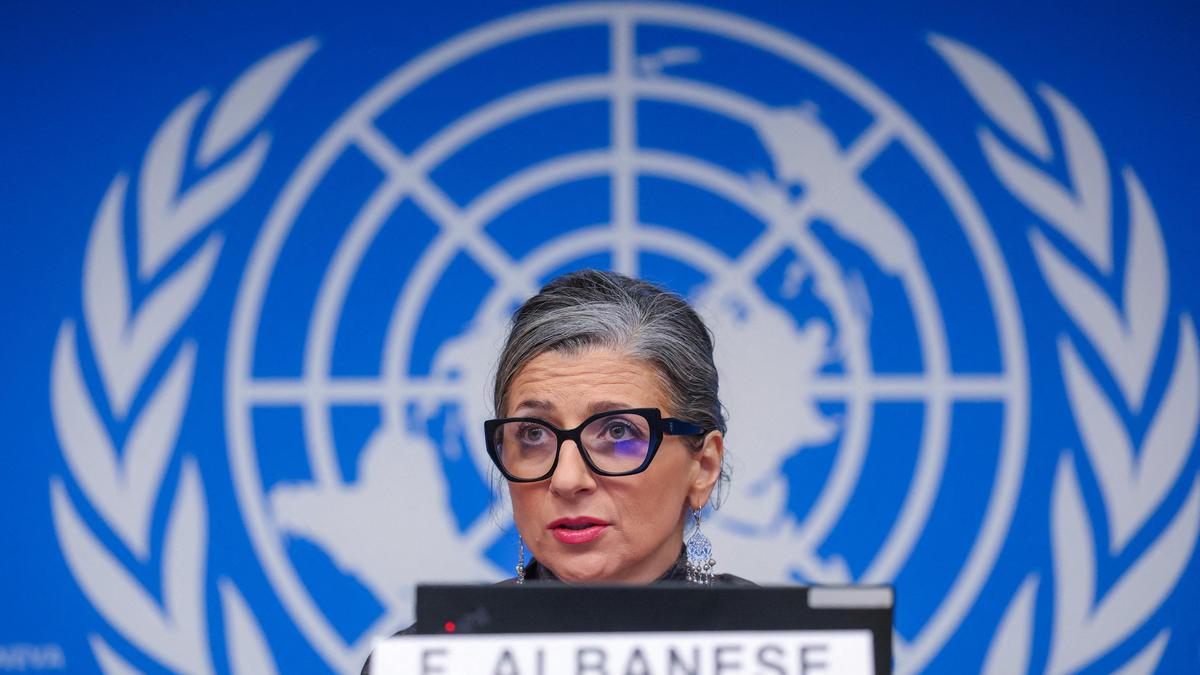
UN Expert Albanese: India Violates Law
UN Rapporteur Francesca Albanese accuses India of breaching international law, spotlighting human rights concerns in Kashmir and prompting diplomatic pushback.

Global Politics
US Seizes Iranian Ship, Tensions Surge
The US seizure of the Iranian ship Touska highlights a shift in control over the Strait of Hormuz, favoring Iran's strategic position.

Conflict & Security
Drone Warfare Killing Aid Workers at Unprec
Over 1,000 humanitarian workers killed in three years as cheap armed drones collapse legal protections. Gaza, Sudan, Ukraine, and DRC see deliberate targeting of aid convoys and hospitals with zero prosecutions.

Global
World Normalises Taliban as Afghan Women Eras
UN data shows Afghan women erased from public life as Russia recognises the Taliban, EU hosts officials in Brussels, and ICC warrants for gender persecution go unenforced.