TVK’s 13 Promises: Vijay’s Bid to Look Governing-Ready
TVK is selling not just welfare, but state capacity — a pitch aimed at anti-incumbent voters, young workers and first-time backers in Tamil Nadu.
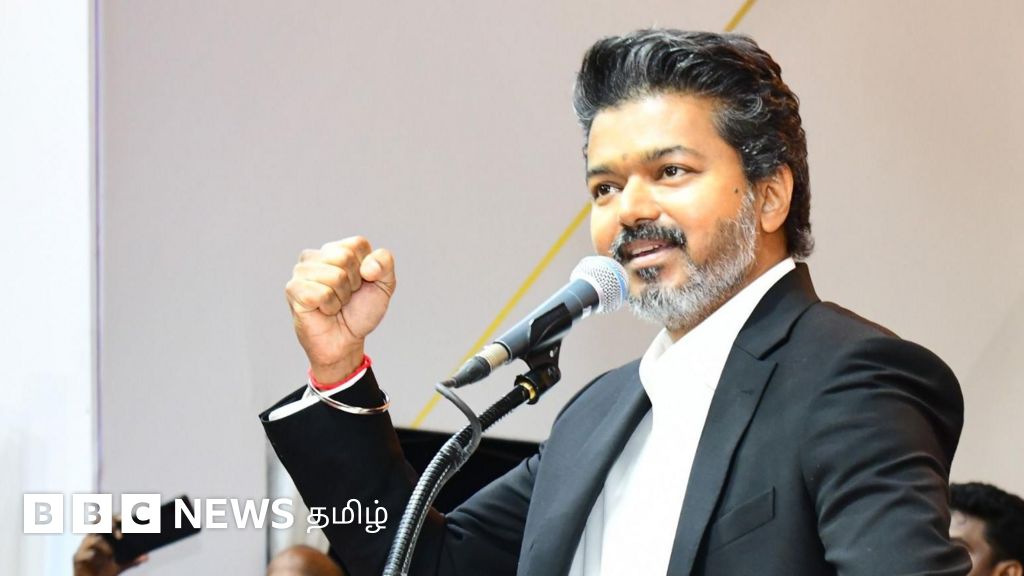
Vijay is trying to turn celebrity into governing credibility. BBC News தமிழ் says Tamilaga Vettri Kazhagam’s manifesto rests on 13 key promises, while  The Hindu and The Hindu show the same pattern across the campaign: cash support, welfare delivery, education finance, job creation, and a heavy dose of administrative reform. That is the point. TVK is not just promising more benefits than the DMK or AIADMK; it is trying to claim it can run the state better than the parties that have done it for decades.
What TVK is actually promising
The headline pledges are broad but targeted. BBC Tamil’s report highlights 200 units of free electricity, monthly cash support, and a package aimed at families and women. The Hindu reports that Vijay promised 8 grams of gold for marriage assistance, interest-free loans for women-led self-help groups, annual aid to prevent school dropouts, 100 Kamarajar special residential schools, health insurance of ₹25 lakh per family, and a monthly pension of ₹3,000 for the elderly, widows and persons with disabilities.
He is also stacking up state-building promises: The Hindu says TVK wants a Tamil Nadu Citizen Privilege Card, a Right to Service Act within six months, a “super app” for welfare delivery, a Ministry of AI, and an AI university. That is a deliberate contrast with the usual election manifesto in  India: TVK is packaging administration as politics.
Why this matters politically
The real contest is over credibility, not ideology. Vijay is using a populist manifesto to tell voters he can deliver both relief and order. That helps him with three groups: households that want immediate cash and welfare, young voters looking for jobs and internships, and middle-class voters tired of bureaucratic friction. The Hindu also shows TVK leaning into youth-specific pledges: collateral-free education loans, unemployment allowances, internships, and incentives for firms that hire Tamil workers.
But the same breadth is also the weakness. Reuters has reported that TVK’s business pitch depends on cutting red tape and attracting investment in semiconductors, electric vehicles, aerospace and AI, while noting investor anxiety about the party’s lack of political experience ( Reuters). That is the tension inside the manifesto: it promises expansionary welfare and faster growth at the same time, without yet showing the machinery to pay for both.
What to watch next
The next test is whether TVK can move from slogan to budget. Watch for three things: the costings behind the manifesto, the names of the people who would run finance and revenue, and whether Vijay keeps the same governing tone once campaigning ends. If TVK is serious, the decisive date is the first post-election budget cycle, when the promises on pensions, schools, free power and job schemes have to be reconciled with the state’s fiscal room. That is where the manifesto stops being a campaign document and becomes a governing contract.