Trump’s Iran talks expose GOP hawks’ weak
Trump's negotiations challenge Republican hardliners.
Model Diplomat3 min readNorth America
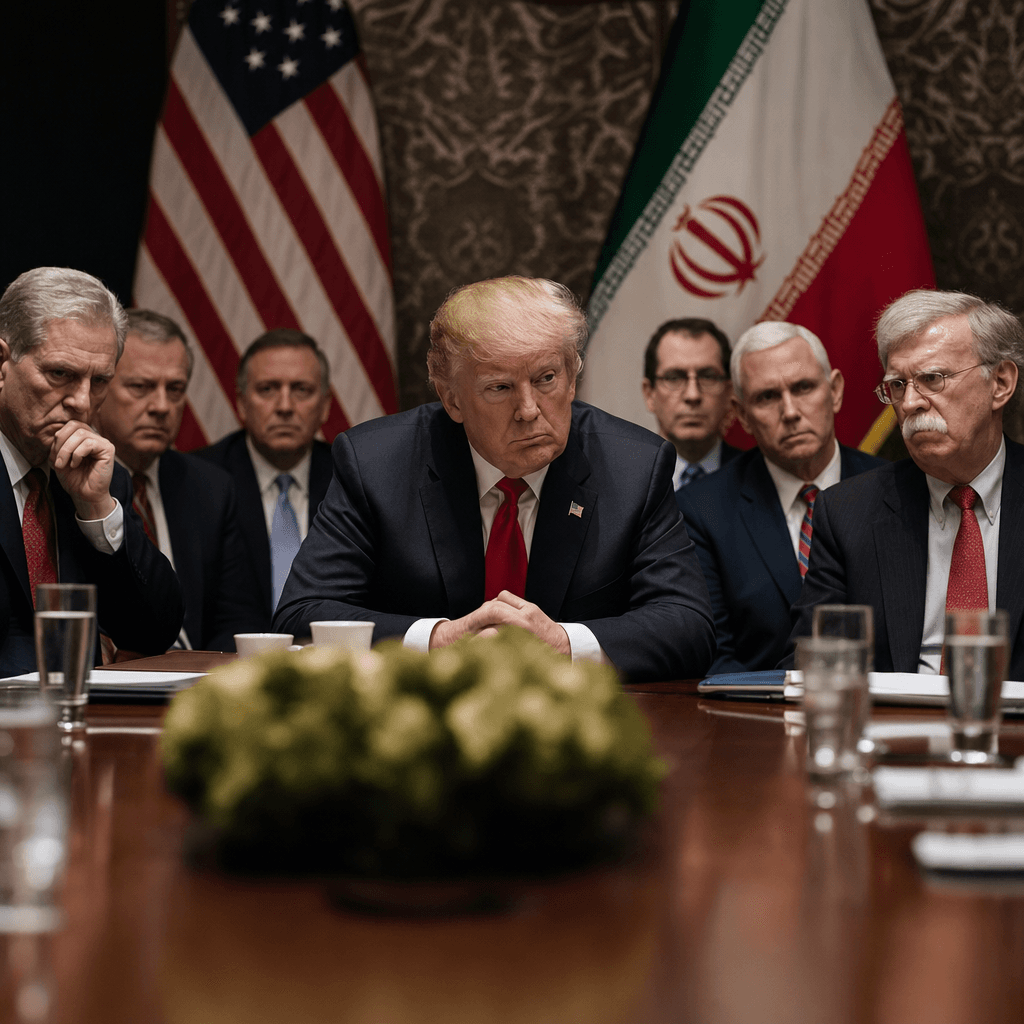
Trump’s Iran talks expose GOP hawks’ weak hand
Trump is negotiating from strength, not principle: he can reward or punish hardliners, while Republicans who backed the war now have to swallow a deal they may not like.
Trump’s Iran diplomacy is putting his own defense hawks in a bind because he controls the only lever that matters now: whether the United States keeps pressure on Tehran or trades it for a temporary bargain. On Monday, Trump said talks were “proceeding nicely” and pressed a maximalist vision that would tie any Iran deal to wider regional normalization, including Arab states joining the Abraham Accords, according to BBC News and
Al Jazeera. That immediately forced Republican Iran hawks to choose between backing Trump’s diplomacy and attacking the concessions it may require.
The leverage is Trump’s, not the hawks’
The problem for the hardliners is that Trump has already signaled flexibility on the core issue they said was non-negotiable: Iran’s enriched uranium. He posted that the stockpile could be destroyed “in place” or at another site under international oversight, a clear departure from earlier demands that it be handed over to the United States, according to The Guardian and
BBC News. That move undercuts the argument from senators like Ted Cruz and Roger Wicker that any pause or partial deal would amount to surrender.
The hawks’ influence is real, but mostly as a veto threat inside the Republican coalition. Cruz warned that a deal leaving Iran with money, uranium capability, and control over the Strait of Hormuz would be a “disastrous mistake,” while Wicker said a 60-day ceasefire would make “everything accomplished” in the campaign “for naught,” reported Al Jazeera and
BBC News. Mike Pompeo went further, calling the emerging terms “not remotely America First,” per
The Guardian. But none of them can actually write the deal.
Why this matters for the war and the Hill
This is not just a policy fight; it is a test of who sets the Republican line on national security. Trump has already shown he is willing to pair negotiations with force, with CENTCOM carrying out new “self-defense” strikes in southern Iran even as talks continued in Doha, according to Al Jazeera and
The Guardian. That gives him a simple argument: pressure is working, and the hawks should not block the payoff.
For the White House, the upside is obvious: a deal that reopens the Strait of Hormuz and freezes the war would be sold as proof that Trump can use force to create diplomacy. For the hawks, the downside is sharper: if they attack the deal too hard, they risk looking like the faction that wanted a bigger war but cannot stop the president from ending it.
What to watch next
The next decision point is whether the Doha talks produce a written framework on the Strait of Hormuz, sanctions relief, and the uranium stockpile. BBC News reported Rubio saying the talks could take “a few days,” while Iran says agreement is not imminent. If Trump keeps tightening the screws while floating concessions, the real question is not whether the deal is good enough for the hawks. It is whether they have any power left to stop it.
For broader context, track the fallout through US Politics and the U.S. angle on
Global Politics.
Discover more
Global Politics
Trump's Conflicting Messages on Iran War
Trump's mixed messages on Iran reflect a strategy of audience management, benefiting Tehran amid a complex geopolitical landscape.

Economics
Fed's Amex AML order puts correspondent banking on notice
Federal Reserve's Amex AML order requires board-level controls and a 90-day plan; OCC fined the bank $350 million over enterprise-wide deficiencies.

Conflict & Security
Guatemala: El Niño 2026–27 becomes regional security test
UNICEF: 25.8M children face El Niño risks in Latin America; Guatemala maps 188 municipalities for drought and food insecurity amid regional security test.
Economics
Fed's stress-test overhaul is a capital-smoothing exercise
Federal Reserve finalized stress-test overhaul: two-year averaging for bank capital buffers and public input, expected to halve volatility.