Trump’s Delhi Phone-In Signals Thaw
Trump's call hints at a tactical shift in US-India relations.
Model Diplomat3 min readAsia
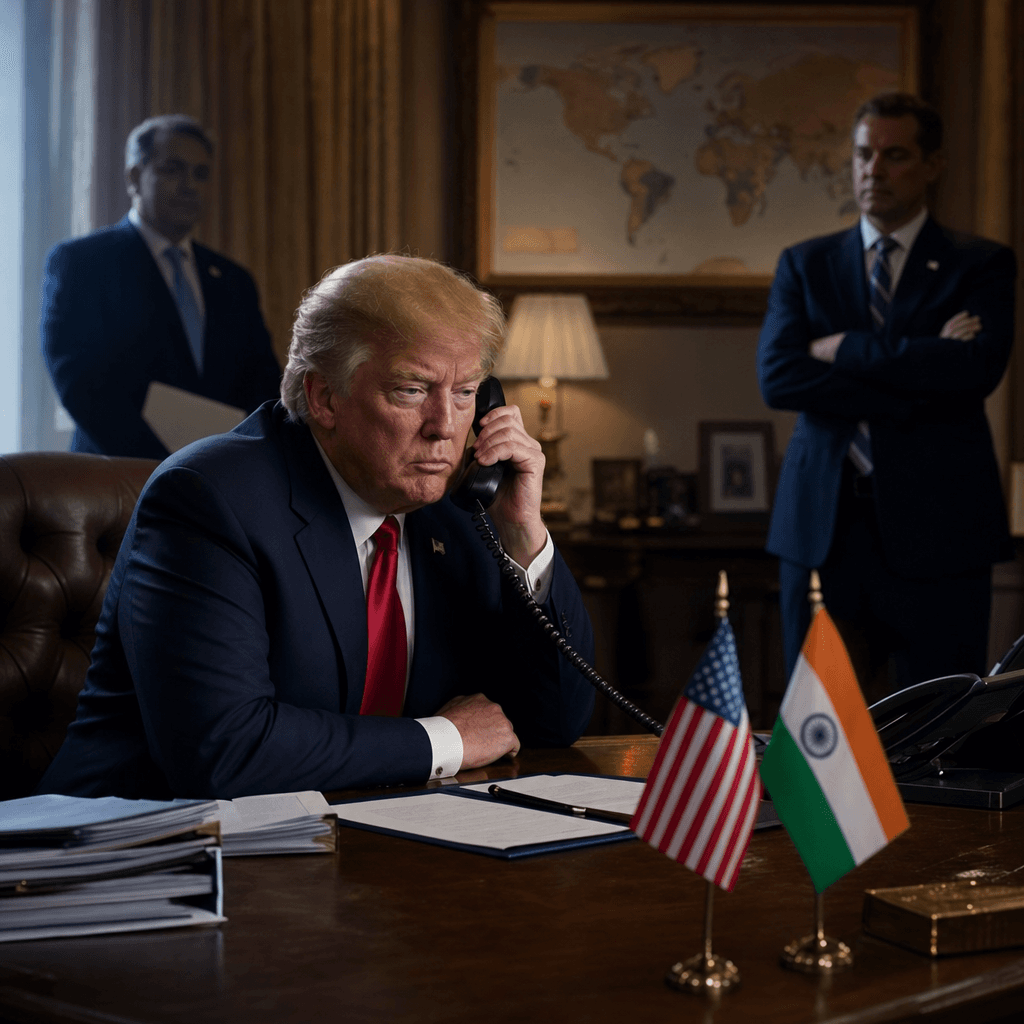
Trump’s Delhi Phone-In Signals a Tactical Thaw with India
Trump’s call into Rubio’s Delhi event is cheap reassurance: Washington wants a reset, but still controls the hard leverage over trade and visas.
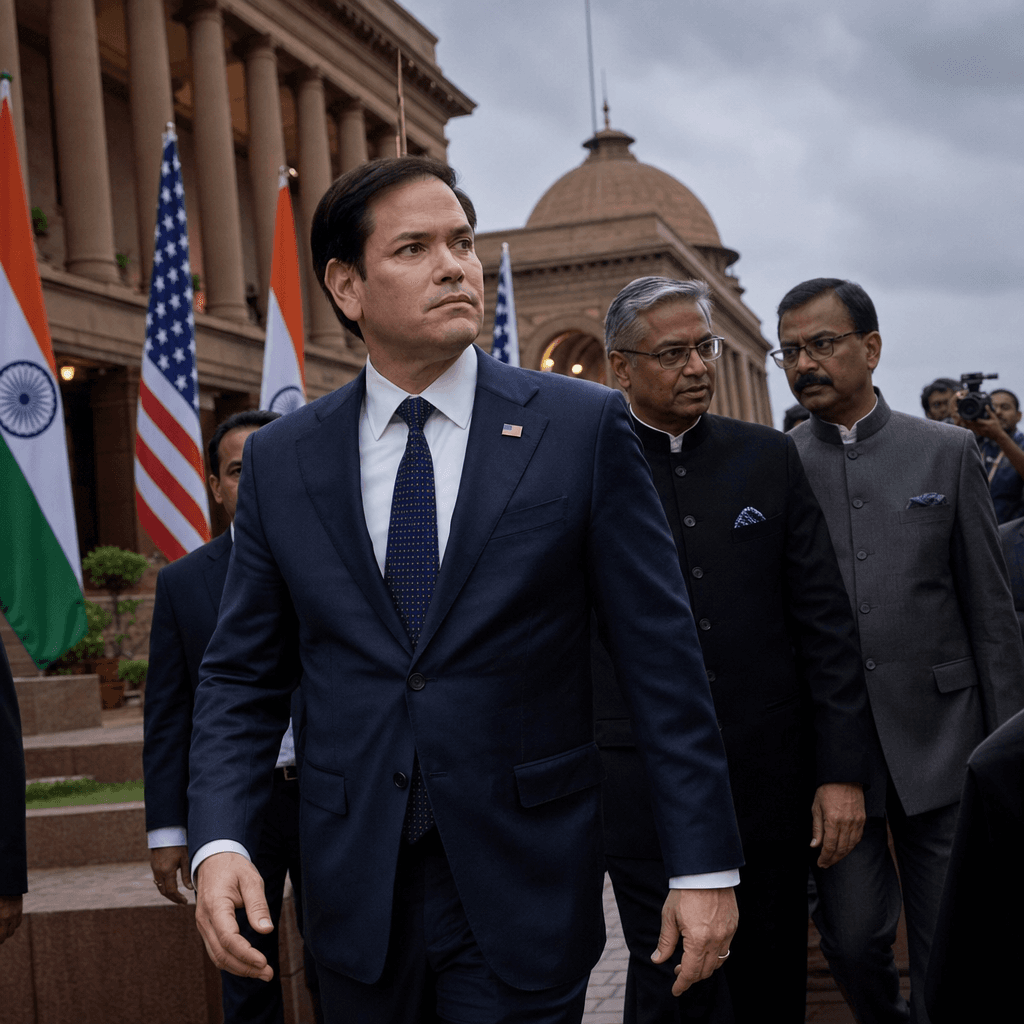
US President Donald Trump dialled Secretary of State Marco Rubio into a Delhi embassy event on Sunday and used the moment to tell an Indian audience, “I love the Prime Minister. Modi is great. He’s my friend,” while insisting the relationship with India had “never been closer” (The Indian Express;
The Hindu). That was not just flattery. It was a signal that Washington wants the optics of warmth while it keeps the substantive bargaining power over trade, visas and strategic alignment.
The message behind the call
Rubio’s India trip is being sold as a repair mission after a year of strain over tariffs, visa restrictions, deportations and Washington’s outreach to Pakistan, with both sides now trying to stabilise a relationship that matters for defence, energy and critical technologies (The Indian Express;
CNA). Trump’s call into the embassy event did two things at once: it publicly backed Modi, and it reminded New Delhi that the White House is still the one doing the granting.
That matters because this is a relationship built less on trust than on mutual need. The US wants India as a counterweight in the Indo-Pacific and as a market for energy and advanced technology; India wants relief from tariff pressure and a steadier policy line from a Trump administration that has been unpredictable on China, Pakistan and migration (CNA;
The Hindu). The Trump-Rubio messaging is designed to keep India engaged without conceding leverage.
Why it matters for New Delhi
For Modi, the upside is immediate and political. A public “I love Modi” line from Trump helps offset the impression that India has been under pressure in Washington’s China-first, deal-first agenda. It also reinforces the argument that the bilateral channel remains open before the Quad foreign ministers meet in Delhi on May 26 (The Indian Express;
The Hindu). For India, this is about preserving room to manoeuvre on
India while avoiding a public rupture with Washington.
The deeper issue is that the warmth is running ahead of the deal. Rubio said the two sides were close to a trade agreement and that a US trade delegation would come “very soon,” but that still leaves the hardest issues unresolved: tariff levels, market access, and how much India is expected to align on US energy and security priorities (The Hindu;
CNA).
What to watch next
The next decision point is the Quad meeting on May 26, where the US and India will have to show whether this reset has operational content or is still mostly theater (The Indian Express;
The Hindu). Watch for three tells: a date for Modi’s White House visit, movement on the interim trade deal, and whether Trump’s public warmth is matched by any easing on tariffs or visas. On
Global Politics, that is the difference between a managed thaw and another short-lived diplomatic performance.
Discover more
India
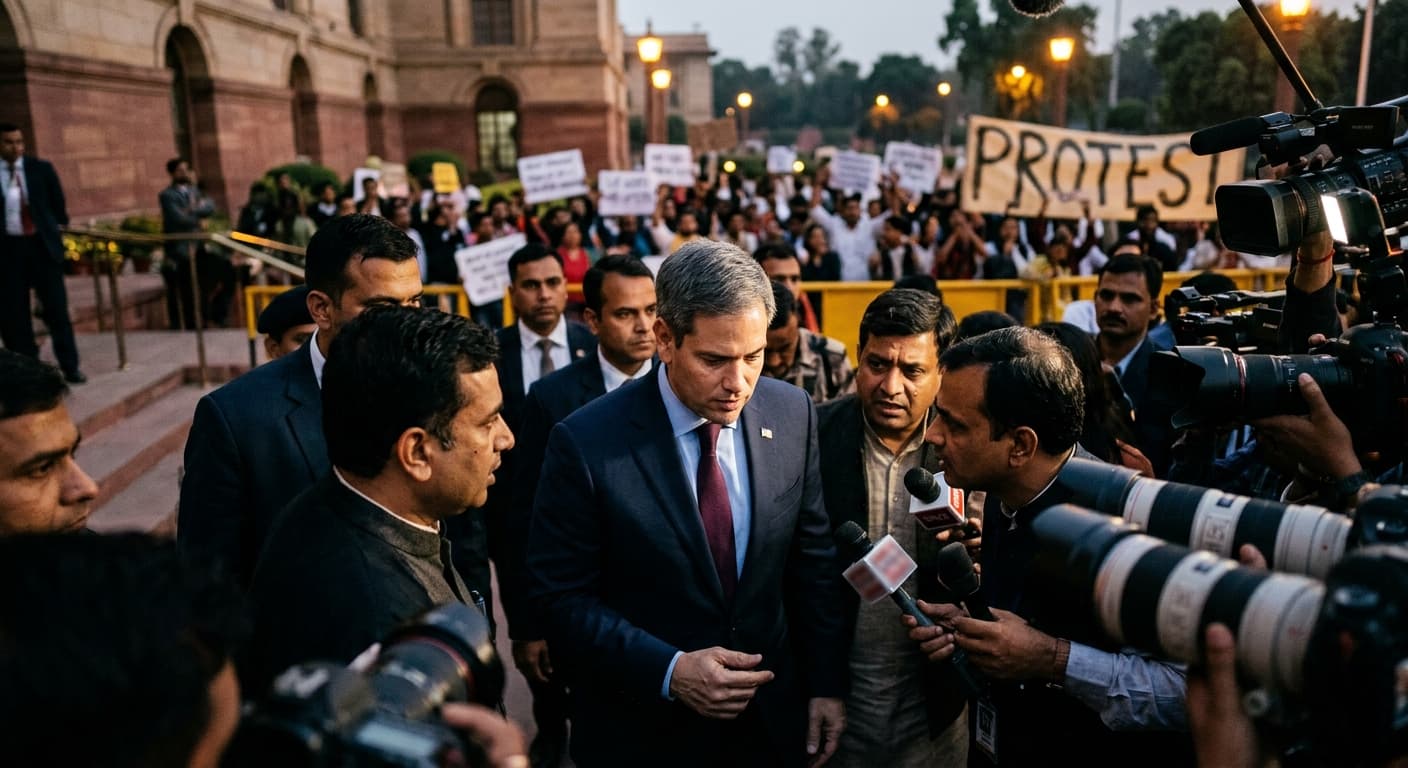
Rubio Defends Hormuz Blockade Amid India Pro
US Secretary of State Marco Rubio's defense of the Hormuz naval blockade escalates maritime-security tensions and sharply strains relations with India.
India
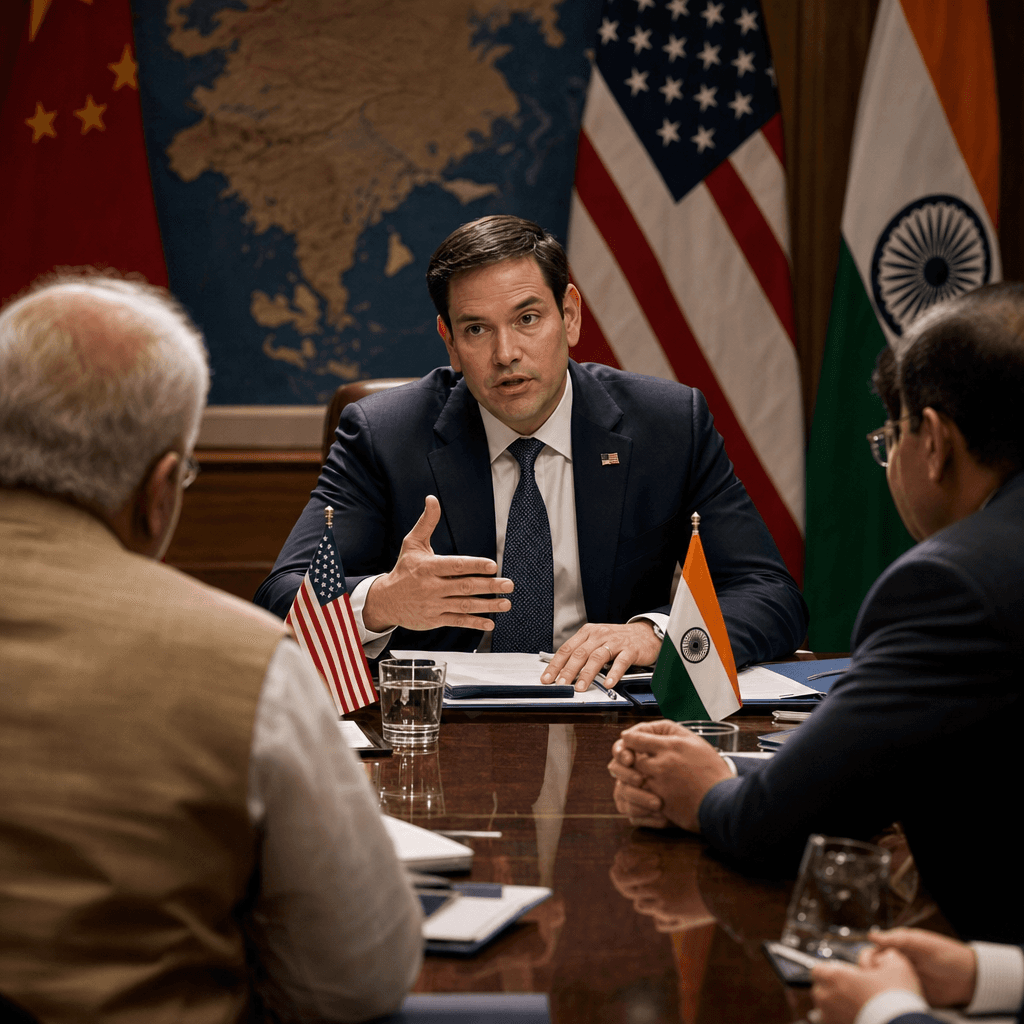
Rubio Recasts India as a Strategic Lever
Marco Rubio is recasting India as a strategic lever against China, framing the partnership around the Indo-Pacific even as trade frictions complicate the ties.
India
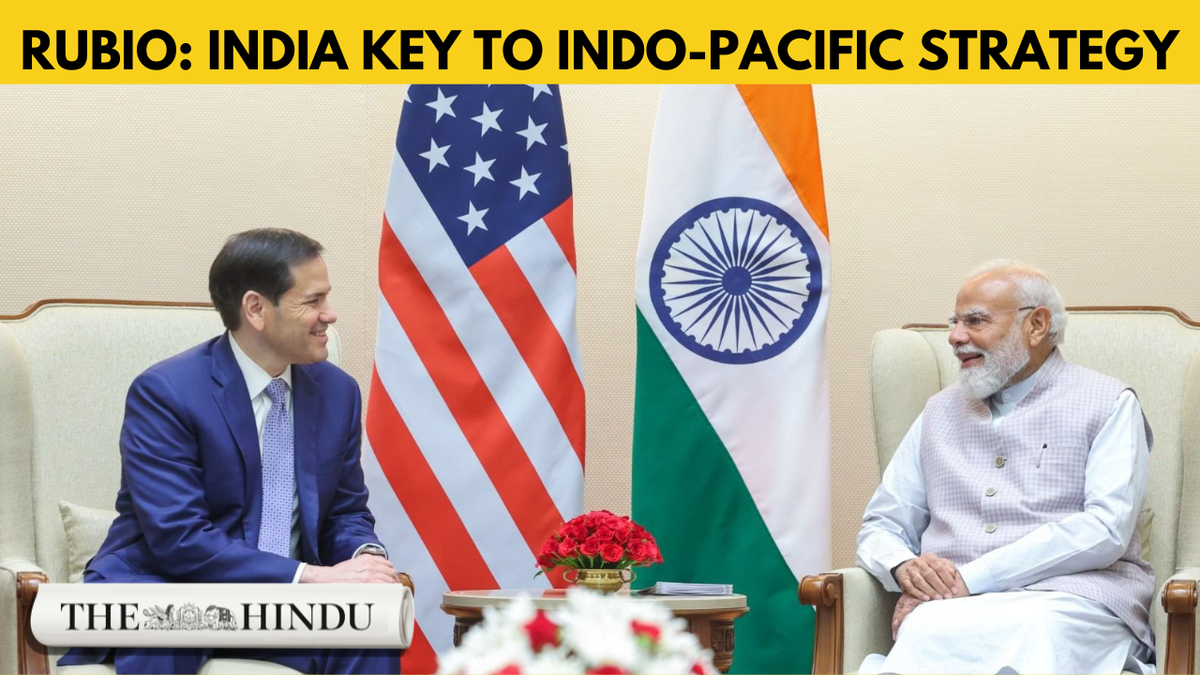
Rubio's Modi Invite: U.S.-India Relations
Marco Rubio's invitation to Modi signals a fragile US-India reset, with Quad cooperation, trade friction, and Indo-Pacific strategy all hanging in the balance.
India
Rubio's Delhi Visit: U.S.-India Relations Unr
Marco Rubio's Delhi push tests US leverage over India, with energy policy, trade, and Quad geopolitics revealing who still sets the pace in the relationship.

