Rubio's Delhi Visit: U.S.-India Relations Unr
Rubio's visit highlights U.S.-India relations and strategic leverage.
Model Diplomat3 min readAsia
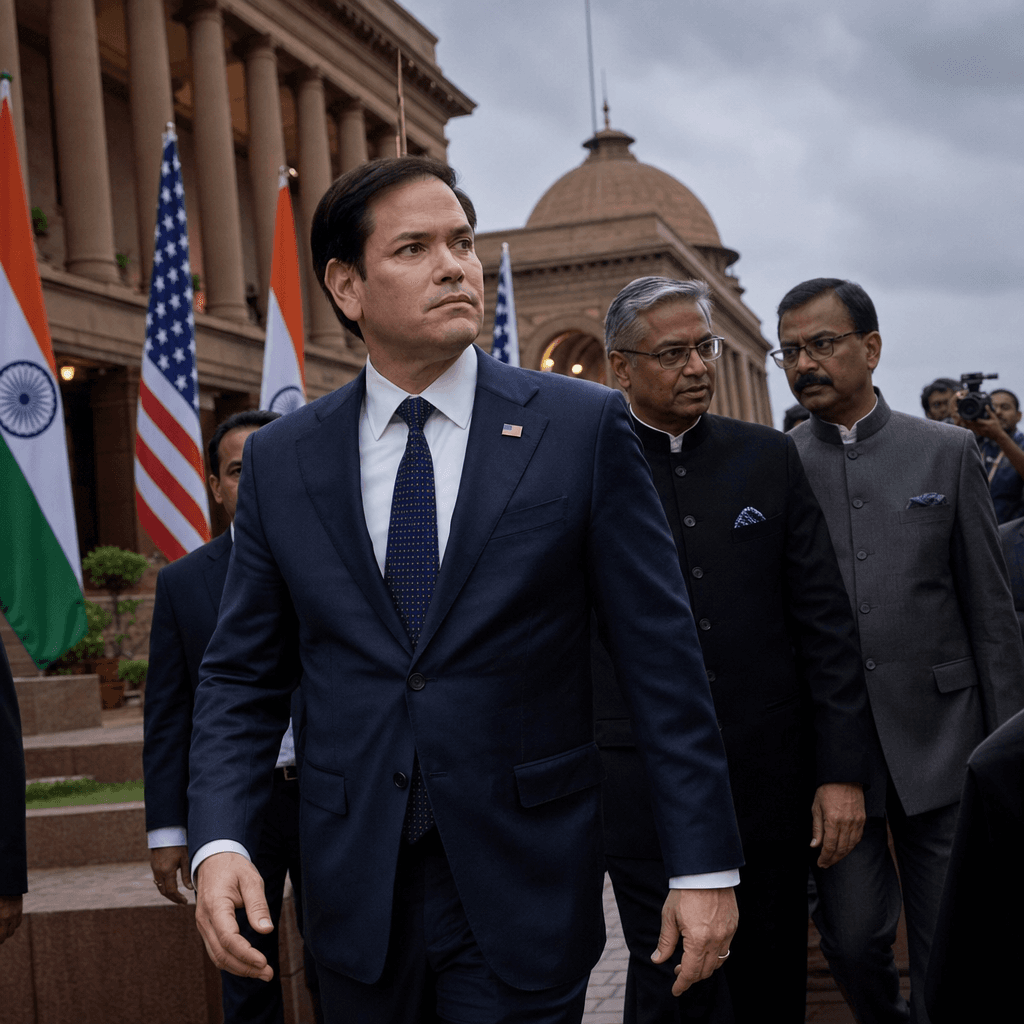
Rubio’s Delhi Push Shows Who Still Sets the Pace
[Rubio’s talks with Jaishankar signal continuity, but Washington is using energy, trade and the Quad to press India while Modi keeps leverage through strategic alignment.]
Marco Rubio’s Delhi stop is less a reset than a pressure test. At Hyderabad House, External Affairs Minister S. Jaishankar said he expected “open and productive discussions” with the U.S. secretary of state, while Rubio stressed that the relationship is already “very solid and strong” and “not about restoring or reinvigorating” ties, but building on them, according to The Hindu. That framing matters: Washington is signaling partnership, but it is also using this visit to extract movement on energy, trade and technology from a government that wants the relationship insulated from U.S. tariffs and Middle East shocks.
Washington has leverage, but not a free hand
Rubio’s public line was calibrated for Indian ears. The State Department said he told Prime Minister Narendra Modi that U.S. energy products could diversify India’s supply, and that Washington would not let Iran “hold the global energy market hostage,” according to CNA, citing Reuters. That is not just rhetoric. India is exposed on two fronts: it needs stable oil flows, and it wants to keep expanding trade with the United States without appearing to cut itself off from Russia or other suppliers. Washington knows it can squeeze on tariffs, export controls and market access; India knows Washington also needs New Delhi in the Indo-Pacific architecture and in the
Global Politics contest with China.
Modi’s side also got a political dividend. Rubio conveyed an invitation from President Donald Trump for Modi to visit the White House “in the near future,” The Hindu reported, which keeps the top-level channel open even as lower-level negotiations remain unsettled. The message is simple: both capitals want the optics of momentum, but each is trying to set the terms.
The real issue is not symbolism, it is bargaining power
The immediate agenda is broad — trade, defence, energy security and critical technologies — but that breadth is exactly the point. Broad agendas let both sides claim progress while postponing the hardest concessions. India wants U.S. support for strategic autonomy without giving up policy flexibility on Russian oil and regional diplomacy. The Trump administration wants India to buy more U.S. energy, align more closely on supply chains, and deepen Quad coordination, while avoiding a public rupture with one of America’s most important partners.
That balance is delicate because the relationship has been strained by U.S. tariffs and by Washington’s sharper engagement with Pakistan, which has annoyed New Delhi, according to CNA. Rubio’s insistence that this trip is not about “restoring” ties is a tell: neither side believes the partnership broke, but both know it is being renegotiated under worse geopolitical conditions.
For India, the benefit is obvious: continued U.S. engagement without having to choose sides publicly. For Washington, the gain is access — to markets, to Indian diplomatic cooperation, and to a partner that helps make the Quad look like more than a talking shop.
What to watch next
The next decision point is Tuesday’s Quad foreign ministers’ meeting in New Delhi. If Rubio uses that forum to push a tighter line on energy diversification, technology controls or Indo-Pacific coordination, it will show Washington is turning symbolism into bargaining. If the meeting produces only generic language, that will tell you the partnership is still strong — but the hard tradeoffs have been deferred, not solved.
Discover more

India
India-South Korea $50B Trade Expansion Plan
India and South Korea target $50 billion in bilateral trade by 2030, focusing on industrial cooperation and strategic alignment amid US pressures.

Conflict & Security
Drone Warfare Killing Aid Workers at Unprec
Over 1,000 humanitarian workers killed in three years as cheap armed drones collapse legal protections. Gaza, Sudan, Ukraine, and DRC see deliberate targeting of aid convoys and hospitals with zero prosecutions.

Global
World Normalises Taliban as Afghan Women Eras
UN data shows Afghan women erased from public life as Russia recognises the Taliban, EU hosts officials in Brussels, and ICC warrants for gender persecution go unenforced.
Conflict & Security
West Africa Food Crisis: Three Shocks in 2026
Conflict, climate extremes, and the Strait of Hormuz closure drive a severe food crisis in West and Central Africa, with fertilizer prices surging 80% and millions displaced.

