Rubio Defends Hormuz Blockade Amid India Pro
US Secretary of State clashes with India over naval strikes
Model Diplomat2 min readAsia
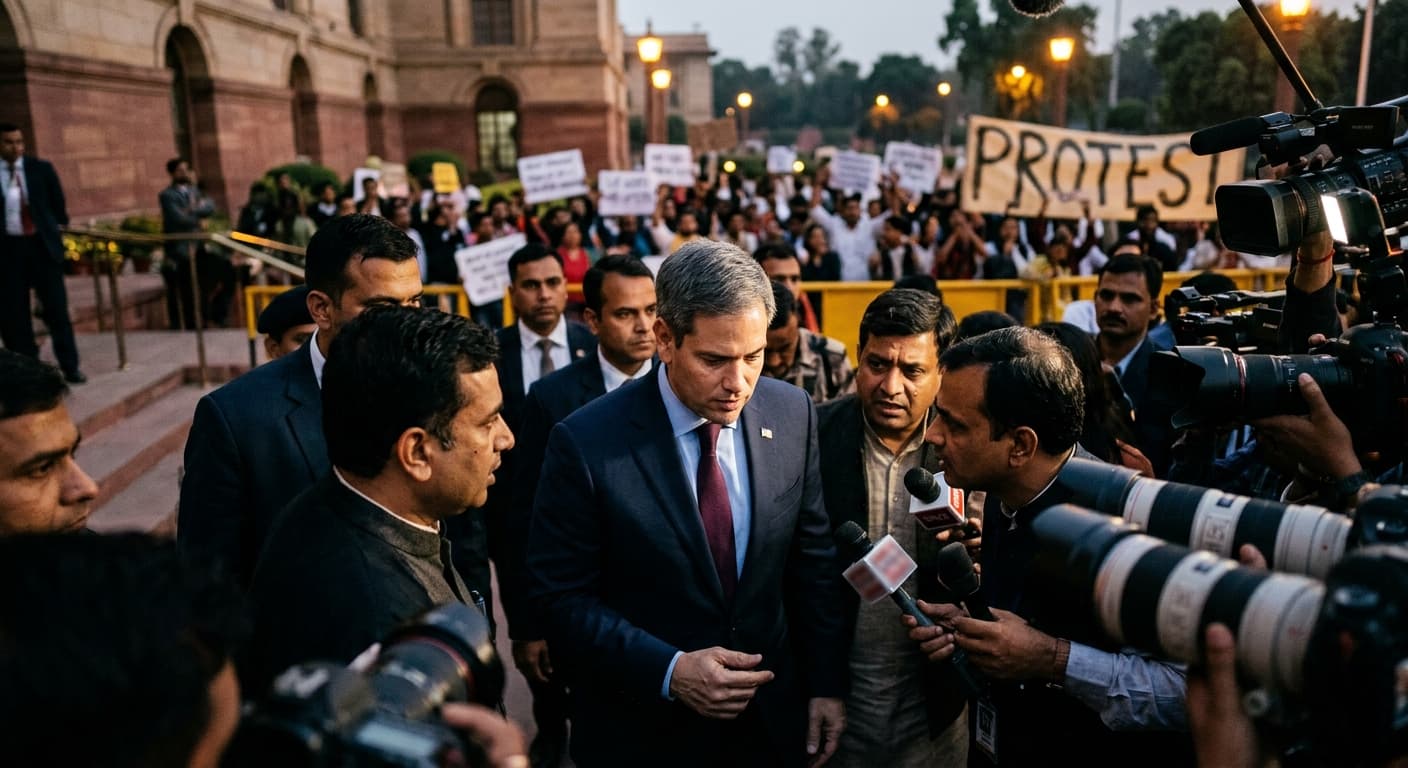
Rubio Rejects India Protests, Vows to Enforce Hormuz Blockade
US Secretary of State Marco Rubio defended military strikes on ships carrying Indian crew, setting the stage for a rare public fracture with New Delhi.
In a rare and highly public fracture of bilateral relations, US Secretary of State Marco Rubio rejected a fierce protest from Indian External Affairs Minister S. Jaishankar over U.S. naval strikes that killed three Indian seafarers. Rubio told his Indian counterpart that maritime blockade violations will not be tolerated under any circumstances, defending the U.S. campaign in the Strait of Hormuz Indian Express. This diplomatic confrontation followed New Delhi's decision to summon the
United States Chargé d'Affaires, Jason Meeks, to lodge repeated formal protests over consecutive hits on shipping vessels
Times Now.
The Clash of Vital Interests
Two foreign-flagged oil tankers, the Marivex and the Settebello, both staffed largely by Indian crews, were disabled by U.S. forces in the Gulf of Oman earlier in the week, with the strike on the Settebello claiming three Indian lives Al Jazeera. A subsequent attack on the Guinea-Bissau-flagged MT Jalveer with Hellfire missiles on Thursday further aggravated tensions
Al Jazeera. Central Command (CENTCOM) asserted that each vessel was targeted for attempting to bypass the maritime blockade on Iranian crude oil exports
Al Jazeera.
This military escalation exposes a sharp divergence in how Washington and New Delhi define national security in the region. The Trump administration is using aggressive naval interdiction to force Tehran into permanent nuclear concessions. For Washington, establishing the absolute credibility of the blockade is the paramount objective, even if it requires accepting significant collateral friction with a key Indo-Pacific ally. Letting shipping firms bypass sanctions with impunity under the cover of neutral, foreign-flagged crews would render U.S. economic warfare toothless.
New Delhi, conversely, faces immense domestic political fallout and a direct threat to its massive export labor economy, which includes nearly 300,000 professional mariners globally BBC. Jaishankar publicly stated that "lethal actions against commercial shipping are not justified" and demanded unimpeded transit
Al Jazeera. However, India currently holds minimal physical leverage in the Gulf of Oman to deter U.S. naval assets. The Indian government cannot afford to derail its broader strategic relationship with the U.S. while managing a persistent land border standoff with China.
What to Watch Next
The immediate focus moves to the high-stakes ceasefire negotiations mediated by Pakistan in Islamabad Al Jazeera. If diplomats fail to formalize a broader deal that safely reopens the Strait of Hormuz to civilian transit, watch whether the Indian Navy deploys escort vessels to protect the thousands of Indian seafarers still operating in the region
BBC. Any such outward military deployment by New Delhi in the Gulf would risk unprecedented tactical friction with U.S. naval forces
Conflict.
Discover more

Global Politics
US Seizes Iranian Ship, Tensions Surge
The US seizure of the Iranian ship Touska highlights a shift in control over the Strait of Hormuz, favoring Iran's strategic position.

Conflict & Security
Drone Warfare Killing Aid Workers at Unprec
Over 1,000 humanitarian workers killed in three years as cheap armed drones collapse legal protections. Gaza, Sudan, Ukraine, and DRC see deliberate targeting of aid convoys and hospitals with zero prosecutions.
Global
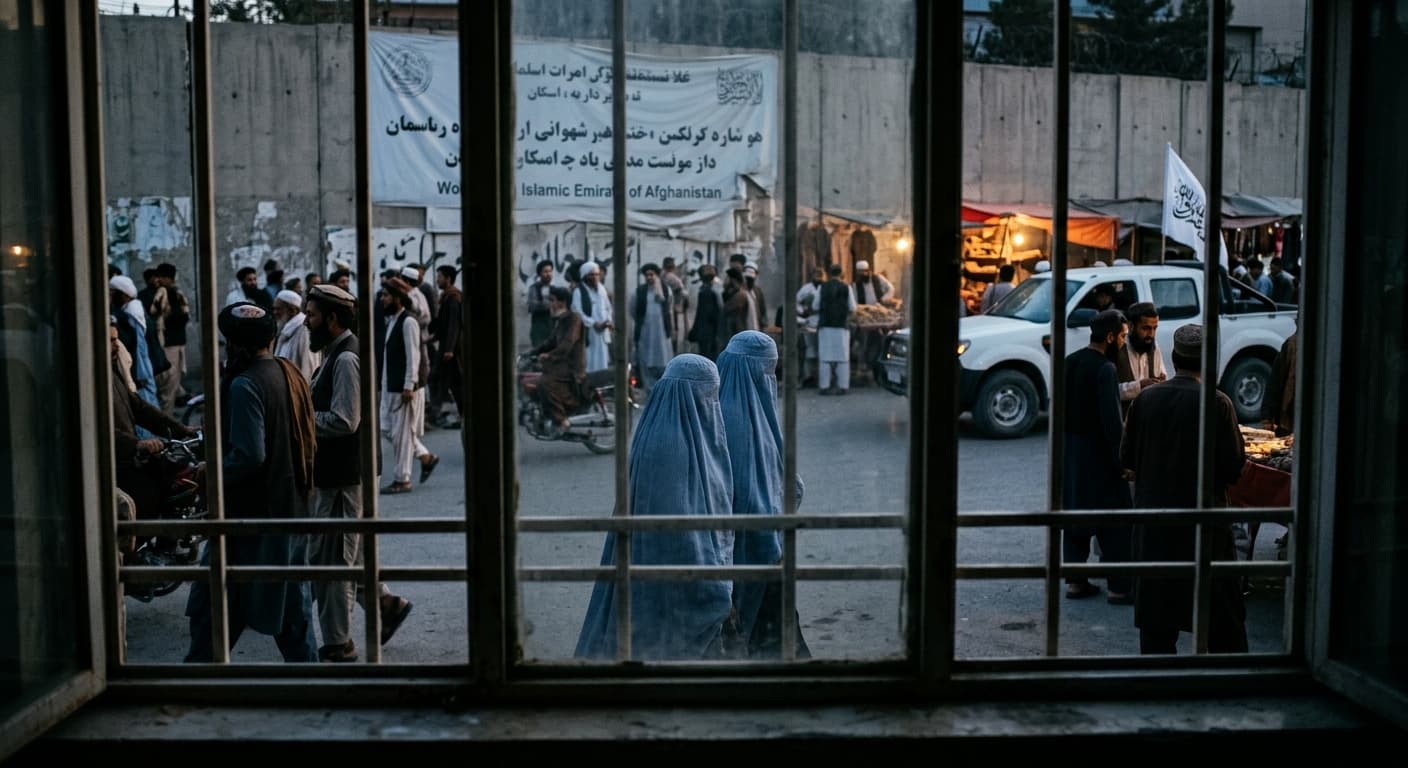
World Normalises Taliban as Afghan Women Eras
UN data shows Afghan women erased from public life as Russia recognises the Taliban, EU hosts officials in Brussels, and ICC warrants for gender persecution go unenforced.
Conflict & Security
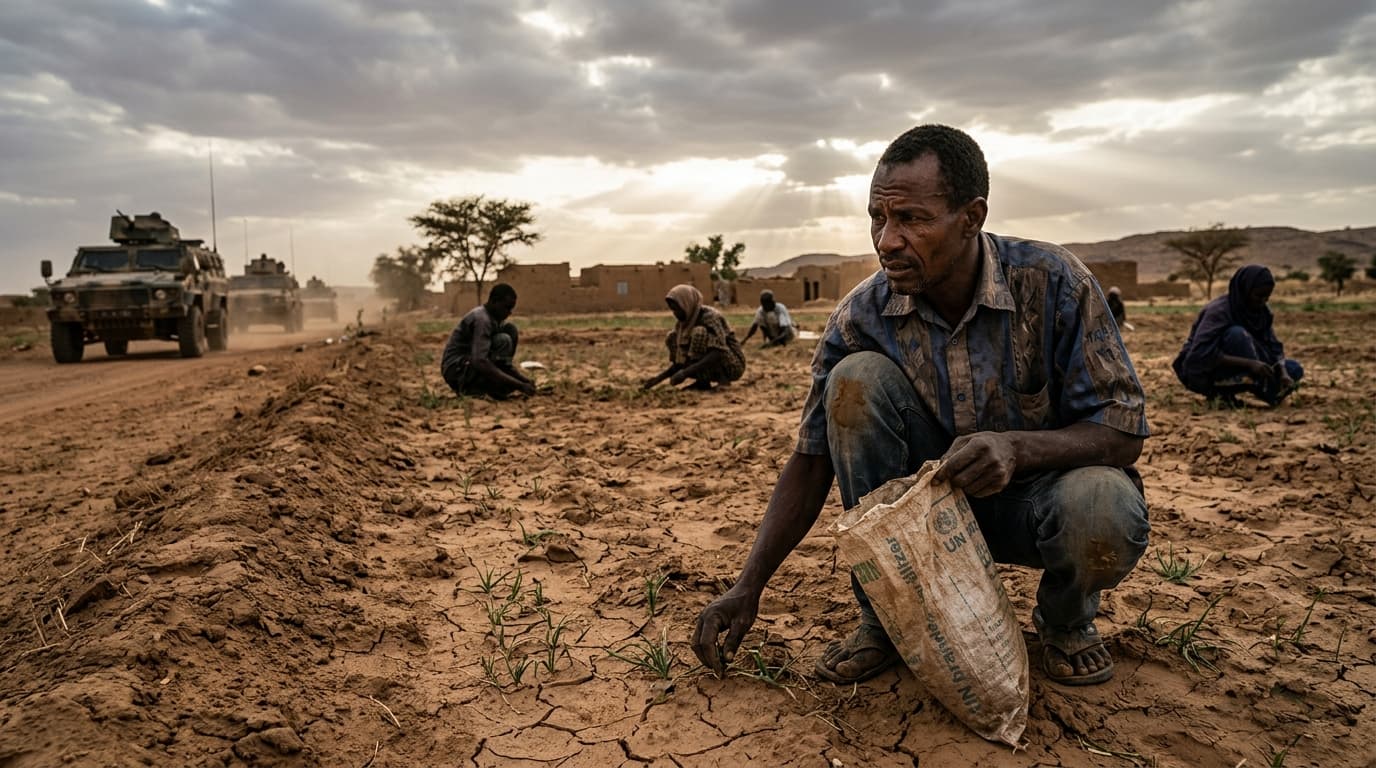
West Africa Food Crisis: Three Shocks in 2026
Conflict, climate extremes, and the Strait of Hormuz closure drive a severe food crisis in West and Central Africa, with fertilizer prices surging 80% and millions displaced.

